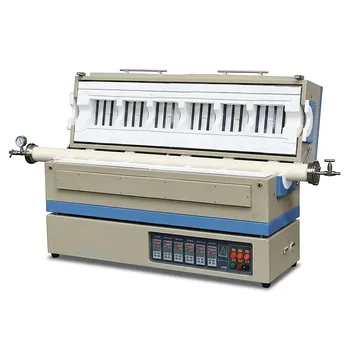
How is a dual-temperature zone tube furnace configured for MXene-based metal phosphides? Expert Synthesis Guide
Updated 3 months ago
The configuration of a dual-temperature zone tube furnace for MXene-based metal phosphide synthesis involves a spatial separation of reactants to decouple gas generation from the chemical reaction. By placing the phosphorus source in the upstream zone and the metal-loaded MXene precursor in the downstream zone, researchers can independently control the decomposition rate of the phosphorus and the kinetics of the phosphidation reaction.
The core advantage of this dual-zone configuration is the ability to maintain a stable, continuous concentration of phosphine (PH3) gas over the precursor. This precision ensures a uniform gas-solid phase reaction, which is essential for achieving high-purity nanocrystalline structures while preserving the MXene's conductive framework.
Spatial Configuration and Flow Dynamics
Upstream Placement of the Phosphorus Source
The phosphorus source, typically sodium hypophosphite ($NaH_2PO_2$), is positioned in the first heating zone (upstream). This zone is responsible solely for the thermal decomposition of the solid source into phosphine (PH3) gas.
Downstream Placement of the MXene Precursor
The metal-loaded MXene precursor is placed in the second heating zone (downstream). This separation allows the metal sites on the MXene surface to react with the incoming gas only after the upstream zone has reached the necessary decomposition temperature.
The Role of Inert Carrier Gases
An inert carrier gas, such as Argon (Ar), is introduced from the upstream end to move directionally through the tube. This flow acts as a transport mechanism, carrying the $PH_3$ vapor at a constant rate toward the downstream reaction site.
Thermal Gradient and Kinetic Control
Independent Temperature Profiles
The dual-zone setup allows for distinct heating curves tailored to the specific thermal properties of each material. For example, the upstream zone might be held at approximately 300°C to trigger decomposition, while the downstream zone is adjusted to optimize the formation of the metal phosphide interface.
Managing the PH3 Gas Generation Rate
By decoupling the heat sources, the furnace prevents the "burst" effect often seen in single-zone systems. This ensures that the gas-solid phase reaction occurs under a steady state, leading to a more thorough and uniform transformation of the metal particles into phosphides.
Regulation of Reaction Kinetics
Controlling the downstream temperature independently allows researchers to regulate the reaction kinetics on the MXene surface. This precision is vital for creating specific heterojunction interfaces without destroying the sensitive two-dimensional structure of the MXene substrate.
Understanding the Trade-offs
Complexity of Parameter Optimization
While dual zones offer more control, they significantly increase the experimental variables. Determining the ideal temperature offset between the upstream decomposition and downstream reaction zones requires extensive calibration to avoid incomplete phosphidation.
Risk of Gas Re-condensation
If the temperature gradient between the two zones is too steep or the carrier gas flow is too slow, there is a risk of reactant vapor re-condensation on the tube walls. This can lead to a decrease in the effective concentration of the phosphorus source and result in non-uniform product quality.
Material Integrity vs. Reaction Degree
High reaction temperatures in the downstream zone can enhance phosphidation but may also lead to the oxidation or degradation of the MXene framework. Finding the "sweet spot" between high-quality phosphide growth and the maintenance of the conductive MXene lattice is a primary challenge.
How to Apply This to Your Project
Implementation Strategies
- If your primary focus is Phase Purity: Maintain a slight temperature surplus in the upstream zone to ensure a saturated $PH_3$ environment throughout the entire reaction window.
- If your primary focus is MXene Conductivity: Prioritize the lowest possible reaction temperature in the downstream zone that still allows for metal-to-phosphide conversion.
- If your primary focus is Uniformity: Use a higher flow rate of Argon to ensure the phosphorus-containing vapor is distributed evenly across the surface of the downstream solid particles.
Precise spatial and thermal configuration of the tube furnace is the definitive factor in transforming MXene-based precursors into high-performance metal phosphides.
Summary Table:
| Component | Location | Primary Function | Key Control Parameter |
|---|---|---|---|
| Phosphorus Source | Upstream Zone | Thermal decomposition into $PH_3$ gas | Decomposition Temperature |
| MXene Precursor | Downstream Zone | Gas-solid phase phosphidation reaction | Reaction Kinetics & Temp |
| Inert Carrier Gas | Flow Directional | Transports $PH_3$ to the downstream site | Gas Flow Rate (Ar) |
| Thermal Gradient | Between Zones | Decouples gas generation from reaction | Temperature Offset |
Elevate Your Material Synthesis with THERMUNITS
Achieving high-purity nanocrystalline structures like MXene-based metal phosphides requires absolute thermal precision. THERMUNITS is a leading manufacturer of high-performance laboratory equipment designed for the rigors of material science and industrial R&D.
We provide a comprehensive range of thermal processing solutions, including:
- Advanced Tube & Dual-Zone Furnaces for precise gas-solid phase reactions.
- CVD/PECVD Systems for sophisticated thin-film and 2D material growth.
- Muffle, Vacuum, and Atmosphere Furnaces for diverse heat treatment needs.
- Specialized Equipment: Rotary kilns, Hot Press furnaces, and Vacuum Induction Melting (VIM) systems.
Our equipment ensures uniform heating and stable gas dynamics, empowering you to maintain the structural integrity of sensitive substrates like MXenes.
Ready to optimize your lab’s thermal capabilities? Contact our technical experts today to discuss a customized solution for your research requirements!
References
- Hengjun Su, Xiaojun Zeng. Recent progress in the synthesis and electrocatalytic application of MXene‐based metal phosphide composites. DOI: 10.1002/cnl2.169
Mentioned Products
- High Temperature 1700C Dual Zone Tube Furnace for Material Science and Industrial Chemical Vapor Deposition Research
- 1200C Dual Temperature Zone Slidable Tube Furnace for 2D Material Growth and TCVD Synthesis
- High Temperature 1700C Dual Zone Rotary Tube Furnace with 60mm Alumina Tube and Precision Rotation Control
- Dual Zone Tube Furnace 1100C with 11 Inch Quartz Tube and Vacuum Flanges for 8 Inch Wafer Processing
- Dual Heating Zone 1200C Compact Split Tube Furnace with Optional 1" - 2" Tube and Vacuum Flanges
People Also Ask
- What is the function of a dual-zone tube furnace in CVD for 2D perovskites? Optimize Precision & Film Uniformity
- What are the technical advantages of a dual-zone tube furnace for phosphidation? Optimize Cobalt Nanowall Synthesis.
- What are the primary technical advantages of using a dual-zone tube furnace for MoS2? Optimize CVD Precision & Yield
- Why is it necessary to place MoS2 devices in a dual-zone tube furnace for annealing? Optimize Lattice Repair & Doping
- What are the technical advantages of using a dual-zone tube furnace for growing large PdCoO2 crystals via CVT? Expert Tips

Tech Team · ThermUnits
Last updated on Jun 02, 2026
Related Products
High Temperature 1700C Dual Zone Tube Furnace for Material Science and Industrial Chemical Vapor Deposition Research
1200C Dual Temperature Zone Slidable Tube Furnace for 2D Material Growth and TCVD Synthesis
High Temperature 1700C Dual Zone Rotary Tube Furnace with 60mm Alumina Tube and Precision Rotation Control
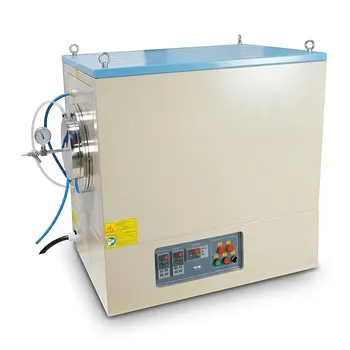
Dual Zone Tube Furnace 1100C with 11 Inch Quartz Tube and Vacuum Flanges for 8 Inch Wafer Processing
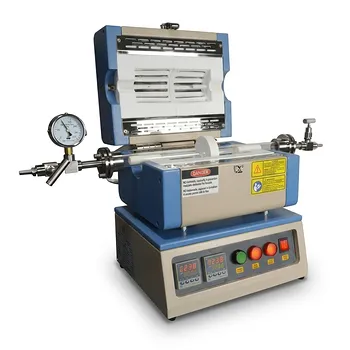
Dual Heating Zone 1200C Compact Split Tube Furnace with Optional 1" - 2" Tube and Vacuum Flanges
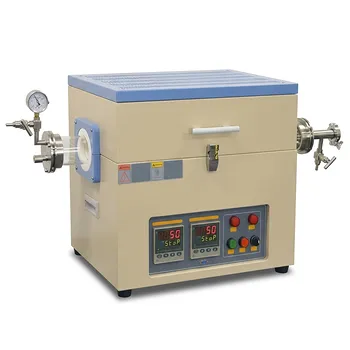
1200C Dual Zone Split Tube Furnace with Fused Quartz Tube and Vacuum Flanges Available in 60mm 80mm and 100mm Diameters
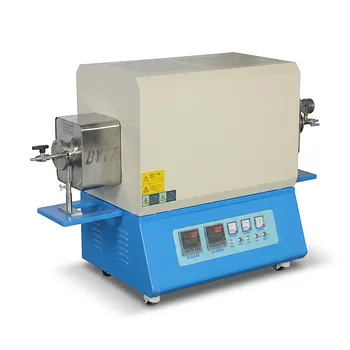
High Temperature Dual Zone Split Tube Furnace for Advanced Atmosphere Sintering and Vacuum CVD Applications
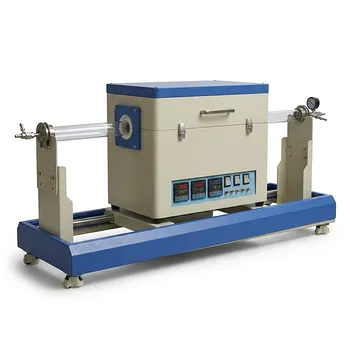
Double Temperature Zone Double Cover Tube Furnace for High Temperature CVD and Vacuum Annealing
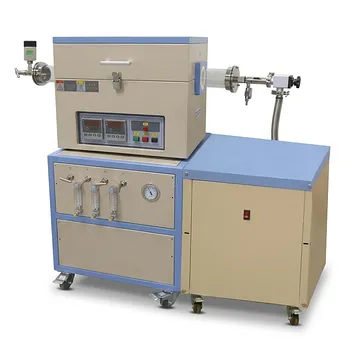
Dual Zone Quartz Tube Furnace with 80mm Diameter 1200C Max Temperature 3 Channel Gas Mixer and Vacuum Pump System
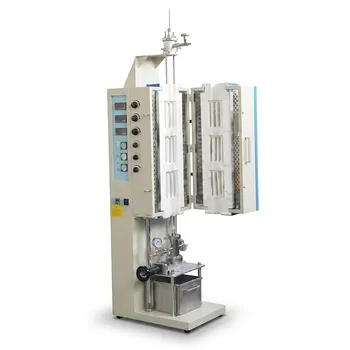
High Temperature Dual Zone Tube Furnace for Material Science Research and Professional Thermal Processing
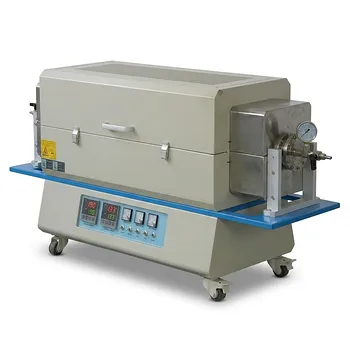
High Temperature Elongated Dual Zone Tube Furnace for Material Research and Industrial Heat Treatment
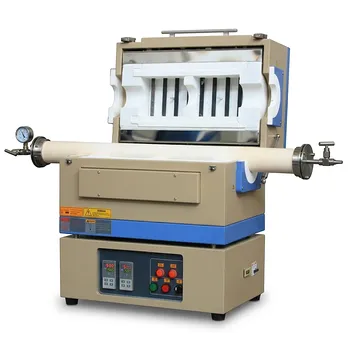
1500C Two Zone Split Tube Furnace with Vacuum Flange and 80mm Alumina Tube
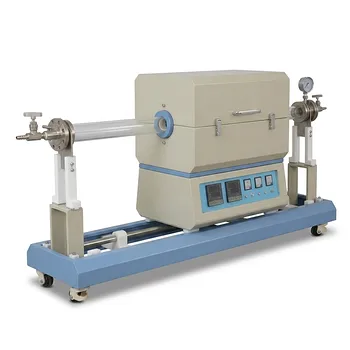
Double Zone Fast Heating Tube Furnace High Temperature Vacuum Atmosphere System
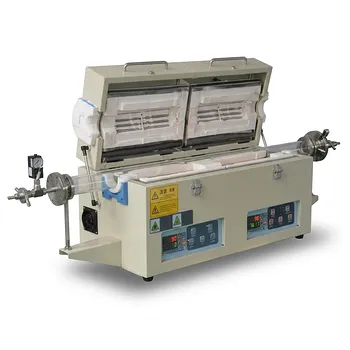
Elongated Two Temperature Zone Pipe Furnace for Industrial Heat Treatment and Material Science Research
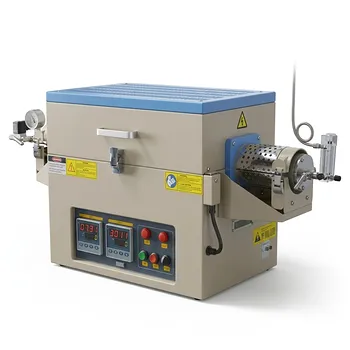
1100C Dual Zone Hydrogen Gas Tube Furnace with Quartz Tube and Integrated H2 Leak Detection System
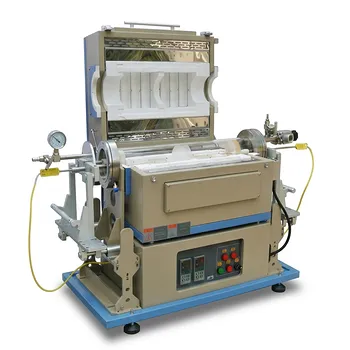
Two Zone IR Heating Rapid Thermal Processing RTP Tube Furnace with 4 Inch ID Quartz Tube and Sliding Sample Holders
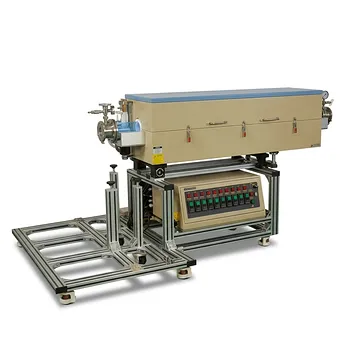
Ten Zone Multi Orientation Laboratory Tube Furnace for 1200C High Temperature Gradient Thermal Processing
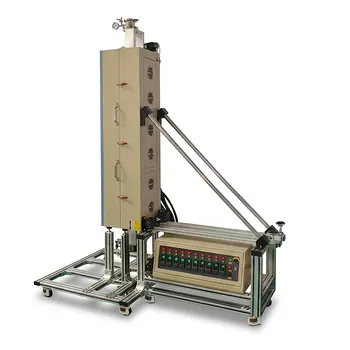
1200°C 10-Zone Split Tube Furnace with Horizontal and Vertical Mounting for Multi-Zone Thermal Gradients and Large Diameter Material Processing
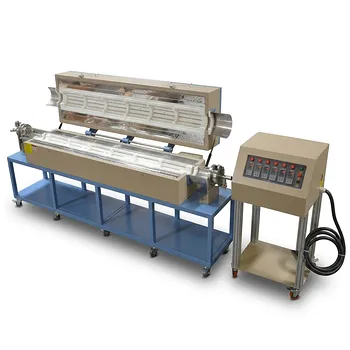
Six Zone Split Tube Furnace 1.8 Meter Quartz Tube 1200C High Temperature Heating System