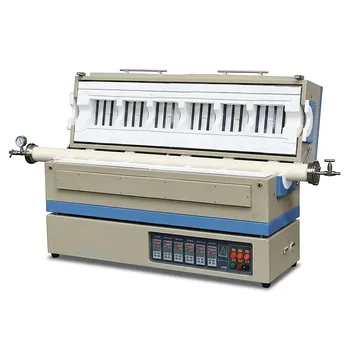
What is the function of a dual-zone tube furnace in CVD for 2D perovskites? Optimize Precision & Film Uniformity
Updated 3 months ago
The dual-temperature zone tube furnace serves as the critical engine for decoupling the sublimation of organic precursors from the chemical reaction occurring at the substrate. In the synthesis of 2D hybrid halide perovskites, these furnaces provide two independent thermal environments that allow researchers to vaporize organic salts—such as BAI, PEAI, or FAI—at their specific sublimation points while maintaining the substrate at a different, optimal temperature for vapor-phase conversion. This precise management of the temperature gradient ensures the growth of high-quality, large-area, and uniform 2D Ruddlesden-Popper type perovskite thin films.
Core Takeaway: Dual-temperature furnaces enable independent control over precursor evaporation and reaction kinetics. This decoupling is essential for managing materials with different vapor pressures, ensuring stoichiometric accuracy and structural uniformity in 2D perovskite films.
Decoupling Sublimation and Reaction Kinetics
Independent Control of Organic Precursors
Organic precursors like BAI (Butyramidinium Iodide) or PEAI (Phenethylammonium Iodide) require specific, often lower, temperatures to sublime without decomposing. A dual-zone system allows the "upstream" zone to be set precisely to the precursor’s sublimation point, ensuring a steady and controlled supply of vapor to the reaction site.
Optimizing the Substrate Environment
The "downstream" zone focuses exclusively on the substrate, which is often pre-coated with an inorganic template like lead iodide (PbI2). By maintaining this zone at a separate temperature, the furnace facilitates a solvent-free vapor-phase conversion where the organic vapor reacts with the solid film to form the 2D perovskite structure.
Managing Vapor Pressure Gradients
Precise temperature management allows for the regulation of saturated vapor pressure within the tube. This gradient is the physical prerequisite for transporting reactants at the correct density, which directly influences the phase purity of the resulting Ruddlesden-Popper thin films.
Precision Control of Film Morphology
Achieving Stoichiometric Balance
Different precursors often exhibit vastly different volatilities; for example, organic halides sublime much more readily than inorganic lead halides. Dual-zone furnaces allow for the setting of distinct temperatures (e.g., 180°C for the source and 160°C for the substrate) to ensure the ideal stoichiometric ratio is maintained in the gaseous reaction zone.
Regulating Grain Size and Thickness
By fine-tuning the temperature of the reaction zone, researchers can control the nucleation and growth rates of the perovskite crystals. This independent adjustment is what allows for the fabrication of films with specific grain sizes and highly reproducible thicknesses across large surface areas.
Atmosphere and Pressure Stability
Beyond temperature, the tube furnace environment provides a stable process atmosphere using carrier gases like argon or hydrogen. When combined with high vacuum capabilities, the dual-zone setup ensures superior airtightness and a uniform temperature field, which are vital for suppressing side reactions and promoting single-crystal growth.
Understanding the Trade-offs and Challenges
The Risk of Thermal Cross-Talk
One significant challenge in dual-zone systems is thermal longitudinal conduction, where heat from the higher-temperature zone bleeds into the lower-temperature zone. If the zones are not sufficiently insulated or separated, this can lead to uncontrolled precursor evaporation and inconsistent film quality.
Complexity in Parameter Optimization
Operating a dual-zone furnace requires a more complex calibration of gas flow rates, vacuum levels, and temperature offsets. Finding the "sweet spot" where both zones work in harmony demands extensive empirical testing compared to simpler single-zone systems.
Precursor Deposition Efficiency
If the temperature gradient between the two zones is too steep, precursors may prematurely condense on the tube walls before reaching the substrate. This not only wastes material but can also lead to cross-contamination in subsequent synthesis runs if the tube is not meticulously cleaned.
How to Apply This to Your Synthesis Goals
When configuring your CVD process for 2D perovskites, your temperature settings should align with your specific material objectives:
- If your primary focus is large-area uniformity: Prioritize the stability of the downstream reaction zone temperature to ensure consistent crystal growth across the entire substrate surface.
- If your primary focus is phase purity and stoichiometry: Focus on the precise calibration of the upstream sublimation zone to match the specific saturated vapor pressure of your organic salt (e.g., BAI or FAI).
- If your primary focus is grain size control: Use the dual-zone capability to create a slight temperature "over-potential" at the substrate, which can increase nucleation density or promote larger grain growth depending on the offset.
The ability to manipulate the thermal path of precursors independently of the reaction site makes the dual-zone tube furnace an indispensable tool for the repeatable production of high-performance 2D halide perovskites.
Summary Table:
| Feature | Role in 2D Perovskite Synthesis | Key Benefit |
|---|---|---|
| Upstream Zone | Independent sublimation of organic salts (BAI/PEAI/FAI) | Precise vapor pressure management |
| Downstream Zone | Dedicated substrate reaction & phase conversion | Uniform film morphology & grain size |
| Atmosphere Control | Stable carrier gas flow (Argon/Hydrogen) | Suppressed side reactions & high purity |
| Vacuum Capability | Controlled low-pressure environment | Enhanced reproducibility & airtightness |
Master Your 2D Perovskite Synthesis with THERMUNITS
THERMUNITS is a leading manufacturer of high-performance laboratory equipment for material science and industrial R&D. Our precision-engineered CVD/PECVD systems and Dual-Zone Tube Furnaces are designed to give you total control over precursor sublimation and reaction kinetics, ensuring stoichiometric accuracy for 2D perovskite growth.
From Muffle, Vacuum, and Atmosphere furnaces to specialized Rotary, Hot Press, and Vacuum Induction Melting (VIM) furnaces, we provide the thermal solutions required for cutting-edge heat treatment. We also offer Dental Furnaces, Thermal Elements, and custom laboratory equipment tailored to your research goals.
Ready to elevate your lab's capabilities? Contact Our Engineering Team Today
References
- Dallar Babaian, S. Guha. Carrier relaxation and exciton dynamics in chemical-vapor-deposited two-dimensional hybrid halide perovskites. DOI: 10.1039/d4tc03014a
Mentioned Products
- High Temperature 1700C Dual Zone Tube Furnace for Material Science and Industrial Chemical Vapor Deposition Research
- 1200C Dual Temperature Zone Slidable Tube Furnace for 2D Material Growth and TCVD Synthesis
- High Temperature 1700C Dual Zone Rotary Tube Furnace with 60mm Alumina Tube and Precision Rotation Control
- Dual Zone Tube Furnace 1100C with 11 Inch Quartz Tube and Vacuum Flanges for 8 Inch Wafer Processing
- Dual Heating Zone 1200C Compact Split Tube Furnace with Optional 1" - 2" Tube and Vacuum Flanges
People Also Ask
- How is a dual-temperature zone tube furnace configured for MXene-based metal phosphides? Expert Synthesis Guide
- What are the technical advantages of a dual-zone tube furnace for phosphidation? Optimize Cobalt Nanowall Synthesis.
- What are the primary technical advantages of using a dual-zone tube furnace for MoS2? Optimize CVD Precision & Yield
- Why is it necessary to place MoS2 devices in a dual-zone tube furnace for annealing? Optimize Lattice Repair & Doping
- What are the technical advantages of using a dual-zone tube furnace for growing large PdCoO2 crystals via CVT? Expert Tips

Tech Team · ThermUnits
Last updated on Jun 03, 2026
Related Products
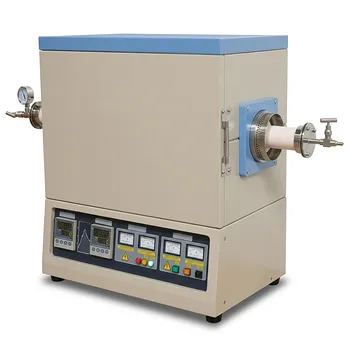
High Temperature 1700C Dual Zone Tube Furnace for Material Science and Industrial Chemical Vapor Deposition Research
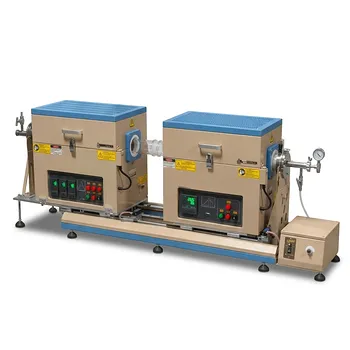
1200C Dual Temperature Zone Slidable Tube Furnace for 2D Material Growth and TCVD Synthesis
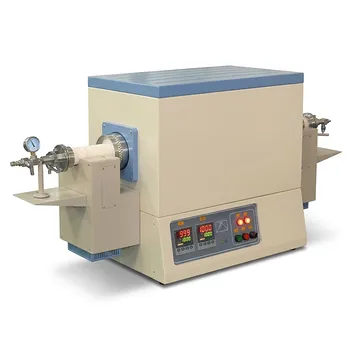
High Temperature 1700C Dual Zone Rotary Tube Furnace with 60mm Alumina Tube and Precision Rotation Control
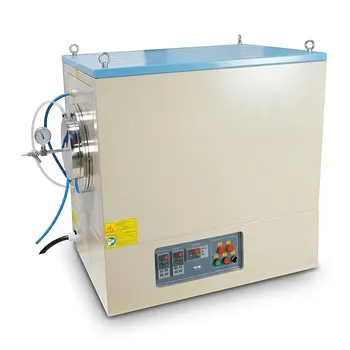
Dual Zone Tube Furnace 1100C with 11 Inch Quartz Tube and Vacuum Flanges for 8 Inch Wafer Processing
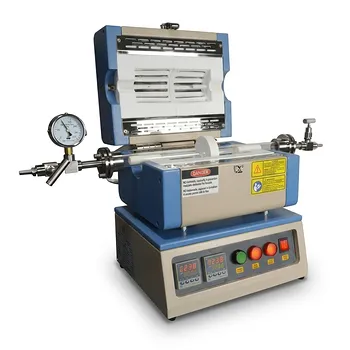
Dual Heating Zone 1200C Compact Split Tube Furnace with Optional 1" - 2" Tube and Vacuum Flanges
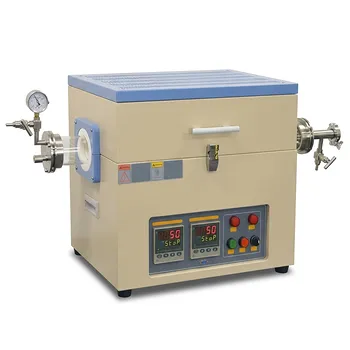
1200C Dual Zone Split Tube Furnace with Fused Quartz Tube and Vacuum Flanges Available in 60mm 80mm and 100mm Diameters
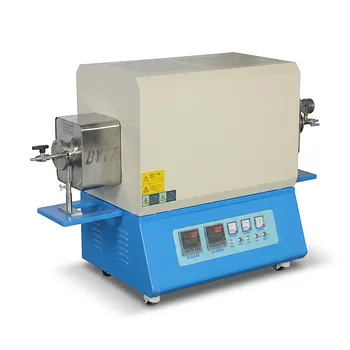
High Temperature Dual Zone Split Tube Furnace for Advanced Atmosphere Sintering and Vacuum CVD Applications
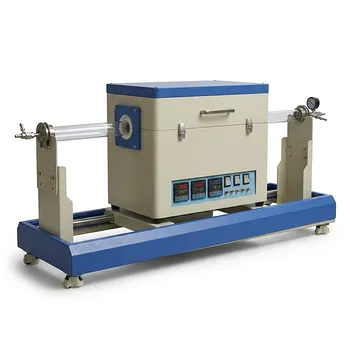
Double Temperature Zone Double Cover Tube Furnace for High Temperature CVD and Vacuum Annealing
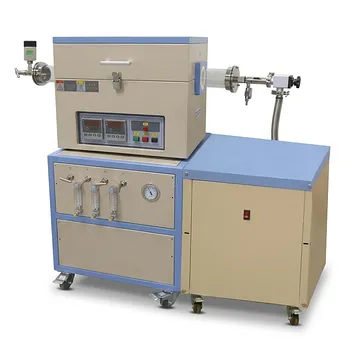
Dual Zone Quartz Tube Furnace with 80mm Diameter 1200C Max Temperature 3 Channel Gas Mixer and Vacuum Pump System
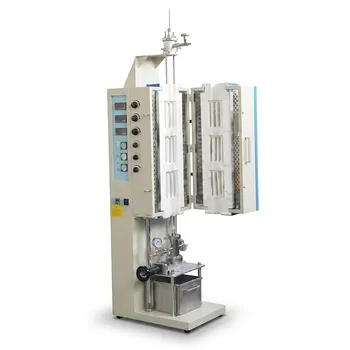
High Temperature Dual Zone Tube Furnace for Material Science Research and Professional Thermal Processing
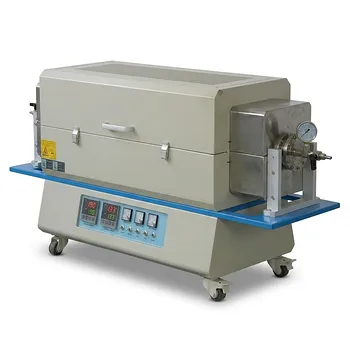
High Temperature Elongated Dual Zone Tube Furnace for Material Research and Industrial Heat Treatment
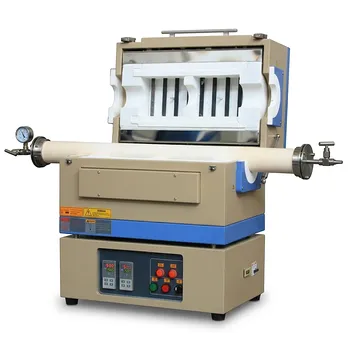
1500C Two Zone Split Tube Furnace with Vacuum Flange and 80mm Alumina Tube
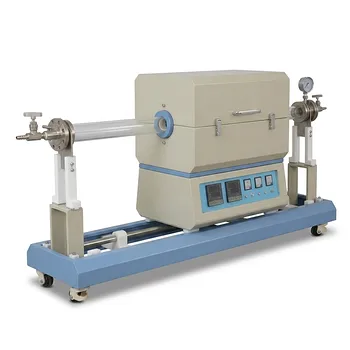
Double Zone Fast Heating Tube Furnace High Temperature Vacuum Atmosphere System
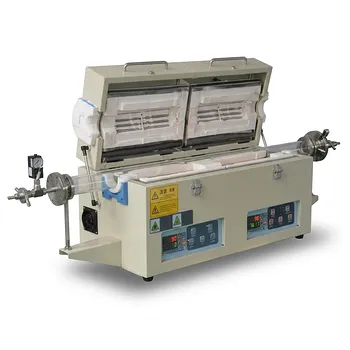
Elongated Two Temperature Zone Pipe Furnace for Industrial Heat Treatment and Material Science Research
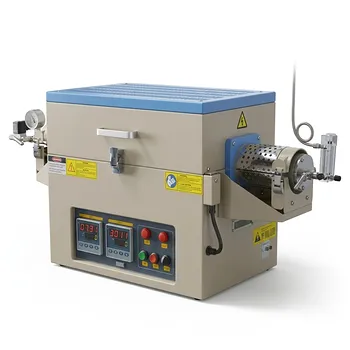
1100C Dual Zone Hydrogen Gas Tube Furnace with Quartz Tube and Integrated H2 Leak Detection System
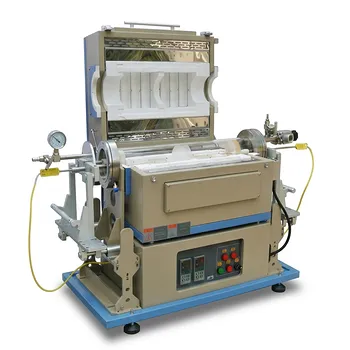
Two Zone IR Heating Rapid Thermal Processing RTP Tube Furnace with 4 Inch ID Quartz Tube and Sliding Sample Holders
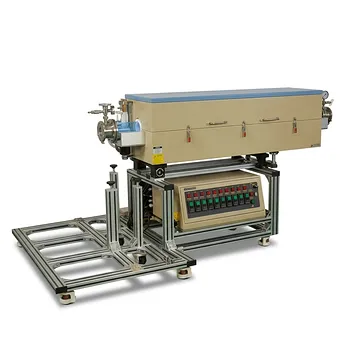
Ten Zone Multi Orientation Laboratory Tube Furnace for 1200C High Temperature Gradient Thermal Processing
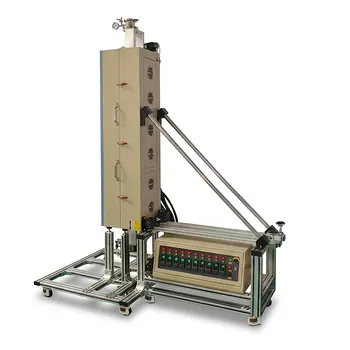
1200°C 10-Zone Split Tube Furnace with Horizontal and Vertical Mounting for Multi-Zone Thermal Gradients and Large Diameter Material Processing
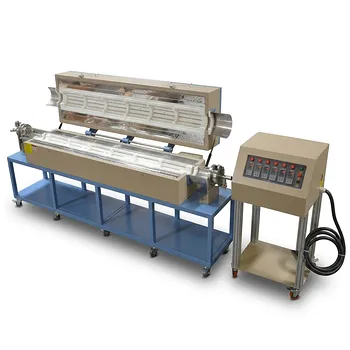
Six Zone Split Tube Furnace 1.8 Meter Quartz Tube 1200C High Temperature Heating System