What is the significance of rapid cooling of the quartz tube following the selective epitaxial growth of Sb2Te3? | 2QL
Updated 3 months ago
Rapidly cooling the quartz tube functions as a "physical quench" that is essential for preserving the precise atomic structure of the growth. This process immediately halts gas-phase precursor transport and surface diffusion, which are the primary drivers of crystal formation. By removing the heat source abruptly, you effectively lock the Sb2Te3 (Antimony Telluride) at the desired bilayer (2QL) state before it can degrade or evolve further.
The core significance of rapid cooling lies in its ability to act as a kinetic shutter, instantly freezing the growth morphology to prevent grain coarsening and ensure that the film remains at a strictly controlled thickness.
The Principle of Physical Quenching
Halting Precursor Transport
The growth of Sb2Te3 relies on the continuous delivery of chemical precursors through the gas phase. Rapid cooling stops this transport instantly, ensuring that no additional material reaches the substrate once the desired growth time has elapsed.
Suspending Surface Diffusion
Even after precursors stop arriving, atoms on the substrate surface remain mobile at high temperatures. Quenching eliminates the thermal energy required for this surface diffusion, preventing the atoms from rearranging into unintended patterns.
Protecting the Bilayer (2QL) State
Preventing Grain Coarsening
Slow cooling allows smaller crystal grains to merge into larger, less uniform structures through a process known as coarsening. Rapidly dropping the temperature "freezes" the grain boundaries in place, maintaining the morphological integrity of the 2QL state.
Inhibiting Secondary Nucleation
In a heated environment, new layers can begin to nucleate even after the primary growth phase is intended to end. The quench prevents secondary nucleation, ensuring the sample does not transition from a bilayer to a multilayer structure.
Locking Thickness Control
By bypassing the slow-cool phase, researchers can achieve precise control over the number of quintuple layers (QL). This is critical for 2D materials where electronic properties change drastically with even a single layer of difference.
The Mechanics of the Cooling Process
Rapid Spatial Transition
In practice, this is often achieved by physically moving the quartz tube out of the furnace heating zone. This mechanical shift allows the ambient environment to act as a heat sink, pulling energy away from the sample.
Achieving Room Temperature
The goal of this method is to drop the sample temperature to room level within a matter of seconds. This ultra-fast rate is necessary because chemical and physical transformations can occur even during moderate temperature declines.
Understanding the Trade-offs
Thermal Stress Risks
The primary risk of rapid quenching is thermal shock, which can cause the quartz tube or the substrate to crack. The rate of cooling must be fast enough to lock the morphology but not so violent that it compromises the structural integrity of the materials.
Substrate Adhesion Issues
Significant differences in the thermal expansion coefficients between the Sb2Te3 and the substrate can lead to delamination. If the cooling is too aggressive, the film may peel or develop micro-cracks due to the rapid contraction of the materials.
How to Apply Cooling Strategies
Making the Right Choice for Your Goal
To maximize the quality of your selective epitaxial growth, consider your primary objective when managing the cooling phase:
- If your primary focus is precise layer thickness: Use the fastest possible quench by moving the tube entirely out of the hot zone to lock the 2QL state immediately.
- If your primary focus is crystalline perfection and minimal defects: Experiment with a slightly moderated cooling rate to reduce internal thermal stress while still preventing coarsening.
- If your primary focus is large-scale uniformity: Ensure the entire length of the substrate is moved out of the heating zone simultaneously to prevent a temperature gradient across the sample.
By mastering the timing and speed of the cooling phase, you transform the growth process from a semi-predictable reaction into a precisely controlled synthesis of high-performance materials.
Summary Table:
| Feature | Physical Quenching Function | Impact on Sb2Te3 Quality |
|---|---|---|
| Precursor Transport | Halts gas-phase delivery instantly | Stops additional material deposition |
| Surface Diffusion | Eliminates thermal energy for mobility | Prevents atom rearrangement and coarsening |
| Layer Morphology | Freezes grain boundaries in place | Preserves specific bilayer (2QL) thickness |
| Nucleation | Inhibits secondary layer formation | Ensures mono/bilayer uniformity over multi-layers |
| Thermal Shift | Rapid spatial transition from heat zone | Achieves room temperature in seconds |
Maximize Your Material Synthesis Precision with THERMUNITS
Precise control over the cooling phase is critical for the integrity of high-performance materials like Sb2Te3. At THERMUNITS, we understand that in material science R&D, every second of thermal exposure matters.
We provide leading-edge thermal processing solutions, including CVD/PECVD systems, Tube furnaces, and Vacuum furnaces, specifically designed to handle the rigorous demands of selective epitaxial growth and rapid quenching. Our equipment ensures the stable temperature gradients and mechanical reliability needed to achieve perfect 2QL states without compromising structural integrity.
Ready to upgrade your lab's heat treatment capabilities?
Contact THERMUNITS Today to find the perfect furnace for your research needs and secure the future of your material innovation.
References
- Baojun Pan, Sui‐Dong Wang. Direct Selective Epitaxy of 2D Sb2Te3 onto Monolayer WS2 for Vertical p–n Heterojunction Photodetectors. DOI: 10.3390/nano14100884
Mentioned Products
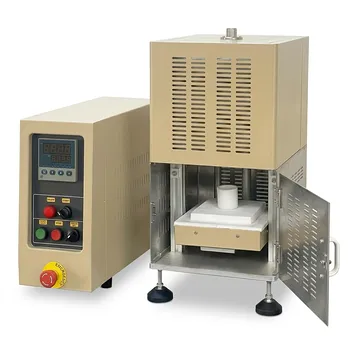
- 1200C Max Sliding Tube Furnace with 80mm OD Quartz Tube and Vacuum Flanges for Rapid Thermal Processing Fast Heating and Cooling
- Compact Vertical Split Quartz Tube Furnace with Stainless Steel Vacuum Flanges for Rapid Thermal Quenching and Controlled Atmosphere Material Processing
- Rapid Thermal Processing Sliding Tube Furnace with 4 Inch OD Quartz Tube and 900C IR Heating
- Split Vertical Tube Furnace with 1200C Quartz Tube and Stainless Steel Vacuum Flanges for Rapid Thermal Processing
- Bottom Loading Vacuum Furnace 1200C Rapid Cooling Atmosphere Control Quartz Chamber
People Also Ask
- What role does a SiC-coated graphite susceptor play in H2Se selenization? Boost RTP Thermal Uniformity & Film Purity.
- Why must the nitridation reaction of LiGa be conducted in a quartz tube with sealing flanges? Ensure Purity & Selection
- What are the functional advantages of an RTP system for surface deposition? Enhance Heterojunction Interface Integrity
- How does a slanted tube furnace contribute to the crystal growth of Sr4Os3O12? Optimize Thermal Fields and Purity
- Why are quartz reaction tubes and quartz boats selected for transition metal disulfide synthesis setups? Essential for Purity

Tech Team · ThermUnits
Last updated on Jun 03, 2026
Related Products
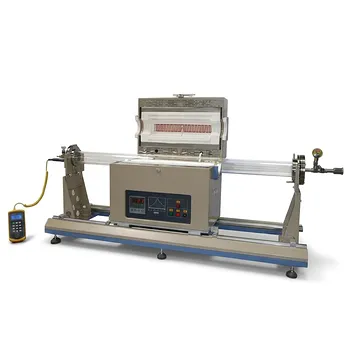
1200C Max Sliding Tube Furnace with 80mm OD Quartz Tube and Vacuum Flanges for Rapid Thermal Processing Fast Heating and Cooling

Compact Vertical Split Quartz Tube Furnace with Stainless Steel Vacuum Flanges for Rapid Thermal Quenching and Controlled Atmosphere Material Processing
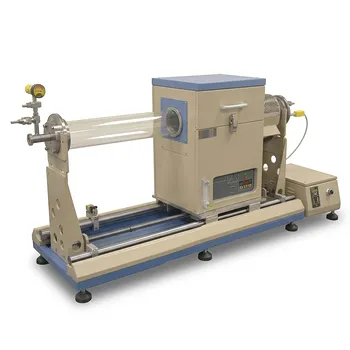
Rapid Thermal Processing Sliding Tube Furnace with 4 Inch OD Quartz Tube and 900C IR Heating
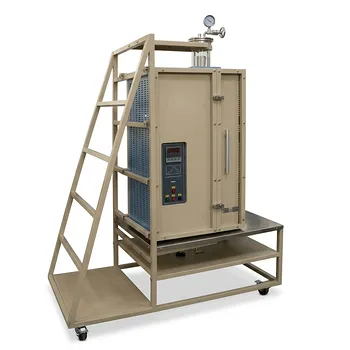
Split Vertical Tube Furnace with 1200C Quartz Tube and Stainless Steel Vacuum Flanges for Rapid Thermal Processing
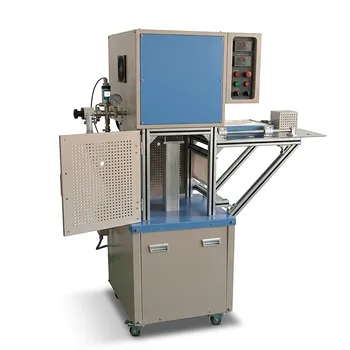
Bottom Loading Vacuum Furnace 1200C Rapid Cooling Atmosphere Control Quartz Chamber
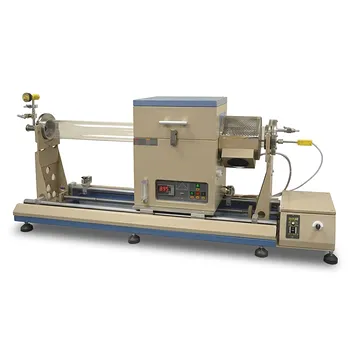
900 ºC Max Sliding RTP Tube Furnace with Rapid IR Heating and 4 Inch OD Quartz Tube
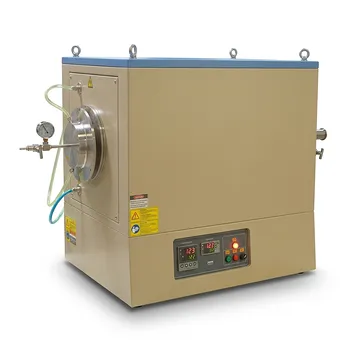
1100°C Large Diameter Quartz Tube Furnace with 24 Inch Heating Zone and Water Cooled Flanges
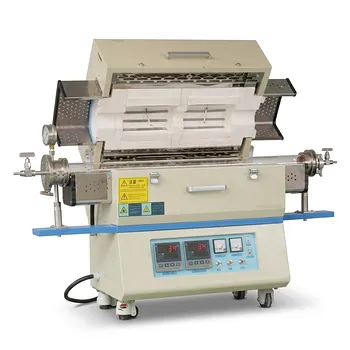
Dual Zone Split Tube Quenching Furnace with High Vacuum Atmosphere Control and Rapid Cooling
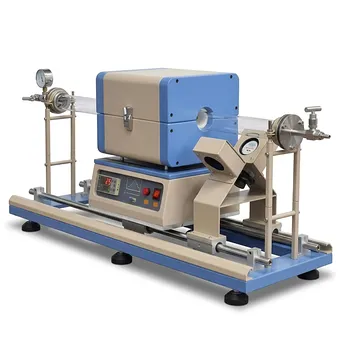
Automated Sliding Tube Furnace for Fast Heating and Cooling 2 Inch OD 1100C Max

High Temperature Tube Furnace 1500C with Sliding Flanges and 50mm OD for Rapid Thermal Processing Fast Heating and Cooling

1200°C 5 Inch Vertical Quartz Tube Furnace with Stainless Steel Vacuum Flanges
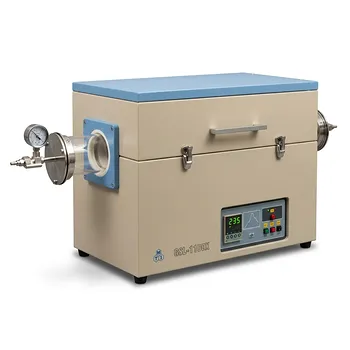
Single Zone Tube Furnace 5 Inch Quartz Tube 36 Inch Heating Zone Vacuum Flanges
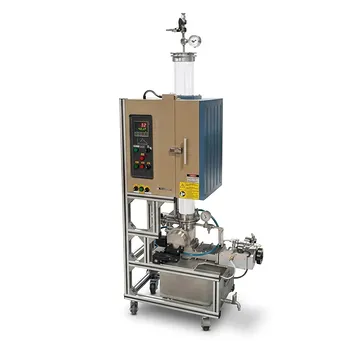
1200C High Temperature Atmosphere Controlled Vertical Quenching Tube Furnace with 4 Inch Quartz Tube
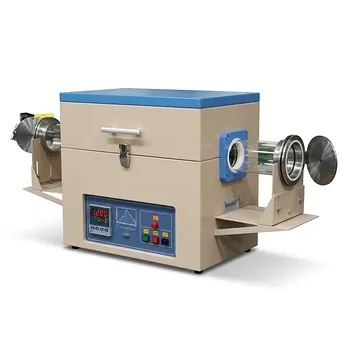
High Temperature 1200C Split Tube Furnace with Hinged Vacuum Flanges and 4 Inch Quartz Tube for Laboratory Research

Three Zone Tube Furnace with 11 Inch or 15 Inch Quartz Tube and Hinged Flanges for Vacuum Atmosphere Heat Treatment
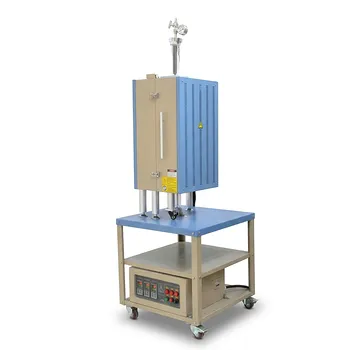
1200C Three Zone Vertical Tube Furnace with 2 Inch Quartz Tube and Vacuum Flanges
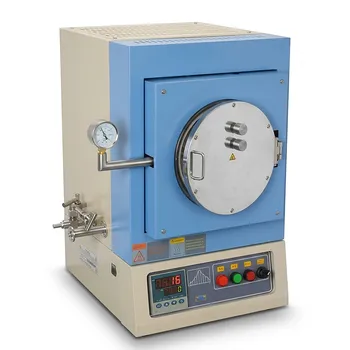
1100°C High Temperature Quartz Chamber Furnace 8 Inch OD with 7.6 Liter Capacity and Vacuum Atmosphere Capability

High Temperature Automated 5 Inch Tube Furnace for Autonomous Material Research and Advanced Laboratory R&D
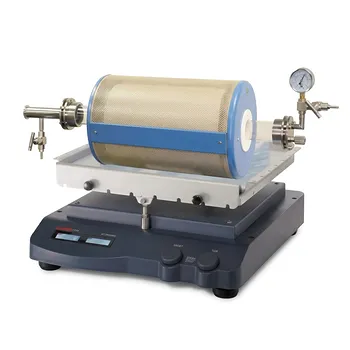
High Temperature Rocking Tube Furnace with Quartz Tube and Vacuum Flange for Materials Synthesis