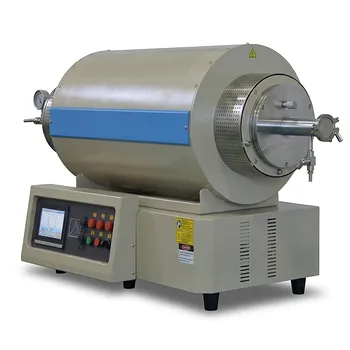
What is the significance of 900°C secondary pyrolysis in an atmosphere furnace for NCG/Pt? Optimize Pt-N4 Catalysts.
Updated 3 months ago
The 900°C secondary pyrolysis process is the decisive step for transforming molecular precursors into a stable, high-performance single-atom catalyst. This specific thermal treatment converts polyaniline precursors into stable pyridine nitrogen ligands, which act as "anchors" for platinum ions. By reaching this precise temperature, the system facilitates the formation of Pt-N4 coordination structures, which are the essential active sites for the Hydrogen Evolution Reaction (HER).
The 900°C pyrolysis in an atmosphere tube furnace acts as a thermodynamic "lock," converting unstable chemical precursors into a durable carbon-nitrogen framework that secures platinum in an atomically dispersed state. This process is the only way to ensure both peak catalytic activity and long-term structural stability by preventing metal atoms from clustering into inactive particles.
Engineering the Catalyst Microstructure
The Transition to Pyridine Nitrogen Ligands
The 900°C environment provides the necessary thermal energy to decompose polyaniline precursors into specific nitrogen-containing species. This process specifically promotes the formation of pyridine nitrogen, which possesses the ideal electronic structure to coordinate with transition metals.
Establishing the Pt-N4 Active Site
The primary significance of this temperature is the creation of the Pt-N4 coordination structure. These sites are the fundamental "engines" of the catalyst, providing the exact electronic environment required to facilitate the Hydrogen Evolution Reaction (HER) with minimal energy loss.
Strengthening the Support Interaction
High-temperature treatment ensures that the platinum single atoms are not just resting on the surface but are chemically bonded to the nitrogen-doped crumpled graphene (NCG) framework. This robust interaction is what keeps the platinum from migrating and forming clusters during aggressive electrochemical reactions.
The Role of the Atmosphere Tube Furnace
Maintaining an Oxygen-Free Environment
The use of an atmosphere-controlled tube furnace is non-negotiable for preventing the combustion of the carbon support. By maintaining a continuous flow of inert gas (such as Argon or Nitrogen), the furnace purges oxygen, ensuring the high-purity production of nitrogen-doped graphene.
Facilitating Graphene Lattice Repair
Beyond doping, the high-temperature environment helps "heal" defects in the graphene lattice that may have occurred during initial synthesis steps. This repair enhances the electrical conductivity of the NCG, which is vital for efficient electron transfer during catalysis.
Precision Carbonization Curves
The tube furnace allows for controlled heating rates, which are critical for the controlled thermal decomposition of precursors. This precision ensures that the nitrogen atoms are integrated into the carbon framework as pyridinic or pyrrolic structures rather than being lost as volatile gasses.
Understanding the Trade-offs
The Risk of Thermal Sintering
While 900°C is necessary for Pt-N4 formation, exceeding this temperature can lead to atomic sintering. If the temperature is too high, the thermal energy may overcome the nitrogen anchoring bonds, causing platinum atoms to aggregate into nanoparticles and significantly reducing the catalyst's active surface area.
Incomplete Doping at Lower Temperatures
Conversely, performing pyrolysis at temperatures significantly below 900°C often results in incomplete carbonization. This leads to a higher concentration of unstable organic residues and fewer pyridine nitrogen sites, which results in a catalyst with poor stability and lower HER activity.
How to Apply This to Your Project
Recommendations for Catalyst Optimization
To achieve the best results with Nitrogen-doped Crumpled Graphene supported Platinum single atoms (NCG/Pt), consider your primary objective:
- If your primary focus is maximum catalytic activity: Ensure the pyrolysis temperature is held precisely at 900°C to maximize the density of Pt-N4 coordination sites.
- If your primary focus is long-term durability: Prioritize the purity of the inert atmosphere in the tube furnace to prevent oxygen-induced degradation of the graphene support.
- If your primary focus is cost-effective scaling: Use a high-purity nitrogen flow (e.g., 10 ml/min) as an inert medium to prevent oxidation while maintaining a stable carbonization environment.
The 900°C pyrolysis process represents the critical intersection of thermodynamics and material science required to stabilize single-atom catalysts for next-generation energy applications.
Summary Table:
| Key Feature | Scientific Significance | Performance Outcome |
|---|---|---|
| 900°C Temperature | Facilitates Pt-N4 coordination | Maximizes HER catalytic activity |
| Pyridine Nitrogen | Acts as an atomic "anchor" | Prevents Pt migration/clustering |
| Inert Atmosphere | Prevents carbon support combustion | Maintains high-purity NCG structure |
| Thermal Repair | Heals graphene lattice defects | Enhances electrical conductivity |
| Controlled Cooling | Stabilizes carbonization curves | Ensures structural uniformity |
Achieve Precision in Your Catalyst Research with THERMUNITS
To successfully synthesize stable NCG/Pt single-atom catalysts, precise temperature control and atmosphere purity are non-negotiable. THERMUNITS is a leading manufacturer of high-temperature laboratory equipment, supporting material science and industrial R&D with professional-grade thermal solutions.
Our extensive range of equipment includes:
- Atmosphere and Tube Furnaces (Ideal for NCG/Pt pyrolysis)
- Muffle, Vacuum, and Rotary Furnaces
- CVD/PECVD Systems and Hot Press Furnaces
- Vacuum Induction Melting (VIM) and Dental Furnaces
- High-quality Thermal Elements and accessories
Enhance your laboratory's R&D capabilities today. Contact our technical experts to find the perfect thermal processing solution for your specific application.
References
- Won‐Young Lee, Myeongjin Kim. Atomically Dispersed Platinum Supported on Crumpled Graphene Supports for Highly Efficient Hydrogen Evolution Reaction. DOI: 10.1155/2024/8700573
Mentioned Products
- High Temperature Dual Zone Split Tube Furnace for Advanced Atmosphere Sintering and Vacuum CVD Applications
- 900°C Max Rotary Tube Furnace with 8 Inch 310S Alloy Tube and Optional Multi Zone Heating for Industrial Material Calcination
- 1200C Hybrid Muffle and Tube Furnace for Material Research with Dual Atmosphere Control Quartz Tubes
- 1750°C High Temperature Benchtop Vacuum Atmosphere Tube Furnace with Kanthal Super 1800 Heating Elements and 60mm Alumina Processing Tube
- Vertical 1700C Vacuum and Atmosphere Tube Furnace with 80mm Alumina Tube
People Also Ask
- What is the function of a dual-zone tube furnace in CVD for 2D perovskites? Optimize Precision & Film Uniformity
- How is a dual-temperature zone tube furnace configured for MXene-based metal phosphides? Expert Synthesis Guide
- What are the technical advantages of a dual-zone tube furnace for phosphidation? Optimize Cobalt Nanowall Synthesis.
- What are the core functions of a dual-zone tube furnace in the growth of FexTaSe2 single crystals? CVT Synthesis Guide
- What is the primary function of an industrial-grade dual-zone tube furnace? Mastering CuInP2S6 CVT Crystal Growth

Tech Team · ThermUnits
Last updated on Jun 02, 2026
Related Products
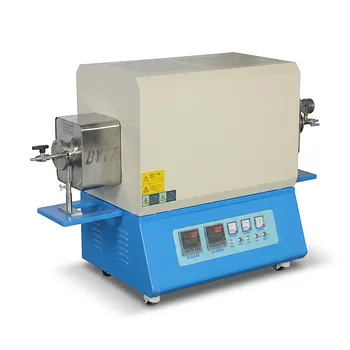
High Temperature Dual Zone Split Tube Furnace for Advanced Atmosphere Sintering and Vacuum CVD Applications
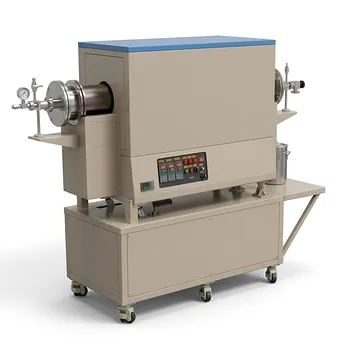
900°C Max Rotary Tube Furnace with 8 Inch 310S Alloy Tube and Optional Multi Zone Heating for Industrial Material Calcination
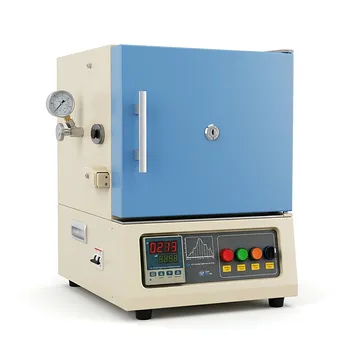
1200C Hybrid Muffle and Tube Furnace for Material Research with Dual Atmosphere Control Quartz Tubes

1750°C High Temperature Benchtop Vacuum Atmosphere Tube Furnace with Kanthal Super 1800 Heating Elements and 60mm Alumina Processing Tube

Vertical 1700C Vacuum and Atmosphere Tube Furnace with 80mm Alumina Tube
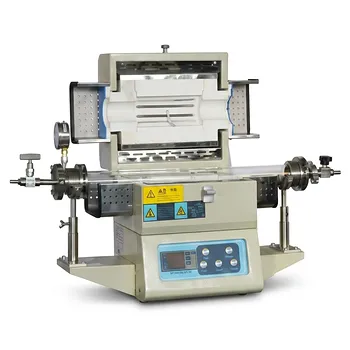
High Temperature 1200C Split Tube Furnace for CVD Research and Vacuum Atmosphere Heat Treatment

High Temperature Tube Furnace 1500C with Sliding Flanges and 50mm OD for Rapid Thermal Processing Fast Heating and Cooling

High Temperature 1700C Vertical Tube Furnace for Powder Spherification and Material Sintering
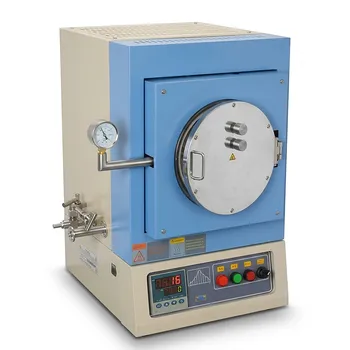
1100°C High Temperature Quartz Chamber Furnace 8 Inch OD with 7.6 Liter Capacity and Vacuum Atmosphere Capability
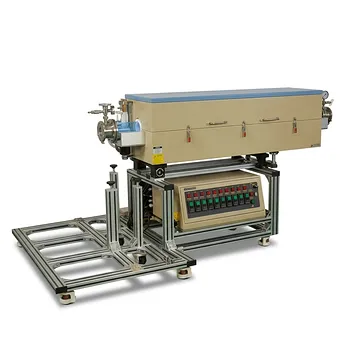
Ten Zone Multi Orientation Laboratory Tube Furnace for 1200C High Temperature Gradient Thermal Processing

Compact High Temperature 1600C Tube Furnace with 50mm Alumina Tube and Vacuum Flanges for Material Sintering
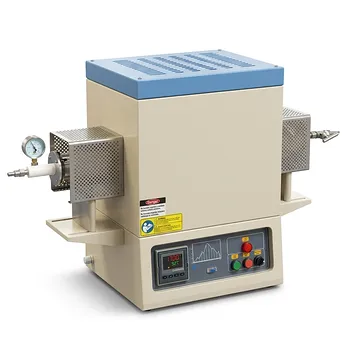
High Temperature Three Zone Tube Furnace 1700C with Alumina Tube and Water Cooled Flanges

1800C High Temperature Compact Vacuum Tube Furnace with 60mm OD Alumina Tube and Kanthal MoSi2 Heating Elements

High Temperature Automated 5 Inch Tube Furnace for Autonomous Material Research and Advanced Laboratory R&D
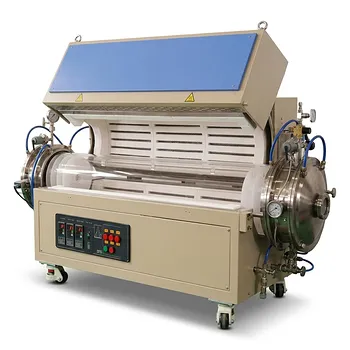
High Temperature Three Zone Split Tube Furnace 1200C Max 35.4 Inch Heating Length 8 Inch ID Tube
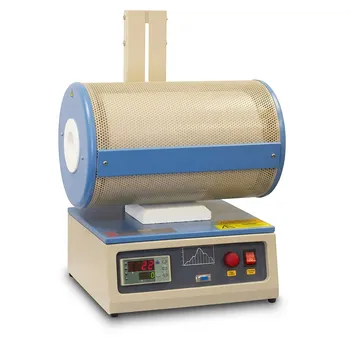
Multi Position Tube Furnace 1100C for Laboratory Material Research and Advanced Industrial Thermal Processing

High Temperature 1700C Benchtop Tube Furnace with 5 Inch Heating Zone High Purity Alumina Tube and Vacuum Sealing Flanges
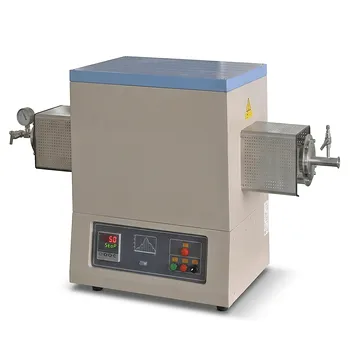
High Temperature 1700C Tube Furnace with 4 Inch OD Alumina Tube and Vacuum Sealing Flanges

1100C Tube Furnace with Vacuum Flange and Programmable Temperature Controller for Material Science and Industrial Heat Treatment