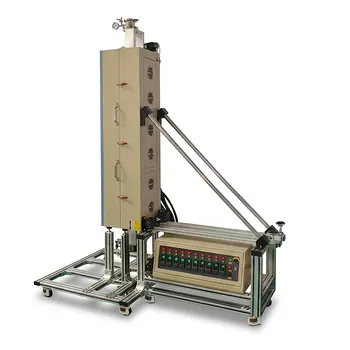
What are the core functions of a dual-zone tube furnace in the growth of FexTaSe2 single crystals? CVT Synthesis Guide
Updated 3 months ago
In the synthesis of $\text{Fe}_x\text{TaSe}_2$ single crystals, a dual-zone tube furnace acts as the primary engine for Chemical Vapor Transport (CVT). It establishes a precise, stable temperature gradient—typically maintaining a source zone at 900°C and a growth zone at 700°C—to provide the thermodynamic driving force necessary for material sublimation, transport, and subsequent crystallization.
The dual-zone furnace’s core function is to transform thermal energy into a directional transport mechanism. By decoupling the temperatures of the source and growth regions, it allows for the controlled migration of precursors that results in high-quality, large-dimension single crystals.
The Mechanism of Thermal Driving Forces
Creating the Precise Temperature Gradient
The furnace utilizes two independent heating elements to create a sharp thermal decline across a quartz tube.
This gradient is essential because it dictates the direction of the chemical reaction, moving vaporized precursors from the high-temperature source zone (900°C) to the lower-temperature growth zone (700°C).
Facilitating Vapor Phase Transport
The temperature difference allows a transport agent to react with the solid $\text{Fe}_x\text{TaSe}_2$ precursors, turning them into gaseous volatile species.
As these gases migrate to the cooler end of the furnace, the shift in thermal energy triggers a reverse reaction, causing the material to deposit and crystallize.
Impact on Crystal Quality and Morphology
Regulating Nucleation and Growth Rates
Precise control over the growth zone temperature is critical for managing the supersaturation level of the vapor.
If the temperature is held with high stability, the furnace encourages the formation of fewer, higher-quality nuclei, which eventually grow into larger, well-defined single crystals.
Ensuring Chemical and Structural Uniformity
The uniformity of the temperature distribution within each zone directly affects the distribution of intercalated iron (Fe) atoms.
Fluctuations in the thermal field can lead to defects or variations in the stoichiometry (the $x$ value in $\text{Fe}_x\text{TaSe}_2$), which would compromise the physical properties of the resulting crystal.
Understanding the Trade-offs and Pitfalls
The Risk of Excessive Gradients
If the temperature difference between the two zones is too great, the transport rate may become too rapid.
This often leads to uncontrolled nucleation, resulting in a cluster of small, low-quality polycrystals rather than a single, large crystal.
Thermal Lag and Stability Issues
Maintaining a stable gradient over the long duration required for crystal growth (often several days) is a significant technical challenge.
Even minor thermal oscillations can cause "striations" or structural layers in the crystal, which degrade its overall integrity and performance in research applications.
Optimizing the Growth Environment for Your Goals
To achieve the best results with a dual-zone furnace, the temperature parameters must be aligned with the specific requirements of the $\text{Fe}_x\text{TaSe}_2$ phase being targeted.
- If your primary focus is maximizing crystal size: Maintain a smaller temperature gradient and a very slow cooling rate to prioritize the growth of existing nuclei over the formation of new ones.
- If your primary focus is chemical purity: Use a high-precision furnace with minimal thermal fluctuation to ensure the iron intercalation remains uniform throughout the lattice.
- If your primary focus is rapid synthesis: Increase the source zone temperature slightly to boost vapor pressure, though you must be prepared for a potential decrease in crystalline perfection.
Mastering the thermal gradient within a dual-zone furnace is the most effective way to transition from basic material synthesis to the production of research-grade single crystals.
Summary Table:
| Feature | Role in CVT Process | Impact on FexTaSe2 Quality |
|---|---|---|
| Source Zone | High-temp region (~900°C) | Sublimates precursors into volatile vapor species. |
| Growth Zone | Cooler region (~700°C) | Triggers reverse reaction for crystal deposition. |
| Thermal Gradient | Driving force | Controls transport rate and directional migration. |
| Zone Stability | Nucleation control | Ensures chemical uniformity and minimizes defects. |
Elevate Your Crystal Growth Precision with THERMUNITS
Achieve the perfect thermal environment for FexTaSe2 synthesis and other advanced material research. THERMUNITS is a leading manufacturer of high-performance laboratory equipment, providing the stability and control required for successful Chemical Vapor Transport (CVT).
Our comprehensive range of thermal solutions includes:
- Tube & Rotary Furnaces (Single and Multi-zone)
- Muffle, Vacuum, & Atmosphere Furnaces
- CVD/PECVD Systems & Hot Press Furnaces
- Vacuum Induction Melting (VIM) & Dental Furnaces
Whether you are focusing on maximizing crystal size or ensuring chemical purity, our equipment delivers the reliability your R&D demands. Contact THERMUNITS today to discuss your specific heat treatment needs!
References
- Qianqian Feng, Guang‐hua Guo. Magnetic properties of Fe intercalation FexTaSe2. DOI: 10.3389/fphy.2024.1371171
Mentioned Products
- Dual Zone Quartz Tube Furnace with 80mm Diameter 1200C Max Temperature 3 Channel Gas Mixer and Vacuum Pump System
- Dual Zone Tube Furnace 1100C with 11 Inch Quartz Tube and Vacuum Flanges for 8 Inch Wafer Processing
- 1200C Dual Zone Split Tube Furnace with Fused Quartz Tube and Vacuum Flanges Available in 60mm 80mm and 100mm Diameters
- High Temperature Dual Zone Tube Furnace for Material Science Research and Professional Thermal Processing
- Dual Zone Split Tube Quenching Furnace with High Vacuum Atmosphere Control and Rapid Cooling
People Also Ask
- How do dual-zone quartz tube furnaces achieve controllable material preparation? Optimize Perovskite VD Processes
- What are the technical advantages of using a dual-zone tube furnace for growing large PdCoO2 crystals via CVT? Expert Tips
- Purpose of the reverse gradient step in CVT growth? Master Crystal Purity with Dual-Zone Furnaces
- Why is it necessary to place MoS2 devices in a dual-zone tube furnace for annealing? Optimize Lattice Repair & Doping
- Why is a dual-zone tube furnace necessary for ReO3-doped Cu2Te CVD? Essential for precise precursor synchronization.

Tech Team · ThermUnits
Last updated on Jun 02, 2026
Related Products
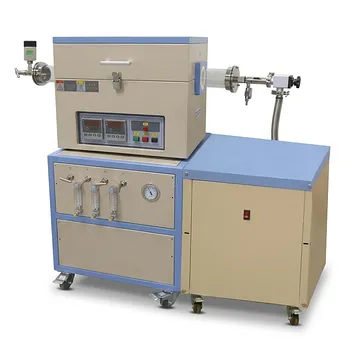
Dual Zone Quartz Tube Furnace with 80mm Diameter 1200C Max Temperature 3 Channel Gas Mixer and Vacuum Pump System
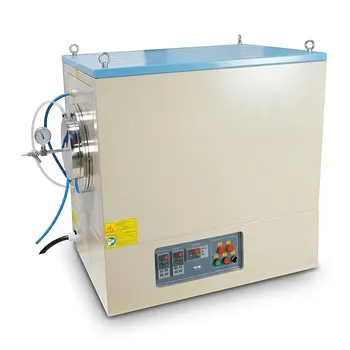
Dual Zone Tube Furnace 1100C with 11 Inch Quartz Tube and Vacuum Flanges for 8 Inch Wafer Processing
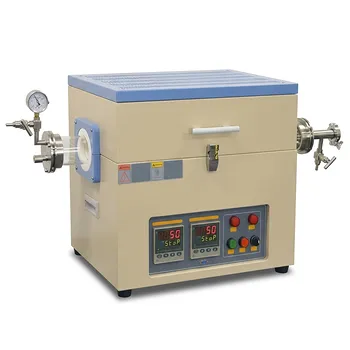
1200C Dual Zone Split Tube Furnace with Fused Quartz Tube and Vacuum Flanges Available in 60mm 80mm and 100mm Diameters
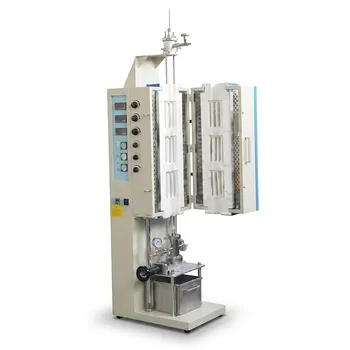
High Temperature Dual Zone Tube Furnace for Material Science Research and Professional Thermal Processing
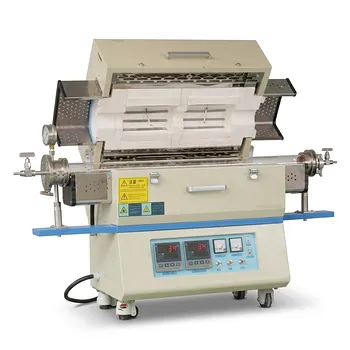
Dual Zone Split Tube Quenching Furnace with High Vacuum Atmosphere Control and Rapid Cooling
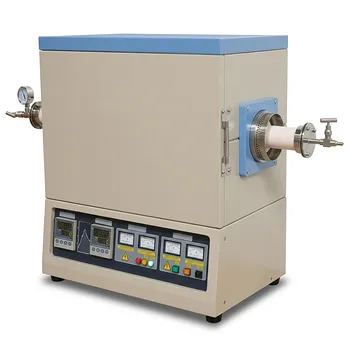
High Temperature 1700C Dual Zone Tube Furnace for Material Science and Industrial Chemical Vapor Deposition Research
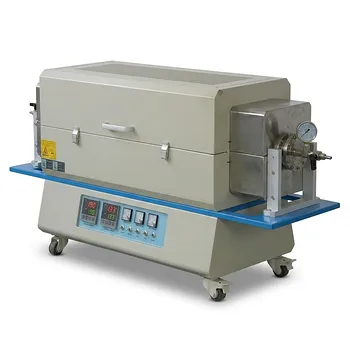
High Temperature Elongated Dual Zone Tube Furnace for Material Research and Industrial Heat Treatment
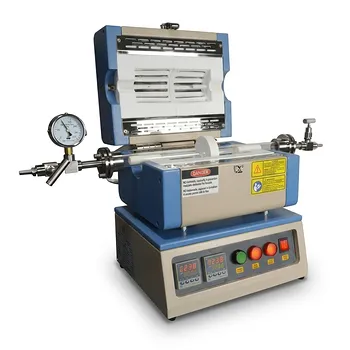
Dual Heating Zone 1200C Compact Split Tube Furnace with Optional 1" - 2" Tube and Vacuum Flanges
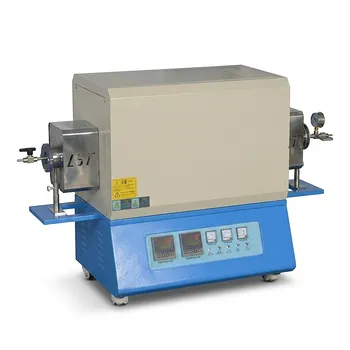
High Temperature Dual Zone Vacuum Tube Furnace for Material Research and CVD Processing
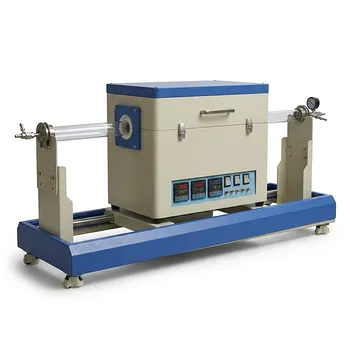
Double Temperature Zone Double Cover Tube Furnace for High Temperature CVD and Vacuum Annealing
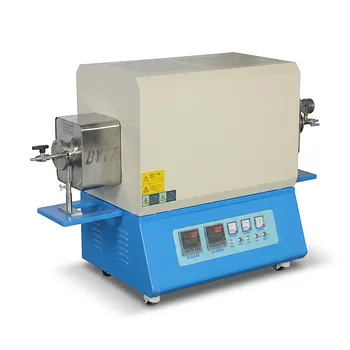
High Temperature Dual Zone Split Tube Furnace for Advanced Atmosphere Sintering and Vacuum CVD Applications
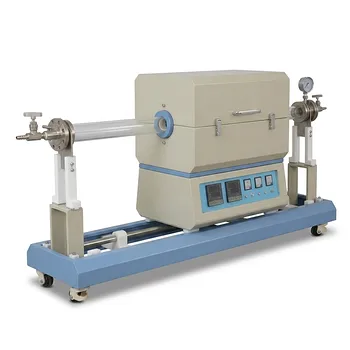
Double Zone Fast Heating Tube Furnace High Temperature Vacuum Atmosphere System
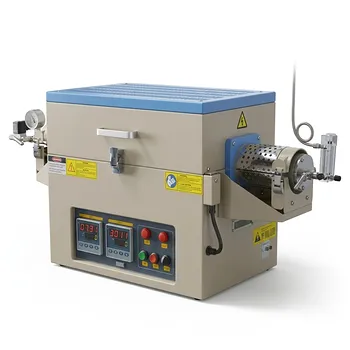
1100C Dual Zone Hydrogen Gas Tube Furnace with Quartz Tube and Integrated H2 Leak Detection System
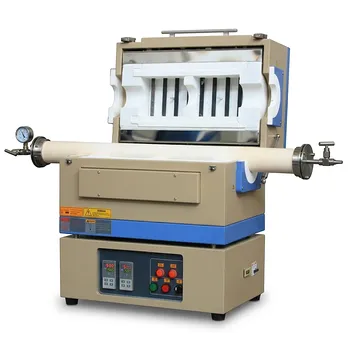
1500C Two Zone Split Tube Furnace with Vacuum Flange and 80mm Alumina Tube
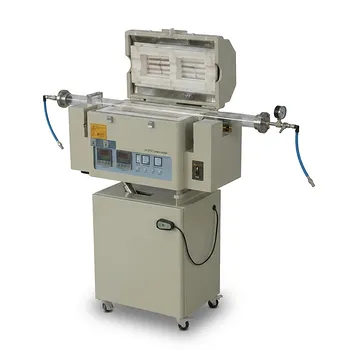
Double Temperature Revolving Tube Furnace with Precision Rotation and Adjustable Inclination for Advanced Material Research
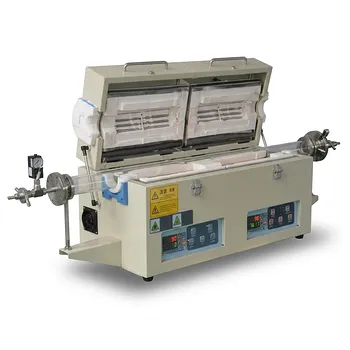
Elongated Two Temperature Zone Pipe Furnace for Industrial Heat Treatment and Material Science Research
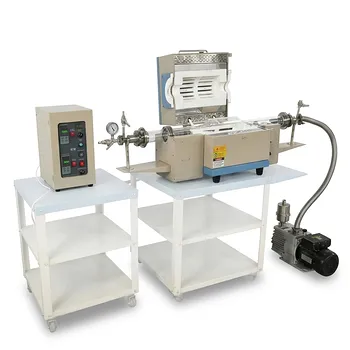
Two Zone Rotary Tube Furnace for Powder CVD Coating and Core Shell Material Synthesis 1100C
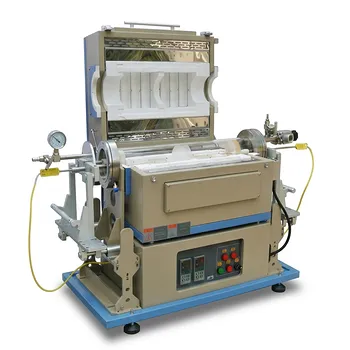
Two Zone IR Heating Rapid Thermal Processing RTP Tube Furnace with 4 Inch ID Quartz Tube and Sliding Sample Holders
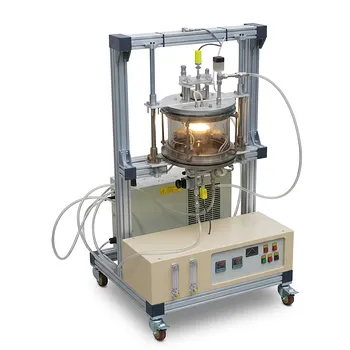
Two Zones CSS Furnace for Rapid Thermal Processing Thin Film Coating 3 Inch Diameter 650C