What is the significance of using high-purity alumina ceramic tubes for 8YSZ and 20SDC flash sintering experiments?
Updated 3 months ago
High-purity alumina ceramic tubes are essential for flash sintering because they provide the necessary electrical insulation to prevent high-voltage current leakage while maintaining extreme chemical stability. In 8YSZ and 20SDC experiments, these tubes ensure that the intense Joule heat generated does not trigger chemical reactions or release volatile impurities that would compromise the accuracy of luminescence spectra.
The significance of high-purity alumina lies in its dual role as a high-performance electrical insulator and a chemically inert vessel. This ensures that the experimental data reflects the true behavior of the ceramic samples, free from electrical interference or chemical contamination.
The Role of Electrical Isolation in Flash Sintering
Preventing High-Voltage Current Leakage
Flash sintering involves the application of significant electric fields to drive rapid densification. High-purity alumina possesses superior high-temperature electrical insulation, which prevents the current from leaking to the furnace body.
Maintaining Experimental Control
By containing the electric field within the sample chamber, alumina ensures that the energy is directed entirely into the 8YSZ or 20SDC samples. This precision is vital for correlating the electrical input with the resulting material properties.
Safeguarding Chemical and Spectral Purity
Avoiding Volatile Contaminants
During flash sintering, samples generate intense internal Joule heat that can reach extreme temperatures. High-purity alumina remains stable under these conditions, ensuring no volatile impurities are released into the chamber atmosphere.
Preserving Luminescence Accuracy
The purity of the sample environment is critical when recording luminescence spectra. Because alumina is chemically inert, it prevents the introduction of foreign elements that could cause "noise" or false signals in the spectral data.
Preventing Solid-Phase Reactions
Alumina does not react with ceramic green bodies, such as perovskites or zirconia-based materials, even at temperatures exceeding 1400°C. This prevents the formation of unwanted secondary phases at the interface between the sample and the tube.
Structural and Thermal Stability
Resilience Under Thermal Shock
Flash sintering is characterized by rapid temperature spikes that can shatter lesser materials. High-purity alumina offers high thermal shock resistance, allowing the tube to maintain its structural integrity during the "flash" event.
Ensuring Stable Heat Conduction
The regular geometric dimensions and consistent thermal properties of alumina tubes help maintain a stable heat conduction environment. This uniformity is necessary for ensuring the flatness and alignment of the sintering or growth interface.
Resistance to Corrosive Environments
In experiments involving reactive atmospheres or corrosive byproducts, high-purity alumina acts as a robust barrier. It resists erosion from gases like HCl, ensuring that any observed corrosion or change originates solely from the sample itself.
Understanding the Trade-offs
Mechanical Brittleness
While alumina is exceptionally hard and thermally stable, it is also inherently brittle. It is susceptible to mechanical failure if subjected to uneven physical stress or improper handling during assembly.
Temperature Ceiling
Although alumina is stable at high temperatures, its performance begins to degrade near its melting point (approximately 2050°C). For ultra-high-temperature applications beyond 1800°C, specialized refractories or alternative cooling methods may be required to prevent softening.
Cost vs. Purity
Higher purity levels (99.9%+) significantly increase the cost of the ceramic components. However, using lower-grade alumina can introduce trace oxides that might lower the melting point of the tube or interfere with sensitive electrical measurements.
How to Apply This to Your Project
Selecting Components for Flash Sintering
Choosing the right grade of alumina is essential for balancing experimental accuracy with budget constraints.
- If your primary focus is spectral accuracy and luminescence: Use the highest purity alumina (99.9% or higher) to eliminate any risk of volatile trace elements interfering with optical signals.
- If your primary focus is high-voltage safety: Prioritize the dielectric strength and wall thickness of the alumina tube to ensure total isolation from the furnace chassis.
- If your primary focus is chemical phase analysis: Ensure the alumina is certified to be non-reactive with your specific sample composition (e.g., 8YSZ or 20SDC) at the peak expected Joule temperature.
Using high-purity alumina ceramic tubes provides the foundational stability and purity required to turn volatile flash sintering experiments into precise, repeatable scientific data.
Summary Table:
| Key Feature | Benefit for Flash Sintering | Impact on Results |
|---|---|---|
| High Dielectric Strength | Prevents high-voltage current leakage | Ensures data accuracy & safety |
| Chemical Inertness | Avoids volatile impurities & reactions | Preserves luminescence accuracy |
| Thermal Shock Resistance | Withstands rapid Joule heat spikes | Prevents tube cracking/failure |
| Structural Stability | Maintains uniform heat conduction | Ensures flat sintering interfaces |
Achieve Scientific Precision with THERMUNITS Solutions
Successful flash sintering of materials like 8YSZ and 20SDC requires equipment that can handle extreme electrical and thermal stress. THERMUNITS is a leading manufacturer of high-temperature laboratory equipment for material science and industrial R&D. We offer a comprehensive range of thermal processing solutions, including Muffle, Vacuum, Atmosphere, Tube, Rotary, and Hot Press furnaces, CVD/PECVD systems, Dental Furnaces, and Vacuum Induction Melting (VIM) units.
Our high-purity thermal elements and ceramic components are engineered to provide the foundational stability your research demands. Whether you need precise atmosphere control or robust electrical isolation, we deliver the tools to turn volatile experiments into repeatable data.
Ready to elevate your lab's capabilities? Contact THERMUNITS today for a professional consultation
References
- R. Muccillo, E.N.S. Muccillo. Analysis of the Luminescent Emission during Flash Sintering of 8YSZ and 20SDC Ceramics. DOI: 10.3390/ceramics7010021
Mentioned Products
- High Temperature 1700C Benchtop Tube Furnace with 5 Inch Heating Zone High Purity Alumina Tube and Vacuum Sealing Flanges
- 1700C High Temperature Alumina Tube Furnace with 18 Inch Heated Zone and Vacuum Sealing Flanges
- High Temperature Compact Vacuum Tube Furnace 1750C Max 60mm OD Alumina Tube
- Compact High Temperature 1600C Tube Furnace with 50mm Alumina Tube and Vacuum Flanges for Material Sintering
- Vertical Hybrid High Temperature Furnace 1500C Alumina Tube SOFC Fuel Cell Testing Laboratory Heat Treatment Research Equipment
People Also Ask
- How are high-temperature tube furnaces utilized to repair etching damage? Precision Lattice Restoration Solutions
- What is the function of a high-temperature tube furnace in the synthesis of g-C3N4? Optimize Thermal Polycondensation
- What impact does the heating rate of a tube furnace have on biochar microstructure? Optimize Your Material R&D.
- What is the role of a high-temperature tube furnace in the calcination process of ZnO/In2O3 nanocomposites?
- Conditions for nZVI Synthesis in Tube Furnaces? Learn to Optimize Thermal and Atmospheric Control for High Purity.

Tech Team · ThermUnits
Last updated on Jun 02, 2026
Related Products

High Temperature 1700C Benchtop Tube Furnace with 5 Inch Heating Zone High Purity Alumina Tube and Vacuum Sealing Flanges

1700C High Temperature Alumina Tube Furnace with 18 Inch Heated Zone and Vacuum Sealing Flanges
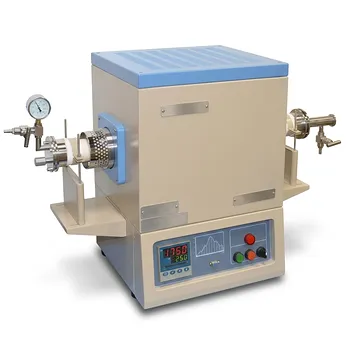
High Temperature Compact Vacuum Tube Furnace 1750C Max 60mm OD Alumina Tube

Compact High Temperature 1600C Tube Furnace with 50mm Alumina Tube and Vacuum Flanges for Material Sintering
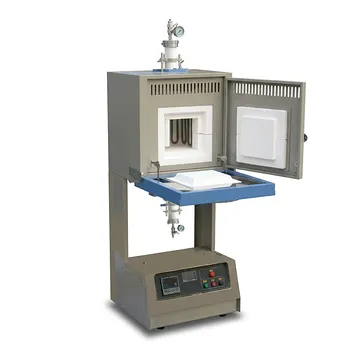
Vertical Hybrid High Temperature Furnace 1500C Alumina Tube SOFC Fuel Cell Testing Laboratory Heat Treatment Research Equipment
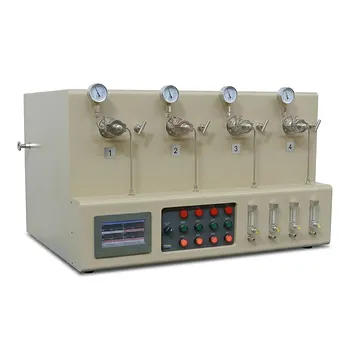
High Temperature 1700C 4 Channel Tube Furnace 1 Inch Alumina Tube for Hi-Throughput Annealing
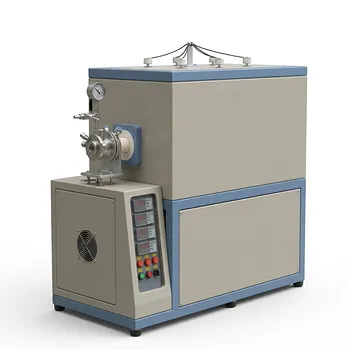
High Temperature 1700C Three Zone Tube Furnace with Alumina Tube 50mm 60mm 80mm OD for Material Research and Industrial Heat Treatment

1800C High Temperature Compact Vacuum Tube Furnace with 60mm OD Alumina Tube and Kanthal MoSi2 Heating Elements

High Temperature 1700C Tube Furnace with 4 Inch OD Alumina Tube and Vacuum Sealing Flanges

1750°C High Temperature Benchtop Vacuum Atmosphere Tube Furnace with Kanthal Super 1800 Heating Elements and 60mm Alumina Processing Tube

High Temperature 1700C Six Zone Split Tube Furnace with Alumina Tube and Water Cooled Flanges
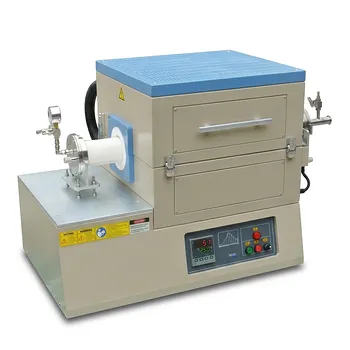
High Temperature 1700C Split Tube Furnace with Vacuum Flanges Valves and 60mm Alumina Tube

Vertical 1700C Vacuum and Atmosphere Tube Furnace with 80mm Alumina Tube
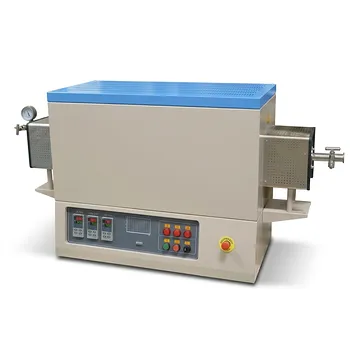
Three Zone Alumina Tube Furnace with Vacuum Flanges High Temperature 1700C Thermal Gradient CVD System
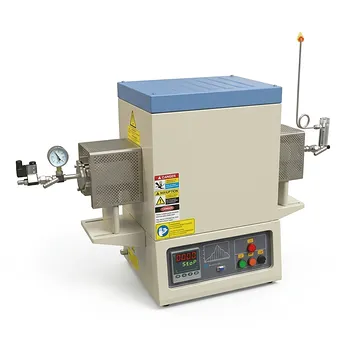
1700C Hydrogen Gas Tube Furnace with 60mm Alumina Process Tube and Integrated Hydrogen Safety Detector
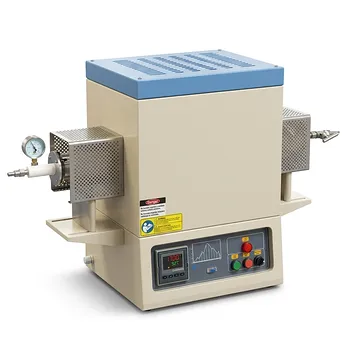
High Temperature Three Zone Tube Furnace 1700C with Alumina Tube and Water Cooled Flanges
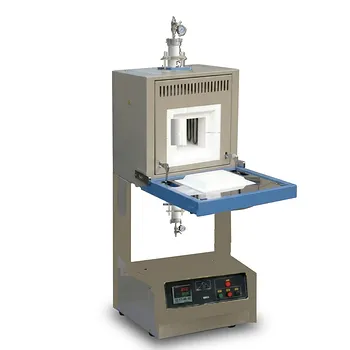
High Temperature Vertical Hybrid Furnace with Alumina Tube and SiC Heating for SOFC Coin Cell Testing and Atmosphere Processing
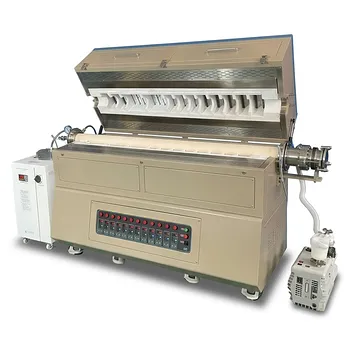
Twelve Zone 1700°C Multi Zone Split Tube Furnace with 100mm Alumina Processing Tube and Independent Temperature Gradient Control
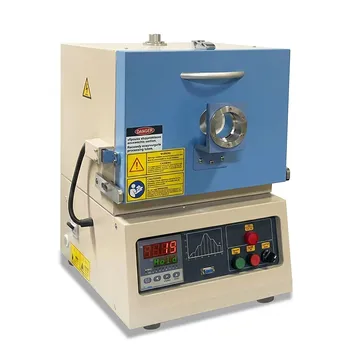
High Temperature Hybrid Muffle and Tube Furnace 1700C Programmable PID Controlled Box System with Vacuum Flange and Alumina Processing Tube