What is the technical significance of setting the tube furnace temperature to 500°C? Mastering Catalyst Segregation
Updated 3 months ago
At 500 degrees Celsius, the tube furnace achieves a precise kinetic balance required to transform a mixed metal precursor into a functional core-shell catalyst. This temperature provides the exact thermal energy needed for iridium atoms to migrate to the surface—a process known as segregation—while maintaining the structural integrity of the catalyst's core.
Core Takeaway: 500°C represents the "critical process window" where the diffusion kinetics are high enough to ensure iridium surface migration but low enough to prevent the structural collapse or re-alloying that occurs at higher temperatures.
The Mechanics of Atomic Segregation at 500°C
Driving Iridium to the Surface
The primary technical significance of 500°C is that it provides sufficient diffusion kinetics for iridium atoms. In a core-shell synthesis, iridium must move from the interior to the exterior to form a protective or active "shell."
Avoiding the Amorphous Mixed State
If the furnace is set below 500°C, the atoms lack the energy to complete their migration. This results in incomplete segregation, leaving the metals trapped in an amorphous mixed state rather than the desired layered structure.
Optimizing Crystalline Quality
Beyond mere movement, this temperature facilitates the recrystallization of materials. Similar to how 500°C eliminates internal stresses in thin films, it allows the catalyst lattice to stabilize into a highly ordered, functional configuration.
Thermal Stability and Structural Preservation
Preventing Core-Shell Collapse
While higher temperatures generally increase atom mobility, exceeding 600°C is often detrimental to core-shell architectures. Excessive heat can cause the structure to collapse or undergo re-alloying, where the distinct shell and core layers melt back into a uniform mixture.
Maintaining Catalytic Advantages
The performance of these catalysts relies on the specific interface between the core and the shell. Overheating leads to a loss of these performance advantages by destroying the geometric and electronic properties inherent to the core-shell design.
Ensuring Phase Purity
Precise control at 500°C ensures that precursors, such as nitrates, decompose into active phases like spinels or oxides. This avoids the formation of unwanted soluble species that could dissolve during electrochemical processes.
Understanding the Trade-offs
Kinetic Energy vs. Structural Entropy
The central trade-off in annealing is balancing the need for movement (kinetics) with the need for order (thermodynamics). While 500°C is ideal for iridium segregation, it may not be sufficient for materials requiring higher crystallinity, such as Mo2N, which often requires 600-700°C for optimal conductivity.
Surface Area vs. Particle Size
As temperature increases, particles tend to sinter or grow larger, which reduces the electrochemically active surface area. Setting the furnace to the minimum temperature required for segregation (500°C) helps preserve a high surface area while still achieving the necessary atomic rearrangement.
Atmosphere Sensitivity
The success of the 500°C setpoint is often dependent on the furnace atmosphere. Using reducing gases like hydrogen or inert gases like nitrogen is critical to prevent unwanted oxidation of the iridium or the core material during the heating cycle.
How to Apply This to Your Project
Recommendations Based on Material Goals
- If your primary focus is maximizing surface segregation: Maintain a strict 500°C setpoint to ensure complete iridium migration without risking the onset of re-alloying.
- If your primary focus is increasing electrical conductivity: Consider incrementally raising the temperature toward 600°C, but monitor the core-shell interface closely for signs of structural collapse.
- If your primary focus is converting precursors to active oxides: Use 500°C in an oxygen-rich or roasting environment to facilitate the thermal decomposition of nitrates into stable spinel phases.
- If your primary focus is eliminating internal lattice stress: A 500°C soak time is highly effective for improving carrier concentration and crystalline quality in doped thin-film structures.
The technical significance of 500°C lies in its unique ability to catalyze atomic movement while simultaneously acting as a thermal ceiling that preserves the complex geometry of the core-shell structure.
Summary Table:
| Temperature Range | Effect on Catalyst Structure | Process Outcome |
|---|---|---|
| Below 500°C | Insufficient diffusion energy | Incomplete segregation & amorphous mixed state |
| 500°C (Optimal) | Controlled iridium surface migration | Stable core-shell architecture & phase purity |
| Above 600°C | Sintering and re-alloying | Structural collapse & loss of active surface area |
Precision Thermal Solutions for Your Catalyst Research
At THERMUNITS, we understand that in material science, a few degrees can be the difference between a breakthrough and a failed experiment. As a leading manufacturer of high-temperature laboratory equipment, we provide the precise thermal control necessary for complex processes like atomic segregation and recrystallization.
Our comprehensive range of solutions includes Tube, Vacuum, Atmosphere, and Rotary furnaces, as well as advanced CVD/PECVD systems designed for the rigors of industrial R&D. Whether you are developing core-shell catalysts, optimizing VIM processes, or engineering thin films, THERMUNITS delivers the uniformity and stability your research demands.
Ready to elevate your lab's heat treatment precision?
Contact our technical experts today to find the perfect furnace solution!
References
- Jihyeon Park, Drew Higgins. Formation of Core‐Shell Ir@TiO<sub>2</sub> Nanoparticles through Hydrogen Treatment as Acidic Oxygen Evolution Reaction Catalysts. DOI: 10.1002/adfm.202408848
Mentioned Products
- High Temperature Tube Furnace 1500C with Sliding Flanges and 50mm OD for Rapid Thermal Processing Fast Heating and Cooling
- Vertical 1700C Vacuum and Atmosphere Tube Furnace with 80mm Alumina Tube
- 1100C Tube Furnace with Vacuum Flange and Programmable Temperature Controller for Material Science and Industrial Heat Treatment
- Compact High Temperature 1600C Tube Furnace with 50mm Alumina Tube and Vacuum Flanges for Material Sintering
- 900°C Max Rotary Tube Furnace with 8 Inch 310S Alloy Tube and Optional Multi Zone Heating for Industrial Material Calcination
People Also Ask
- How are high-temperature tube furnaces utilized to repair etching damage? Precision Lattice Restoration Solutions
- What role does a high-temperature tube furnace play in CVD synthesis of silicon nanowires? Master VLS Growth Precision.
- What core conditions does a high-temperature tube furnace provide for rGO aerogels? Mastering Precision Synthesis.
- What role does a high-temperature tube furnace play in the sulfidation heat treatment of CoS@C/MXene nanocomposites? Guide
- How does precision tube furnace control influence CoFe nanoparticle formation? Master Your Bimetallic Synthesis.

Tech Team · ThermUnits
Last updated on Jun 03, 2026
Related Products
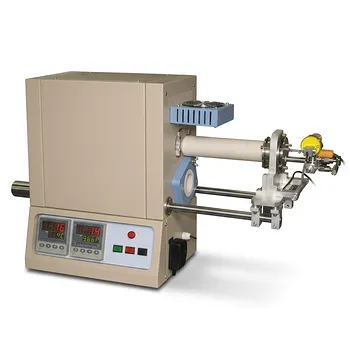
High Temperature Tube Furnace 1500C with Sliding Flanges and 50mm OD for Rapid Thermal Processing Fast Heating and Cooling

Vertical 1700C Vacuum and Atmosphere Tube Furnace with 80mm Alumina Tube

1100C Tube Furnace with Vacuum Flange and Programmable Temperature Controller for Material Science and Industrial Heat Treatment

Compact High Temperature 1600C Tube Furnace with 50mm Alumina Tube and Vacuum Flanges for Material Sintering
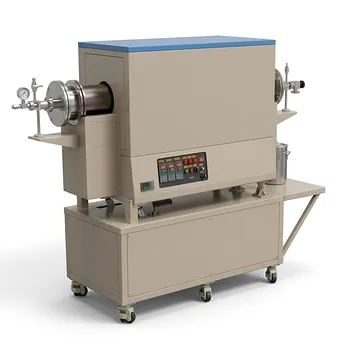
900°C Max Rotary Tube Furnace with 8 Inch 310S Alloy Tube and Optional Multi Zone Heating for Industrial Material Calcination
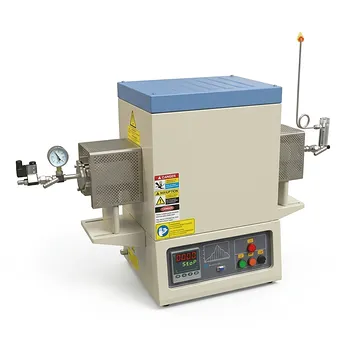
1700C Hydrogen Gas Tube Furnace with 60mm Alumina Process Tube and Integrated Hydrogen Safety Detector

High Temperature 1700C Tube Furnace with High Vacuum Turbomolecular Pump System and Multi Channel Mass Flow Controller Gas Mixer
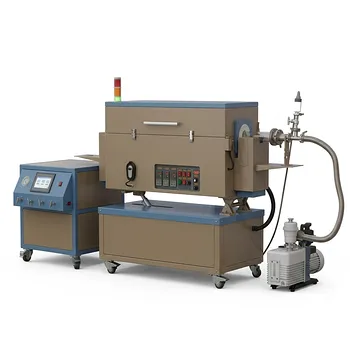
5 Inch Three Zone Rotary Tube Furnace with Integrated Gas Delivery System and 1200C Capability for Advanced Material CVD Processing

Three Zone Tube Furnace with 11 Inch or 15 Inch Quartz Tube and Hinged Flanges for Vacuum Atmosphere Heat Treatment
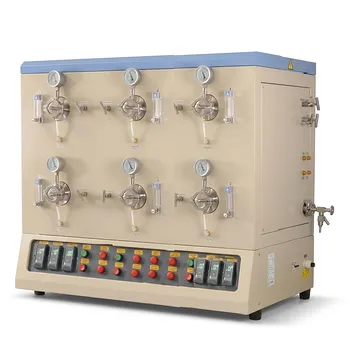
1200C High Throughput Multi Channel Tube Furnace with 50mm Quartz Tubes for Annealing and Material Phase Diagram Research

1200°C 5 Inch Vertical Quartz Tube Furnace with Stainless Steel Vacuum Flanges
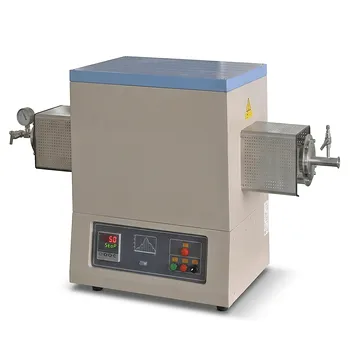
High Temperature 1700C Tube Furnace with 4 Inch OD Alumina Tube and Vacuum Sealing Flanges

High Temperature 1700C Benchtop Tube Furnace with 5 Inch Heating Zone High Purity Alumina Tube and Vacuum Sealing Flanges

High Temperature 1700C Six Zone Split Tube Furnace with Alumina Tube and Water Cooled Flanges

Compact Vertical Split Quartz Tube Furnace with Stainless Steel Vacuum Flanges for Rapid Thermal Quenching and Controlled Atmosphere Material Processing

1800C High Temperature Compact Vacuum Tube Furnace with 60mm OD Alumina Tube and Kanthal MoSi2 Heating Elements
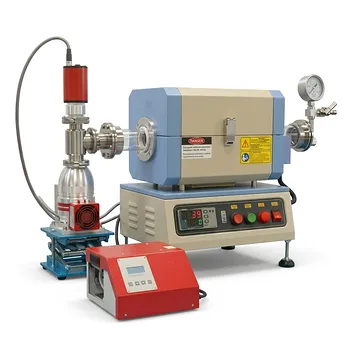
High Vacuum Compact Tube Furnace 1200C with Integrated Turbo Pump System and 8 Inch Heating Zone
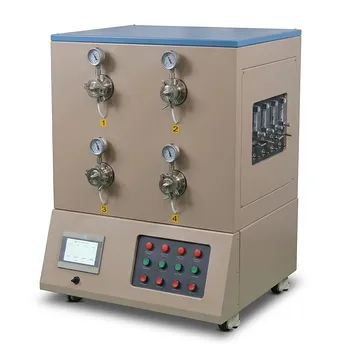
High Throughput 1200C Four Channel Tube Furnace with 3 Inch Quartz Tubes for Multi Zone Annealing and Material Research

High Temperature Automated 5 Inch Tube Furnace for Autonomous Material Research and Advanced Laboratory R&D
