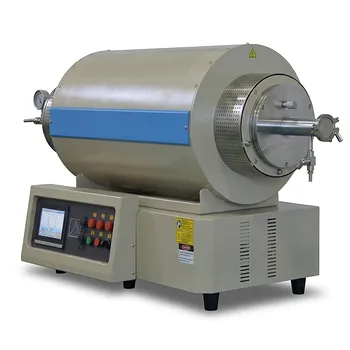
What key processing conditions does a tube atmosphere furnace provide for Fe/RGO? Master Material Reduction Precision.
Updated 3 months ago
A tube atmosphere furnace provides a dual-action environment that combines high-purity chemical reduction with precise thermal management. Specifically for Fe/RGO composites, it maintains a constant 350 °C temperature while introducing a controlled hydrogen (H2) flow. This specific combination facilitates the simultaneous reduction of Iron Oxide (Fe2O3) into metallic iron and the thermal conversion of Graphene Oxide (GO) into its conductive reduced form (RGO).
The core value of a tube atmosphere furnace lies in its ability to synchronize the chemical reduction of metal oxides and the thermal restoration of carbon lattices within a single, oxygen-free processing window. By controlling the gas chemistry and temperature gradient, the furnace ensures the composite achieves the desired interfacial carrier injection characteristics.
Precise Atmosphere and Gas Path Control
The Role of Hydrogen as a Reducing Agent
The furnace acts as a sealed reaction chamber for the introduction of hydrogen (H2), which is essential for the chemical transformation of the iron component. In this environment, H2 reacts with the oxygen in Fe2O3 nanosheets, stripping it away to leave behind pure metallic iron (Fe).
Preventing Oxidative Combustion
Because graphene is highly sensitive to oxygen at elevated temperatures, the furnace’s sealed gas path is critical for maintaining an oxygen-deficient state. By excluding oxygen, the equipment prevents the carbon framework from undergoing combustion, which would otherwise destroy the material's structure.
Regulation of Gas Flow and Pressure
The design of the tube furnace allows for a steady flow of gases that not only provides the reactant (hydrogen) but also sweeps away gaseous byproducts. This continuous movement of the gas atmosphere helps maintain the chemical equilibrium required for complete material transformation.
Thermal Management and Synchronized Conversion
The 350 °C Processing Threshold
While various carbon treatments occur at higher temperatures, the reduction of Fe/RGO is specifically optimized at 350 °C within the furnace. This temperature provides sufficient energy to trigger the thermal expansion and desorption of oxygen groups from the GO surface without causing excessive sintering of the iron particles.
Synchronizing Component Transformation
The primary advantage of the tube furnace is synchronized conversion, where both the metal and the carbon support reach their final states at the same time. This timing is essential for creating the correct interfacial characteristics, allowing for efficient electron transport between the metallic iron and the RGO network.
Maintaining Temperature Uniformity
High-quality tube furnaces provide a precise temperature gradient across the heating zone. This uniformity ensures that the entire batch of Fe/RGO composite undergoes the same degree of reduction, preventing "cold spots" where iron might remain partially oxidized.
Understanding the Trade-offs
Temperature vs. Material Stability
Using higher temperatures (such as 800°C to 950°C) can significantly increase the electrical conductivity of the RGO by removing more residual oxygen. However, these extreme temperatures can also lead to metal particle agglomeration or the introduction of excessive defects that might weaken the structural integrity of the composite.
Hydrogen Concentration Risks
While a hydrogen-rich atmosphere is the most effective for reducing iron oxide, it presents significant safety and processing challenges. Finding the balance between a high enough H2 concentration for effective reduction and a safe level to prevent explosive hazards is a critical operational constraint.
Inert vs. Reducing Atmospheres
Using inert gases like Argon or Nitrogen protects the carbon framework but lacks the chemical potential to reduce metal oxides. Therefore, the furnace must be capable of switching or mixing gases to ensure both protection (from oxygen) and active reduction (via hydrogen).
How to Apply This to Your Project
Recommendations Based on Your Objectives
- If your primary focus is maximizing metallic purity: Prioritize a higher concentration of hydrogen flow and ensure the furnace seals are checked to prevent any oxygen ingress.
- If your primary focus is high electrical conductivity: Consider a two-stage heating profile where a lower temperature reduces the iron, followed by a brief high-temperature "soak" to further restore the RGO carbon lattice.
- If your primary focus is structural morphology (wrinkled sheets): Utilize rapid thermal ramping (thermal shock) within the furnace to trigger the explosive release of functional groups.
By mastering the balance between gas chemistry and thermal precision, you can reliably produce Fe/RGO composites with tailored electronic and chemical properties.
Summary Table:
| Key Condition | Functional Role | Benefit for Fe/RGO Composites |
|---|---|---|
| H2 Atmosphere | Reducing Agent | Strips oxygen from Fe2O3 to create pure metallic iron. |
| 350 °C Setpoint | Thermal Threshold | Triggers GO reduction without causing iron agglomeration. |
| Sealed Gas Path | Oxygen Exclusion | Prevents graphene framework combustion and degradation. |
| Steady Flow Rate | Mass Transport | Sweeps away gaseous byproducts to maintain equilibrium. |
| Thermal Uniformity | Gradient Control | Ensures consistent material properties across the entire batch. |
Optimize Your Advanced Material Synthesis with THERMUNITS
Precision is paramount when managing the delicate balance of chemical reduction and thermal stability for Fe/RGO and other advanced composites. THERMUNITS is a leading manufacturer of high-temperature laboratory equipment specifically designed for material science and industrial R&D.
We provide a comprehensive range of thermal processing solutions tailored to your research needs, including:
- Atmosphere & Tube Furnaces for precise gas-phase reactions.
- Vacuum & Muffle Furnaces for high-purity heat treatment.
- CVD/PECVD Systems and Hot Press Furnaces.
- Vacuum Induction Melting (VIM), Rotary Kilns, and Dental Furnaces.
Whether you are refining conductive lattices or scaling up metal oxide reduction, our equipment ensures the reliable interfacial characteristics your project demands.
Ready to enhance your lab’s capabilities? Contact us today to find the perfect thermal solution!
References
- Kaili Zhang, Xiaoxiao Huang. Tracking Regulatory Mechanism of Trace Fe on Graphene Electromagnetic Wave Absorption. DOI: 10.1007/s40820-023-01280-6
Mentioned Products
- Vertical 1700C Vacuum and Atmosphere Tube Furnace with 80mm Alumina Tube
- 1200C Hybrid Muffle and Tube Furnace for Material Research with Dual Atmosphere Control Quartz Tubes
- Compact Vertical Split Quartz Tube Furnace with Stainless Steel Vacuum Flanges for Rapid Thermal Quenching and Controlled Atmosphere Material Processing
- Compact Hybrid Muffle and Tube Furnace for 1000C Controlled Atmosphere Laboratory Material Sintering
- 1200°C Atmosphere Controlled Automatic Bottom Loading Furnace with 6 Inch Quartz Tube
People Also Ask
- How is an industrial-grade vertical tube furnace utilized in smelting leaching residues? Enhance Metal Recovery Efficiency
- What is the function of a laboratory-grade vertical tube furnace in fast pyrolysis? Optimize Composite Research.
- How does a vertical tube furnace facilitate thermoelectric alloy melting? Precision synthesis for material homogeneity.
- Why is a thermocouple sensor indispensable for monitoring the vertical tube furnace during gallium oxide nanowire production? Optimize VLS Growth
- What are the advantages of using a vertical tube furnace for crucible experiments simulating steel-slag interactions?

Tech Team · ThermUnits
Last updated on Jun 02, 2026
Related Products

Vertical 1700C Vacuum and Atmosphere Tube Furnace with 80mm Alumina Tube
1200C Hybrid Muffle and Tube Furnace for Material Research with Dual Atmosphere Control Quartz Tubes

Compact Vertical Split Quartz Tube Furnace with Stainless Steel Vacuum Flanges for Rapid Thermal Quenching and Controlled Atmosphere Material Processing
Compact Hybrid Muffle and Tube Furnace for 1000C Controlled Atmosphere Laboratory Material Sintering
1200°C Atmosphere Controlled Automatic Bottom Loading Furnace with 6 Inch Quartz Tube
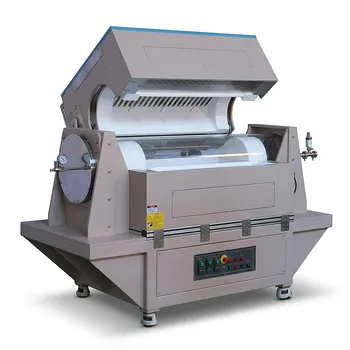
Three Zone Tube Furnace with 11 Inch or 15 Inch Quartz Tube and Hinged Flanges for Vacuum Atmosphere Heat Treatment

1200°C 5 Inch Vertical Quartz Tube Furnace with Stainless Steel Vacuum Flanges
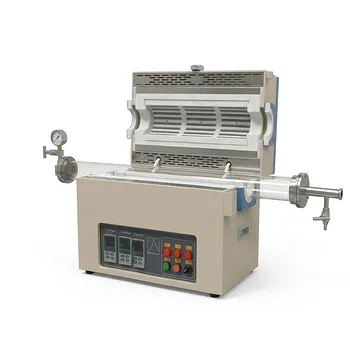
1200°C Three Zone Split Tube Furnace with 18 Inch Heating Length and Vacuum Flanges
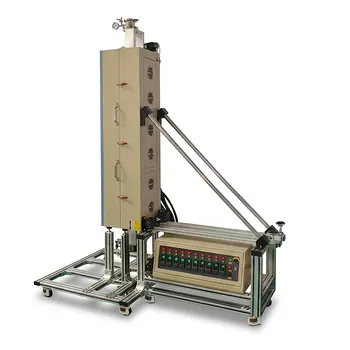
1200°C 10-Zone Split Tube Furnace with Horizontal and Vertical Mounting for Multi-Zone Thermal Gradients and Large Diameter Material Processing
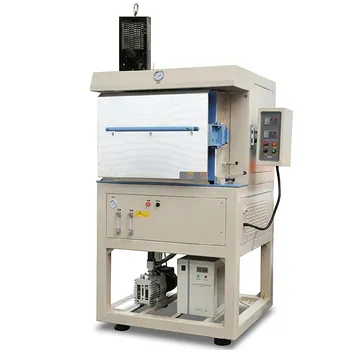
1200C Hydrogen Atmosphere Box Furnace with 5 Heated Sides and 64L Chamber

High Temperature 1700C Tube Furnace with High Vacuum Turbomolecular Pump System and Multi Channel Mass Flow Controller Gas Mixer
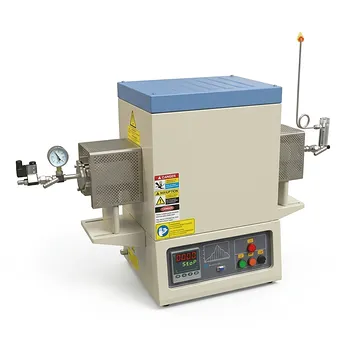
1700C Hydrogen Gas Tube Furnace with 60mm Alumina Process Tube and Integrated Hydrogen Safety Detector

High Temperature 1700C Vertical Tube Furnace for Powder Spherification and Material Sintering

High Temperature 1700C Six Zone Split Tube Furnace with Alumina Tube and Water Cooled Flanges
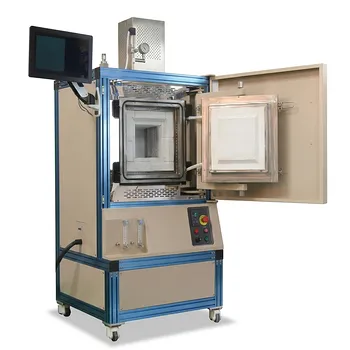
High Temperature Hydrogen Atmosphere Box Furnace 1650C Max Reducing Environment Material Synthesis System 8x8x8 Chamber
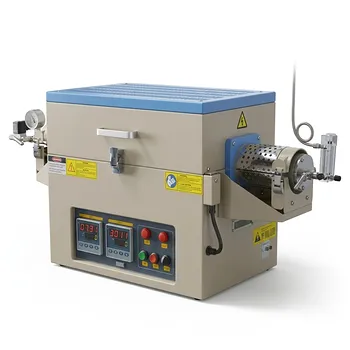
1100C Dual Zone Hydrogen Gas Tube Furnace with Quartz Tube and Integrated H2 Leak Detection System

1800C High Temperature Compact Vacuum Tube Furnace with 60mm OD Alumina Tube and Kanthal MoSi2 Heating Elements

High Temperature 1700C Benchtop Tube Furnace with 5 Inch Heating Zone High Purity Alumina Tube and Vacuum Sealing Flanges

High Temperature Automated 5 Inch Tube Furnace for Autonomous Material Research and Advanced Laboratory R&D