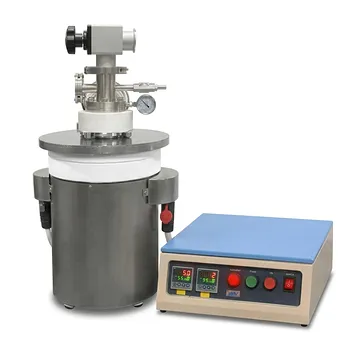
What role does an air atmosphere furnace play in In2O3-ZrO2 support prep? Optimize Calcination & Phase Control
Updated 3 months ago
The high-temperature air atmosphere furnace acts as the primary driver for calcination, facilitating the thermal decomposition and phase transformation required to create a stable composite. It provides a precisely controlled thermal environment—typically 873 K for two hours—to convert liquid or amorphous precursors into a chemically stable, solid-state oxide structure. This process is essential for ensuring the indium and zirconia components are uniformly distributed across the support surface.
The furnace is the critical tool for calcination, a process that transforms impregnated precursors into a functional $In_2O_3-ZrO_2$ support. By maintaining precise temperature control, it ensures thermal decomposition, structural stability, and the removal of volatile impurities that would otherwise compromise the material's performance.
Facilitating Chemical Transformation and Phase Control
Decomposition of Metal Precursors
The furnace provides the energy necessary for the thermal decomposition of indium nitrate precursors impregnated on the zirconia surface. This reaction breaks down the nitrates, leaving behind stable indium oxide ($In_2O_3$) bonded to the support. Without this controlled heat, the precursor would remain in its chemically unstable salt form.
Inducing Phase Transitions
High-temperature treatment is vital for transforming amorphous hydroxide precursors into specific crystalline phases, such as tetragonal zirconia ($t-ZrO_2$). These phases are often preferred for their superior mechanical strength and specific surface physicochemical properties. The furnace ensures the material reaches the exact energy threshold required for these structural shifts.
Enhancing Crystalline Quality
By maintaining a constant high temperature, the furnace enables crystal growth and the formation of clear exposed crystal facets. This improvement in crystallinity reduces defects within the nanomaterials. High crystalline quality is often linked to better stability and more predictable performance in catalytic applications.
Optimizing Structural and Surface Properties
Ensuring Component Uniformity
The furnace environment, particularly in a muffle or tube configuration, provides the temperature uniformity needed for a consistent reaction across the entire sample. This results in a uniform distribution of indium oxide throughout the zirconia framework. Consistent heating prevents the formation of "hot spots" that could lead to localized component clustering.
Removal of Organic and Volatile Impurities
During synthesis, additives like glucose, urea, or nitrates often leave behind organic residues. The air atmosphere at high temperatures facilitates the oxidation and elimination of these impurities. Removing these volatile components is critical for opening up the pore structure and maximizing the available surface area.
Promoting Solid-State Synergies
The furnace environment facilitates solid-state reactions between the indium and zirconia components. This thermal "soaking" enhances the synergistic effects between the two oxides, improving the overall structural stability and mechanical strength of the final composite.
Understanding the Trade-offs
Sintering vs. Surface Area
While high temperatures are necessary for stability, excessive heat can lead to sintering, where particles fuse together. This reduces the specific surface area and can close off pores, potentially decreasing the support's effectiveness. Finding the balance between "high enough for stability" and "low enough to preserve surface area" is a critical engineering challenge.
Atmospheric Influence
The use of an air atmosphere is beneficial for oxidation but may be unsuitable for materials prone to over-oxidation. In some composite preparations, a lack of precise atmosphere control can lead to unwanted oxide phases. Furthermore, rapid heating or cooling rates can induce thermal stress, leading to micro-cracks in the ceramic structure.
Applying Furnace Parameters to Your Goal
How to Apply This to Your Project
To achieve the best results for your specific $In_2O_3-ZrO_2$ preparation, tailor your furnace settings to your desired material characteristics:
- If your primary focus is maximizing surface area: Use the lowest effective calcination temperature (near 773 K - 873 K) to prevent excessive sintering of the zirconia particles.
- If your primary focus is long-term chemical stability: Opt for a longer dwell time (2+ hours) at 873 K to ensure the complete decomposition of all nitrate precursors and a stable crystalline structure.
- If your primary focus is high crystallinity and purity: Ensure a steady air flow within the furnace to facilitate the complete oxidation of organic residues and a slow cooling rate to minimize structural defects.
Precise control over the furnace atmosphere and temperature profile is the most decisive factor in determining the final performance of composite oxide supports.
Summary Table:
| Process Function | Impact on Material | Key Benefit |
|---|---|---|
| Thermal Decomposition | Converts metal nitrates into stable oxides | Ensures Chemical Stability |
| Phase Control | Facilitates transition to crystalline phases ($t-ZrO_2$) | Enhances Structural Integrity |
| Oxidation | Eliminates organic residues and volatile impurities | High Purity & Open Porosity |
| Uniform Heating | Prevents localized component clustering | Homogeneous Oxide Distribution |
| Solid-State Synergy | Promotes bonding between $In_2O_3$ and $ZrO_2$ | Improved Mechanical Strength |
Elevate Your Material Synthesis with THERMUNITS Precision Solutions
Achieving the perfect $In_2O_3-ZrO_2$ composite requires absolute thermal precision. As a leading manufacturer of high-temperature laboratory equipment, THERMUNITS provides the advanced thermal processing solutions essential for material science and industrial R&D. We empower your research with superior reliability and precise control over every phase transition.
Our comprehensive range includes:
- Atmosphere & Muffle Furnaces for precise calcination and oxidation.
- Tube & Rotary Furnaces for uniform heat treatment.
- Vacuum, Hot Press, & VIM Furnaces for advanced metallurgy.
- CVD/PECVD Systems and specialized Dental Furnaces.
Ready to optimize your lab's efficiency and material performance? Contact our experts today to find the ideal heating solution for your application!
References
- Chengshuang Zhou, Matteo Cargnello. Steam‐Assisted Selective CO<sub>2</sub> Hydrogenation to Ethanol over Ru−In Catalysts. DOI: 10.1002/anie.202406761
Mentioned Products
- 1650C High Temperature Atmosphere Controlled Box Furnace with 65L Chamber for Advanced Material Sintering and Industrial Heat Treatment
- High Temperature Vertical Atmosphere Controlled Furnace with Automatic Bottom Loading and 1700°C Capacity for Advanced Material Research
- 1750°C High Temperature Benchtop Vacuum Atmosphere Tube Furnace with Kanthal Super 1800 Heating Elements and 60mm Alumina Processing Tube
- High Temperature Oxygen and Inert Atmosphere Controlled Furnace 8 Liter 1700C Sintering System for Advanced Materials RD
- High Temperature 1200C Split Tube Furnace for CVD Research and Vacuum Atmosphere Heat Treatment
People Also Ask
- What role does atmosphere control play in technical ceramics and glass? Master Material Purity and Precision
- What role does a high-temperature atmosphere furnace play in the direct electrochemical reduction of CO2? - Key Insights
- What is the role of a high-temperature box furnace in the solid-state synthesis of Europium-doped M3MgSi2O8 phosphors?
- What is the role of a high-temperature box furnace in Na3MnZr(PO4)3 synthesis? Engineering High-Performance NASICON.
- What is the role of a high-temperature atmosphere furnace in Co/Co0.85Se@NC synthesis? Optimize Catalyst Performance

Tech Team · ThermUnits
Last updated on Jun 02, 2026
Related Products
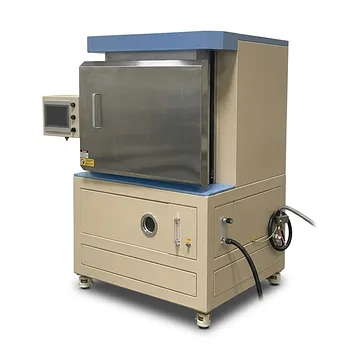
1650C High Temperature Atmosphere Controlled Box Furnace with 65L Chamber for Advanced Material Sintering and Industrial Heat Treatment
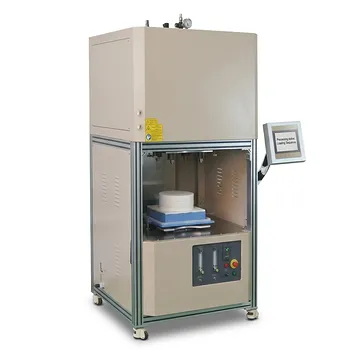
High Temperature Vertical Atmosphere Controlled Furnace with Automatic Bottom Loading and 1700°C Capacity for Advanced Material Research

1750°C High Temperature Benchtop Vacuum Atmosphere Tube Furnace with Kanthal Super 1800 Heating Elements and 60mm Alumina Processing Tube
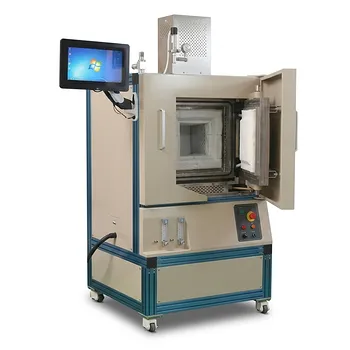
High Temperature Oxygen and Inert Atmosphere Controlled Furnace 8 Liter 1700C Sintering System for Advanced Materials RD
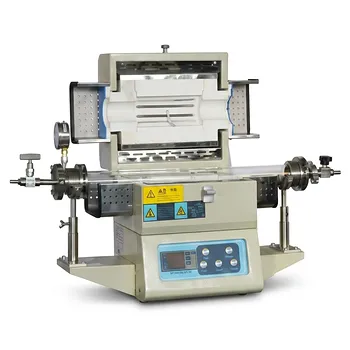
High Temperature 1200C Split Tube Furnace for CVD Research and Vacuum Atmosphere Heat Treatment
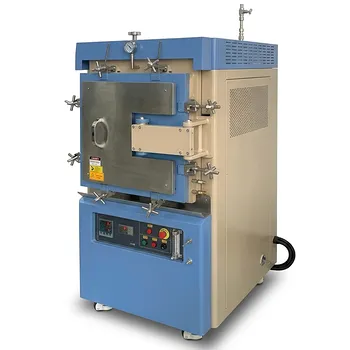
Atmosphere Controlled Muffle Furnace 1700C Maximum Temperature 80L High Capacity Vacuum Inert Gas Box Furnace
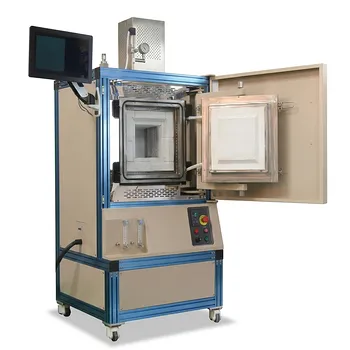
High Temperature Hydrogen Atmosphere Box Furnace 1650C Max Reducing Environment Material Synthesis System 8x8x8 Chamber
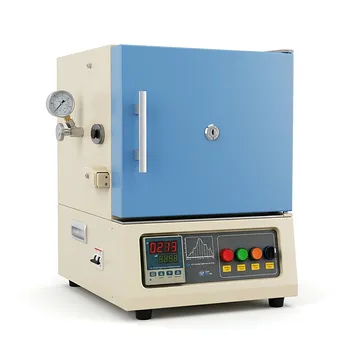
1200C Hybrid Muffle and Tube Furnace for Material Research with Dual Atmosphere Control Quartz Tubes
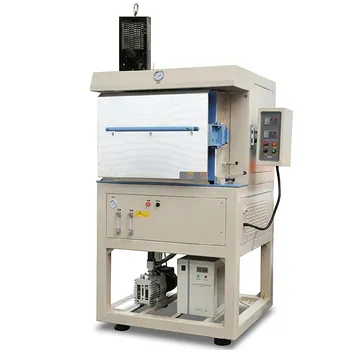
1200C Hydrogen Atmosphere Box Furnace with 5 Heated Sides and 64L Chamber
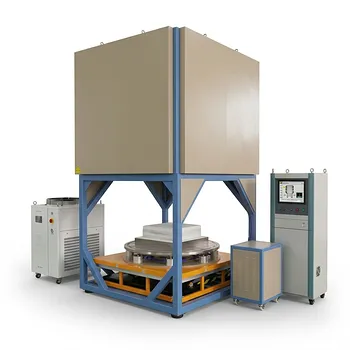
Bottom Loaded Inert Gas Atmosphere Box Furnace 1700C 1300C 216L Large Capacity Industrial Thermal Processing System

Vertical 1700C Vacuum and Atmosphere Tube Furnace with 80mm Alumina Tube
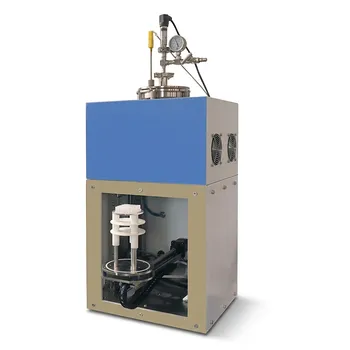
Rapid Thermal Processing RTP Atmosphere Controlled Bottom Loading Furnace 1100C High Throughput 50C per Second Heating Rate
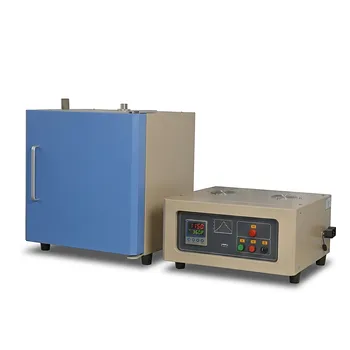
High Temperature Muffle Furnace with Alloy Chamber for Debinding and Sintering Applications
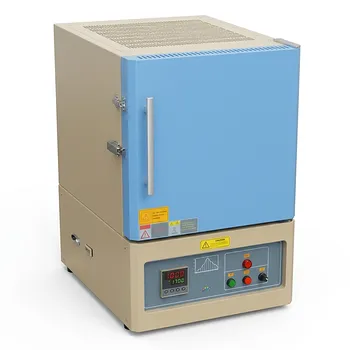
Large Bench Top 1700C High Temperature Muffle Furnace with 19L Chamber for Advanced Material Sintering and Annealing
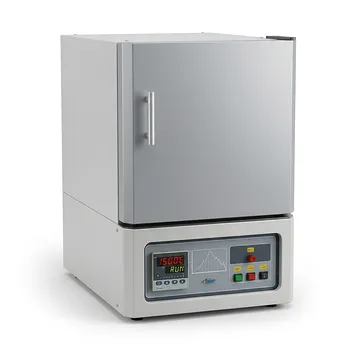
High Temperature 1500C Benchtop Muffle Furnace 3.6L Alumina Fiber Chamber Programmable Controller Sintering Annealing Carbonization Thermal Processing System
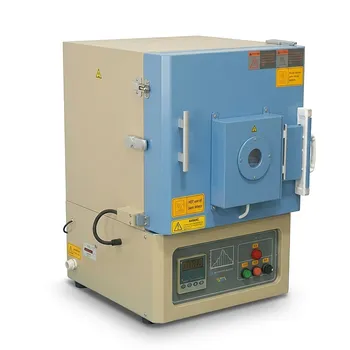
High Temperature Benchtop Muffle Furnace 1500C with 3.6L Chamber and Quartz Observation Window
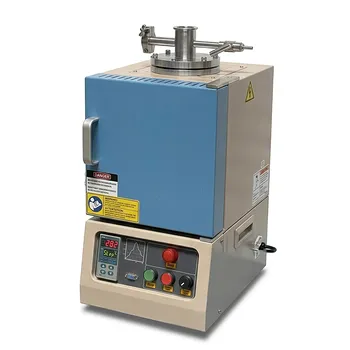
High Temperature Hybrid Muffle and Tube Furnace with Vacuum Capability and PID Control
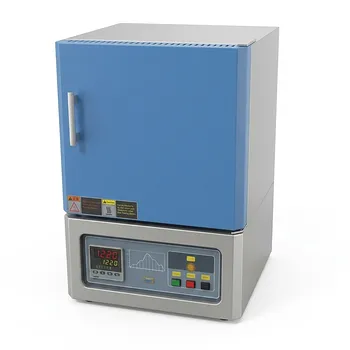
High Temperature Benchtop Muffle Furnace 1700C 10L Chamber Alumina Fiber Insulation MoSi2 Heating Elements
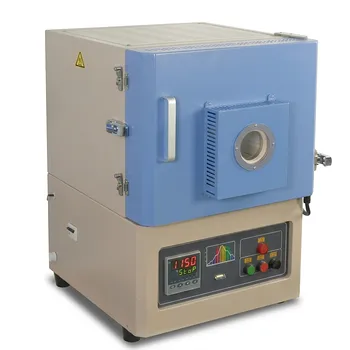
High Temperature Benchtop Muffle Furnace with Quartz Observation Window for Thermal Imaging and Material Analysis