What role does a high-temperature atmosphere tube furnace play in the interface engineering of bismuth telluride-based thin films?
Updated 5 months ago
A high-temperature atmosphere tube furnace is the critical tool for driving the thermal diffusion and phase transformation necessary to optimize bismuth telluride interfaces. By providing precise temperature control and a tailored gas environment, the furnace facilitates the migration of atoms between adjacent nanosheets, eliminating internal voids and converting unstable surfaces into conductive interface phases. This process fundamentally enhances the electrical conductivity and power factor of the resulting thin film.
Core Takeaway: The tube furnace acts as a controlled reactor that engineers the atomic structure of bismuth telluride films, transforming discrete nanosheets into a cohesive, high-performance thermoelectric material through precise thermal and atmospheric management.
Facilitating Atom Diffusion and Interface Phase Formation
Driving Inter-Nanosheet Connectivity
The primary role of the furnace is to provide the thermal energy required for atoms to migrate across boundaries between adjacent nanosheets. This diffusion process strengthens physical connections and effectively "welds" the nanostructures together.
Eliminating Internal Voids
As atoms rearrange during the annealing process, internal gaps and voids within the film structure are filled. This reduction in porosity is essential for creating a continuous path for charge carriers, which directly increases the material's density and overall conductivity.
Creating New Interface Phases
The furnace allows for the transformation of unstable surface layers into stable, high-conductivity interface phases. These new phases reduce the energy barriers for electron transport, significantly boosting the power factor and the thermoelectric efficiency of the film.
Structural Evolution and Defect Management
Driving Recrystallization and Grain Growth
High-temperature treatment within the tube furnace provides the energy needed to drive the structural transition from an amorphous state to a polycrystalline rhombohedral structure. This grain growth is critical for increasing material mobility.
Optimizing Carrier Concentration
By precisely controlling annealing duration and temperature, the furnace helps balance lattice defects, such as tellurium (Te) vacancies. This optimization is necessary to achieve a synergistic improvement in both the Seebeck coefficient and electrical conductivity.
Inducing Liquid-Phase Sintering
In specific conditions where excess Tellurium is present, the stable temperature field of the furnace promotes liquid-phase sintering. This achieves high densification even under pressure-less conditions, suppressing defects that would otherwise hinder performance.
Atmosphere Management and Oxidation Mitigation
Preventing Thermal Oxidation
Bismuth telluride-based films are highly sensitive to oxygen at elevated temperatures. The tube furnace provides a sealed environment where a high vacuum or inert gases (like Argon) can be maintained to prevent the formation of insulating oxide layers.
Chemical Bonding Regulation
The furnace atmosphere can be manipulated using forming gases, such as a hydrogen-nitrogen mixture, to further reduce oxidation risks. This environment allows for the systematic regulation of chemical bonding around bismuth atoms, which can tune the material's selectivity and stability.
Stress Relief and Lattice Rearrangement
The controlled cooling and heating cycles within the furnace eliminate internal stresses generated during the initial deposition (such as sputtering). This relaxation allows for effective lattice rearrangement and ensures the long-term electrical stability of the thin film.
Understanding the Trade-offs
The Risk of Tellurium Volatility
While high temperatures promote grain growth, excessive heat can lead to the evaporation of Tellurium due to its high vapor pressure. This can result in unintended changes to the material's stoichiometry and a drop in thermoelectric performance.
Balancing Time and Temperature
Longer annealing times may improve crystallinity but can also lead to excessive grain coarsening, which may negatively impact the thermal properties of the film. Precision in the "thermal budget" is required to avoid degrading the nanostructure.
Atmosphere Purity Requirements
The effectiveness of the furnace is entirely dependent on the purity of the gas environment. Even trace amounts of oxygen or moisture within the tube can lead to interface contamination, negating the benefits of the thermal treatment.
How to Apply This to Your Project
Recommendations for Implementation
- If your primary focus is maximizing electrical conductivity: Prioritize higher annealing temperatures within the stable range to drive maximum atom diffusion and eliminate internal voids.
- If your primary focus is maintaining stoichiometry: Use a closed-tube configuration with an overpressure of Tellurium or a strictly controlled inert atmosphere to prevent the loss of volatile elements.
- If your primary focus is optimizing the Seebeck coefficient: Focus on precise, lower-temperature annealing cycles (150°C to 300°C) to reduce point defects and manage carrier concentration without excessive grain growth.
Mastering the thermal and atmospheric parameters of the tube furnace is the definitive path to transforming raw bismuth telluride films into high-efficiency thermoelectric devices.
Summary Table:
| Role/Function | Mechanism | Impact on Thin Film |
|---|---|---|
| Atom Diffusion | Drives migration between nanosheets | Strengthens physical connections; "welds" nanostructures |
| Void Elimination | Fills internal gaps during annealing | Increases material density and charge carrier paths |
| Structural Evolution | Promotes recrystallization & grain growth | Improves material mobility and Seebeck coefficient |
| Atmosphere Control | Provides vacuum or inert gas (Ar/H2-N2) | Prevents thermal oxidation and regulates chemical bonding |
| Stress Relief | Controlled heating/cooling cycles | Eliminates internal stresses for long-term stability |
Elevate Your Material Research with THERMUNITS
Mastering the complex interface engineering of bismuth telluride requires absolute precision. THERMUNITS is a leading manufacturer of high-temperature laboratory equipment, providing the advanced thermal solutions necessary for cutting-edge material science and industrial R&D.
Whether you need to optimize atom diffusion, prevent oxidation, or manage tellurium volatility, our comprehensive range of equipment—including Atmosphere Tube Furnaces, Vacuum/CVD systems, Muffle, and Rotary furnaces—is designed to meet the most rigorous research standards.
Ready to enhance your thin film performance? Contact our experts today to find the perfect thermal processing solution for your laboratory.
References
- Xudong Wu, Xiahan Sang. Enhanced Electrical Properties of Bi<sub>2−<i>x</i></sub>Sb<i><sub>x</sub></i>Te<sub>3</sub> Nanoflake Thin Films Through Interface Engineering. DOI: 10.1002/eem2.12755
Mentioned Products
- Vertical 1700C Vacuum and Atmosphere Tube Furnace with 80mm Alumina Tube
- 1750°C High Temperature Benchtop Vacuum Atmosphere Tube Furnace with Kanthal Super 1800 Heating Elements and 60mm Alumina Processing Tube
- 1200°C Atmosphere Controlled Automatic Bottom Loading Furnace with 6 Inch Quartz Tube
- 1200C Hybrid Muffle and Tube Furnace for Material Research with Dual Atmosphere Control Quartz Tubes
- Compact Hybrid Muffle and Tube Furnace for 1000C Controlled Atmosphere Laboratory Material Sintering
People Also Ask
- How is an industrial-grade vertical tube furnace utilized in smelting leaching residues? Enhance Metal Recovery Efficiency
- What is the function of a laboratory-grade vertical tube furnace in fast pyrolysis? Optimize Composite Research.
- How does a vertical tube furnace facilitate thermoelectric alloy melting? Precision synthesis for material homogeneity.
- Why is a thermocouple sensor indispensable for monitoring the vertical tube furnace during gallium oxide nanowire production? Optimize VLS Growth
- What are the advantages of using a vertical tube furnace for crucible experiments simulating steel-slag interactions?

Tech Team · ThermUnits
Last updated on Apr 14, 2026
Related Products

Vertical 1700C Vacuum and Atmosphere Tube Furnace with 80mm Alumina Tube

1750°C High Temperature Benchtop Vacuum Atmosphere Tube Furnace with Kanthal Super 1800 Heating Elements and 60mm Alumina Processing Tube
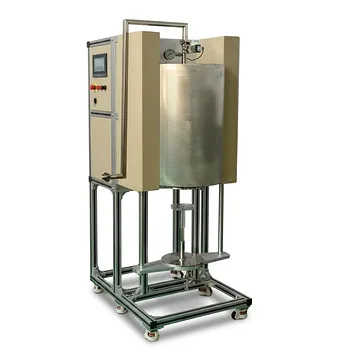
1200°C Atmosphere Controlled Automatic Bottom Loading Furnace with 6 Inch Quartz Tube
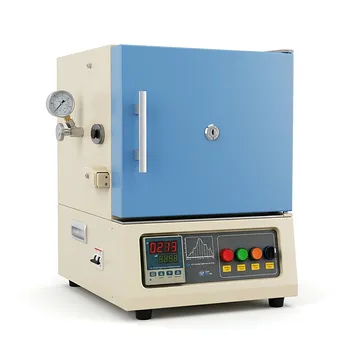
1200C Hybrid Muffle and Tube Furnace for Material Research with Dual Atmosphere Control Quartz Tubes
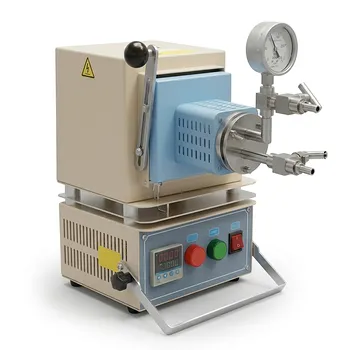
Compact Hybrid Muffle and Tube Furnace for 1000C Controlled Atmosphere Laboratory Material Sintering
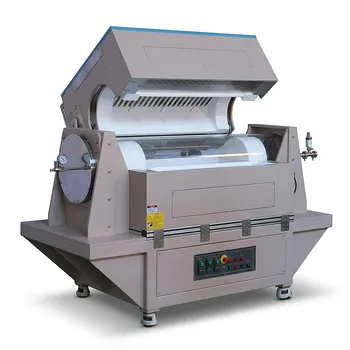
Three Zone Tube Furnace with 11 Inch or 15 Inch Quartz Tube and Hinged Flanges for Vacuum Atmosphere Heat Treatment
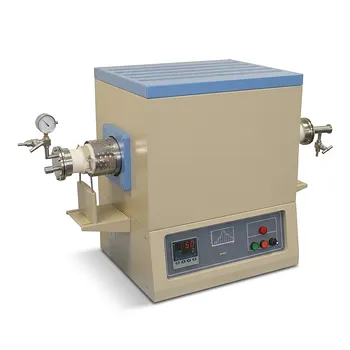
1700C High Temperature Alumina Tube Furnace with 18 Inch Heated Zone and Vacuum Sealing Flanges

1100°C High Temperature Quartz Chamber Furnace 8 Inch OD with 7.6 Liter Capacity and Vacuum Atmosphere Capability
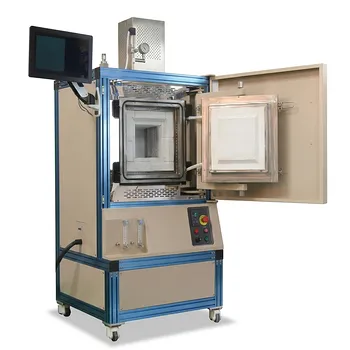
High Temperature Hydrogen Atmosphere Box Furnace 1650C Max Reducing Environment Material Synthesis System 8x8x8 Chamber
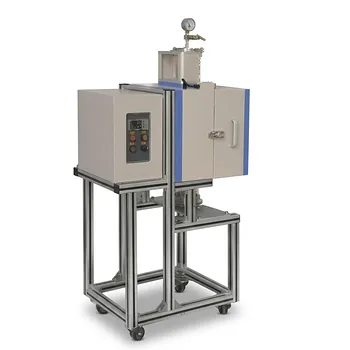
1200°C 5 Inch Vertical Quartz Tube Furnace with Stainless Steel Vacuum Flanges
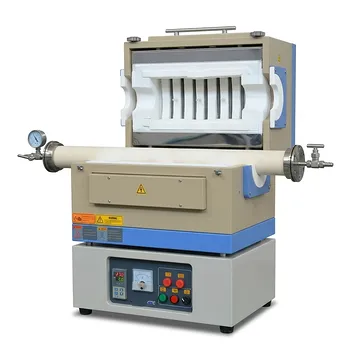
High Temperature 1600C Split Tube Furnace Vacuum Flanges Valves Optional 60mm 80mm Alumina Tube

High Temperature 1700C Tube Furnace with High Vacuum Turbomolecular Pump System and Multi Channel Mass Flow Controller Gas Mixer
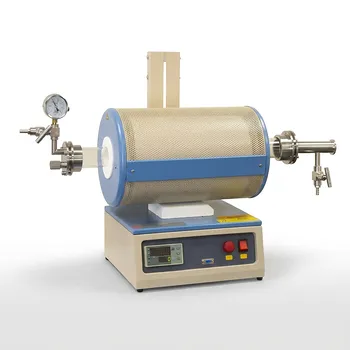
1100C Tube Furnace with Vacuum Flange and Programmable Temperature Controller for Material Science and Industrial Heat Treatment

Compact High Temperature 1600C Tube Furnace with 50mm Alumina Tube and Vacuum Flanges for Material Sintering

High Temperature 1700C Vertical Tube Furnace for Powder Spherification and Material Sintering
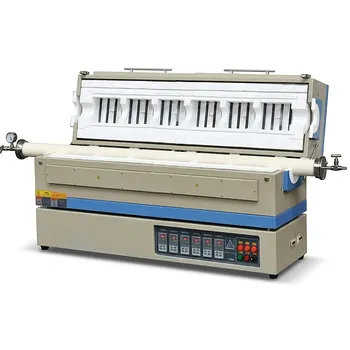
High Temperature 1700C Six Zone Split Tube Furnace with Alumina Tube and Water Cooled Flanges

1800C High Temperature Compact Vacuum Tube Furnace with 60mm OD Alumina Tube and Kanthal MoSi2 Heating Elements
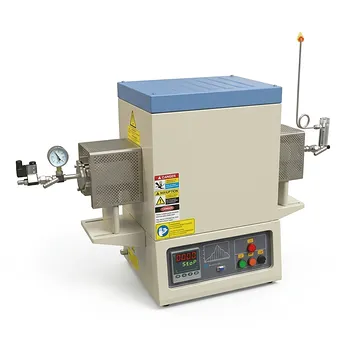
1700C Hydrogen Gas Tube Furnace with 60mm Alumina Process Tube and Integrated Hydrogen Safety Detector

High Temperature Automated 5 Inch Tube Furnace for Autonomous Material Research and Advanced Laboratory R&D
