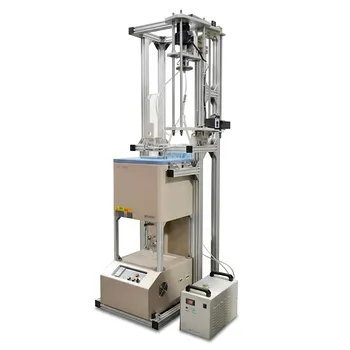
What role does a high-temperature horizontal tube furnace play in the preparation of biochar? Master Precise Pyrolysis.
Updated 3 months ago
The horizontal tube furnace serves as the primary thermal treatment platform for the controlled pyrolysis of biomass. It provides the precise, oxygen-free environment necessary to trigger the chemical degradation of organic precursors, transforming raw materials like wheat straw or pine sawdust into stable, carbon-rich biochar.
A high-temperature horizontal tube furnace allows researchers to manipulate the heating rate, residence time, and atmospheric composition of the pyrolysis process. This level of control is essential for engineering biochar with specific pore structures, surface functional groups, and fixed carbon content.
The Foundation of Precise Thermal Control
Regulation of Heating Rates and Temperatures
The furnace provides a highly controllable thermal environment, typically operating between 300 °C and 750 °C. By setting specific heating rates, such as 5 °C or 10 °C per minute, the equipment prevents uneven heating and ensures that the biomass undergoes a uniform thermochemical transition.
Management of Residence Times
The tube furnace allows for exact control over how long a sample remains at its peak temperature, known as the residence time. Whether the duration is 30 minutes or 4 hours, this consistency ensures that the biomass is thoroughly carbonized and that volatile components are effectively removed.
Consistency for Kinetic Studies
Because the horizontal tube furnace maintains a stable and repeatable environment, it is the standard tool for generating consistent biochar samples. This reliability is critical for subsequent kinetic studies and for establishing standardized carbonization methods across different research projects.
Engineering the Chemical Environment
Establishing Anaerobic Conditions
A critical role of the furnace is to maintain a strictly anaerobic or oxygen-deprived atmosphere. By introducing a constant flow of high-purity nitrogen (N2) or creating a vacuum, the furnace prevents the biomass from combusting, forcing it to undergo pyrolysis instead.
Facilitating Elemental Doping
The controlled environment within the furnace tube makes it possible to introduce specific elements like boron or nitrogen into the carbon framework. This process, known as doping, is essential for constructing electrocatalytic active sites and enhancing the performance of biochar in applications like carbon dioxide reduction.
Integration of Composite Materials
The furnace acts as a reactor for creating complex biochar/montmorillonite composites. By providing a precisely controlled reduction environment, it ensures that modified organic powders integrate correctly with mineral substrates to form specialized high-performance materials.
Structural and Material Transformation
Development of Pore Structures
As the furnace drives the dehydration and degassing of biomass, it facilitates the creation of a rich pore structure. This increased surface area is vital for biochar intended for use in filtration, catalysis, or soil amendment.
Conversion to Fixed Carbon
The high-temperature environment effectively drives off volatile matter and reorganizes carbon elements into stable frameworks. This results in the formation of either graphitic or amorphous carbon structures, significantly increasing the fixed carbon content of the final product.
Removal of Organic Impurities
Through the thermal decomposition of cellulose fibers and other organic substances, the furnace removes unwanted volatile components. This process establishes the initial carbon framework necessary for producing high-purity, stable biochar.
Understanding the Trade-offs
Equipment Scaling Limitations
While horizontal tube furnaces offer unmatched precision at the laboratory scale, they are often limited by batch size and throughput. For large-scale industrial biochar production, the precise control of a tube furnace is often traded for the higher volume capacity of rotary kilns.
Complexity of Atmosphere Maintenance
Maintaining a perfectly inert atmosphere requires a continuous supply of high-purity gases and a perfectly sealed tube. Any leak or drop in gas pressure can lead to partial combustion, which alters the chemical properties of the biochar and may ruin the sample.
Thermal Gradient Challenges
In longer horizontal tubes, there is a risk of temperature gradients where the center of the tube is hotter than the ends. Researchers must carefully calibrate their equipment to ensure the biomass sample is placed within the "constant temperature zone" to maintain the integrity of the experiment.
How to Optimize Your Biochar Production
To achieve the best results in biochar preparation, you must align your furnace settings with your specific material goals.
- If your primary focus is Maximizing Surface Area: Utilize a slower heating rate (e.g., 5 °C/min) and a moderate pyrolysis temperature to allow for the gradual development of intricate micropore structures.
- If your primary focus is High Fixed Carbon Stability: Aim for higher temperatures (above 600 °C) and longer residence times to ensure the complete removal of volatiles and the formation of a stable graphitic framework.
- If your primary focus is Electrocatalytic Activity: Ensure a strictly inert nitrogen flow and introduce doping precursors during the heating phase to facilitate the integration of active sites.
The horizontal tube furnace remains the gold standard for biochar research because it transforms the volatile complexity of biomass into a highly engineered and stable carbon material.
Summary Table:
| Key Function | Specific Benefit in Biochar Preparation |
|---|---|
| Precise Heating | Ensures uniform thermochemical transition and consistent carbonization. |
| Anaerobic Control | Prevents combustion via N2 flow/vacuum to facilitate pure pyrolysis. |
| Atmospheric Doping | Enables the introduction of Boron/Nitrogen for electrocatalytic activity. |
| Pore Engineering | Facilitates degassing to create high-surface-area porous structures. |
| Fixed Carbonization | Maximizes carbon stability by removing volatiles at high temperatures. |
Elevate Your Biochar Research with THERMUNITS
As a leading manufacturer of high-temperature laboratory equipment for material science and industrial R&D, THERMUNITS provides the precision tools you need for advanced carbonization and material synthesis. Our comprehensive range of thermal solutions—including Tube Furnaces, Rotary Kilns, Vacuum & Atmosphere Furnaces, CVD/PECVD systems, and Hot Press furnaces—is engineered to provide the stable, oxygen-free environments required for high-purity biochar production.
Ready to optimize your heating rates and material yields? Contact our experts today to discuss how our specialized heat treatment equipment can advance your research and development goals.
References
- Huiying Zhang, Weifeng Chen. Roles of biochars’ properties in their water-holding capacity and bound water evaporation: quantitative importance and controlling mechanism. DOI: 10.1007/s42773-024-00317-2
Mentioned Products
- Multi Position Tube Furnace 1100C for Laboratory Material Research and Advanced Industrial Thermal Processing
- Ten Zone Multi Orientation Laboratory Tube Furnace for 1200C High Temperature Gradient Thermal Processing
- High Temperature 1700C Vertical Tube Furnace for Powder Spherification and Material Sintering
- High Temperature Tube Furnace 1500C with Sliding Flanges and 50mm OD for Rapid Thermal Processing Fast Heating and Cooling
- High Temperature 1700C Tube Furnace with High Vacuum Turbomolecular Pump System and Multi Channel Mass Flow Controller Gas Mixer
People Also Ask
- Why use a tube furnace for oxygen annealing LaCrO3/LaMnO3? Optimize Phase Transition & Magnetic Performance.
- What key role does a laboratory high-temperature tube furnace play in the production of carbon nanofibers? Guide
- How is a laboratory high-temperature tube furnace utilized to research the products of aluminothermic reduction? Advanced Metallurgical Solutions
- What is the role of a laboratory tube furnace in the carbonization process of porous carbon foam (PCF)? Master 3D Synthesis
- What role does a laboratory tube furnace play in the pyrolysis and carbonization of biomass? Optimize Thermal Research.

Tech Team · ThermUnits
Last updated on Jun 03, 2026
Related Products
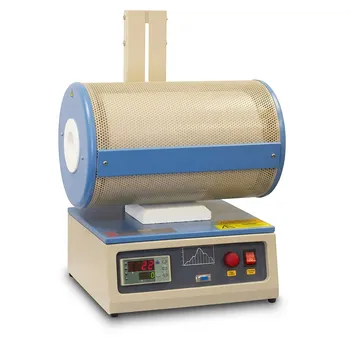
Multi Position Tube Furnace 1100C for Laboratory Material Research and Advanced Industrial Thermal Processing
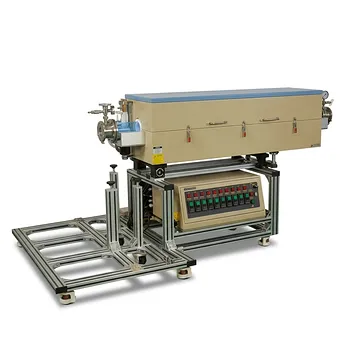
Ten Zone Multi Orientation Laboratory Tube Furnace for 1200C High Temperature Gradient Thermal Processing

High Temperature 1700C Vertical Tube Furnace for Powder Spherification and Material Sintering

High Temperature Tube Furnace 1500C with Sliding Flanges and 50mm OD for Rapid Thermal Processing Fast Heating and Cooling

High Temperature 1700C Tube Furnace with High Vacuum Turbomolecular Pump System and Multi Channel Mass Flow Controller Gas Mixer

Compact High Temperature 1600C Tube Furnace with 50mm Alumina Tube and Vacuum Flanges for Material Sintering
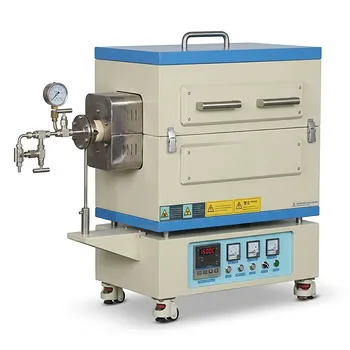
High Temperature Split Tube Furnace 1500C for Material Research Vacuum and Atmosphere Thermal Processing

High Temperature Automated 5 Inch Tube Furnace for Autonomous Material Research and Advanced Laboratory R&D

High Temperature 1700C Tube Furnace with 4 Inch OD Alumina Tube and Vacuum Sealing Flanges

High Temperature 1700C Benchtop Tube Furnace with 5 Inch Heating Zone High Purity Alumina Tube and Vacuum Sealing Flanges
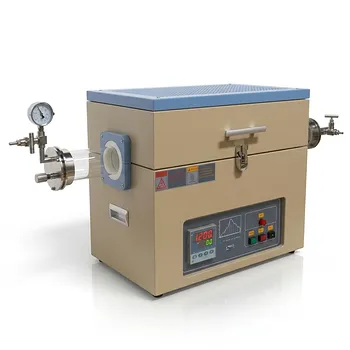
High Temperature 1200C Split Tube Furnace with Optional Quartz Tube Sizes and Vacuum Sealing Flanges for Material Science Research
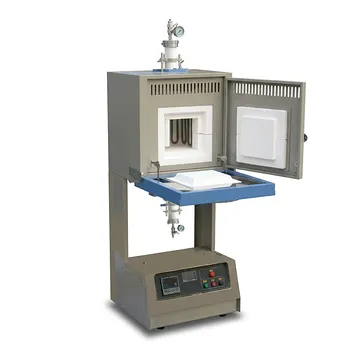
Vertical Hybrid High Temperature Furnace 1500C Alumina Tube SOFC Fuel Cell Testing Laboratory Heat Treatment Research Equipment
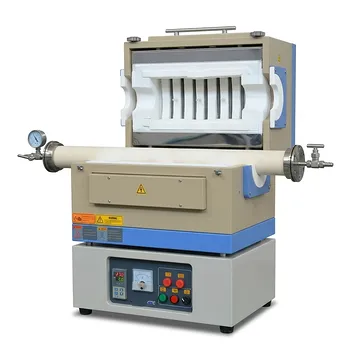
High Temperature 1600C Split Tube Furnace Vacuum Flanges Valves Optional 60mm 80mm Alumina Tube

1750°C High Temperature Benchtop Vacuum Atmosphere Tube Furnace with Kanthal Super 1800 Heating Elements and 60mm Alumina Processing Tube

1800C High Temperature Compact Vacuum Tube Furnace with 60mm OD Alumina Tube and Kanthal MoSi2 Heating Elements
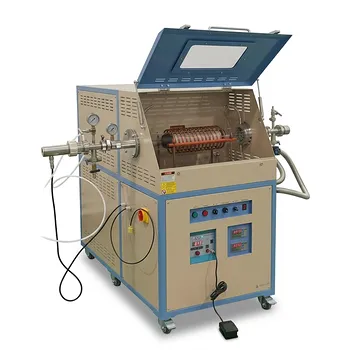
Ultra High Temperature 2300C Induction Heated Graphite Tube Furnace with Infrared Control
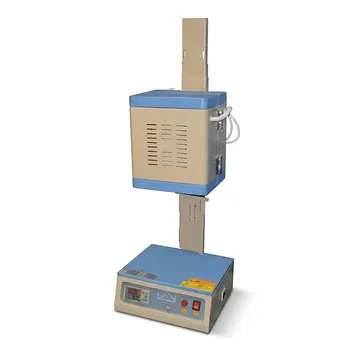
High Temperature Vertical Split Tube Furnace with PID Temperature Controller for 1 and 2 Inch Processing Tubes
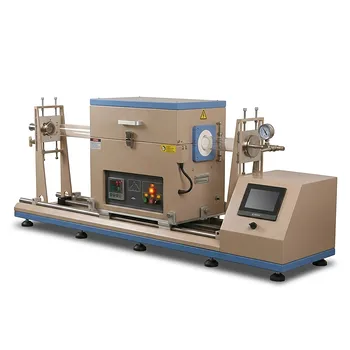
1200C Sliding Tube Furnace for Rapid Thermal Processing and CVD Graphene Growth with 100mm OD Capacity

1100C Tube Furnace with Vacuum Flange and Programmable Temperature Controller for Material Science and Industrial Heat Treatment