What role does a high-temperature tube furnace play in simulating the roasting process of pellet ores? Optimize Research
Updated 3 months ago
The high-temperature tube furnace serves as the primary simulation vessel for replicating industrial pellet ore roasting. It enables researchers to precisely control thermal gradients and atmospheric conditions, specifically simulating industrial temperature curves between 1433 K and 1553 K. By mimicking these extreme environments, the furnace allows for the detailed analysis of consolidation strength, phase transformation laws, and the microstructural evolution of iron ore pellets.
The high-temperature tube furnace is the critical link between laboratory research and industrial-scale production. It provides the precise environmental control necessary to observe how raw material variations and heating profiles affect the physical and chemical properties of the final pellet.
Replicating Industrial Thermal Cycles
The furnace acts as the core reaction equipment, bridging the gap between small-scale testing and the massive scale of industrial kilns. It allows for the execution of staged heating programs that are essential for pellet formation.
Precise Temperature Programming
A tube furnace allows for the execution of complex temperature programs including preheating, isothermal oxidation, and high-temperature roasting. This precision ensures that the thermal history of the sample matches what it would experience in a full-scale furnace.
Simulating Specific Reaction Stages
By mimicking industrial roasting temperature curves (1433 K to 1553 K), the furnace facilitates specific stages of material development. This includes the solid-phase reactions and melt consolidation necessary for the pellets to gain structural integrity.
Atmospheric and Gas Flow Management
Beyond heat, the roasting process depends heavily on the interaction between the ore and the surrounding gases. The tube furnace provides a sealed environment to control these interactions.
Creating Controlled Reaction Environments
The sealed tube structure allows for the introduction of specific process gases or inert protective gases like Argon. This control is vital for isolating specific reactions, such as preventing unwanted oxidation or simulating a reduction roasting environment.
Managing Airflow and Residence Times
The furnace acts as a gas path hub, maintaining constant air velocity across the sample. By controlling the residence time of the pellets at specific temperatures, researchers can accurately predict how organic matter decomposes and how minerals re-lattice.
Analyzing Material Consolidation and Quality
The ultimate role of the simulation is to evaluate how the pellets will perform in a blast furnace. The tube furnace provides the controlled environment needed to isolate these variables.
Evaluating Raw Material Impacts
Researchers use the furnace to determine how different additives, such as black spinel, affect the final product. It helps quantify changes in consolidation strength, ensuring the pellets can withstand the physical pressures of industrial handling.
Investigating Microstructural Evolution
The uniform temperature field within the furnace allows for a consistent analysis of phase transformation laws. By examining the pellets after roasting, scientists can map the microstructure evolution and identify how elemental doping or raw material changes alter the internal grain structure.
Understanding the Trade-offs
While high-temperature tube furnaces offer superior control, they have inherent limitations compared to industrial reality.
Scale and Mass Transfer Limitations
Laboratory furnaces operate on a much smaller scale, which can lead to differences in mass transfer rates compared to industrial-scale beds. The gas-to-solid ratio in a small tube may not perfectly replicate the complex flow dynamics of a large rotary kiln or grate-kiln system.
Temperature Gradient Discrepancies
Although the furnace provides a stable thermal environment, industrial furnaces often have significant temperature gradients within the bulk material. A tube furnace typically ensures a more uniform temperature, which may mask issues related to uneven heating that occur in larger operations.
How to Apply These Insights to Your Research
To maximize the value of your simulation, you must align the furnace parameters with your specific metallurgical goals.
- If your primary focus is consolidation strength: Prioritize the precision of the high-temperature roasting stage (1433 K - 1553 K) to ensure proper melt consolidation.
- If your primary focus is phase transformation kinetics: Use the furnace’s ability to switch atmospheres rapidly to isolate the effects of oxygen-rich or inert environments.
- If your primary focus is thermal durability: Complement tube furnace roasting with thermal bursting tests in a muffle furnace to simulate the rapid thermal shock of blast furnace charging.
By leveraging the precision of the high-temperature tube furnace, you can transform raw ore characteristics into predictable, high-performance industrial charges.
Summary Table:
| Core Role | Key Parameter/Feature | Scientific Insight Generated |
|---|---|---|
| Thermal Cycling | 1433 K – 1553 K gradients | Pellet consolidation strength & integrity |
| Atmosphere Control | Inert (Argon) or process gases | Phase transformation & oxidation laws |
| Kinetic Analysis | Precise airflow & residence time | Organic decomposition & mineral re-latticing |
| Microstructure | Uniform temperature field | Grain structure evolution & elemental doping |
Unlock High-Precision Metallurgical Results with THERMUNITS
Are you looking to bridge the gap between laboratory simulation and industrial-scale roasting? THERMUNITS is a leading manufacturer specializing in high-performance thermal equipment for material science and industrial R&D. We provide the precision machinery needed to master complex heat treatment processes.
Our extensive portfolio includes:
- Refined Tube & Rotary Furnaces for precise ore roasting simulations.
- Muffle, Vacuum, & Atmosphere Furnaces for diverse heat treatment needs.
- Advanced CVD/PECVD Systems & Hot Press Furnaces for specialized material synthesis.
- Dental & Vacuum Induction Melting (VIM) Furnaces for niche industrial applications.
Enhance the accuracy of your research and ensure the quality of your industrial charges. Contact our technical experts today to discuss your specific furnace requirements and achieve superior material performance.
References
- Chenmei Tang, Zhengqi Guo. Oxidation Behavior of High FeO Ferrous Spinels and Its Impacts on the Induration Characteristics of Oxidized Pellets. DOI: 10.1007/s11663-024-03230-y
Mentioned Products
- High Temperature Tube Furnace 1500C with Sliding Flanges and 50mm OD for Rapid Thermal Processing Fast Heating and Cooling
- Compact High Temperature 1600C Tube Furnace with 50mm Alumina Tube and Vacuum Flanges for Material Sintering
- High Temperature 1700C Benchtop Tube Furnace with 5 Inch Heating Zone High Purity Alumina Tube and Vacuum Sealing Flanges
- High Temperature 1700C Tube Furnace with High Vacuum Turbomolecular Pump System and Multi Channel Mass Flow Controller Gas Mixer
- High Temperature 1700C Vertical Tube Furnace for Powder Spherification and Material Sintering
People Also Ask
- How are high-temperature tube furnaces utilized to repair etching damage? Precision Lattice Restoration Solutions
- What core conditions does a high-temperature tube furnace provide for rGO aerogels? Mastering Precision Synthesis.
- What role does a high-temperature tube furnace play in CVD synthesis of silicon nanowires? Master VLS Growth Precision.
- How does precision tube furnace control influence CoFe nanoparticle formation? Master Your Bimetallic Synthesis.
- What role does a high-temperature tube furnace play in the sulfidation heat treatment of CoS@C/MXene nanocomposites? Guide

Tech Team · ThermUnits
Last updated on Jun 03, 2026
Related Products
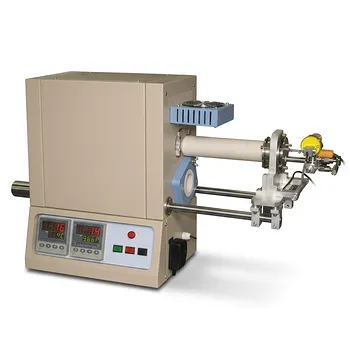
High Temperature Tube Furnace 1500C with Sliding Flanges and 50mm OD for Rapid Thermal Processing Fast Heating and Cooling

Compact High Temperature 1600C Tube Furnace with 50mm Alumina Tube and Vacuum Flanges for Material Sintering

High Temperature 1700C Benchtop Tube Furnace with 5 Inch Heating Zone High Purity Alumina Tube and Vacuum Sealing Flanges

High Temperature 1700C Tube Furnace with High Vacuum Turbomolecular Pump System and Multi Channel Mass Flow Controller Gas Mixer

High Temperature 1700C Vertical Tube Furnace for Powder Spherification and Material Sintering
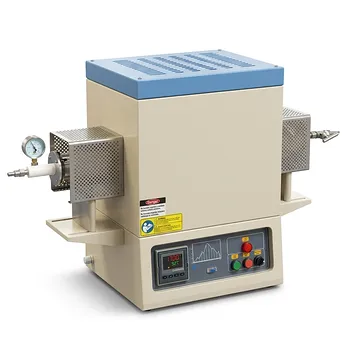
High Temperature Three Zone Tube Furnace 1700C with Alumina Tube and Water Cooled Flanges

1800C High Temperature Compact Vacuum Tube Furnace with 60mm OD Alumina Tube and Kanthal MoSi2 Heating Elements
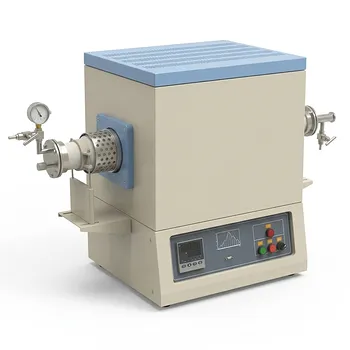
1750°C High Temperature Benchtop Vacuum Atmosphere Tube Furnace with Kanthal Super 1800 Heating Elements and 60mm Alumina Processing Tube
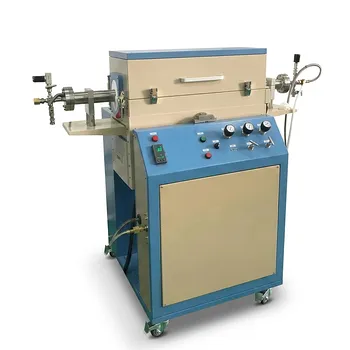
High Temperature Rocking Tube Furnace 1700°C Alumina Processing Tube with Precision Oscillation for Material Synthesis
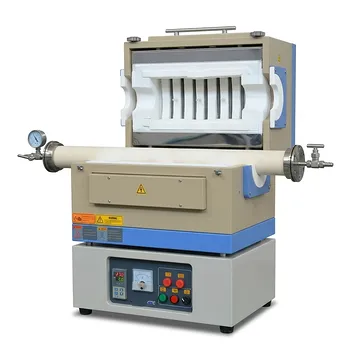
High Temperature 1600C Split Tube Furnace Vacuum Flanges Valves Optional 60mm 80mm Alumina Tube
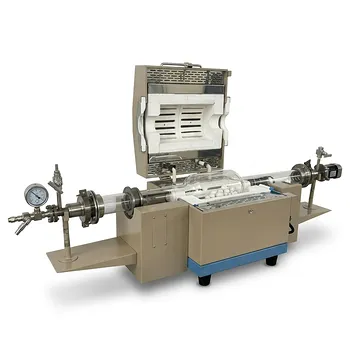
High Temperature Rotary Tube Furnace with Integrated Ball Milling and Gas Flow Function for Powder Nitriding
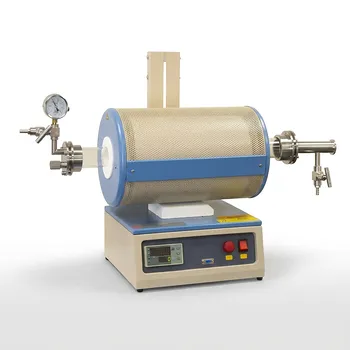
1100C Tube Furnace with Vacuum Flange and Programmable Temperature Controller for Material Science and Industrial Heat Treatment
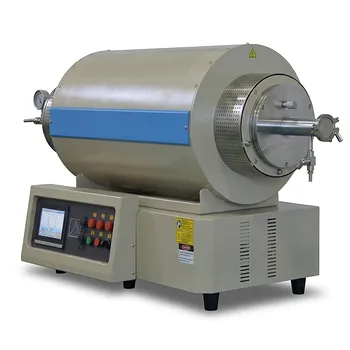
1200C Max Three Zone Tube Furnace 6 Inch OD Max with Tube and Flange
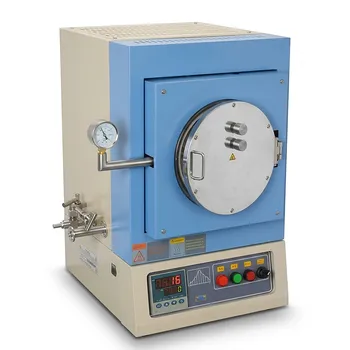
1100°C High Temperature Quartz Chamber Furnace 8 Inch OD with 7.6 Liter Capacity and Vacuum Atmosphere Capability
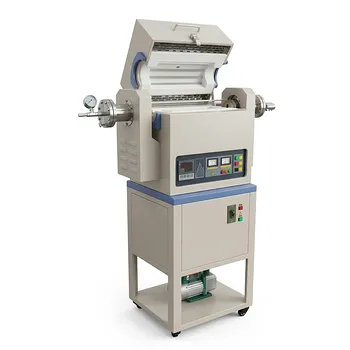
High Temperature Rotary Tilt Tubular Furnaces for Advanced Powder Sintering and Material Processing
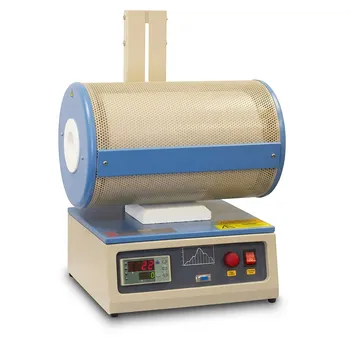
Multi Position Tube Furnace 1100C for Laboratory Material Research and Advanced Industrial Thermal Processing
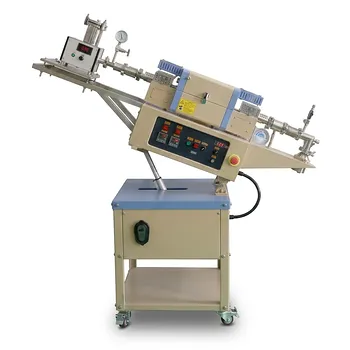
1100°C Dual Zone Rotary Tube Furnace with Automatic Feeding and Collection System for Continuous Powder Processing
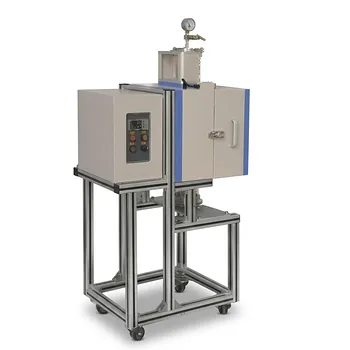
1200°C 5 Inch Vertical Quartz Tube Furnace with Stainless Steel Vacuum Flanges
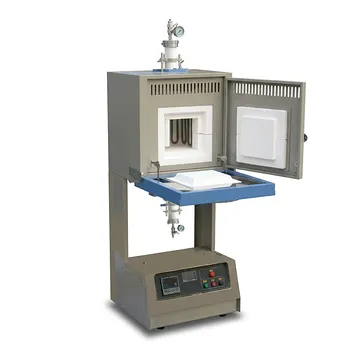
Vertical Hybrid High Temperature Furnace 1500C Alumina Tube SOFC Fuel Cell Testing Laboratory Heat Treatment Research Equipment