What role does a high-temperature tube furnace play in Ti3AlC2 synthesis? Master MAX phase thermal & atmosphere control.
Updated 3 months ago
A high-temperature tube furnace acts as the primary reactor for $Ti_3AlC_2$ synthesis by providing a controlled thermal and chemical environment. It delivers the extreme temperatures (up to 1600°C) required to trigger solid-state reactions while simultaneously maintaining an inert or reducing atmosphere to prevent the rapid oxidation of titanium and aluminum powders.
The tube furnace is the fundamental tool for MAX phase synthesis because it integrates precise thermal field management with atmosphere isolation, ensuring that raw metallic precursors undergo a specific thermodynamic conversion into a high-purity, layered crystal structure.
Thermal Management and Thermodynamic Control
Achieving High-Temperature Reaction Thresholds
The synthesis of $Ti_3AlC_2$ via solid-state reaction requires temperatures typically ranging from 1350°C to 1600°C. The tube furnace provides a stable thermal field that allows the raw powder compacts—usually a mixture of Ti, Al, and C (or TiC)—to reach the activation energy necessary for atomic diffusion.
Precise Control of Heating and Cooling Rates
Precise control over the heating rate, often set at 10°C/min, is critical for managing the reaction kinetics. This accuracy ensures that intermediate phases, such as $Ti_2AlC$, can effectively convert into the target $Ti_3AlC_2$ phase without overshooting or causing uneven grain growth.
Strategic Holding Stages
The furnace's programmable temperature controllers allow for specific "dwell" or holding times. For example, a lower-temperature stage at 400°C may be used to burn off residual binders or impurities, ensuring the final product achieves maximum phase purity and chemical stability.
Atmospheric Protection and Chemical Purity
Exclusion of Oxygen and Water Vapor
Metallic titanium and aluminum are highly reactive and will oxidize instantly at elevated temperatures if oxygen is present. The tube furnace uses a sealed tube system to continuously introduce high-purity argon (Ar) or an Ar/$H_2$ reducing atmosphere, effectively purging the chamber of oxygen and water vapor.
Maintaining Inert Environments
By maintaining a constant flow of inert gas, the furnace creates a low-oxygen environment that protects the structural integrity of the MAX phase. This prevents the formation of unwanted titanium oxides or aluminum oxides, which would otherwise degrade the electrical and mechanical properties of the precursor.
Vacuum Capabilities for Extreme Purity
In specialized cases, a high-vacuum tube furnace can reach pressures as low as 10⁻⁵ mbar. This extreme reducing environment is essential for preventing even trace oxidation during the high-temperature sintering of sensitive MAX phase compositions.
Structural Development and Material Processing
Facilitating the Layered Crystal Structure
The precise thermal distribution and stable atmosphere flow rate within the tube furnace are vital for obtaining the characteristic layered MAX phase structure. This controlled environment allows the atoms to self-assemble into the hexagonal $P6_3/mmc$ symmetry that defines $Ti_3AlC_2$.
Optimization of Post-Synthesis Processing
Tube furnace synthesis typically results in a lightly sintered product. This is a significant advantage for researchers, as the resulting material is easier to crush and grind into fine powders for further applications, such as the delamination into 2D MXenes.
Resistance to High-Temperature Corrosion
To withstand these harsh conditions, the furnace often utilizes industrial-grade high-alumina tubes and crucibles. These components offer the necessary thermal stability and resistance to corrosion from metallic vapors at temperatures exceeding 1500°C.
Understanding Technical Constraints and Trade-offs
Equipment Wear and Maintenance
Operating consistently at temperatures near 1600°C places significant stress on the heating elements (such as silicon carbide or molybdenum disilicide) and the alumina tubes. Frequent thermal cycling can lead to tube cracking or seal failure, which risks atmospheric contamination.
Throughput vs. Precision
While tube furnaces provide excellent environmental control, they are often limited in volume compared to batch furnaces. This makes them ideal for high-purity precursor synthesis and research, but potentially less efficient for large-scale industrial production.
Atmosphere Integrity
The quality of the final $Ti_3AlC_2$ phase is entirely dependent on the gas-tightness of the furnace seals. Even a minor leak can introduce enough oxygen to halt the formation of the MAX phase, resulting in a mixture of ceramics and oxides instead of the intended precursor.
How to Apply This to Your Synthesis Project
Strategic Recommendations Based on Goals
- If your primary focus is phase purity: Utilize a high-vacuum-capable tube furnace and high-purity argon (99.999%) to ensure no oxides interfere with the $Ti_2AlC$ to $Ti_3AlC_2$ conversion.
- If your primary focus is material processing (MXene precursor): Aim for a synthesis temperature that produces a "lightly sintered" bulk, facilitating easier mechanical crushing without damaging the crystal flakes.
- If your primary focus is intermediate phase control: Use a programmable furnace to implement specific holding stages at 1150°C-1350°C to ensure the complete thermodynamic transition of intermediate phases.
By masterfully balancing precise thermal energy with a strictly controlled chemical atmosphere, the high-temperature tube furnace transforms raw metallic powders into the sophisticated, layered architecture of the $Ti_3AlC_2$ MAX phase.
Summary Table:
| Key Feature | Requirement for $Ti_3AlC_2$ | Role of Tube Furnace |
|---|---|---|
| Temperature Range | 1350°C to 1600°C | Provides stable thermal field for atomic diffusion |
| Atmosphere Control | High-purity Ar or Ar/$H_2$ | Prevents oxidation of Ti and Al powders |
| Heating Kinetics | Precise 10°C/min rate | Manages transition from $Ti_2AlC$ to $Ti_3AlC_2$ |
| Vacuum Levels | Down to $10^{-5}$ mbar | Ensures extreme purity for sensitive compositions |
| Structural Integrity | Hexagonal self-assembly | Facilitates layered crystal structure formation |
Elevate Your Material Research with THERMUNITS
Achieving high-purity $Ti_3AlC_2$ MAX phase precursors requires uncompromising precision in thermal and atmospheric control. THERMUNITS is a leading manufacturer of high-temperature laboratory equipment specifically designed for the rigorous demands of material science and industrial R&D.
Whether you are synthesizing MXene precursors or developing advanced ceramics, our comprehensive range of solutions—including Tube, Vacuum, Atmosphere, Muffle, Rotary, and Hot Press furnaces—delivers the reliability you need. We also specialize in CVD/PECVD systems, Dental Furnaces, electric rotary kilns, and Vacuum Induction Melting (VIM) furnaces, supported by high-quality thermal elements.
Ready to optimize your synthesis process? Contact our expert team today to discuss how our thermal processing solutions can enhance your laboratory's efficiency and material purity.
References
- Kun Liang, Michael Naguib. Nitrogen‐Doped Graphene‐Like Carbon Intercalated MXene Heterostructure Electrodes for Enhanced Sodium‐ and Lithium‐Ion Storage. DOI: 10.1002/advs.202402708
Mentioned Products
- High Temperature 1700C Vertical Tube Furnace for Powder Spherification and Material Sintering
- High Temperature Tube Furnace 1500C with Sliding Flanges and 50mm OD for Rapid Thermal Processing Fast Heating and Cooling
- High Temperature 1200C Automatic Sliding Dual Zone Tube Furnace for 2D Transition Metal Dichalcogenides Growth and Material Sublimation Research
- High Temperature Dual Zone Rotating Tube Furnace 1500C Silicon Carbide Heating for Advanced Material Synthesis
- Compact High Temperature 1600C Tube Furnace with 50mm Alumina Tube and Vacuum Flanges for Material Sintering
People Also Ask
- What role does a high-temperature vertical tube furnace play in simulating high-carbon ferromanganese slag formation?
- What functions does a vertical high-temperature tube furnace perform? Master Industrial Sintering & R&D Simulation
- What is the primary function of a high-temperature tube furnace in Cu1-N-C synthesis? Precision Thermal Control.
- High-Temp Tube Furnace Role in Converting Microbial Proteins to Iron Single-Atom Sites: Expert Synthesis Guide
- What impact does the heating rate of a tube furnace have on biochar microstructure? Optimize Your Material R&D.

Tech Team · ThermUnits
Last updated on Jun 03, 2026
Related Products

High Temperature 1700C Vertical Tube Furnace for Powder Spherification and Material Sintering
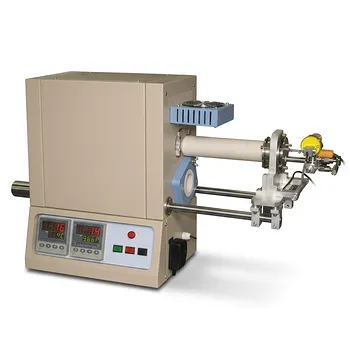
High Temperature Tube Furnace 1500C with Sliding Flanges and 50mm OD for Rapid Thermal Processing Fast Heating and Cooling
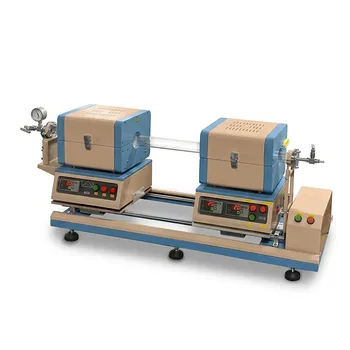
High Temperature 1200C Automatic Sliding Dual Zone Tube Furnace for 2D Transition Metal Dichalcogenides Growth and Material Sublimation Research
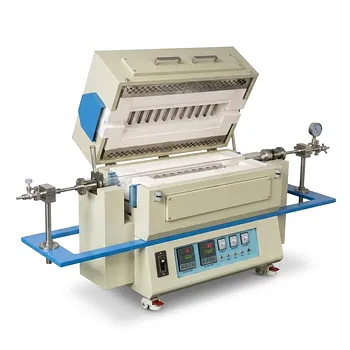
High Temperature Dual Zone Rotating Tube Furnace 1500C Silicon Carbide Heating for Advanced Material Synthesis

Compact High Temperature 1600C Tube Furnace with 50mm Alumina Tube and Vacuum Flanges for Material Sintering
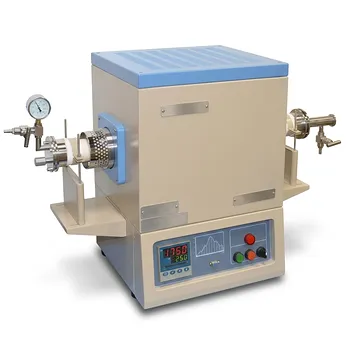
High Temperature Compact Vacuum Tube Furnace 1750C Max 60mm OD Alumina Tube
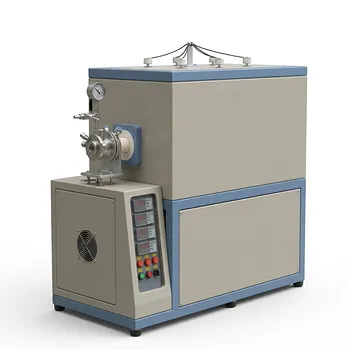
High Temperature 1700C Three Zone Tube Furnace with Alumina Tube 50mm 60mm 80mm OD for Material Research and Industrial Heat Treatment
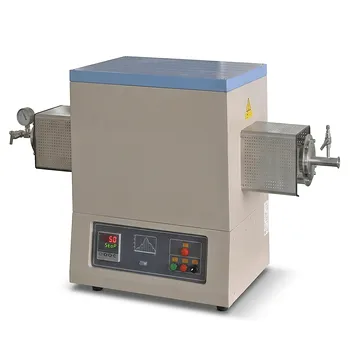
High Temperature 1700C Tube Furnace with 4 Inch OD Alumina Tube and Vacuum Sealing Flanges
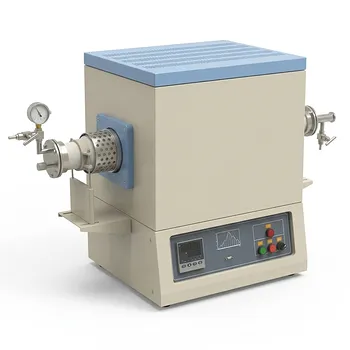
1750°C High Temperature Benchtop Vacuum Atmosphere Tube Furnace with Kanthal Super 1800 Heating Elements and 60mm Alumina Processing Tube
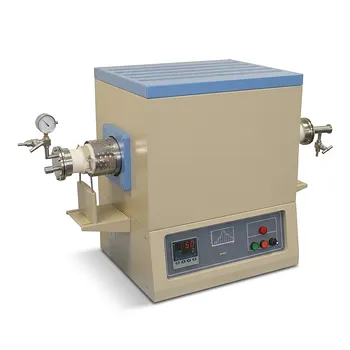
1700C High Temperature Alumina Tube Furnace with 18 Inch Heated Zone and Vacuum Sealing Flanges

High Temperature 1700C Benchtop Tube Furnace with 5 Inch Heating Zone High Purity Alumina Tube and Vacuum Sealing Flanges

High Temperature 1700C Tube Furnace with High Vacuum Turbomolecular Pump System and Multi Channel Mass Flow Controller Gas Mixer
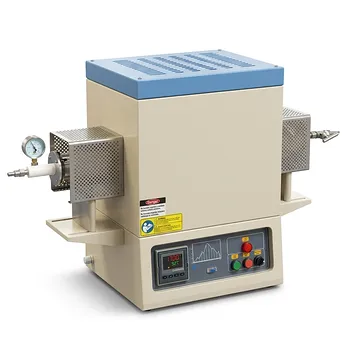
High Temperature Three Zone Tube Furnace 1700C with Alumina Tube and Water Cooled Flanges

1800C High Temperature Compact Vacuum Tube Furnace with 60mm OD Alumina Tube and Kanthal MoSi2 Heating Elements
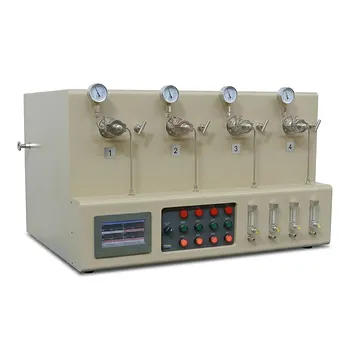
High Temperature 1700C 4 Channel Tube Furnace 1 Inch Alumina Tube for Hi-Throughput Annealing
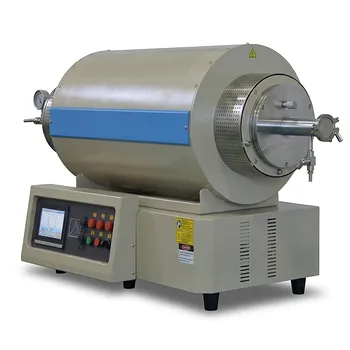
1200C Max Three Zone Tube Furnace 6 Inch OD Max with Tube and Flange
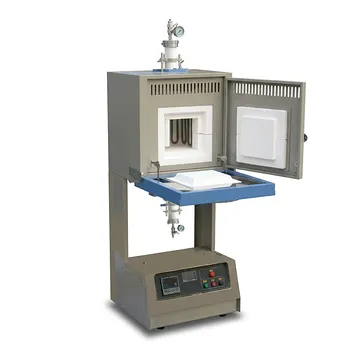
Vertical Hybrid High Temperature Furnace 1500C Alumina Tube SOFC Fuel Cell Testing Laboratory Heat Treatment Research Equipment
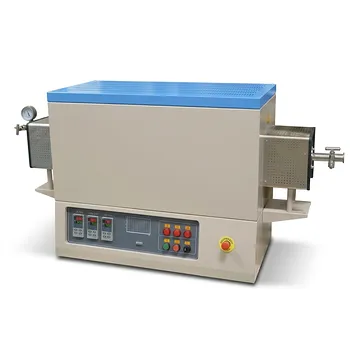
Three Zone Alumina Tube Furnace with Vacuum Flanges High Temperature 1700C Thermal Gradient CVD System
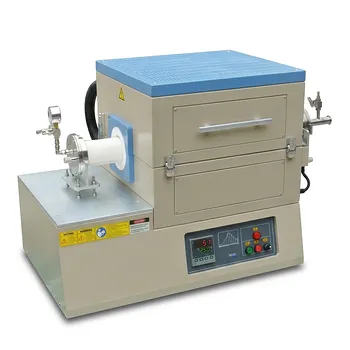
High Temperature 1700C Split Tube Furnace with Vacuum Flanges Valves and 60mm Alumina Tube
