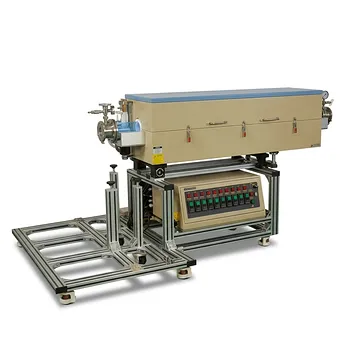
What role does a high vacuum or atmosphere tube furnace play in carbonizing mesoporous carbon nanoreactors? Expert Guide
Updated 3 months ago
A high vacuum or atmosphere tube furnace acts as the essential environment for the controlled pyrolysis of organic precursors into mesoporous carbon structures. By providing a strictly regulated inert atmosphere and precise thermal gradients, the furnace converts materials like phenolic resin or glucose into stable, conductive carbon skeletons while preventing the oxidative destruction of the nanoreactor's delicate architecture.
The core role of the tube furnace is to facilitate oxygen-free thermal decomposition, allowing organic precursors to undergo structural reorganization into carbon without being consumed by combustion. This process ensures the resulting nanoreactors maintain high electrical conductivity and a stable, high-performance skeletal structure.
Creating a Controlled Chemical Environment
Prevention of Oxidative Loss
The primary function of the atmosphere tube furnace is to exclude oxygen during high-temperature treatments. In an open environment, carbon materials would react with oxygen and combust into CO2; the furnace uses high-purity nitrogen or argon to ensure the carbon remains as a solid structure.
Facilitating Pyrolytic Dehydration
As the temperature rises, the furnace drives the pyrolytic dehydration of organic molecules. This process removes hydrogen and oxygen from the precursors—such as glucose or resins—leaving behind a purified, amorphous, or crystalline carbon layer that forms the walls of the nanoreactor.
Integration of Protective Gases
In specialized applications, the furnace can introduce specific gases like carbon monoxide to protect underlying components. This is critical when working with metal-carbon interfaces, as it inhibits chemical corrosion of substrates like titanium, preserving the smoothness and conductivity of the final material.
Precision Thermal Management
Regulating Structural Reorganization
The furnace uses integrated PID control systems to manage complex, multi-stage heating programs. By stabilizing at lower temperatures before reaching the final carbonization point (typically 800°C to 1000°C), the furnace prevents thermal overshoot, ensuring the precursor undergoes uniform pyrolysis.
Controlling Porosity and Surface Area
The rate of heating, such as a steady 3°C or 10°C per minute, directly influences how volatiles are released. A controlled release is vital for preserving the original framework's microporous structure and ensuring the formation of a high-adsorption pore network with a high specific surface area.
Enhancing Electrical Conductivity
High-temperature treatment within the furnace is the "activation" step for electrical performance. The stable thermal field allows for the graphitization or carbonization of the material, turning non-conductive organic ligands into a highly conductive carbon framework essential for electrochemical applications.
Understanding the Trade-offs
The Risk of Thermal Overshoot
While high temperatures are necessary for conductivity, excessive heat or rapid temperature spikes can cause the collapse of the mesoporous structure. If the furnace does not have precise PID control, the resulting nanoreactor may lose its intended surface area and catalytic efficiency.
Atmospheric Purity vs. Cost
Maintaining a high-vacuum or ultra-high-purity argon environment is resource-intensive. While nitrogen is a cost-effective alternative, some highly reactive precursors may require the more inert properties of argon to prevent minor side reactions that could degrade the purity of the carbon skeleton.
Balancing Uniformity and Throughput
The geometry of a tube furnace ensures excellent atmosphere control but can limit the volume of material processed at once. Overloading the furnace tube can lead to uneven heating or "dead zones" where the inert gas does not fully displace oxygen, resulting in non-uniform carbonization.
How to Apply This to Your Project
When selecting your furnace parameters for carbonizing mesoporous nanoreactors, align your settings with your specific performance goals:
- If your primary focus is Maximum Conductivity: Utilize higher temperatures (up to 1000°C) and longer soak times to promote the formation of a more ordered, graphitic carbon skeleton.
- If your primary focus is High Surface Area: Use a slower heating ramp (3°C/min) and precise multi-stage stabilization to prevent the rapid gas evolution that can collapse delicate pore networks.
- If your primary focus is Substrate Integrity: Incorporate a high-vacuum stage or specific protective gases (like Ar/CO mixes) to prevent the oxidation or coarsening of metal-carbon interfaces.
By masterfully controlling the furnace atmosphere and thermal profile, you transform a simple organic coating into a sophisticated, high-performance carbon nanoreactor.
Summary Table:
| Key Function | Impact on Nanoreactor | Critical Parameters |
|---|---|---|
| Atmosphere Control | Prevents oxidative loss; ensures carbon skeleton stability | High-purity Nitrogen or Argon flow |
| Thermal Management | Regulates pyrolytic dehydration & structural reorganization | Precise PID control; 3-10°C/min ramp |
| Carbonization | Enhances electrical conductivity and graphitization | High temperature (800°C - 1000°C) |
| Porosity Protection | Prevents pore collapse; maximizes specific surface area | Multi-stage stabilization & vacuum stage |
Achieve Unmatched Precision in Carbon Nanomaterial Synthesis
At THERMUNITS, we understand that the integrity of your mesoporous structures depends on absolute atmospheric purity and thermal stability. As a leading manufacturer of high-temperature laboratory equipment for material science and industrial R&D, we provide the tools necessary to transform organic precursors into high-performance carbon frameworks.
Our comprehensive range of thermal processing solutions includes:
- Atmosphere & Vacuum Tube Furnaces for precise carbonization.
- CVD/PECVD Systems for advanced thin-film and nanostructure growth.
- Muffle, Rotary, & Hot Press Furnaces for diverse heat treatment needs.
- Vacuum Induction Melting (VIM) and specialized Dental Furnaces.
Whether you are focusing on maximizing electrical conductivity or preserving delicate pore networks, our equipment offers the reliability your research demands.
Ready to elevate your lab's capabilities?
Contact our engineering experts today to discuss a customized solution for your thermal processing challenges!
References
- Qiang Tian, Jinlong Yang. Mesoporous carbon spheres with programmable interiors as efficient nanoreactors for H2O2 electrosynthesis. DOI: 10.1038/s41467-024-45243-w
Mentioned Products
- Vertical 1700C Vacuum and Atmosphere Tube Furnace with 80mm Alumina Tube
- 1750°C High Temperature Benchtop Vacuum Atmosphere Tube Furnace with Kanthal Super 1800 Heating Elements and 60mm Alumina Processing Tube
- 1200C Hybrid Muffle and Tube Furnace for Material Research with Dual Atmosphere Control Quartz Tubes
- Compact Hybrid Muffle and Tube Furnace for 1000C Controlled Atmosphere Laboratory Material Sintering
- Three Zone Tube Furnace with 11 Inch or 15 Inch Quartz Tube and Hinged Flanges for Vacuum Atmosphere Heat Treatment
People Also Ask
- How is an industrial-grade vertical tube furnace utilized in smelting leaching residues? Enhance Metal Recovery Efficiency
- What is the function of a laboratory-grade vertical tube furnace in fast pyrolysis? Optimize Composite Research.
- How does a vertical tube furnace facilitate thermoelectric alloy melting? Precision synthesis for material homogeneity.
- Why is a thermocouple sensor indispensable for monitoring the vertical tube furnace during gallium oxide nanowire production? Optimize VLS Growth
- What are the advantages of using a vertical tube furnace for crucible experiments simulating steel-slag interactions?

Tech Team · ThermUnits
Last updated on Jun 03, 2026
Related Products

Vertical 1700C Vacuum and Atmosphere Tube Furnace with 80mm Alumina Tube
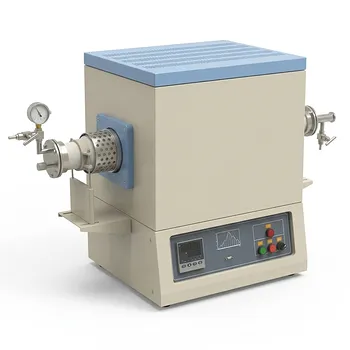
1750°C High Temperature Benchtop Vacuum Atmosphere Tube Furnace with Kanthal Super 1800 Heating Elements and 60mm Alumina Processing Tube
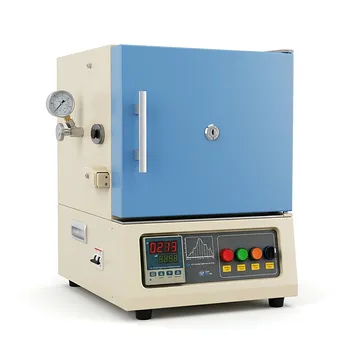
1200C Hybrid Muffle and Tube Furnace for Material Research with Dual Atmosphere Control Quartz Tubes
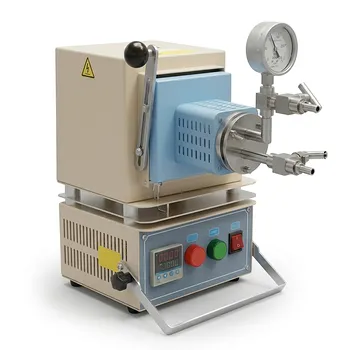
Compact Hybrid Muffle and Tube Furnace for 1000C Controlled Atmosphere Laboratory Material Sintering
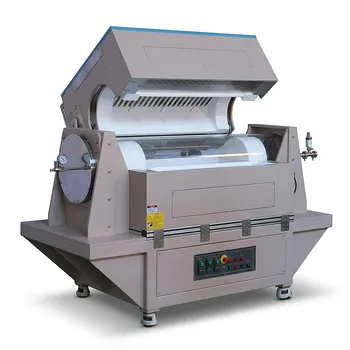
Three Zone Tube Furnace with 11 Inch or 15 Inch Quartz Tube and Hinged Flanges for Vacuum Atmosphere Heat Treatment
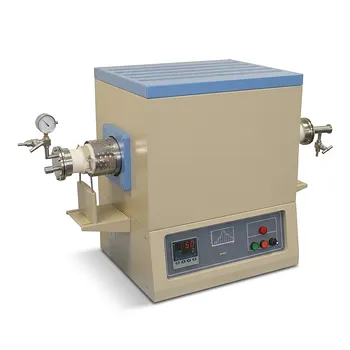
1700C High Temperature Alumina Tube Furnace with 18 Inch Heated Zone and Vacuum Sealing Flanges
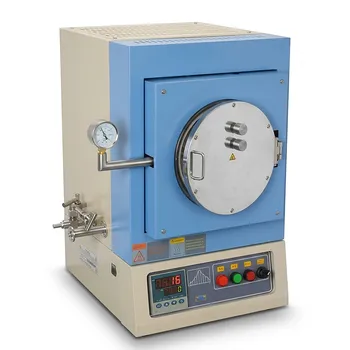
1100°C High Temperature Quartz Chamber Furnace 8 Inch OD with 7.6 Liter Capacity and Vacuum Atmosphere Capability
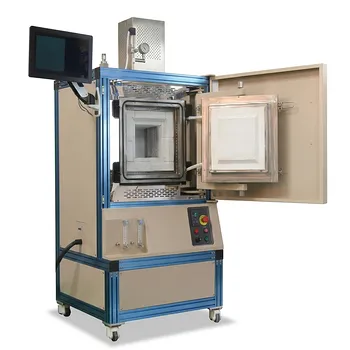
High Temperature Hydrogen Atmosphere Box Furnace 1650C Max Reducing Environment Material Synthesis System 8x8x8 Chamber
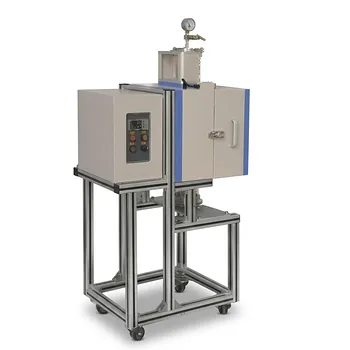
1200°C 5 Inch Vertical Quartz Tube Furnace with Stainless Steel Vacuum Flanges
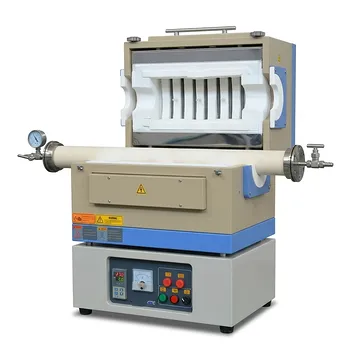
High Temperature 1600C Split Tube Furnace Vacuum Flanges Valves Optional 60mm 80mm Alumina Tube

High Temperature 1700C Tube Furnace with High Vacuum Turbomolecular Pump System and Multi Channel Mass Flow Controller Gas Mixer
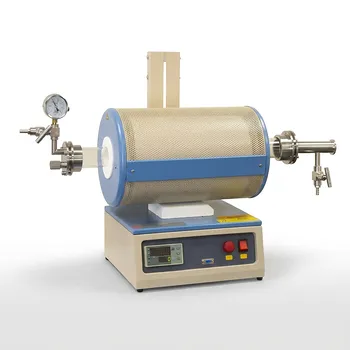
1100C Tube Furnace with Vacuum Flange and Programmable Temperature Controller for Material Science and Industrial Heat Treatment

High Temperature 1700C Vertical Tube Furnace for Powder Spherification and Material Sintering

Compact High Temperature 1600C Tube Furnace with 50mm Alumina Tube and Vacuum Flanges for Material Sintering
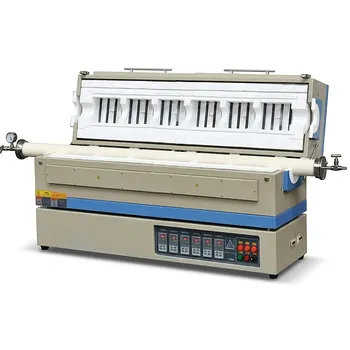
High Temperature 1700C Six Zone Split Tube Furnace with Alumina Tube and Water Cooled Flanges

1800C High Temperature Compact Vacuum Tube Furnace with 60mm OD Alumina Tube and Kanthal MoSi2 Heating Elements
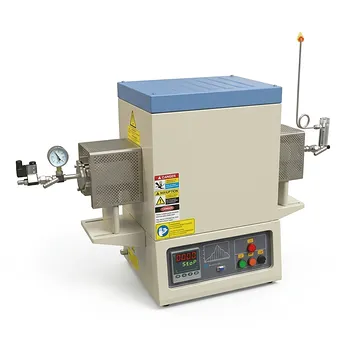
1700C Hydrogen Gas Tube Furnace with 60mm Alumina Process Tube and Integrated Hydrogen Safety Detector
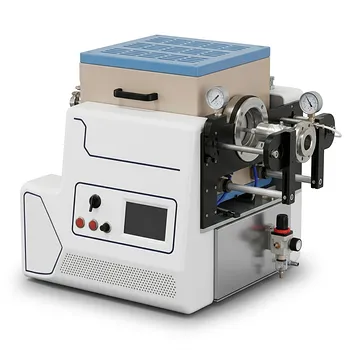
High Temperature Automated 5 Inch Tube Furnace for Autonomous Material Research and Advanced Laboratory R&D

High Temperature 1700C Benchtop Tube Furnace with 5 Inch Heating Zone High Purity Alumina Tube and Vacuum Sealing Flanges