What role does a laboratory tube furnace play in the synthesis of g-C3N4? Precision Heating for Photocatalyst R&D
Updated 3 months ago
A laboratory tube furnace acts as the primary reactor for the thermal polycondensation of organic precursors. It provides the high-temperature environment and precise thermal management required to transform monomers like urea or melamine into a stable, two-dimensional layered polymer. By strictly controlling temperature cycles and heating rates, the furnace ensures the resulting material achieves the specific crystallinity and electronic band structures necessary for photocatalytic applications.
The laboratory tube furnace is the critical tool for defining the molecular architecture of graphitic carbon nitride ($g-C_3N_4$). It facilitates the chemical transition from simple organic molecules to a complex semiconductor by regulating the kinetics of deamination and polymerization.
Facilitating Thermal Polycondensation
The Transformation of Precursors
The primary role of the furnace is to supply the energy required for thermal polycondensation. During this process, nitrogen-rich precursors (such as urea, melamine, or dicyandiamide) undergo a series of chemical reactions, including deamination and deoxygenation.
Building the Layered Structure
As the temperature rises, typically to around 550°C, the precursor molecules rearrange into a stable, two-dimensional triazine or heptazine ring structure. The furnace’s ability to maintain this thermal field allows these rings to link into a layered, graphite-like lattice.
Achieving Chemical Maturity
The furnace environment ensures the complete transformation of monomers. Without a stable high-temperature maintenance cycle—often lasting 4 to 5 hours—the polymerization remains incomplete, resulting in a material with poor stability and inferior electronic properties.
The Importance of Precision Control
Regulating Heating Rates
Precision in a tube furnace is measured by its programmable heating rate, often set between 2°C/min and 5°C/min. A slow, controlled ramp-up is essential to ensure uniform deamination and to prevent the structural defects that occur with rapid thermal expansion.
Thermal Uniformity and Crystallinity
Tube furnaces offer superior thermal uniformity compared to standard heating elements. This consistent environment is vital for producing $g-C_3N_4$ with high crystallinity, which directly correlates to the material's efficiency in transporting charge carriers during photocatalysis.
Advanced Annealing Cycles
Advanced synthesis often involves secondary thermal steps, such as annealing at 520°C. These maintenance cycles, facilitated by the furnace's high-precision controllers, are used to tune the interlayer stacking and refine the material's surface area.
Impact on Photocatalytic Properties
Tuning the Energy Band Gap
The furnace’s temperature stability directly determines the energy band structures of the $g-C_3N_4$. Small fluctuations in heat can shift the band gap, altering the material’s ability to absorb visible light and perform chemical work.
Maximizing Specific Surface Area
The thermal environment influences the degree of polymerization and the physical morphology of the final product. A well-controlled furnace cycle creates a support platform with a high specific surface area, which is essential for loading active components like copper oxide.
Ensuring Structural Integrity
By providing a stable thermal field, the furnace protects the structural integrity of the layered polymer. This prevents the degradation of the triazine rings, ensuring the material remains chemically robust for long-term use in aqueous or gaseous environments.
Understanding the Trade-offs and Pitfalls
Temperature Sensitivity
If the furnace temperature exceeds the optimal threshold (typically above 600°C), the $g-C_3N_4$ may begin to sublime or decompose. This leads to significant mass loss and a decrease in photocatalytic yield.
Heating Rate Consequences
Setting a heating rate that is too aggressive can lead to "shattering" at the molecular level. This results in an amorphous structure rather than a crystalline one, significantly reducing the material's semiconducting performance.
The Role of Air vs. Inert Atmosphere
While many syntheses occur in a closed crucible within the furnace, the atmosphere inside the tube can affect the final product. Failure to account for oxygen presence can lead to unintended doping or oxidation, which may or may not be desirable depending on the specific research goal.
How to Apply This to Your Synthesis
Making the Right Choice for Your Goal
To achieve the best results in $g-C_3N_4$ production, your furnace settings must align with your desired material characteristics.
- If your primary focus is High Crystallinity: Use a slow heating rate of 2°C/min and a longer dwell time at 550°C to allow for perfect lattice alignment.
- If your primary focus is High Surface Area: Consider a slightly faster ramp rate or a lower peak temperature to prevent excessive densification of the layers.
- If your primary focus is Band Gap Tuning: Utilize a furnace with high-precision PID controllers to experiment with narrow temperature windows between 500°C and 550°C.
The laboratory tube furnace is not merely a heat source, but the fundamental architect of the graphitic carbon nitride's molecular and electronic landscape.
Summary Table:
| Synthesis Parameter | Furnace Function | Impact on g-C3N4 |
|---|---|---|
| Heating Rate (2-5°C/min) | Controlled Ramp-up | Ensures uniform deamination & high crystallinity |
| Peak Temp (~550°C) | Thermal Stability | Facilitates stable triazine/heptazine ring formation |
| Dwell Time (4-5 hrs) | Energy Supply | Ensures complete polymerization & chemical maturity |
| Atmosphere Control | Environment Regulation | Prevents unintended oxidation or enables specific doping |
| Thermal Uniformity | Consistent Heat Field | Maintains structural integrity and optimized band gaps |
Elevate Your Material Synthesis with THERMUNITS
Achieving the perfect molecular architecture for g-C3N4 requires the highest level of thermal precision. THERMUNITS is a leading manufacturer of high-temperature laboratory equipment specifically designed for material science and industrial R&D. We provide the tools you need to master kinetics and achieve superior photocatalytic performance.
Our comprehensive range of thermal processing solutions includes:
- Laboratory Tube Furnaces (Single/Multi-zone & Rotary)
- Muffle, Vacuum, and Atmosphere Furnaces
- CVD/PECVD Systems for advanced thin-film deposition
- Vacuum Induction Melting (VIM) and Hot Press Furnaces
- Dental Furnaces and Specialized Thermal Elements
Whether you are refining band gaps or scaling up production, THERMUNITS delivers the uniformity and reliability your research demands.
Contact our technical team today to discuss your specific heat treatment requirements and find the ideal solution for your lab!
References
- Ji Wu, Guohui Song. Carbon dots prepared from waste wood and residual adhesive and their use as catalysts for hydrogen production. DOI: 10.15376/biores.19.2.2417-2435
Mentioned Products
- High Temperature Tube Furnace 1500C with Sliding Flanges and 50mm OD for Rapid Thermal Processing Fast Heating and Cooling
- Vertical 1700C Vacuum and Atmosphere Tube Furnace with 80mm Alumina Tube
- 1100C Tube Furnace with Vacuum Flange and Programmable Temperature Controller for Material Science and Industrial Heat Treatment
- Compact High Temperature 1600C Tube Furnace with 50mm Alumina Tube and Vacuum Flanges for Material Sintering
- 900°C Max Rotary Tube Furnace with 8 Inch 310S Alloy Tube and Optional Multi Zone Heating for Industrial Material Calcination
People Also Ask
- How are high-temperature tube furnaces utilized to repair etching damage? Precision Lattice Restoration Solutions
- What role does a high-temperature tube furnace play in CVD synthesis of silicon nanowires? Master VLS Growth Precision.
- What core conditions does a high-temperature tube furnace provide for rGO aerogels? Mastering Precision Synthesis.
- What role does a high-temperature tube furnace play in the sulfidation heat treatment of CoS@C/MXene nanocomposites? Guide
- How does precision tube furnace control influence CoFe nanoparticle formation? Master Your Bimetallic Synthesis.

Tech Team · ThermUnits
Last updated on Jun 03, 2026
Related Products

High Temperature Tube Furnace 1500C with Sliding Flanges and 50mm OD for Rapid Thermal Processing Fast Heating and Cooling

Vertical 1700C Vacuum and Atmosphere Tube Furnace with 80mm Alumina Tube

1100C Tube Furnace with Vacuum Flange and Programmable Temperature Controller for Material Science and Industrial Heat Treatment

Compact High Temperature 1600C Tube Furnace with 50mm Alumina Tube and Vacuum Flanges for Material Sintering
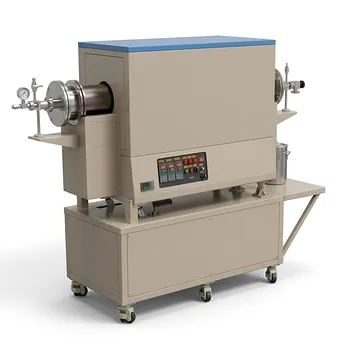
900°C Max Rotary Tube Furnace with 8 Inch 310S Alloy Tube and Optional Multi Zone Heating for Industrial Material Calcination

1700C Hydrogen Gas Tube Furnace with 60mm Alumina Process Tube and Integrated Hydrogen Safety Detector

High Temperature 1700C Tube Furnace with High Vacuum Turbomolecular Pump System and Multi Channel Mass Flow Controller Gas Mixer
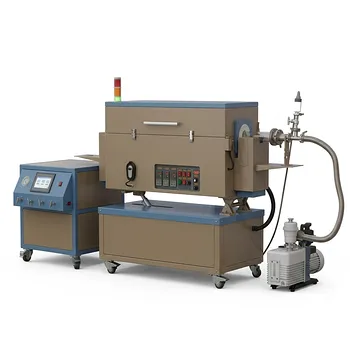
5 Inch Three Zone Rotary Tube Furnace with Integrated Gas Delivery System and 1200C Capability for Advanced Material CVD Processing
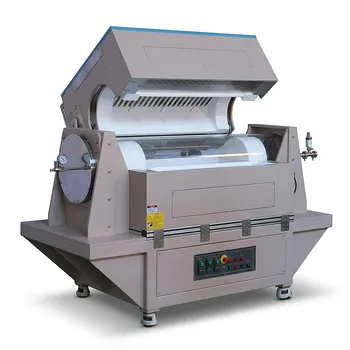
Three Zone Tube Furnace with 11 Inch or 15 Inch Quartz Tube and Hinged Flanges for Vacuum Atmosphere Heat Treatment
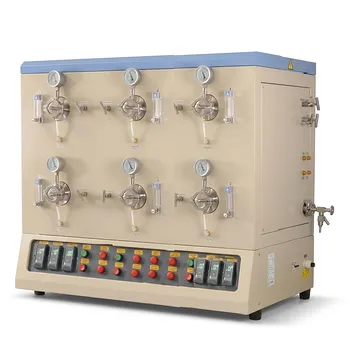
1200C High Throughput Multi Channel Tube Furnace with 50mm Quartz Tubes for Annealing and Material Phase Diagram Research

1200°C 5 Inch Vertical Quartz Tube Furnace with Stainless Steel Vacuum Flanges

High Temperature 1700C Tube Furnace with 4 Inch OD Alumina Tube and Vacuum Sealing Flanges

High Temperature 1700C Benchtop Tube Furnace with 5 Inch Heating Zone High Purity Alumina Tube and Vacuum Sealing Flanges

High Temperature 1700C Six Zone Split Tube Furnace with Alumina Tube and Water Cooled Flanges

Compact Vertical Split Quartz Tube Furnace with Stainless Steel Vacuum Flanges for Rapid Thermal Quenching and Controlled Atmosphere Material Processing

1800C High Temperature Compact Vacuum Tube Furnace with 60mm OD Alumina Tube and Kanthal MoSi2 Heating Elements
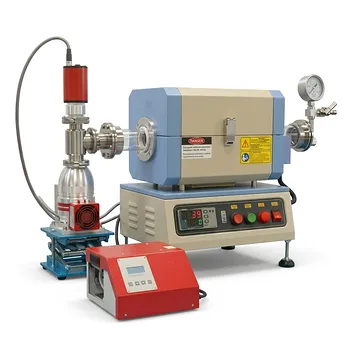
High Vacuum Compact Tube Furnace 1200C with Integrated Turbo Pump System and 8 Inch Heating Zone
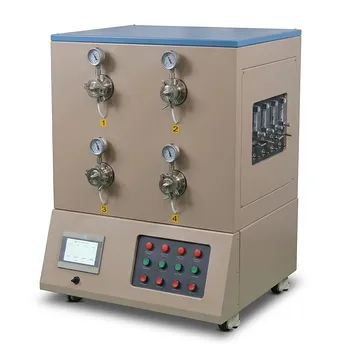
High Throughput 1200C Four Channel Tube Furnace with 3 Inch Quartz Tubes for Multi Zone Annealing and Material Research

High Temperature Automated 5 Inch Tube Furnace for Autonomous Material Research and Advanced Laboratory R&D
