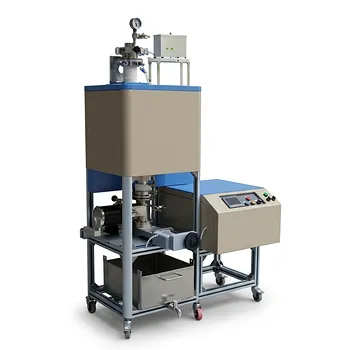
What role does a tube furnace play in preparing porous carbon? Control Annealing for Superior Material Performance
Updated 6 months ago
The tube furnace serves as the critical reaction vessel for the controlled thermal degradation and structural reorganization of carbon precursors. It provides a precisely regulated, oxygen-free environment—typically between 500 °C and 1000 °C—that facilitates pyrolysis, carbon isolation, and aromatization while preventing the direct combustion of raw materials.
Core Takeaway: A tube furnace is the fundamental tool for transforming organic precursors into porous carbon by maintaining strict control over temperature gradients and inert atmospheres, which directly determines the material's final crystallinity, pore architecture, and electrical conductivity.
Atmospheric Protection and Oxygen Exclusion
Preventing Oxidative Combustion
In the preparation of porous carbon, the presence of oxygen at high temperatures would lead to the complete combustion of the precursor into ash. The tube furnace provides a sealed environment where air is replaced by inert gases like nitrogen (N2) or argon (Ar).
Facilitating Reductive Environments
Beyond simple protection, a tube furnace allows for specialized atmospheres, such as Ar/H2 mixtures. These environments are essential for specific chemical reactions, such as the dehydrogenation of glucose or the reduction of iron salts into magnetic nanoparticles within the carbon matrix.
Precise Gas Flow Management
The furnace enables the regulation of gas flow rates (e.g., 50 mL/min). This constant flow effectively carries away volatile components and decomposition byproducts, preventing unwanted secondary reactions that could clog the developing pore structure.
Thermal Control of the Carbonization Process
Programmed Heating Rates
The ability to set a precise heating rate, such as 3 °C/min, is vital for structural integrity. Slow, controlled heating ensures that volatiles are released gradually, which helps in maintaining the desired macropore and mesopore structures without collapsing the carbon skeleton.
Achieving High-Temperature Benchmarks
Tube furnaces provide the sustained high temperatures required for different stages of development. While 500-700 °C is often sufficient for initial pyrolysis and aromatization of biomass like banana pseudostems, temperatures reaching 1000 °C are necessary to achieve high levels of graphitization and conductivity.
Uniformity of the Thermal Zone
The design of the tube ensures a constant temperature zone. This uniformity is critical for ensuring that the entire batch of material undergoes the same degree of thermal decomposition, leading to a homogenous final product with consistent chemical properties.
Engineering the Porous Architecture
Template Removal and Gasification
In many synthetic processes, "hard templates" like polystyrene or "soft templates" like block copolymers are used to shape the carbon. The tube furnace provides the thermal energy required to gasify these templates, leaving behind a hollow, interconnected 3D network.
Facilitating Chemical Activation
High-temperature environments inside the furnace promote reactions between the carbon substrate and activation agents like ZnCl2 or molten salts. This process, known as chemical activation, "etches" the carbon surface to create a high-density network of micropores, vastly increasing the surface area.
Heteroatom Doping and Functionalization
The furnace environment can be used to induce heteroatom doping (such as nitrogen or sulfur). By controlling the temperature and the precursor mix, researchers can precisely tune the doping levels, which is essential for improving the material's performance in energy storage or catalysis.
Understanding the Trade-offs
The Balance of Temperature and Surface Area
Increasing the annealing temperature generally improves electrical conductivity and graphitization. However, excessively high temperatures can cause the carbon framework to shrink or pores to collapse, potentially reducing the total surface area.
Atmospheric Purity vs. Cost
While argon provides a more inert environment than nitrogen, it is significantly more expensive. Nitrogen is suitable for most biomass carbonization, but at temperatures exceeding 1000 °C, it may react with certain precursors, making the choice of gas a critical trade-off between purity and operational cost.
Scale and Uniformity Constraints
Tube furnaces are excellent for laboratory-scale precision, but maintaining a perfectly uniform temperature zone becomes increasingly difficult as the tube diameter increases. This limitation can lead to batch-to-batch variability when attempting to scale up production.
How to Apply This to Your Project
Recommendations for Material Optimization
- If your primary focus is high electrical conductivity: Target higher annealing temperatures (900 °C - 1000 °C) to promote the formation of a well-developed graphitized carbon framework.
- If your primary focus is maximum surface area/porosity: Utilize lower heating rates and incorporate chemical activation agents or templates that decompose at specific temperature plateaus (500 °C - 700 °C).
- If your primary focus is magnetic properties or doping: Use a tube furnace to precisely control the reduction atmosphere (e.g., Ar/H2) to convert metal salts into active nanoparticles while simultaneously carbonizing the skeleton.
By masterfully controlling the thermal and atmospheric parameters of a tube furnace, you transform raw organic matter into a highly engineered technical material.
Summary Table:
| Process Element | Furnace Function | Impact on Porous Carbon |
|---|---|---|
| Atmosphere Control | Oxygen exclusion via N2/Ar/H2 flow | Prevents combustion; enables heteroatom doping. |
| Thermal Regulation | Programmed heating rates (e.g., 3°C/min) | Maintains structural integrity; controls pore size. |
| Graphitization | Sustained high temperatures (up to 1000°C) | Enhances electrical conductivity and crystallinity. |
| Template Removal | Precise thermal decomposition zone | Creates interconnected 3D porous networks. |
| Activation | Facilitating chemical etching reactions | Maximizes surface area and micropore density. |
Elevate Your Material Research with THERMUNITS
Are you looking to optimize the conductivity and surface area of your porous carbon materials? THERMUNITS is a leading manufacturer of high-temperature laboratory equipment specifically designed for material science and industrial R&D.
We offer a comprehensive range of thermal processing solutions, including Tube, Vacuum, Atmosphere, and Rotary furnaces, as well as advanced CVD/PECVD systems and Vacuum Induction Melting (VIM) furnaces. Our equipment provides the precise temperature gradients and atmospheric purity required to transform organic precursors into high-performance technical materials.
Ready to enhance your lab's thermal processing capabilities? Contact our expert team today to discuss your specific heat treatment requirements and discover how our tailored furnace solutions can drive your research forward.
References
- Md. Mahmudur Rahman, Muhammed Shah Miran. Preparation and Characterization of Porous Carbon Material from Banana Pseudo-Stem. DOI: 10.3329/dujs.v72i1.71190
Mentioned Products
- High Temperature Tube Furnace 1500C with Sliding Flanges and 50mm OD for Rapid Thermal Processing Fast Heating and Cooling
- Vertical 1700C Vacuum and Atmosphere Tube Furnace with 80mm Alumina Tube
- 1100C Tube Furnace with Vacuum Flange and Programmable Temperature Controller for Material Science and Industrial Heat Treatment
- Compact High Temperature 1600C Tube Furnace with 50mm Alumina Tube and Vacuum Flanges for Material Sintering
- 900°C Max Rotary Tube Furnace with 8 Inch 310S Alloy Tube and Optional Multi Zone Heating for Industrial Material Calcination
People Also Ask
- How are high-temperature tube furnaces utilized to repair etching damage? Precision Lattice Restoration Solutions
- How does precision tube furnace control influence CoFe nanoparticle formation? Master Your Bimetallic Synthesis.
- What role does a high-temperature tube furnace play in CVD synthesis of silicon nanowires? Master VLS Growth Precision.
- What role does a high-temperature tube furnace play in the sulfidation heat treatment of CoS@C/MXene nanocomposites? Guide
- What core conditions does a high-temperature tube furnace provide for rGO aerogels? Mastering Precision Synthesis.

Tech Team · ThermUnits
Last updated on Apr 14, 2026
Related Products
High Temperature Tube Furnace 1500C with Sliding Flanges and 50mm OD for Rapid Thermal Processing Fast Heating and Cooling
Vertical 1700C Vacuum and Atmosphere Tube Furnace with 80mm Alumina Tube
1100C Tube Furnace with Vacuum Flange and Programmable Temperature Controller for Material Science and Industrial Heat Treatment
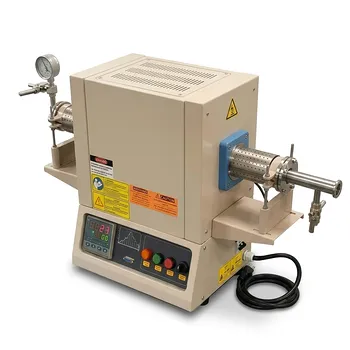
Compact High Temperature 1600C Tube Furnace with 50mm Alumina Tube and Vacuum Flanges for Material Sintering
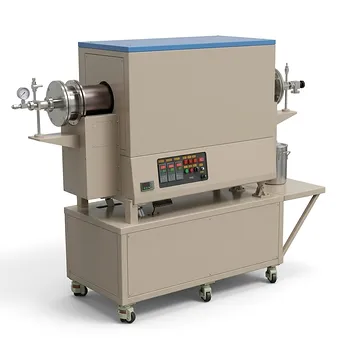
900°C Max Rotary Tube Furnace with 8 Inch 310S Alloy Tube and Optional Multi Zone Heating for Industrial Material Calcination
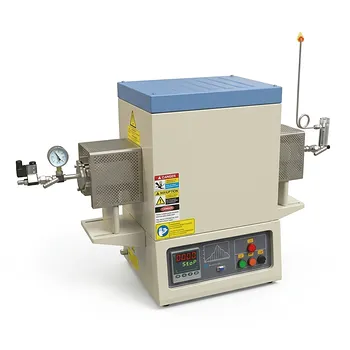
1700C Hydrogen Gas Tube Furnace with 60mm Alumina Process Tube and Integrated Hydrogen Safety Detector
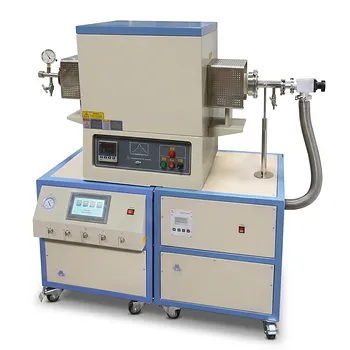
High Temperature 1700C Tube Furnace with High Vacuum Turbomolecular Pump System and Multi Channel Mass Flow Controller Gas Mixer
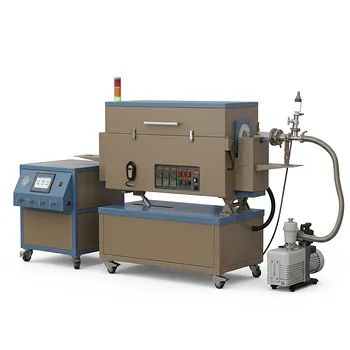
5 Inch Three Zone Rotary Tube Furnace with Integrated Gas Delivery System and 1200C Capability for Advanced Material CVD Processing
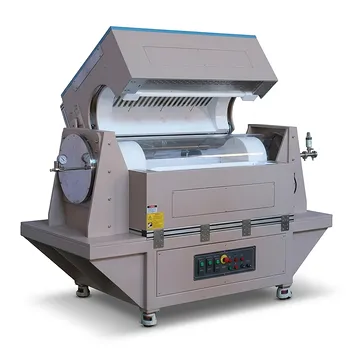
Three Zone Tube Furnace with 11 Inch or 15 Inch Quartz Tube and Hinged Flanges for Vacuum Atmosphere Heat Treatment
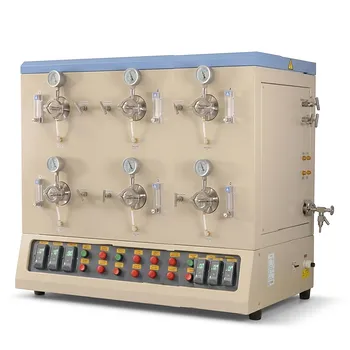
1200C High Throughput Multi Channel Tube Furnace with 50mm Quartz Tubes for Annealing and Material Phase Diagram Research
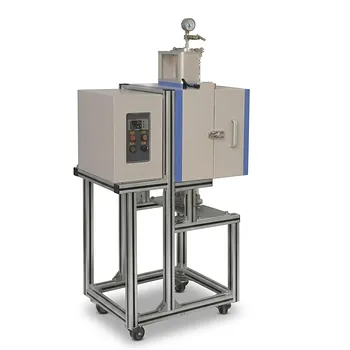
1200°C 5 Inch Vertical Quartz Tube Furnace with Stainless Steel Vacuum Flanges
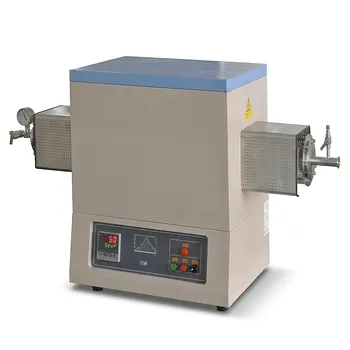
High Temperature 1700C Tube Furnace with 4 Inch OD Alumina Tube and Vacuum Sealing Flanges
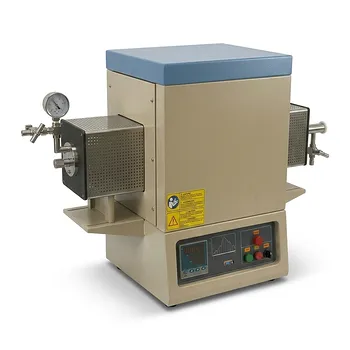
High Temperature 1700C Benchtop Tube Furnace with 5 Inch Heating Zone High Purity Alumina Tube and Vacuum Sealing Flanges
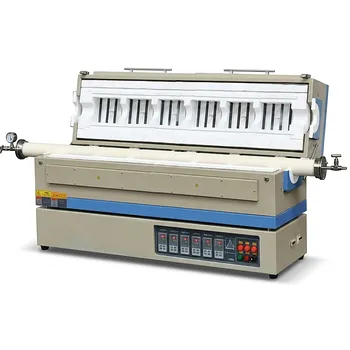
High Temperature 1700C Six Zone Split Tube Furnace with Alumina Tube and Water Cooled Flanges
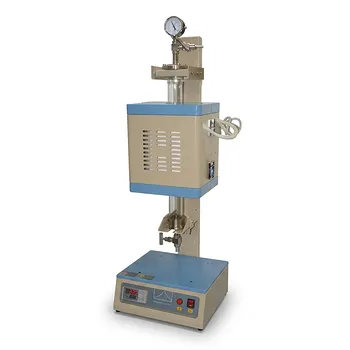
Compact Vertical Split Quartz Tube Furnace with Stainless Steel Vacuum Flanges for Rapid Thermal Quenching and Controlled Atmosphere Material Processing
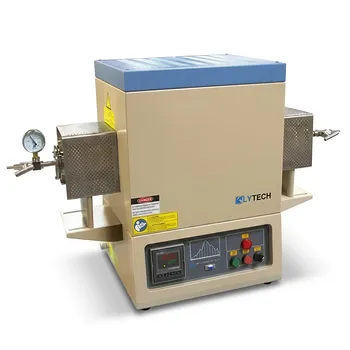
1800C High Temperature Compact Vacuum Tube Furnace with 60mm OD Alumina Tube and Kanthal MoSi2 Heating Elements
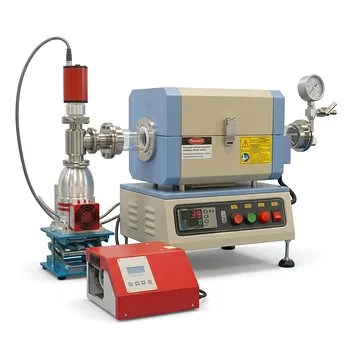
High Vacuum Compact Tube Furnace 1200C with Integrated Turbo Pump System and 8 Inch Heating Zone
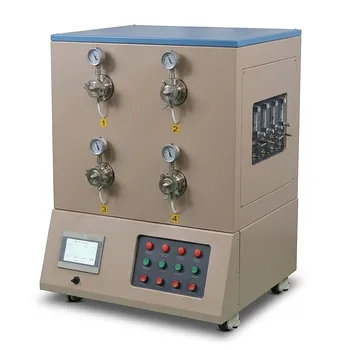
High Throughput 1200C Four Channel Tube Furnace with 3 Inch Quartz Tubes for Multi Zone Annealing and Material Research
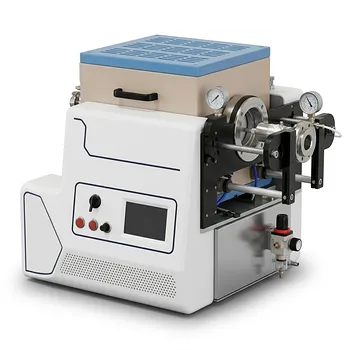
High Temperature Automated 5 Inch Tube Furnace for Autonomous Material Research and Advanced Laboratory R&D