What role does a tube furnace play in converting biomass to activated carbon? Master Precise Pyrolysis & Pore Engineering
Updated 3 months ago
The tube furnace is the primary reactor for the thermal transformation of biomass into activated carbon. It provides a hermetically sealed, high-temperature environment that drives the carbonization and pyrolysis of organic matter. By maintaining a precisely controlled, oxygen-free atmosphere, the furnace allows for the removal of volatile impurities and the intentional engineering of a high-surface-area pore network.
The tube furnace enables the precise carbonization of biomass by maintaining an oxygen-free atmosphere and specific thermal profiles. This controlled pyrolysis is the critical step for enriching carbon content and engineering the complex pore structures required for high-performance adsorption.
Establishing the Controlled Reaction Environment
Maintaining Atmospheric Integrity
The tube furnace provides a strictly oxygen-free or inert atmosphere, typically using nitrogen, argon, or carbon dioxide. This environment is essential to prevent the biomass from combusting (burning) and instead forces it to undergo pyrolysis.
Precision Temperature Management
To achieve high-quality carbon, the furnace maintains precise temperatures, often ranging from 600°C to 800°C. Advanced systems also allow for specific heating rates, such as 10°C per minute, to ensure uniform structural reorganization of the carbon atoms.
Facilitating Chemical Reduction
In specialized applications, the tube furnace drives chemical reactions that convert iron precursors into zero-valent iron crystals. This process occurs simultaneously with carbonization, creating composite materials with enhanced functional properties.
Driving the Structural Transformation
Removal of Volatile Matter
As the furnace heats the biomass, it triggers the breakdown of complex organic compounds like cellulose and lignin. This process, known as degassing or dehydration, removes non-carbon components and enriches the final product's fixed carbon content.
Development of Pore Networks
The heat treatment induces the formation of a preliminary microporous structure within the carbon skeleton. This complex network of pores is what gives activated carbon its high adsorption capacity, making it effective for filtration and storage.
Inducing Structural Reorganization
At higher temperatures, such as 1100°C, the tube furnace can induce the formation of disordered hard carbon structures. This specific reorganization is vital for advanced energy applications, such as sodium-ion battery storage.
Understanding the Trade-offs
Temperature vs. Surface Area
While higher temperatures increase carbon purity, exceeding the optimal range (often above 800°C-900°C) can cause pore shrinkage or collapse. This reduces the available surface area and diminishes the material's adsorption efficiency.
Heating Rate Complexity
Rapid heating rates may save time but can lead to non-uniform carbonization and internal structural stress. Conversely, very slow heating rates increase energy consumption and may result in an overly dense carbon structure with limited porosity.
Atmospheric Sensitivity
Any leak in the furnace's seals that allows oxygen to enter will result in the partial gasification or ash formation of the sample. Maintaining a consistent inert gas flow is a critical but resource-intensive requirement for successful production.
Applying This to Your Process
Choosing the right parameters for your tube furnace depends entirely on your intended application for the resulting activated carbon.
- If your primary focus is gas or liquid filtration: Target temperatures between 600°C and 800°C with a steady nitrogen flow to maximize the development of the microporous network.
- If your primary focus is energy storage (e.g., sodium-ion batteries): Utilize higher temperatures up to 1100°C under argon protection to foster the creation of disordered hard carbon structures.
- If your primary focus is catalytic composites: Use a one-step pyrolysis method to simultaneously carbonize biomass and reduce metallic precursors into active crystalline sites.
By mastering the thermal and atmospheric variables of the tube furnace, you can precisely tune the physical and chemical properties of biomass-derived carbon for any industrial need.
Summary Table:
| Process Objective | Tube Furnace Function | Key Parameters |
|---|---|---|
| Carbonization | Maintains inert atmosphere to prevent combustion | Oxygen-free (N2/Ar), 600°C - 800°C |
| Pore Engineering | Controls thermal profiles to develop surface area | Precise heating rates (e.g., 10°C/min) |
| Impurity Removal | Drives degassing of cellulose and lignin | High-temperature stability & hermetic sealing |
| Structural Tuning | Induces hard carbon formation for energy storage | High-temp range up to 1100°C |
Elevate Your Material Research with THERMUNITS
At THERMUNITS, we specialize in manufacturing high-performance thermal processing solutions designed for the rigors of material science and industrial R&D. Our precision Tube Furnaces provide the atmospheric integrity and thermal accuracy essential for converting biomass into high-value activated carbon.
Beyond tube furnaces, we offer a comprehensive range of equipment including Muffle, Vacuum, Atmosphere, Rotary, and Hot Press furnaces, as well as CVD/PECVD systems and Vacuum Induction Melting (VIM) furnaces. Whether you are engineering advanced filtration media or next-generation battery materials, our team is dedicated to providing the reliable tools you need for success.
Ready to optimize your heat treatment process? Contact our experts today to find the perfect thermal solution for your laboratory or production line!
References
- Kamil Dudek, Piotr Żabiński. Ni-Doped Activated Carbon from Invasive Plants as a Potential Catalyst. DOI: 10.3390/met14070790
Mentioned Products
- High Temperature Tube Furnace 1500C with Sliding Flanges and 50mm OD for Rapid Thermal Processing Fast Heating and Cooling
- Vertical 1700C Vacuum and Atmosphere Tube Furnace with 80mm Alumina Tube
- 1100C Tube Furnace with Vacuum Flange and Programmable Temperature Controller for Material Science and Industrial Heat Treatment
- Compact High Temperature 1600C Tube Furnace with 50mm Alumina Tube and Vacuum Flanges for Material Sintering
- 900°C Max Rotary Tube Furnace with 8 Inch 310S Alloy Tube and Optional Multi Zone Heating for Industrial Material Calcination
People Also Ask
- How are high-temperature tube furnaces utilized to repair etching damage? Precision Lattice Restoration Solutions
- What core conditions does a high-temperature tube furnace provide for rGO aerogels? Mastering Precision Synthesis.
- What role does a high-temperature tube furnace play in CVD synthesis of silicon nanowires? Master VLS Growth Precision.
- How does precision tube furnace control influence CoFe nanoparticle formation? Master Your Bimetallic Synthesis.
- What role does a high-temperature tube furnace play in the sulfidation heat treatment of CoS@C/MXene nanocomposites? Guide

Tech Team · ThermUnits
Last updated on Jun 03, 2026
Related Products

High Temperature Tube Furnace 1500C with Sliding Flanges and 50mm OD for Rapid Thermal Processing Fast Heating and Cooling

Vertical 1700C Vacuum and Atmosphere Tube Furnace with 80mm Alumina Tube

1100C Tube Furnace with Vacuum Flange and Programmable Temperature Controller for Material Science and Industrial Heat Treatment

Compact High Temperature 1600C Tube Furnace with 50mm Alumina Tube and Vacuum Flanges for Material Sintering
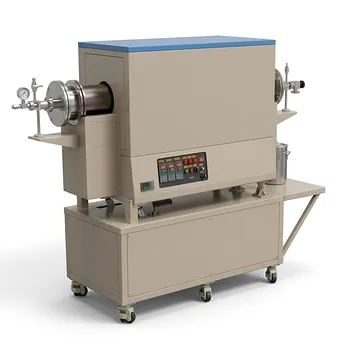
900°C Max Rotary Tube Furnace with 8 Inch 310S Alloy Tube and Optional Multi Zone Heating for Industrial Material Calcination

1700C Hydrogen Gas Tube Furnace with 60mm Alumina Process Tube and Integrated Hydrogen Safety Detector

High Temperature 1700C Tube Furnace with High Vacuum Turbomolecular Pump System and Multi Channel Mass Flow Controller Gas Mixer
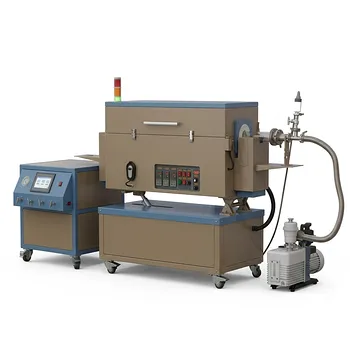
5 Inch Three Zone Rotary Tube Furnace with Integrated Gas Delivery System and 1200C Capability for Advanced Material CVD Processing

Three Zone Tube Furnace with 11 Inch or 15 Inch Quartz Tube and Hinged Flanges for Vacuum Atmosphere Heat Treatment

1200C High Throughput Multi Channel Tube Furnace with 50mm Quartz Tubes for Annealing and Material Phase Diagram Research

1200°C 5 Inch Vertical Quartz Tube Furnace with Stainless Steel Vacuum Flanges
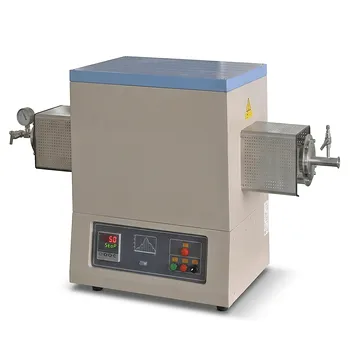
High Temperature 1700C Tube Furnace with 4 Inch OD Alumina Tube and Vacuum Sealing Flanges

High Temperature 1700C Benchtop Tube Furnace with 5 Inch Heating Zone High Purity Alumina Tube and Vacuum Sealing Flanges

High Temperature 1700C Six Zone Split Tube Furnace with Alumina Tube and Water Cooled Flanges

Compact Vertical Split Quartz Tube Furnace with Stainless Steel Vacuum Flanges for Rapid Thermal Quenching and Controlled Atmosphere Material Processing

1800C High Temperature Compact Vacuum Tube Furnace with 60mm OD Alumina Tube and Kanthal MoSi2 Heating Elements
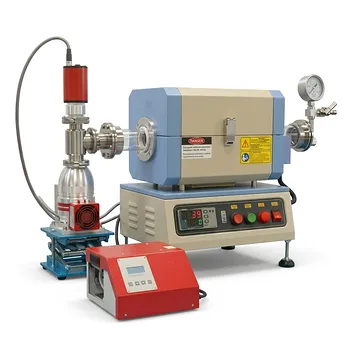
High Vacuum Compact Tube Furnace 1200C with Integrated Turbo Pump System and 8 Inch Heating Zone
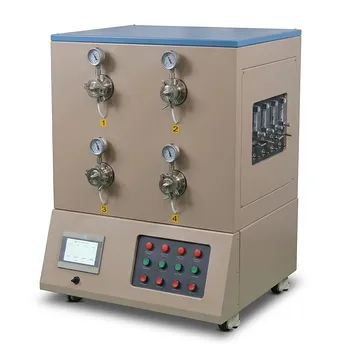
High Throughput 1200C Four Channel Tube Furnace with 3 Inch Quartz Tubes for Multi Zone Annealing and Material Research

High Temperature Automated 5 Inch Tube Furnace for Autonomous Material Research and Advanced Laboratory R&D
