What role does a tube furnace play in the synthesis of SAC support precursors? Mastering Precision Thermal Pyrolysis.
Updated 3 months ago
The tube furnace serves as the foundational thermal reactor for synthesizing high-loading single-atom catalyst supports by providing a precise, inert-atmosphere environment for pyrolysis. Specifically, it enables the transformation of organic precursors like melamine and dicyandiamide into structured carbon nitride (PCN) or nitrogen-doped carbon (NC) frameworks at temperatures typically around 600°C.
The tube furnace is the critical tool for transforming organic precursors into stable, high-surface-area supports through controlled pyrolysis. Its ability to maintain a high-purity inert atmosphere and uniform heat ensures the creation of nitrogen-rich scaffolds necessary for anchoring high-density metal active sites.
Thermal Transformation and Pyrolysis
Creating the Structural Foundation
The primary role of the tube furnace is to facilitate the thermal decomposition (pyrolysis) of organic mixtures such as melamine, dicyandiamide, or guanine. Under high heat, these precursors undergo solid-phase chemical reactions to form polymeric carbon nitride (PCN) or nitrogen-doped carbon (NC).
These materials serve as the structural backbone for the catalyst. The furnace ensures that the resulting support has the necessary surface area and porosity to host metal atoms later in the process.
Regulating the Chemical Environment
A tube furnace allows for precise atmosphere control, which is vital for maintaining the integrity of the carbon framework. By utilizing a continuous flow of high-purity argon, the furnace prevents the oxidation of the precursors that would otherwise occur in an ambient oxygen environment.
This inert atmosphere is essential for the carbonization of polymers. It allows organic ligands to convert into a nitrogen-doped skeleton without burning away, ensuring the support remains chemically receptive to metal anchoring.
Achieving High-Loading Stability
Facilitating Nitrogen-Doping for Metal Anchoring
The furnace environment promotes the incorporation of nitrogen atoms into the carbon lattice, creating Fe-Nx or Ni-Nx active sites. These nitrogen-doped regions act as "anchors" that prevent metal atoms from migrating and aggregating into larger, less effective nanoparticles.
By maintaining temperatures between 600°C and 1,000°C, the tube furnace provides the activation energy required for these metal-support bonds to form. High-precision thermal control ensures a high density of active sites, which is the hallmark of high-loading single-atom catalysts (SACs).
Ensuring Morphological Uniformity
The stable, long temperature zone within a tube furnace ensures that the precursors experience uniform heat distribution. This consistency is critical for controlling the crystallinity and particle size of the support.
Without this uniformity, the catalyst support might develop irregular crystal structures. Precise heating curves and holding times allow for sufficient diffusion of components, resulting in a final product with high phase purity.
Understanding the Trade-offs
Thermal Limits and Structural Integrity
While higher temperatures (up to 1,000°C) can improve electrical conductivity and active site formation, they also risk the thermal degradation of the nitrogen-doped framework. If the temperature exceeds the stability threshold of the carbon nitride, the support may collapse, reducing the overall loading capacity.
Static vs. Dynamic Calcination
Tube furnaces are often preferred for their ability to handle continuous gas flow, which carries away gaseous byproducts of pyrolysis. However, for certain large-scale batches, the static environment of a muffle furnace might be used after an initial tube furnace pyrolysis to ensure complete structural stabilization.
Gas Flow Sensitivity
The rate of the inert gas flow can significantly impact the final morphology. If the flow is too low, byproduct gases may linger and cause secondary reactions; if too high, it may cause temperature fluctuations that disrupt the crystal growth of the support.
Applying This to Your Catalyst Project
How to Apply This to Your Project
Choosing the right thermal treatment parameters is essential for maximizing the performance of your single-atom catalyst.
- If your primary focus is maximizing nitrogen-rich anchoring sites: Use a moderate temperature (approx. 600°C) in the tube furnace to prevent the excessive loss of nitrogen atoms from the carbon nitride framework.
- If your primary focus is high electrical conductivity (e.g., for Fe–N–C fuel cells): Operate the tube furnace at higher temperatures near 1,000°C to ensure a high degree of graphitization in the carbon support.
- If your primary focus is synthesizing metal-oxide based supports: Ensure a stable argon flow to pyrolyze metal-organic frameworks (MOFs), which allows organic ligands to transform into a carbon skeleton while keeping the metal atoms uniformly dispersed.
By mastering the precise thermal and atmospheric controls of the tube furnace, you can engineer highly stable supports that sustain the high metal loadings required for next-generation industrial catalysts.
Summary Table:
| Furnace Function | Impact on Single-Atom Catalysts (SACs) | Key Control Parameters |
|---|---|---|
| Controlled Pyrolysis | Transforms organic precursors into N-doped carbon scaffolds | Temperature (600°C - 1,000°C) |
| Inert Atmosphere | Prevents oxidation; ensures stable nitrogen-rich anchoring sites | Argon flow rate & gas purity |
| Uniform Heating | Ensures morphological consistency and prevents metal aggregation | Heating rate & hot zone length |
| Phase Regulation | Optimizes crystallinity and electrical conductivity of supports | Holding time & vacuum levels |
Elevate Your Catalyst Research with THERMUNITS
As a leading manufacturer of high-temperature laboratory equipment for material science and industrial R&D, THERMUNITS provides the precision tools necessary for advanced heat treatments. Our high-performance Tube Furnaces, CVD/PECVD systems, and Vacuum Atmosphere Furnaces are engineered to deliver the exact thermal uniformity and atmosphere control required for synthesizing high-loading single-atom catalysts.
Whether you are scaling up nitrogen-doped carbon production or exploring complex metal-organic frameworks (MOFs), our comprehensive range of thermal solutions—including Muffle, Rotary, and Hot Press furnaces—ensures your research achieves maximum stability and efficiency.
Ready to optimize your thermal processing? Contact our expert team today to find the perfect solution for your laboratory needs!
References
- Yi Wang, Yunteng Qu. General negative pressure annealing approach for creating ultra-high-loading single atom catalyst libraries. DOI: 10.1038/s41467-024-50061-1
Mentioned Products
- High Temperature Tube Furnace 1500C with Sliding Flanges and 50mm OD for Rapid Thermal Processing Fast Heating and Cooling
- Vertical 1700C Vacuum and Atmosphere Tube Furnace with 80mm Alumina Tube
- Compact High Temperature 1600C Tube Furnace with 50mm Alumina Tube and Vacuum Flanges for Material Sintering
- 900°C Max Rotary Tube Furnace with 8 Inch 310S Alloy Tube and Optional Multi Zone Heating for Industrial Material Calcination
- 1100C Tube Furnace with Vacuum Flange and Programmable Temperature Controller for Material Science and Industrial Heat Treatment
People Also Ask
- How are high-temperature tube furnaces utilized to repair etching damage? Precision Lattice Restoration Solutions
- What core conditions does a high-temperature tube furnace provide for rGO aerogels? Mastering Precision Synthesis.
- What role does a high-temperature tube furnace play in CVD synthesis of silicon nanowires? Master VLS Growth Precision.
- How does precision tube furnace control influence CoFe nanoparticle formation? Master Your Bimetallic Synthesis.
- What role does a high-temperature tube furnace play in the sulfidation heat treatment of CoS@C/MXene nanocomposites? Guide

Tech Team · ThermUnits
Last updated on Jun 02, 2026
Related Products
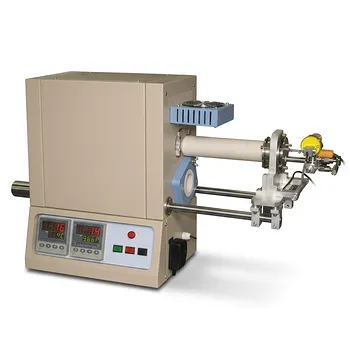
High Temperature Tube Furnace 1500C with Sliding Flanges and 50mm OD for Rapid Thermal Processing Fast Heating and Cooling

Vertical 1700C Vacuum and Atmosphere Tube Furnace with 80mm Alumina Tube

Compact High Temperature 1600C Tube Furnace with 50mm Alumina Tube and Vacuum Flanges for Material Sintering
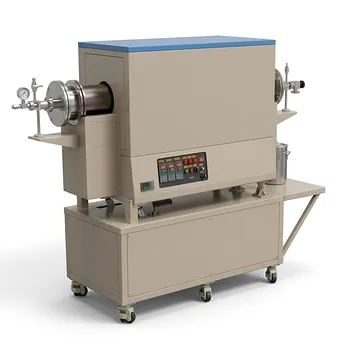
900°C Max Rotary Tube Furnace with 8 Inch 310S Alloy Tube and Optional Multi Zone Heating for Industrial Material Calcination
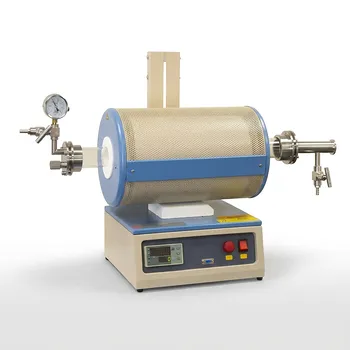
1100C Tube Furnace with Vacuum Flange and Programmable Temperature Controller for Material Science and Industrial Heat Treatment

High Temperature 1700C Tube Furnace with High Vacuum Turbomolecular Pump System and Multi Channel Mass Flow Controller Gas Mixer
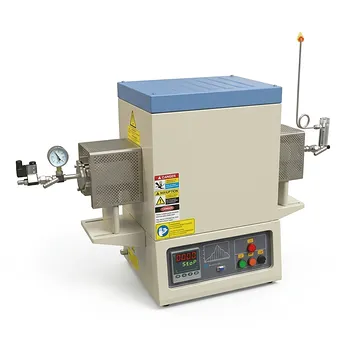
1700C Hydrogen Gas Tube Furnace with 60mm Alumina Process Tube and Integrated Hydrogen Safety Detector
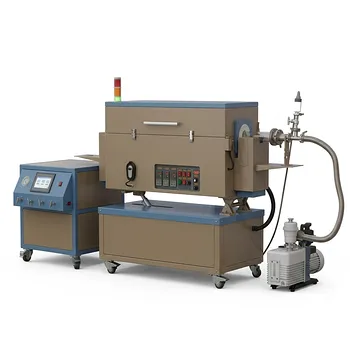
5 Inch Three Zone Rotary Tube Furnace with Integrated Gas Delivery System and 1200C Capability for Advanced Material CVD Processing

1200°C 5 Inch Vertical Quartz Tube Furnace with Stainless Steel Vacuum Flanges
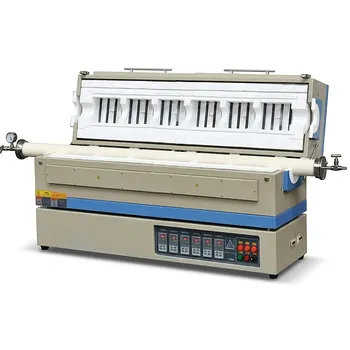
High Temperature 1700C Six Zone Split Tube Furnace with Alumina Tube and Water Cooled Flanges
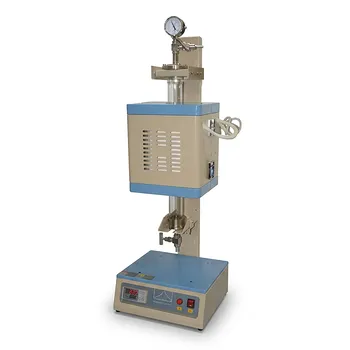
Compact Vertical Split Quartz Tube Furnace with Stainless Steel Vacuum Flanges for Rapid Thermal Quenching and Controlled Atmosphere Material Processing
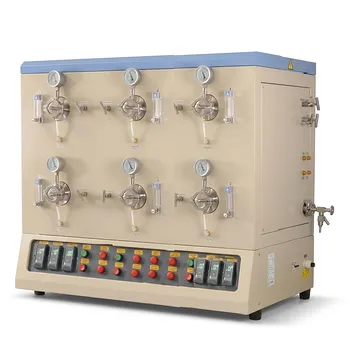
1200C High Throughput Multi Channel Tube Furnace with 50mm Quartz Tubes for Annealing and Material Phase Diagram Research
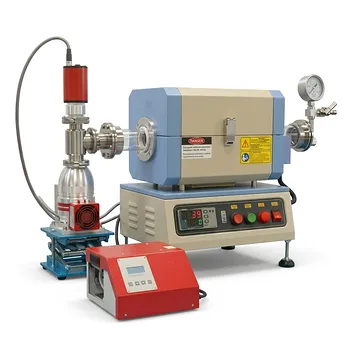
High Vacuum Compact Tube Furnace 1200C with Integrated Turbo Pump System and 8 Inch Heating Zone
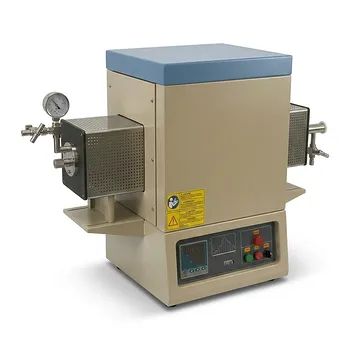
High Temperature 1700C Benchtop Tube Furnace with 5 Inch Heating Zone High Purity Alumina Tube and Vacuum Sealing Flanges

1800C High Temperature Compact Vacuum Tube Furnace with 60mm OD Alumina Tube and Kanthal MoSi2 Heating Elements
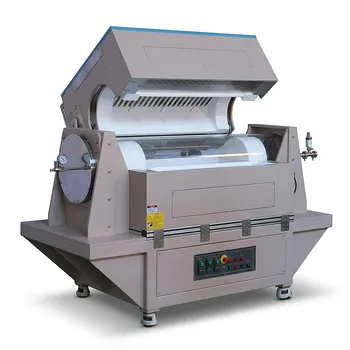
Three Zone Tube Furnace with 11 Inch or 15 Inch Quartz Tube and Hinged Flanges for Vacuum Atmosphere Heat Treatment
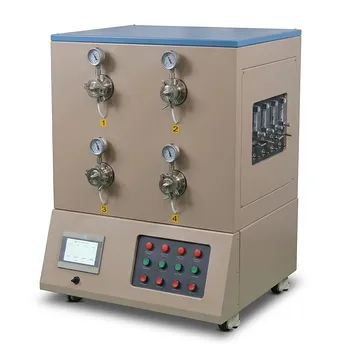
High Throughput 1200C Four Channel Tube Furnace with 3 Inch Quartz Tubes for Multi Zone Annealing and Material Research

High Temperature 1700C Vertical Tube Furnace for Powder Spherification and Material Sintering
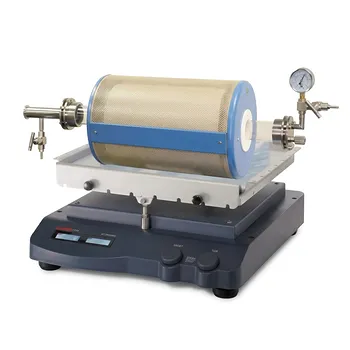
High Temperature Rocking Tube Furnace with Quartz Tube and Vacuum Flange for Materials Synthesis
