What role does a vacuum-sealed quartz tube play in solid-state reactions? Ensure Chemical Precision in Synthesis.
Updated 3 months ago
The vacuum-sealed quartz tube is the critical containment system that ensures chemical precision during high-temperature synthesis. In the specific case of $Cu_2Se-CuGaSe_2$, the tube acts as a hermetic reaction vessel that prevents the loss of volatile selenium (Se) and protects the materials from atmospheric contamination. This allows the composite phases to form accurately according to their intended stoichiometry at temperatures exceeding 600°C.
Core Takeaway: A vacuum-sealed quartz tube provides an isolated, chemically inert environment that is essential for maintaining the precise elemental ratios of materials by suppressing the volatilization of components and preventing unwanted oxidation or hydrolysis during long-duration heat treatments.
Ensuring Precise Chemical Stoichiometry
Suppression of Volatile Component Loss
The primary challenge in synthesizing chalcogenides like $Cu_2Se-CuGaSe_2$ is the high vapor pressure of elements such as selenium. Without a sealed environment, these volatile components would escape the reaction zone as gas, leading to a final product that is deficient in Se.
Maintaining Phase Composition
By sealing the raw materials in a fixed volume, the quartz tube forces a local equilibrium between the solid and gas phases. This ensures that the predefined chemical stoichiometry of the $Cu_2Se-CuGaSe_2$ composite is preserved, which is vital for achieving the desired electronic and structural properties.
Long-Duration Thermal Stability
Solid-state reactions often require processing times exceeding 200 hours to ensure complete phase transformation. The flame-sealed quartz environment maintains its hermetic integrity throughout these extended cycles, preventing even trace amounts of material loss over time.
Providing an Ultra-Clean Reaction Environment
Prevention of Oxidation and Hydrolysis
Many precursors used in solid-state synthesis are highly sensitive to oxygen and moisture. A high-vacuum seal (often reaching levels better than $10^{-3}$ Pa) eliminates residual air, preventing the formation of unwanted oxides or hydroxides that would degrade the material’s performance.
Chemical Inertness of High-Purity Quartz
High-purity quartz is chosen because it does not react with most metallic or chalcogenide precursors at processing temperatures. This chemical neutrality ensures that the reaction vessel itself does not introduce impurities into the high-purity $Cu_2Se-CuGaSe_2$ matrix.
Elimination of Atmospheric Interference
The vacuum environment removes nitrogen and other impurity gases that could interfere with the atomic-layer epitaxial process or crystal growth. This results in higher single-crystal quality and better uniformity across the synthesized material.
Thermal and Mechanical Resilience
High-Temperature Tolerance
Quartz can withstand extreme thermal environments, often exceeding 1000°C, without losing structural integrity. This allows for high-temperature melting and sintering processes that are necessary to drive the solid-state diffusion required for complex composite formation.
Pressure Management
While the tube is under vacuum, the internal pressure can rise significantly as components vaporize at high temperatures. The thickness and quality of the quartz tube are engineered to withstand these internal pressure gradients, keeping the reaction safely contained.
Understanding the Trade-offs
Risk of Explosive Failure
If the internal vapor pressure of volatile components (like sulfur or selenium) exceeds the mechanical strength of the quartz, the tube may explode. This requires precise calculations of the free volume within the tube and careful control of the heating rate.
Potential for Trace Contamination
While quartz is generally inert, at temperatures approaching its softening point, it may become slightly permeable to small ions like hydrogen or helium. Additionally, if the quartz is not of "high purity" grade, trace metal impurities from the tube wall can migrate into the sample.
Technical Complexity and Cost
Vacuum sealing requires specialized equipment, including high-vacuum pumps and hydrogen-oxygen torches for flame-sealing. This increases the operational cost and complexity compared to open-air processing or simple inert gas flows.
How to Apply This to Your Project
Choosing the Right Protocol
When designing a solid-state reaction, your containment strategy must match your material's sensitivity.
- If your primary focus is Stoichiometric Precision: Use a flame-sealed quartz tube with minimal dead space to suppress the volatilization of elements like Se, S, or halides.
- If your primary focus is preventing Oxidation: Ensure a vacuum level of at least $10^{-3}$ Pa and consider a double-encapsulation technique for highly reactive rare-earth elements.
- If your primary focus is High-Quality Single Crystals: Utilize a vacuum-sealed environment to eliminate turbulence and gas-phase impurities during the melt-growth or CVD process.
The vacuum-sealed quartz tube is not merely a container; it is a foundational tool that enables the synthesis of advanced materials by providing total control over the chemical environment.
Summary Table:
| Feature | Function | Key Benefit |
|---|---|---|
| Volatility Suppression | Containment of Se/S vapors | Maintains precise chemical stoichiometry |
| Vacuum Integrity | Removal of air ($10^{-3}$ Pa) | Prevents oxidation and hydrolysis |
| Thermal Resilience | Operates up to 1000°C+ | Enables high-temp solid-state diffusion |
| Chemical Inertness | Neutral high-purity quartz | Eliminates reaction vessel contamination |
Elevate Your Material Research with THERMUNITS
As a leading manufacturer of high-temperature laboratory equipment, THERMUNITS provides the advanced thermal processing solutions required for complex material synthesis. Whether you are conducting solid-state reactions in Tube Furnaces, requiring precise environment control in Vacuum/Atmosphere Furnaces, or scaling production with CVD/PECVD systems, our equipment is engineered for R&D excellence.
We empower researchers in material science and industrial R&D with high-purity solutions, including Hot Press Furnaces, Rotary Kilns, and VIM systems, ensuring your synthesis achieves maximum purity and stoichiometric accuracy.
Contact our technical experts today to optimize your heat treatment workflow!
References
- Zhixiong Yin, Pierre F. P. Poudeu. Native Defects Hybridization and Electronic Transport in Cu<sub>2</sub>Se‐CuGaSe<sub>2</sub> Hierarchical Composites. DOI: 10.1002/adfm.202408063
Mentioned Products
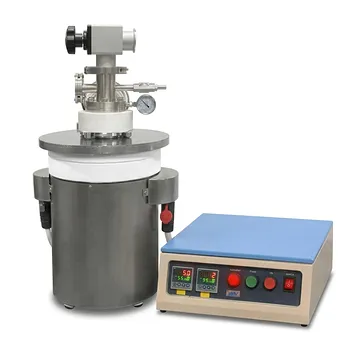
- Compact Vertical Split Quartz Tube Furnace with Stainless Steel Vacuum Flanges for Rapid Thermal Quenching and Controlled Atmosphere Material Processing
- High Temperature Rocking Tube Furnace with Quartz Tube and Vacuum Flange for Materials Synthesis
- High Temperature 1200C Split Tube Furnace with Hinged Vacuum Flanges and 4 Inch Quartz Tube for Laboratory Research
- Three Zone Tube Furnace with 11 Inch or 15 Inch Quartz Tube and Hinged Flanges for Vacuum Atmosphere Heat Treatment
- 1100°C High Temperature Quartz Chamber Furnace 8 Inch OD with 7.6 Liter Capacity and Vacuum Atmosphere Capability
People Also Ask
- Why integrate a vertical split tube furnace with hydraulic loading for HSECC? Essential for In-Situ Fire Simulation.
- What is the role of a split vertical tube furnace during flash sintering of 8YSZ and 20SDC? Master Ultra-Fast R&D
- What is the primary engineering purpose for using a customized ventilation hood when operating a split tube furnace? RCF Safety
- Why is a quartz tube furnace necessary for phosphorus-doped MoS2/GO preparation? Ensure Purity & Precise Synthesis
- What is the primary function of a Quartz Tube Furnace in ZnO VLS growth? Master High-Precision Nanowire Synthesis

Tech Team · ThermUnits
Last updated on Jun 02, 2026
Related Products

Compact Vertical Split Quartz Tube Furnace with Stainless Steel Vacuum Flanges for Rapid Thermal Quenching and Controlled Atmosphere Material Processing
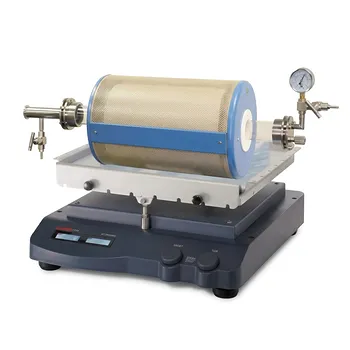
High Temperature Rocking Tube Furnace with Quartz Tube and Vacuum Flange for Materials Synthesis
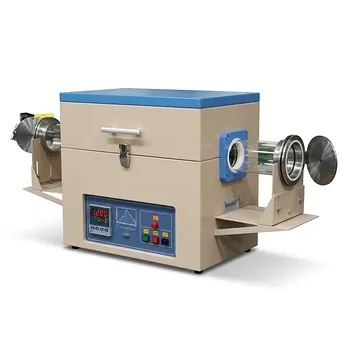
High Temperature 1200C Split Tube Furnace with Hinged Vacuum Flanges and 4 Inch Quartz Tube for Laboratory Research
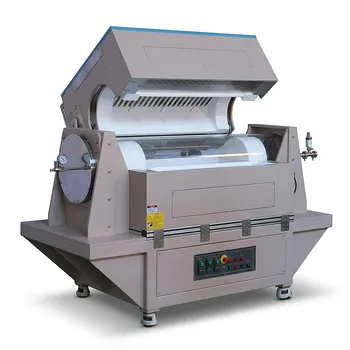
Three Zone Tube Furnace with 11 Inch or 15 Inch Quartz Tube and Hinged Flanges for Vacuum Atmosphere Heat Treatment

1100°C High Temperature Quartz Chamber Furnace 8 Inch OD with 7.6 Liter Capacity and Vacuum Atmosphere Capability
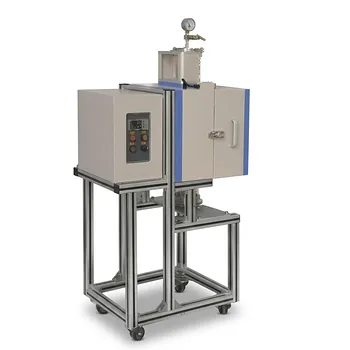
1200°C 5 Inch Vertical Quartz Tube Furnace with Stainless Steel Vacuum Flanges
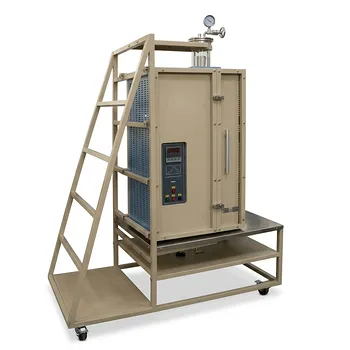
Split Vertical Tube Furnace with 1200C Quartz Tube and Stainless Steel Vacuum Flanges for Rapid Thermal Processing
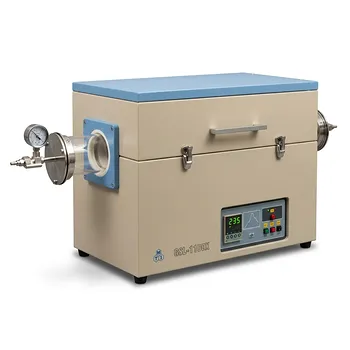
Single Zone Tube Furnace 5 Inch Quartz Tube 36 Inch Heating Zone Vacuum Flanges
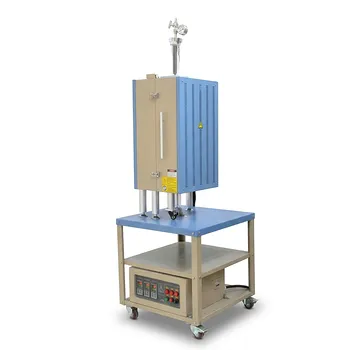
1200C Three Zone Vertical Tube Furnace with 2 Inch Quartz Tube and Vacuum Flanges
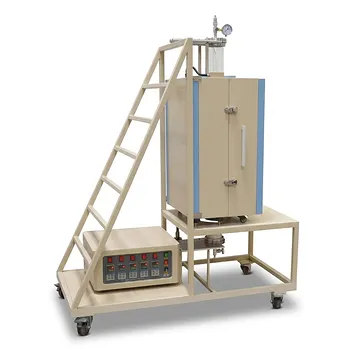
Five Zone Split Vertical Tube Furnace 1200C Max with 4 Inch Quartz Tube and Stainless Steel Vacuum Flanges
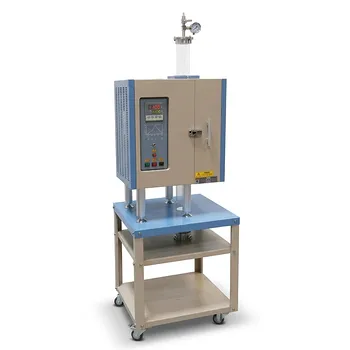
1100°C Split Vertical Tube Furnace with 80mm Quartz Tube and Stainless Steel Vacuum Flanges

High Temperature Automated 5 Inch Tube Furnace for Autonomous Material Research and Advanced Laboratory R&D
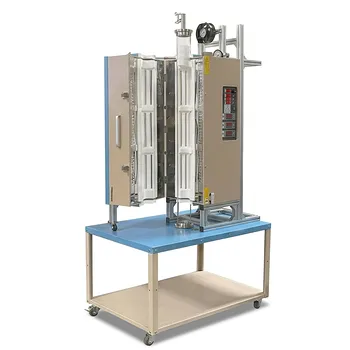
1200C Three Zone Split Vertical Tube Furnace 4 Inch Quartz Tube Stainless Steel Vacuum Flanges

High Temperature 1700C Benchtop Tube Furnace with 5 Inch Heating Zone High Purity Alumina Tube and Vacuum Sealing Flanges
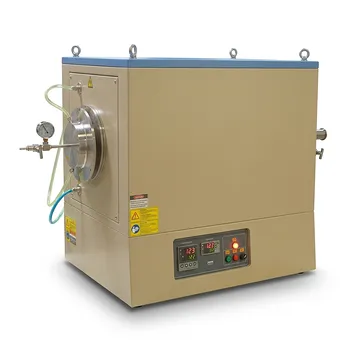
1100°C Large Diameter Quartz Tube Furnace with 24 Inch Heating Zone and Water Cooled Flanges
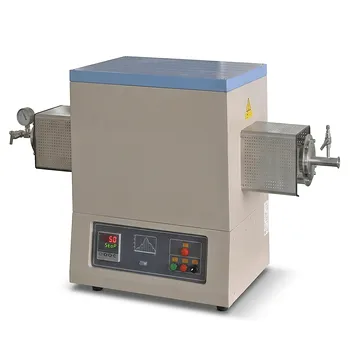
High Temperature 1700C Tube Furnace with 4 Inch OD Alumina Tube and Vacuum Sealing Flanges
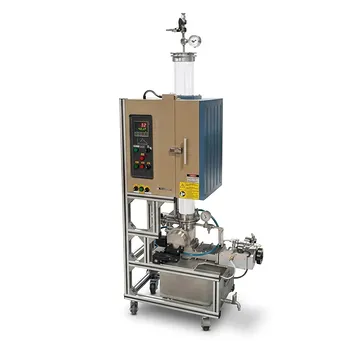
1200C High Temperature Atmosphere Controlled Vertical Quenching Tube Furnace with 4 Inch Quartz Tube
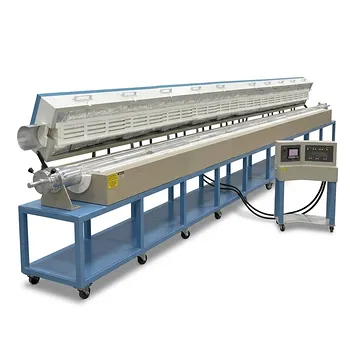
12 Zone Ultra Long Split Tube Furnace with 20 Foot Quartz Tube and 1100C Max Temperature
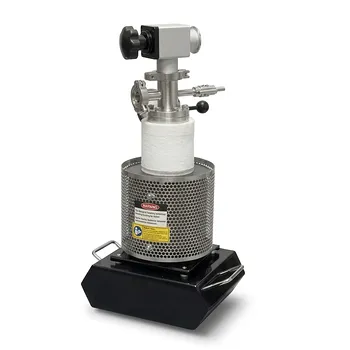
High Temperature 1100C Compact Top Loading Vertical Vacuum Tube Furnace for High Vacuum Noble Metal Melting and Material Research