What role does a vacuum tube furnace play in the synthesis of Bi2Se3 nanosheets? Master Your CVD Growth Process
Updated 3 months ago
The vacuum tube furnace serves as the foundational reactor for the synthesis of Bi2Se3 nanosheets. It provides a precisely controlled high-temperature environment (typically around 600°C) and a stable low-pressure atmosphere (often 1.0×10⁻² Torr) necessary for Chemical Vapor Deposition (CVD). This equipment allows researchers to vaporize precursor powders and facilitate their directional growth into high-quality crystals on a target substrate.
The vacuum tube furnace is the critical tool for managing the thermodynamics and kinetics of Bi2Se3 growth. By balancing temperature gradients and atmospheric purity, it ensures the resulting nanosheets achieve the necessary morphological integrity and crystal quality.
Precision Thermal Management
Controlling Vaporization and Sublimation
The furnace acts as the primary energy source to drive phase transitions in precursor materials. By reaching temperatures near 600°C, the furnace enables the solid-to-gas sublimation of bismuth and selenium-based powders.
Accurate programmed temperature control is essential during this stage. If the heating rate is inconsistent, the sublimation rate of the precursor becomes erratic, leading to non-uniform nanosheet thickness or unwanted secondary phases.
Establishing Necessary Temperature Gradients
In more advanced configurations, such as three-zone horizontal furnaces, the equipment creates a precise temperature gradient. For Bi2Se3, a source zone may be held at approximately 585°C–600°C while the deposition zone is maintained at a lower temperature (typically 330°C–380°C).
This thermal difference is the "engine" of the synthesis process. It drives the gas-phase transport of the vaporized material toward the cooler substrate, where nucleation and crystallization occur.
Atmospheric and Chemical Stability
Prevention of Material Oxidation
Maintaining a high-vacuum environment or an inert gas flow is critical for the purity of Bismuth Selenide. At high temperatures, bismuth is highly susceptible to oxidation, which can result in the formation of Bismuth Oxide (Bi2O3) instead of the desired Bi2Se3.
The sealing integrity of the vacuum tube furnace ensures that oxygen levels remain extremely low. This protects the active precursors and prevents the final nanosheets from re-oxidizing during the cooling phase.
Regulating Deposition Kinetics
The stable low-pressure atmosphere (e.g., 1.0×10⁻² Torr) within the tube regulates how atoms interact with the substrate. By adjusting the pressure and carrier gas flow rates (such as Argon), the furnace allows for the fine-tuning of the reaction rate.
This level of control is what enables the growth of two-dimensional layered structures. Without a stable pressure environment, the growth might become three-dimensional and bulk-like, losing the unique properties of nanosheets.
Understanding the Trade-offs
Temperature Uniformity vs. Gradient Control
While a single-zone furnace offers simplicity and uniform heating, it provides less control over the transport rate. A multi-zone furnace offers superior control over crystallization kinetics but requires significantly more complex calibration to prevent "overshooting" the target temperature in overlapping zones.
Vacuum Depth vs. Growth Speed
A higher vacuum level (10⁻³ Torr and beyond) is more effective at preventing contamination and point defects. However, excessive vacuum can sometimes lead to overly rapid sublimation, making it difficult to control the final thickness of the nanosheets. Finding the "sweet spot" in pressure is essential for structural integrity.
Optimizing Your Synthesis Process
How to Apply This to Your Project
Success in Bi2Se3 synthesis depends on aligning the furnace settings with your specific material requirements.
- If your primary focus is crystal purity: Prioritize the sealing integrity of the quartz tube and aim for a high vacuum to eliminate oxygen-induced side reactions.
- If your primary focus is morphological uniformity: Utilize a multi-zone furnace to establish a stable 200°C–250°C gradient between the source material and the deposition substrate.
- If your primary focus is thickness control: Implement a strictly programmed temperature ramp and soak cycle to regulate the sublimation rate of the precursor powder precisely.
By mastering the interplay between thermal gradients and atmospheric pressure, you can consistently produce high-quality, two-dimensional Bi2Se3 nanosheets.
Summary Table:
| Key Function | Parameters | Impact on Bi2Se3 Synthesis |
|---|---|---|
| Thermal Management | ~600°C Source Temp | Drives precursor sublimation and phase transition. |
| Gradient Control | 200°C–250°C Difference | Facilitates gas-phase transport to the deposition zone. |
| Atmosphere Purity | 1.0×10⁻² Torr / Inert Gas | Prevents Bismuth oxidation (Bi2O3) and ensures purity. |
| Kinetic Regulation | Pressure & Flow Rate | Maintains 2D layered growth vs. 3D bulk formation. |
Elevate Your Material Research with THERMUNITS Precision Furnaces
Achieving the perfect morphology in Bi2Se3 nanosheets requires uncompromising control over thermal gradients and vacuum integrity. THERMUNITS is a leading manufacturer of high-temperature laboratory equipment specifically designed for material science and industrial R&D.
We provide a comprehensive range of thermal solutions to power your breakthroughs, including:
- Advanced CVD/PECVD Systems for precise 2D material synthesis.
- Multi-Zone Vacuum Tube Furnaces for superior gradient management.
- Atmosphere, Muffle, Rotary, and Hot Press Furnaces tailored to your specs.
- Specialized Equipment: From Vacuum Induction Melting (VIM) to Dental Furnaces and Thermal Elements.
Ready to optimize your heat treatment results? Contact us today to explore how our laboratory equipment can enhance your lab's efficiency and crystal quality.
References
- Chih-Chiang Wang, He-Ting Tsai. Enhanced electrical properties of amorphous In-Sn-Zn oxides through heterostructuring with Bi2Se3 topological insulators. DOI: 10.1038/s41598-023-50809-7
Mentioned Products
- 1500C Max Dual Zone Rotary Tube Furnace with 60 mm OD Alumina Tube for High Temperature Material Synthesis
- Three Temperature Zone High Temperature Vacuum Tube Furnace for CVD and Material Sintering
- 24 Inch Three Zone Split Tube Furnace with Optional Quartz Tube and Vacuum Flange System for High Temperature Material Synthesis
- High Temperature 1700C Vertical Tube Furnace for Powder Spherification and Material Sintering
- 1800C High Temperature Compact Vacuum Tube Furnace with 60mm OD Alumina Tube and Kanthal MoSi2 Heating Elements
People Also Ask
- How does a rotary tube furnace improve the processing of granular materials? Enhance Uniformity and Reaction Kinetics
- Why is the precise optimization of residence time essential in the catalyst calcination process? Maximize Your Yields.
- Why use a rotary tube furnace for FACS carbonization? Ensure uniform morphology and prevent sphere agglomeration.
- In what ways do rotary tube furnaces enhance chemical and specialty mineral processing? Drive Precision and Uniformity.
- What parameters must operators control to maintain product quality in a rotary furnace? Master Your Heat Treatment.

Tech Team · ThermUnits
Last updated on Jun 02, 2026
Related Products
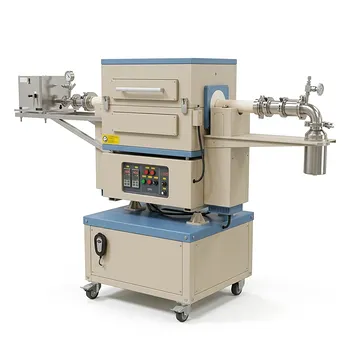
1500C Max Dual Zone Rotary Tube Furnace with 60 mm OD Alumina Tube for High Temperature Material Synthesis
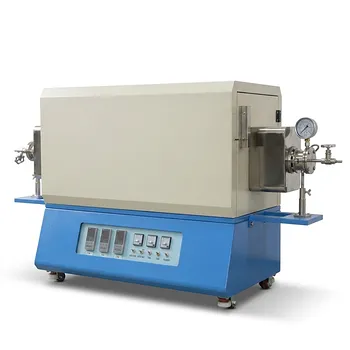
Three Temperature Zone High Temperature Vacuum Tube Furnace for CVD and Material Sintering
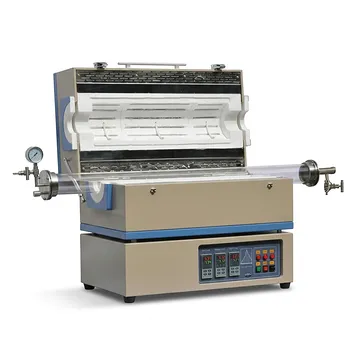
24 Inch Three Zone Split Tube Furnace with Optional Quartz Tube and Vacuum Flange System for High Temperature Material Synthesis

High Temperature 1700C Vertical Tube Furnace for Powder Spherification and Material Sintering

1800C High Temperature Compact Vacuum Tube Furnace with 60mm OD Alumina Tube and Kanthal MoSi2 Heating Elements
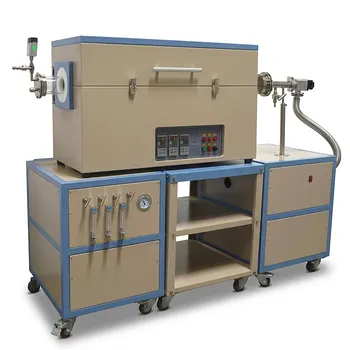
Three Zone Quartz Tube Furnace with 3 Channel Gas Mixer Vacuum Pump and Anti Corrosive Vacuum Gauge
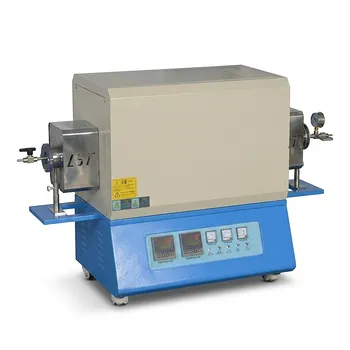
High Temperature Dual Zone Vacuum Tube Furnace for Material Research and CVD Processing

Vertical 1700C Vacuum and Atmosphere Tube Furnace with 80mm Alumina Tube

High Temperature Automated 5 Inch Tube Furnace for Autonomous Material Research and Advanced Laboratory R&D
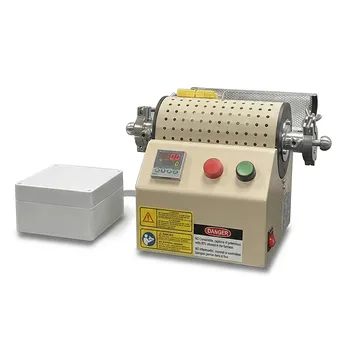
1000C Mini Tube Furnace with 20mm Quartz Tube and Vacuum Flanges for Material Science Research and Controlled Atmosphere Small Sample Processing
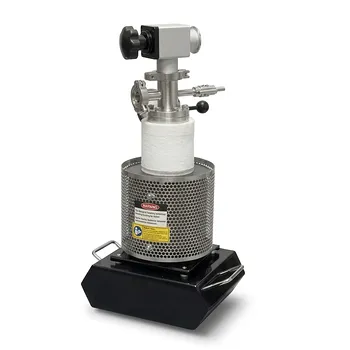
High Temperature 1100C Compact Top Loading Vertical Vacuum Tube Furnace for High Vacuum Noble Metal Melting and Material Research

Compact Vertical Split Quartz Tube Furnace with Stainless Steel Vacuum Flanges for Rapid Thermal Quenching and Controlled Atmosphere Material Processing
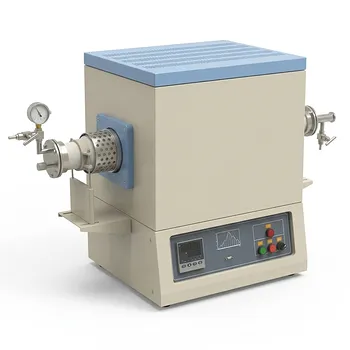
1750°C High Temperature Benchtop Vacuum Atmosphere Tube Furnace with Kanthal Super 1800 Heating Elements and 60mm Alumina Processing Tube
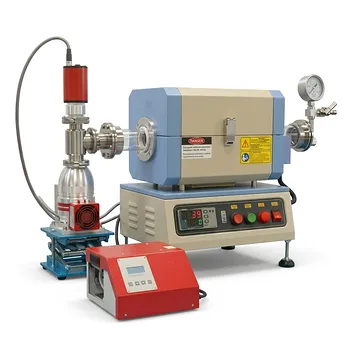
High Vacuum Compact Tube Furnace 1200C with Integrated Turbo Pump System and 8 Inch Heating Zone

High Temperature 1700C Tube Furnace with High Vacuum Turbomolecular Pump System and Multi Channel Mass Flow Controller Gas Mixer
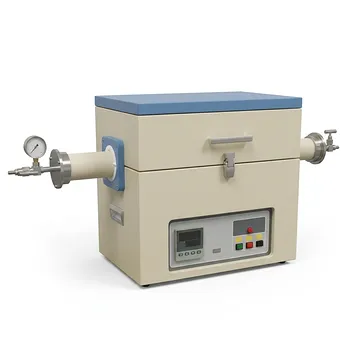
1250C Split Tube Furnace with 3 Inch Mullite Tube and Vacuum Sealing Flanges for Precision Thermal Processing
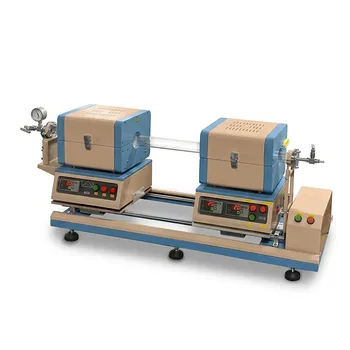
High Temperature 1200C Automatic Sliding Dual Zone Tube Furnace for 2D Transition Metal Dichalcogenides Growth and Material Sublimation Research
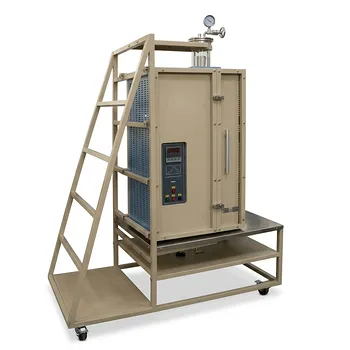
Split Vertical Tube Furnace with 1200C Quartz Tube and Stainless Steel Vacuum Flanges for Rapid Thermal Processing

1100C Tube Furnace with Vacuum Flange and Programmable Temperature Controller for Material Science and Industrial Heat Treatment
