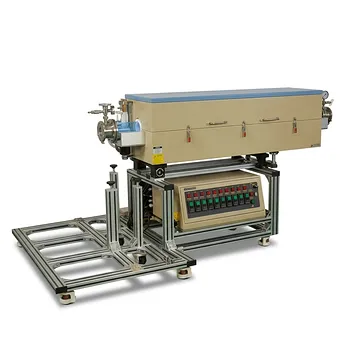
What role does a tube furnace play in K-CN pyrolysis? Achieving precise doping & high-purity synthesis.
Updated 3 months ago
The atmosphere tube furnace serves as the controlled thermal reactor required to facilitate the polycondensation of potassium-doped graphitic carbon nitride (K-CN). It provides the precise high-temperature environment (typically 550°C) and the inert nitrogen ($N_2$) atmosphere necessary to transform precursors like urea and potassium chloride into a stable, doped crystalline skeleton. By strictly excluding oxygen, the furnace prevents oxidative side reactions that would otherwise degrade the material’s chemical structure and performance.
Core Takeaway: The atmosphere tube furnace is the fundamental tool for K-CN synthesis because it bridges the gap between raw chemical precursors and a functional semiconductor, providing the anaerobic conditions and thermal stability required for successful potassium doping and polymerization.
Facilitating Thermal Polycondensation and Doping
Transitioning from Precursors to Polymers
The primary role of the furnace is to induce thermal polycondensation, where urea and potassium chloride undergo a series of condensation reactions. At a sustained temperature of 550°C, the furnace provides the energy needed to break precursor bonds and reform them into the layered graphitic structure characteristic of carbon nitride.
Integration of Potassium Ions
The furnace environment allows for the successful anchoring of potassium ions into the carbon-nitrogen lattice. By maintaining a uniform temperature field, the furnace ensures that the potassium dopants are distributed evenly throughout the material, which is critical for modifying the electronic properties of the resulting K-CN.
The Critical Role of Atmosphere Control
Prevention of Oxidative Degradation
At the high temperatures required for pyrolysis, carbon-based materials are highly susceptible to oxidation if exposed to oxygen. The tube furnace’s rigorous sealing performance and continuous flow of inert gas (nitrogen or argon) create an oxygen-free environment, ensuring that the precursors condense rather than combust.
Maintaining High Product Purity
By excluding atmospheric contaminants, the furnace ensures the generation of high-purity active centers. This controlled atmosphere is essential for avoiding the formation of unwanted oxides or secondary products that could interfere with the photocatalytic or electrochemical properties of the K-CN.
Precision Control for Structural Integrity
Regulating Heating Rates and Holding Times
The furnace allows for precise heating rates, which are essential for controlling the escape velocity of pyrolysis gases. Gradual heating prevents internal pore pressure from accumulating too rapidly, which helps maintain the structural integrity of the carbon nitride and prevents the cracking of the final sample.
Ensuring High Crystallinity
A stable and uniform temperature field within the furnace tube is vital for the development of high crystallinity. Consistent thermal exposure over several hours (typically 4 hours for carbon nitrides) allows the atoms to arrange into the optimal layered nanosheet structure, maximizing the material's surface area and reactive potential.
Understanding the Trade-offs
Thermal Limits and Aggregation
While higher temperatures can improve carbonization, exceeding the optimal range (e.g., going significantly beyond 600°C for g-C3N4) can lead to the excessive aggregation of atoms or the complete thermal decomposition of the material. Finding the "sweet spot" is necessary to avoid losing the specific crystal structure required for potassium doping.
Gas Flow and Precursor Loss
The flow rate of the protective gas must be carefully balanced; while it must be high enough to exclude oxygen, an excessive flow can lead to the loss of volatile precursors before they have the chance to polymerize. This requires a nuanced approach to furnace operation to ensure high yield and consistent doping levels.
How to Apply This to Your Project
Selecting the Right Parameters
- If your primary focus is High Crystallinity: Prioritize a furnace with excellent temperature field uniformity and maintain a steady, long holding time (e.g., 550°C for 4 hours) to allow for complete polymerization.
- If your primary focus is Controlled Porosity: Use the furnace’s precision controller to implement a very low heating rate (1-5°C per minute) to manage gas escape and prevent structural damage.
- If your primary focus is Purity and Doping Accuracy: Ensure the furnace tube is perfectly sealed and pre-purged with high-purity nitrogen or argon to eliminate all traces of oxygen before heating begins.
By leveraging the precise thermal and atmospheric control of a tube furnace, researchers can reliably synthesize K-CN with the specific structural and electronic traits required for advanced technical applications.
Summary Table:
| Key Function | Parameters/Conditions | Impact on K-CN Quality |
|---|---|---|
| Thermal Polycondensation | Stable 550°C environment | Transforms precursors into stable crystalline structures |
| Atmosphere Control | Inert Nitrogen ($N_2$) or Argon | Prevents oxidative degradation; ensures chemical purity |
| Doping Integration | Uniform temperature field | Facilitates even anchoring of potassium ions in the lattice |
| Structural Integrity | Precise heating rates (1-5°C/min) | Regulates gas escape to prevent cracking or aggregation |
Elevate Your Material Research with THERMUNITS Precision
As a leading manufacturer of high-temperature laboratory equipment, THERMUNITS specializes in delivering the thermal stability required for advanced material science and industrial R&D. Our comprehensive range of solutions—including Atmosphere Tube Furnaces, Muffle Furnaces, Vacuum/Hot Press Furnaces, and CVD/PECVD Systems—is engineered to meet the rigorous demands of K-CN synthesis and other complex heat treatments.
Why choose THERMUNITS for your lab?
- Superior Atmosphere Control: Our furnaces offer rigorous sealing for high-purity, anaerobic environments.
- Unmatched Thermal Uniformity: Achieve exact heating rates and stable temperature fields essential for high crystallinity.
- Expertise Across Applications: From Rotary Kilns and Dental Furnaces to Vacuum Induction Melting (VIM) and high-quality Thermal Elements.
Don't compromise on your research outcomes. Ensure structural integrity and doping accuracy with our specialized thermal processing equipment. Contact THERMUNITS today to find your ideal thermal solution!
References
- Chenxi Ye, Xiao Liu. Highly Efficient and Stable Potassium‐Doped g‐C<sub>3</sub>N<sub>4</sub>/Zn<sub>0.5</sub>Cd<sub>0.5</sub>S Quantum Dot Heterojunction Photocatalyst for Hydrogen Evolution. DOI: 10.1002/bte2.20240033
Mentioned Products
- Vertical 1700C Vacuum and Atmosphere Tube Furnace with 80mm Alumina Tube
- 1750°C High Temperature Benchtop Vacuum Atmosphere Tube Furnace with Kanthal Super 1800 Heating Elements and 60mm Alumina Processing Tube
- 1200C Hybrid Muffle and Tube Furnace for Material Research with Dual Atmosphere Control Quartz Tubes
- Compact Hybrid Muffle and Tube Furnace for 1000C Controlled Atmosphere Laboratory Material Sintering
- Three Zone Tube Furnace with 11 Inch or 15 Inch Quartz Tube and Hinged Flanges for Vacuum Atmosphere Heat Treatment
People Also Ask
- How is an industrial-grade vertical tube furnace utilized in smelting leaching residues? Enhance Metal Recovery Efficiency
- What is the function of a laboratory-grade vertical tube furnace in fast pyrolysis? Optimize Composite Research.
- How does a vertical tube furnace facilitate thermoelectric alloy melting? Precision synthesis for material homogeneity.
- Why is a thermocouple sensor indispensable for monitoring the vertical tube furnace during gallium oxide nanowire production? Optimize VLS Growth
- What are the advantages of using a vertical tube furnace for crucible experiments simulating steel-slag interactions?

Tech Team · ThermUnits
Last updated on Jun 02, 2026
Related Products

Vertical 1700C Vacuum and Atmosphere Tube Furnace with 80mm Alumina Tube
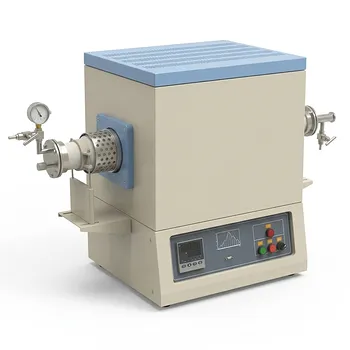
1750°C High Temperature Benchtop Vacuum Atmosphere Tube Furnace with Kanthal Super 1800 Heating Elements and 60mm Alumina Processing Tube
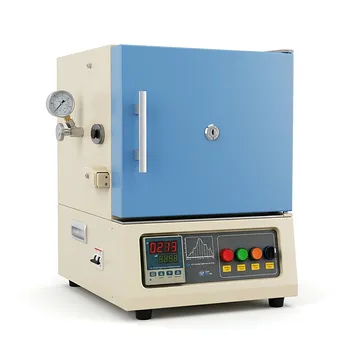
1200C Hybrid Muffle and Tube Furnace for Material Research with Dual Atmosphere Control Quartz Tubes
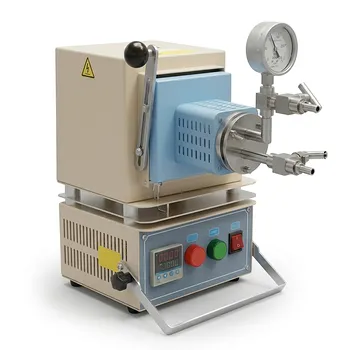
Compact Hybrid Muffle and Tube Furnace for 1000C Controlled Atmosphere Laboratory Material Sintering

Three Zone Tube Furnace with 11 Inch or 15 Inch Quartz Tube and Hinged Flanges for Vacuum Atmosphere Heat Treatment
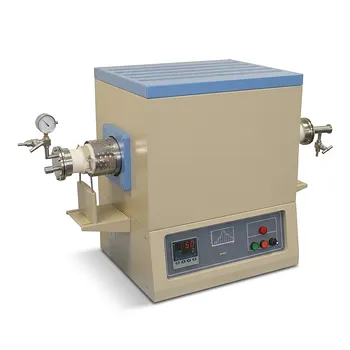
1700C High Temperature Alumina Tube Furnace with 18 Inch Heated Zone and Vacuum Sealing Flanges
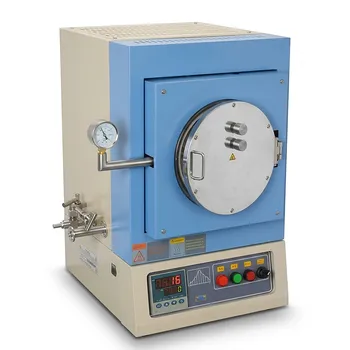
1100°C High Temperature Quartz Chamber Furnace 8 Inch OD with 7.6 Liter Capacity and Vacuum Atmosphere Capability
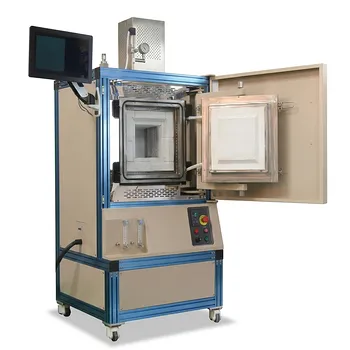
High Temperature Hydrogen Atmosphere Box Furnace 1650C Max Reducing Environment Material Synthesis System 8x8x8 Chamber

1200°C 5 Inch Vertical Quartz Tube Furnace with Stainless Steel Vacuum Flanges
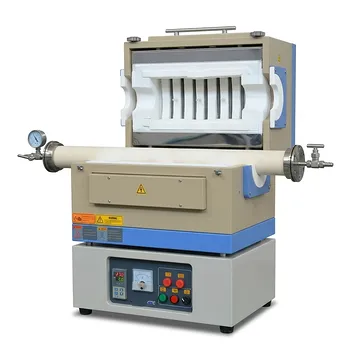
High Temperature 1600C Split Tube Furnace Vacuum Flanges Valves Optional 60mm 80mm Alumina Tube

High Temperature 1700C Tube Furnace with High Vacuum Turbomolecular Pump System and Multi Channel Mass Flow Controller Gas Mixer

1100C Tube Furnace with Vacuum Flange and Programmable Temperature Controller for Material Science and Industrial Heat Treatment

High Temperature 1700C Vertical Tube Furnace for Powder Spherification and Material Sintering

Compact High Temperature 1600C Tube Furnace with 50mm Alumina Tube and Vacuum Flanges for Material Sintering

High Temperature 1700C Six Zone Split Tube Furnace with Alumina Tube and Water Cooled Flanges

1800C High Temperature Compact Vacuum Tube Furnace with 60mm OD Alumina Tube and Kanthal MoSi2 Heating Elements

1700C Hydrogen Gas Tube Furnace with 60mm Alumina Process Tube and Integrated Hydrogen Safety Detector

High Temperature Automated 5 Inch Tube Furnace for Autonomous Material Research and Advanced Laboratory R&D

High Temperature 1700C Benchtop Tube Furnace with 5 Inch Heating Zone High Purity Alumina Tube and Vacuum Sealing Flanges