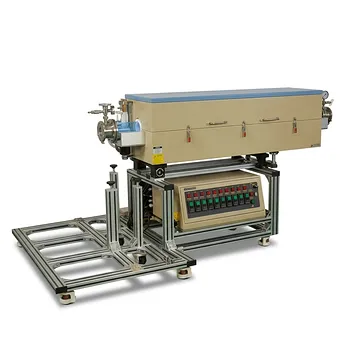
What role does an atmosphere tube furnace play in ZIF-8 derived carbon pyrolysis? Stabilizing Atomic-Level Metal Sites
Updated 3 months ago
The atmosphere tube furnace is the critical reactor for stabilizing atomic-level metal sites during the secondary pyrolysis of ZIF-8 derived carbon. It provides a strictly controlled, oxygen-free environment—either inert or reducing—that enables metal ions to bond securely with the carbon framework while preventing the collapse of the material's complex porous structure.
This secondary thermal treatment is essential for transforming metal-impregnated carbon into a high-performance catalyst by strengthening metal-nitrogen coordination and refining the carbon lattice. Without the precise atmospheric and temperature control of the furnace, the material would risk oxidative combustion or metal aggregation into inactive clusters.
Enhancing Structural Integrity and Coordination
Strengthening Metal-Ligand Bonds
During secondary pyrolysis, the furnace provides a high-temperature environment that facilitates the coordination between metal ions (such as Ru³⁺ or Cu²⁺) and nitrogen-containing heterocyclic ligands within the carbon framework. This heat treatment acts as a "locking" mechanism, ensuring that the metal atoms are chemically integrated into the lattice rather than just physically trapped.
Preventing Lattice Collapse
The atmosphere tube furnace allows for the controlled strengthening of coordination bonds, which provides the necessary structural support to prevent the carbon framework from collapsing at extreme temperatures. By maintaining this structural integrity, the furnace ensures the final material retains the high surface area and porosity inherited from the original ZIF-8 precursor.
Facilitating Atomic Dispersion and Nanostructure Refinement
Achieving Single-Atom Distribution
A primary role of the furnace in this stage is to achieve atomic-level dispersion of metal elements, such as cobalt or iron, within the nitrogen-doped carbon structure. The stable, high-temperature environment prevents metal atoms from migrating and clumping together, which is the core requirement for constructing efficient platinum group metal-free (PGM-free) catalytic active sites.
Eliminating Residual Functional Groups
When equipped with gas-mixing capabilities, the furnace can introduce a reducing environment (typically a 5% H2/Ar gas mixture). This specific atmosphere helps eliminate residual oxygen-containing functional groups and facilitates the evolution of the internal nanostructure, which is a decisive step in refining the chemical purity of the carbon matrix.
Precise Environmental Control for Material Stability
Oxygen-Free Thermal Processing
The furnace maintains a strict inert protection environment, usually using high-purity argon (Ar) or nitrogen (N2), to prevent the oxidative combustion of the carbon carrier. By operating in an oxygen-free state, the furnace ensures that the organic framework undergoes carbonization rather than burning, preserving the stable carbon substrate required for metal loading.
Multi-Stage Heating and Temperature Precision
Advanced atmosphere furnaces utilize PID control systems to execute precise multi-stage heating programs, which prevent thermal overshoot. This precision is vital for managing the transition of the precursor, ensuring uniform pyrolysis and the self-assembly of stable, three-dimensional carbon structures without creating localized defects.
Understanding the Trade-offs and Pitfalls
Thermal Aggregation vs. Coordination
While high temperatures are necessary to strengthen coordination bonds, excessive heat can lead to the aggregation of metal atoms into nanoparticles, destroying the single-atom doping effect. The furnace must be calibrated to find the "sweet spot" where coordination is maximized but metal mobility remains low.
Atmospheric Purity Risks
Any leakage or impurity in the gas flow (such as trace oxygen) can lead to the oxidation of the carbon framework or the metal sites. This not only reduces the specific surface area but can also lead to the formation of metal oxides rather than the desired metal-nitrogen (M-N-C) active sites.
Heating Rate Sensitivity
A heating rate that is too aggressive can cause rapid gas evolution from the ZIF-8 framework, leading to pore blockages or structural deformation. Maintaining a slow, stable heating rate (typically around 3–5°C per minute) is necessary to ensure the formation of developed microporous and macroporous channels.
Making the Right Choice for Your Goal
To achieve the best results in secondary pyrolysis, the furnace parameters must be aligned with the specific requirements of the metal-doped carbon.
- If your primary focus is electrochemical activity: Use a high-temperature inert atmosphere (1000°C+) to maximize the strength of metal-nitrogen coordination bonds and stabilize single-atom sites.
- If your primary focus is nanostructure refinement: Implement a reducing atmosphere (H2/Ar) to effectively remove residual functional groups and clean the carbon surface.
- If your primary focus is preserving porosity: Prioritize precise multi-stage heating and a slow ramp rate to prevent the collapse of the ZIF-8 derived pore network.
Ultimately, the atmosphere tube furnace serves as the definitive tool for transitioning from a raw metal-carbon mixture to a sophisticated, atomically dispersed catalytic material.
Summary Table:
| Key Role | Impact on Material Quality | Essential Furnace Feature |
|---|---|---|
| Atomic Stabilization | Prevents metal aggregation into inactive clusters | High-precision PID Temperature Control |
| Structural Integrity | Prevents carbon lattice collapse at high heat | Multi-stage Heating & Precise Ramp Rates |
| Atmosphere Control | Protects carbon from oxidation/combustion | Vacuum-sealed Inert Gas (Ar/N2) Flow |
| Chemical Refinement | Removes residual groups & purifies matrix | Gas-mixing Capability (e.g., 5% H2/Ar) |
| Active Site Formation | Strengthens Metal-Nitrogen (M-N-C) coordination | Uniform Thermal Field Distribution |
Precision Heat Treatment for Advanced Material Research
Unlock the full potential of your single-atom catalysts and carbon frameworks with THERMUNITS. As a leading manufacturer of high-temperature laboratory equipment for material science and industrial R&D, we provide the rigorous environmental control necessary for successful ZIF-8 derivation and secondary pyrolysis.
Our comprehensive range of thermal processing solutions includes:
- Atmosphere & Vacuum Tube Furnaces (Single & Multi-zone)
- CVD/PECVD Systems for nanostructure engineering
- Muffle, Rotary, and Hot Press Furnaces
- Vacuum Induction Melting (VIM) & Dental Furnaces
- Specialized Thermal Elements and custom heat treatment accessories
Ensure your research yields high-performance results with equipment designed for stability and accuracy. Contact THERMUNITS today to discuss your project requirements and find the perfect furnace for your laboratory.
References
- Xiaobo Han, Shicheng Zhang. ZIF-8-Based Nitrogen and Monoatomic Metal Co-Doped Pyrolytic Porous Carbon for High-Performance Supercapacitor Applications. DOI: 10.3390/nano14161367
Mentioned Products
- Vertical 1700C Vacuum and Atmosphere Tube Furnace with 80mm Alumina Tube
- 1750°C High Temperature Benchtop Vacuum Atmosphere Tube Furnace with Kanthal Super 1800 Heating Elements and 60mm Alumina Processing Tube
- 1200C Hybrid Muffle and Tube Furnace for Material Research with Dual Atmosphere Control Quartz Tubes
- Compact Hybrid Muffle and Tube Furnace for 1000C Controlled Atmosphere Laboratory Material Sintering
- Three Zone Tube Furnace with 11 Inch or 15 Inch Quartz Tube and Hinged Flanges for Vacuum Atmosphere Heat Treatment
People Also Ask
- How is an industrial-grade vertical tube furnace utilized in smelting leaching residues? Enhance Metal Recovery Efficiency
- What is the function of a laboratory-grade vertical tube furnace in fast pyrolysis? Optimize Composite Research.
- How does a vertical tube furnace facilitate thermoelectric alloy melting? Precision synthesis for material homogeneity.
- Why is a thermocouple sensor indispensable for monitoring the vertical tube furnace during gallium oxide nanowire production? Optimize VLS Growth
- What are the advantages of using a vertical tube furnace for crucible experiments simulating steel-slag interactions?

Tech Team · ThermUnits
Last updated on Jun 03, 2026
Related Products

Vertical 1700C Vacuum and Atmosphere Tube Furnace with 80mm Alumina Tube
1750°C High Temperature Benchtop Vacuum Atmosphere Tube Furnace with Kanthal Super 1800 Heating Elements and 60mm Alumina Processing Tube
1200C Hybrid Muffle and Tube Furnace for Material Research with Dual Atmosphere Control Quartz Tubes
Compact Hybrid Muffle and Tube Furnace for 1000C Controlled Atmosphere Laboratory Material Sintering
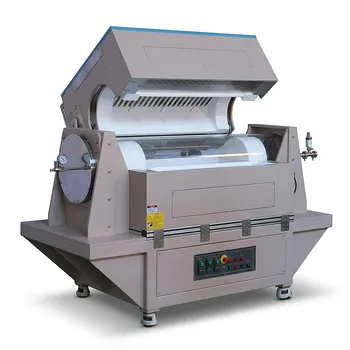
Three Zone Tube Furnace with 11 Inch or 15 Inch Quartz Tube and Hinged Flanges for Vacuum Atmosphere Heat Treatment
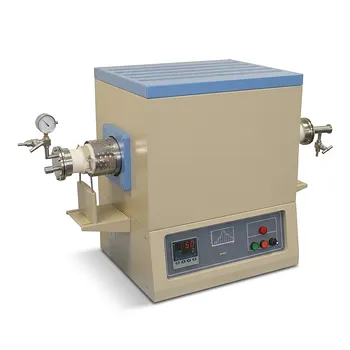
1700C High Temperature Alumina Tube Furnace with 18 Inch Heated Zone and Vacuum Sealing Flanges
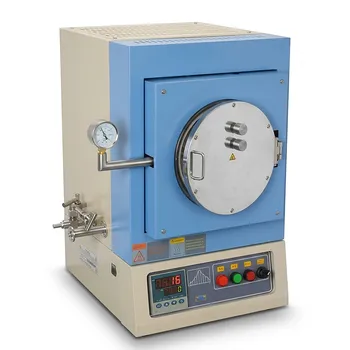
1100°C High Temperature Quartz Chamber Furnace 8 Inch OD with 7.6 Liter Capacity and Vacuum Atmosphere Capability
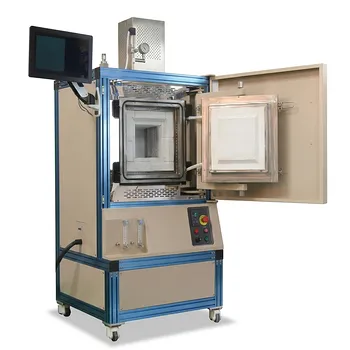
High Temperature Hydrogen Atmosphere Box Furnace 1650C Max Reducing Environment Material Synthesis System 8x8x8 Chamber
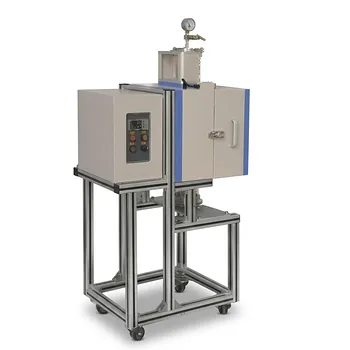
1200°C 5 Inch Vertical Quartz Tube Furnace with Stainless Steel Vacuum Flanges
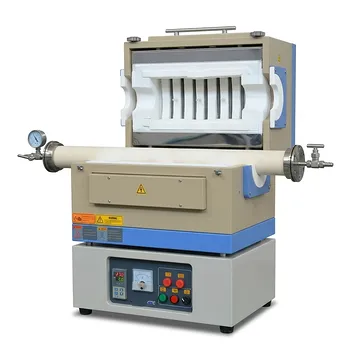
High Temperature 1600C Split Tube Furnace Vacuum Flanges Valves Optional 60mm 80mm Alumina Tube

High Temperature 1700C Tube Furnace with High Vacuum Turbomolecular Pump System and Multi Channel Mass Flow Controller Gas Mixer
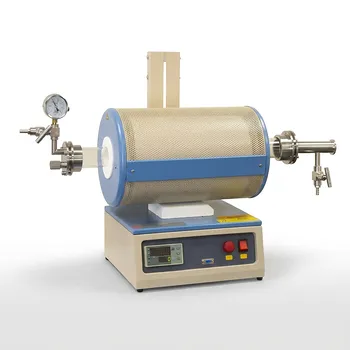
1100C Tube Furnace with Vacuum Flange and Programmable Temperature Controller for Material Science and Industrial Heat Treatment

High Temperature 1700C Vertical Tube Furnace for Powder Spherification and Material Sintering

Compact High Temperature 1600C Tube Furnace with 50mm Alumina Tube and Vacuum Flanges for Material Sintering
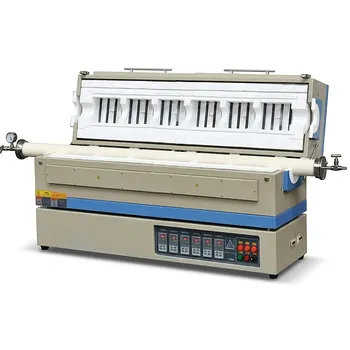
High Temperature 1700C Six Zone Split Tube Furnace with Alumina Tube and Water Cooled Flanges

1800C High Temperature Compact Vacuum Tube Furnace with 60mm OD Alumina Tube and Kanthal MoSi2 Heating Elements
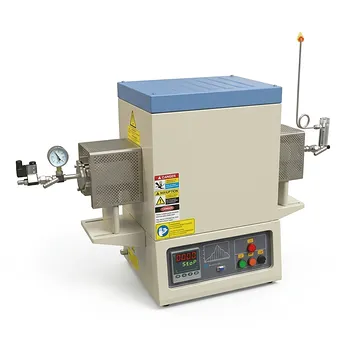
1700C Hydrogen Gas Tube Furnace with 60mm Alumina Process Tube and Integrated Hydrogen Safety Detector

High Temperature 1700C Benchtop Tube Furnace with 5 Inch Heating Zone High Purity Alumina Tube and Vacuum Sealing Flanges

High Temperature Automated 5 Inch Tube Furnace for Autonomous Material Research and Advanced Laboratory R&D