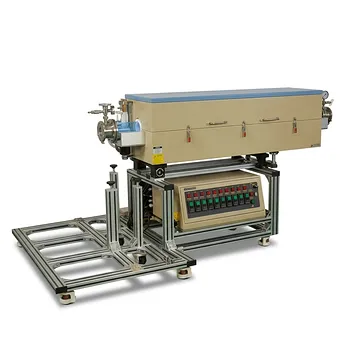
What role does an atmosphere tube furnace play in the synthesis of nitrogen self-doped porous carbon materials?
Updated 3 months ago
The atmosphere tube furnace is the fundamental environment for the thermal conversion of precursors into nitrogen-doped porous carbon. It provides a strictly controlled, oxygen-free setting that allows for the simultaneous carbonization of biomass and the preservation of internal nitrogen elements. By maintaining high-purity inert atmospheres at temperatures typically ranging from 300°C to 1000°C, the furnace enables precise chemical activation and the development of complex pore structures without the risk of oxidative material loss.
The primary role of an atmosphere tube furnace is to facilitate a controlled pyrolysis environment where temperature and gas composition are manipulated to induce nitrogen doping and pore formation. It serves as the critical barrier against oxygen, ensuring the stability and yield of the final carbon framework.
Precision Control of the Chemical Environment
The furnace acts as a closed reactor that isolates the sample from the external environment, which is vital for maintaining the chemistry of nitrogen-doped materials.
Oxygen Isolation and Nitrogen Preservation
The superior sealing performance of the tube furnace effectively isolates oxygen during the heating process. This prevention of oxidative burn-off is essential for preserving the natural nitrogen elements found within biomass precursors, which would otherwise be lost as nitrogen oxides.
Inert Gas Shielding
By continuously purging with gases like high-purity nitrogen or argon, the furnace maintains a stable inert atmosphere. This environment ensures that the thermal decomposition of the polymer skeleton or biomass occurs predictably, leading to a higher yield of the carbonized product.
Active Gas Interaction
In some synthesis routes, the furnace allows for the introduction of reducing or mixed atmospheres (such as Ar/H₂). This capability can assist in specific chemical transformations, such as the complete dehydrogenation of precursors to form a three-dimensional graphitized framework.
Thermal Regulation and Structural Development
The ability to program specific heating profiles allows researchers to dictate the physical architecture of the resulting porous carbon.
Multi-Stage Temperature Programming
Integrated PID control systems enable multi-stage heating, which is crucial for preventing thermal overshoot. Stabilizing at lower temperatures before reaching the final carbonization peak ensures that precursors undergo uniform pyrolysis and self-assemble into stable structures.
Facilitating Chemical Activation
Within the constant temperature zone of the furnace, the heat triggers reactions between chemical activators (like ZnCl₂ or molten salts) and the carbon substrate. This process is responsible for the in-situ generation of micropores and mesopores, which define the material's surface area.
Uniformity of the Temperature Field
High-temperature field uniformity ensures that the entire sample experiences the same thermal history. This consistency is mandatory for the highly repeatable preparation of functional nanomaterials, ensuring that the degree of graphitization and nitrogen doping is even throughout the batch.
Understanding the Trade-offs and Limitations
While the atmosphere tube furnace is a versatile tool, it presents certain operational challenges that can affect the quality of the synthesized carbon.
Sealing Integrity and Contamination
The effectiveness of the furnace relies entirely on its sealing performance; even a minor leak can introduce trace oxygen. This leads to the partial combustion of the carbon framework, which reduces the specific surface area and alters the intended nitrogen doping levels.
Gas Consumption and Flow Dynamics
Maintaining a strictly inert environment requires a continuous flow of high-purity gas, which increases operational costs. Furthermore, improper gas flow rates can create temperature gradients within the tube, potentially leading to non-uniform pore distribution in the synthesized material.
Cooling Rates and Structural Stress
Rapid cooling after high-temperature carbonization can induce thermal stress in the carbon framework, potentially causing structural collapse of delicate pores. Precise control over the cooling phase is just as important as the heating phase for maintaining the integrity of the three-dimensional network.
How to Optimize Your Synthesis Strategy
The choice of furnace parameters should align with the specific electrochemical or structural requirements of your final nitrogen-doped carbon material.
- If your primary focus is high nitrogen retention: Use a strictly sealed nitrogen atmosphere at the lower end of the temperature range (300°C–600°C) to prevent the volatilization of nitrogen-containing functional groups.
- If your primary focus is high specific surface area: Prioritize a multi-stage heating program with chemical activators and a higher peak temperature (700°C–1000°C) to maximize pore development and salt etching.
- If your primary focus is high conductivity: Opt for higher temperatures and an argon/hydrogen mix to promote a high degree of graphitization and a well-ordered three-dimensional carbon skeleton.
Mastering the interplay between gas composition and thermal gradients within the tube furnace is the definitive factor in successfully engineering nitrogen self-doped porous carbon.
Summary Table:
| Key Function | Impact on Synthesis | Critical Parameter |
|---|---|---|
| Oxygen Isolation | Prevents oxidative loss & preserves nitrogen elements | Sealing Performance |
| Inert Shielding | Ensures predictable decomposition & higher carbon yield | Gas Purity (N₂/Ar) |
| Thermal Regulation | Dictates pore architecture & graphitization degree | PID Heating Profiles |
| Chemical Activation | Triggers reaction for micro/mesopore development | Temperature Uniformity |
Elevate Your Material Research with THERMUNITS
At THERMUNITS, we specialize in providing the precision thermal environments necessary for cutting-edge material science and industrial R&D. As a leading manufacturer, we offer a comprehensive range of solutions including Atmosphere Tube Furnaces, Vacuum Furnaces, CVD/PECVD systems, and Hot Press Furnaces tailored for high-performance carbon synthesis.
Whether you are developing nitrogen-doped structures or exploring advanced ceramics, our equipment—ranging from Muffle and Rotary Furnaces to Vacuum Induction Melting (VIM) units—ensures the thermal uniformity and atmosphere integrity your work demands.
Ready to optimize your heat treatment process? Contact our expert team today to find the perfect furnace solution for your laboratory.
References
- Yuhong Zhao, Jianmin Tang. Zanthoxylum bungeanum Waste-Derived High-Nitrogen Self-Doped Porous Carbons as Efficient Adsorbents for Methylene Blue. DOI: 10.3390/molecules29081809
Mentioned Products
- Vertical 1700C Vacuum and Atmosphere Tube Furnace with 80mm Alumina Tube
- 1750°C High Temperature Benchtop Vacuum Atmosphere Tube Furnace with Kanthal Super 1800 Heating Elements and 60mm Alumina Processing Tube
- 1200C Hybrid Muffle and Tube Furnace for Material Research with Dual Atmosphere Control Quartz Tubes
- Compact Hybrid Muffle and Tube Furnace for 1000C Controlled Atmosphere Laboratory Material Sintering
- Three Zone Tube Furnace with 11 Inch or 15 Inch Quartz Tube and Hinged Flanges for Vacuum Atmosphere Heat Treatment
People Also Ask
- How does a vertical tube furnace facilitate thermoelectric alloy melting? Precision synthesis for material homogeneity.
- Why is a thermocouple sensor indispensable for monitoring the vertical tube furnace during gallium oxide nanowire production? Optimize VLS Growth
- What is the function of a laboratory-grade vertical tube furnace in fast pyrolysis? Optimize Composite Research.
- How is an industrial-grade vertical tube furnace utilized in smelting leaching residues? Enhance Metal Recovery Efficiency
- Why is a vertical tube furnace preferred for Ga2O3 CVD? Optimize Convection & Nanowire Growth

Tech Team · ThermUnits
Last updated on Jun 03, 2026
Related Products

Vertical 1700C Vacuum and Atmosphere Tube Furnace with 80mm Alumina Tube

1750°C High Temperature Benchtop Vacuum Atmosphere Tube Furnace with Kanthal Super 1800 Heating Elements and 60mm Alumina Processing Tube
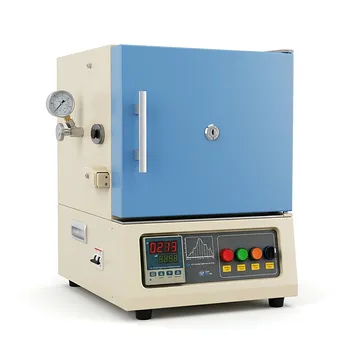
1200C Hybrid Muffle and Tube Furnace for Material Research with Dual Atmosphere Control Quartz Tubes
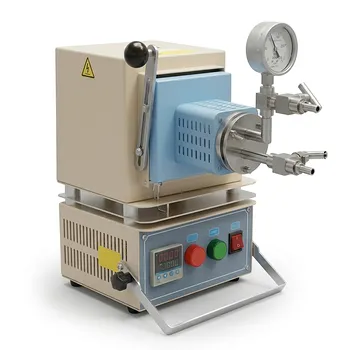
Compact Hybrid Muffle and Tube Furnace for 1000C Controlled Atmosphere Laboratory Material Sintering
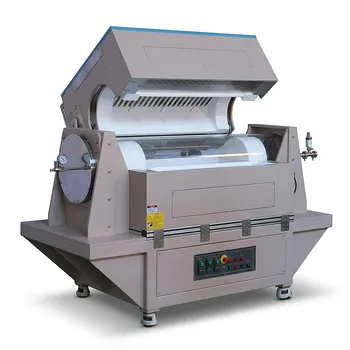
Three Zone Tube Furnace with 11 Inch or 15 Inch Quartz Tube and Hinged Flanges for Vacuum Atmosphere Heat Treatment
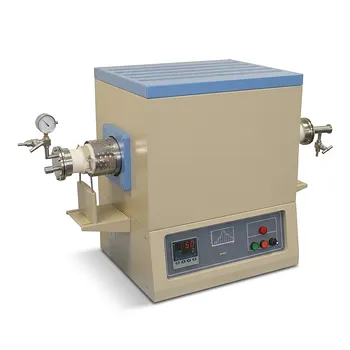
1700C High Temperature Alumina Tube Furnace with 18 Inch Heated Zone and Vacuum Sealing Flanges
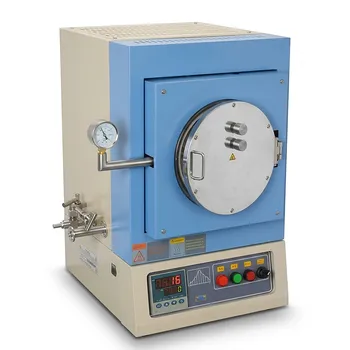
1100°C High Temperature Quartz Chamber Furnace 8 Inch OD with 7.6 Liter Capacity and Vacuum Atmosphere Capability
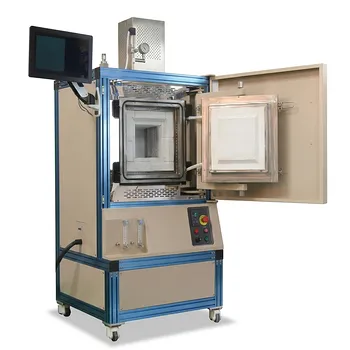
High Temperature Hydrogen Atmosphere Box Furnace 1650C Max Reducing Environment Material Synthesis System 8x8x8 Chamber
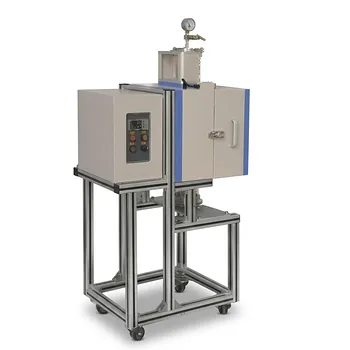
1200°C 5 Inch Vertical Quartz Tube Furnace with Stainless Steel Vacuum Flanges
High Temperature 1600C Split Tube Furnace Vacuum Flanges Valves Optional 60mm 80mm Alumina Tube

High Temperature 1700C Tube Furnace with High Vacuum Turbomolecular Pump System and Multi Channel Mass Flow Controller Gas Mixer
1100C Tube Furnace with Vacuum Flange and Programmable Temperature Controller for Material Science and Industrial Heat Treatment

High Temperature 1700C Vertical Tube Furnace for Powder Spherification and Material Sintering

Compact High Temperature 1600C Tube Furnace with 50mm Alumina Tube and Vacuum Flanges for Material Sintering

High Temperature 1700C Six Zone Split Tube Furnace with Alumina Tube and Water Cooled Flanges

1800C High Temperature Compact Vacuum Tube Furnace with 60mm OD Alumina Tube and Kanthal MoSi2 Heating Elements
1700C Hydrogen Gas Tube Furnace with 60mm Alumina Process Tube and Integrated Hydrogen Safety Detector

High Temperature 1700C Benchtop Tube Furnace with 5 Inch Heating Zone High Purity Alumina Tube and Vacuum Sealing Flanges

High Temperature Automated 5 Inch Tube Furnace for Autonomous Material Research and Advanced Laboratory R&D