What role does an atmosphere tube furnace using H2/N2 play in catalyst reduction? Optimize Activation and Dispersion
Updated 3 months ago
The atmosphere tube furnace serves as the critical environment for catalyst activation. It converts inactive metal precursors into highly active metal nanoparticles by providing a precisely controlled, high-temperature reducing atmosphere. This process ensures uniform distribution on supports, optimizes the electronic structure of the catalyst, and prevents unwanted oxidation during the transition.
The atmosphere tube furnace is the engine of catalyst synthesis, using hydrogen-nitrogen mixtures to facilitate precise chemical reduction. Its primary value lies in its ability to balance complete reduction with the prevention of particle sintering, ultimately defining the catalyst's active surface area and long-term reactivity.
The Mechanics of the Reducing Environment
Conversion of Precursors to Active Metals
The primary role of the furnace is to facilitate the chemical reduction of metal oxides or salts into their zero-valent metallic states (such as Pd⁰ or Ni⁰). By introducing a flowing hydrogen atmosphere, the furnace provides the necessary electrons to transform precursors into active nanoparticles.
The Role of Nitrogen as a Stabilizing Diluent
Nitrogen acts as an inert carrier gas that regulates the concentration of hydrogen, ensuring a stable gas flow field. This mixture prevents volatile reactions while protecting sensitive supports, such as carbon, from unintended oxidation at high temperatures.
Maintaining an Oxygen-Free Environment
The furnace provides a hermetically sealed chamber that excludes ambient oxygen. This is vital for preventing the secondary oxidation of newly formed metallic sites, which would otherwise deactivate the catalyst before it can be used.
Precision Control and Catalyst Performance
Regulating Grain Size and Dispersion
By applying specific programmed temperature ramps, the tube furnace prevents the excessive sintering and agglomeration of metal particles. Strict regulation of reduction time and heat ensures a higher number of active sites and superior metal dispersion across the support.
Engineering Metal-Support Interactions
The high-temperature environment facilitates a strong interaction between the active metal and the support material, such as Titanium Nitride (TiN). This thermal treatment is essential for anchoring particles firmly, which determines the final grain size and enhances electrocatalytic synergistic effects.
Generation of Structural Defects
Controlled reduction in a hydrogen atmosphere can induce oxygen vacancy defects in the catalyst support. These defects are often critical for improving the catalytic activity and electronic conductivity of the final material.
Understanding the Trade-offs and Challenges
The Balance Between Reduction and Sintering
Higher temperatures, often ranging from 500°C to 1000°C, ensure the complete conversion of precursors but increase the risk of particle growth. If the temperature is too high or the duration too long, nanoparticles may merge, drastically reducing the effective surface area.
Atmospheric Consistency vs. Flow Rate
Maintaining a uniform atmosphere requires precise gas flow regulation via flow meters. Fluctuations in the hydrogen-to-nitrogen ratio can lead to partial reduction or uneven catalyst quality across a single batch.
Pretreatment Costs and Complexity
Using a specialized tube furnace for standardized activation adds a step to the manufacturing process but reduces overall reactor costs. It eliminates the need for industrial reactors to maintain the high temperatures required for in-situ activation during the actual chemical reaction.
How to Optimize Your Reduction Process
Choosing the correct furnace parameters depends entirely on the specific requirements of your catalytic system and support material.
- If your primary focus is maximizing active surface area: Use a lower temperature ramp and a higher hydrogen concentration to ensure rapid reduction before particles have the energy to sinter.
- If your primary focus is structural stability and anchoring: Prioritize a higher temperature "soak" time to strengthen the interaction between the metal nanoparticles and the support lattice.
- If your primary focus is bimetallic alloy formation: Utilize a strictly programmed temperature profile to ensure both metal precursors reduce simultaneously, facilitating a uniform alloy structure.
The atmosphere tube furnace remains the definitive tool for transforming raw chemical precursors into high-performance, precision-engineered catalysts.
Summary Table:
| Feature | Mechanism | Impact on Catalyst |
|---|---|---|
| Chemical Reduction | Converts metal precursors into zero-valent nanoparticles | High activation of catalytic sites |
| Gas Regulation | H2/N2 mixture controls reaction speed and flow stability | Prevents sintering and particle growth |
| Thermal Precision | Programmed temperature ramps (up to 1000°C+) | Ensures uniform grain size distribution |
| Hermetic Sealing | Maintains an oxygen-free environment | Prevents deactivation and oxidation |
| Surface Engineering | Induces oxygen vacancies and support interactions | Enhances synergistic catalytic effects |
Maximize Your Catalyst Performance with THERMUNITS
Precise atmospheric control is the difference between a mediocre catalyst and a high-performance material. THERMUNITS is a leading manufacturer of high-temperature laboratory equipment designed specifically for material science and industrial R&D. We empower researchers to achieve superior results through our advanced thermal processing solutions.
Our comprehensive range includes:
- Atmosphere and Tube Furnaces for precise gas-phase reduction.
- CVD/PECVD Systems for advanced surface engineering.
- Vacuum, Muffle, and Rotary Furnaces for versatile heat treatments.
- Specialized Equipment: Hot Press furnaces, Dental furnaces, and Vacuum Induction Melting (VIM) systems.
Whether you are scaling up catalyst production or exploring new bimetallic alloys, our engineering team provides the reliability and precision your research demands.
Contact our technical team today to find your solution
References
- Hansen Mou, Jingguang G. Chen. Trends in electrocatalytic activity and stability of transition-metal nitrides. DOI: 10.1016/j.checat.2023.100867
Mentioned Products
- Vertical 1700C Vacuum and Atmosphere Tube Furnace with 80mm Alumina Tube
- 1750°C High Temperature Benchtop Vacuum Atmosphere Tube Furnace with Kanthal Super 1800 Heating Elements and 60mm Alumina Processing Tube
- 1200°C Atmosphere Controlled Automatic Bottom Loading Furnace with 6 Inch Quartz Tube
- 1200C Hybrid Muffle and Tube Furnace for Material Research with Dual Atmosphere Control Quartz Tubes
- Compact Hybrid Muffle and Tube Furnace for 1000C Controlled Atmosphere Laboratory Material Sintering
People Also Ask
- How is an industrial-grade vertical tube furnace utilized in smelting leaching residues? Enhance Metal Recovery Efficiency
- What is the function of a laboratory-grade vertical tube furnace in fast pyrolysis? Optimize Composite Research.
- How does a vertical tube furnace facilitate thermoelectric alloy melting? Precision synthesis for material homogeneity.
- Why is a thermocouple sensor indispensable for monitoring the vertical tube furnace during gallium oxide nanowire production? Optimize VLS Growth
- What are the advantages of using a vertical tube furnace for crucible experiments simulating steel-slag interactions?

Tech Team · ThermUnits
Last updated on Jun 02, 2026
Related Products
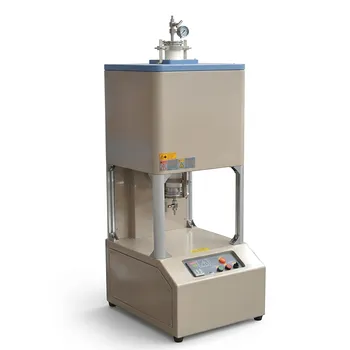
Vertical 1700C Vacuum and Atmosphere Tube Furnace with 80mm Alumina Tube
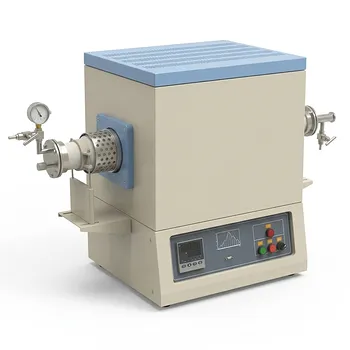
1750°C High Temperature Benchtop Vacuum Atmosphere Tube Furnace with Kanthal Super 1800 Heating Elements and 60mm Alumina Processing Tube
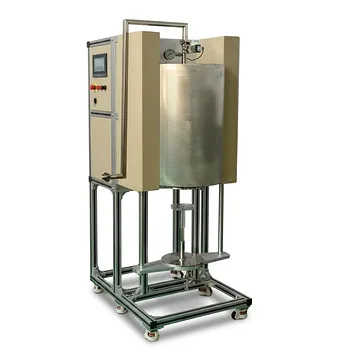
1200°C Atmosphere Controlled Automatic Bottom Loading Furnace with 6 Inch Quartz Tube
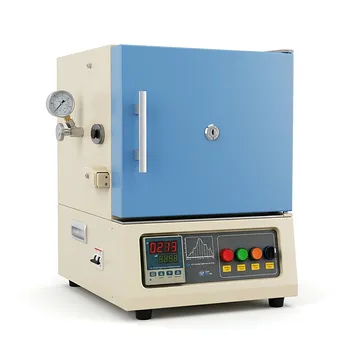
1200C Hybrid Muffle and Tube Furnace for Material Research with Dual Atmosphere Control Quartz Tubes
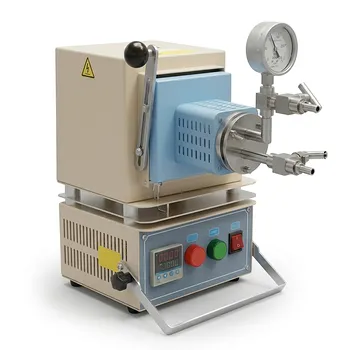
Compact Hybrid Muffle and Tube Furnace for 1000C Controlled Atmosphere Laboratory Material Sintering
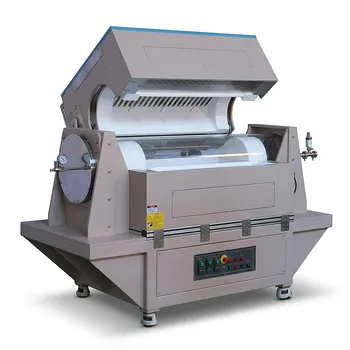
Three Zone Tube Furnace with 11 Inch or 15 Inch Quartz Tube and Hinged Flanges for Vacuum Atmosphere Heat Treatment
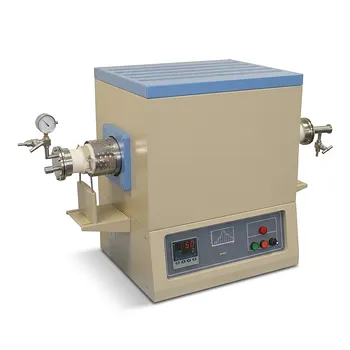
1700C High Temperature Alumina Tube Furnace with 18 Inch Heated Zone and Vacuum Sealing Flanges
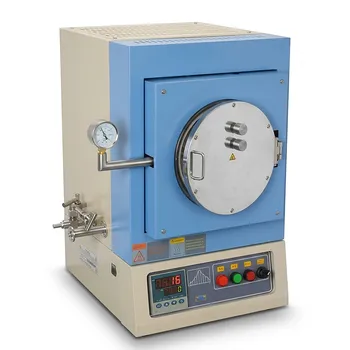
1100°C High Temperature Quartz Chamber Furnace 8 Inch OD with 7.6 Liter Capacity and Vacuum Atmosphere Capability
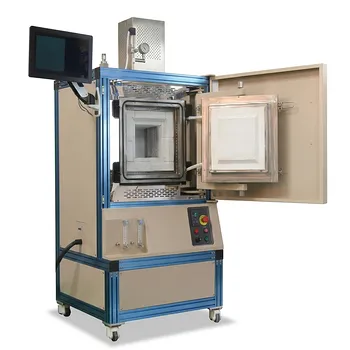
High Temperature Hydrogen Atmosphere Box Furnace 1650C Max Reducing Environment Material Synthesis System 8x8x8 Chamber
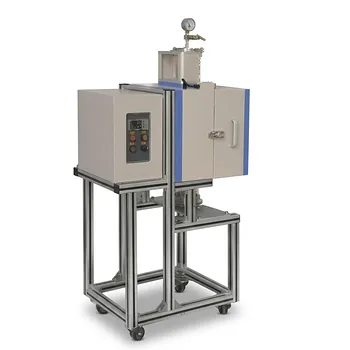
1200°C 5 Inch Vertical Quartz Tube Furnace with Stainless Steel Vacuum Flanges
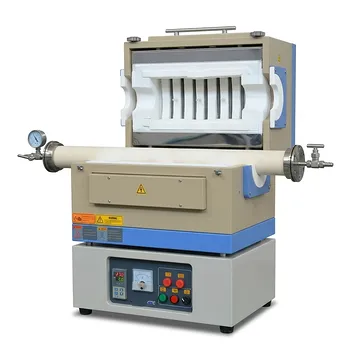
High Temperature 1600C Split Tube Furnace Vacuum Flanges Valves Optional 60mm 80mm Alumina Tube

High Temperature 1700C Tube Furnace with High Vacuum Turbomolecular Pump System and Multi Channel Mass Flow Controller Gas Mixer

1100C Tube Furnace with Vacuum Flange and Programmable Temperature Controller for Material Science and Industrial Heat Treatment

High Temperature 1700C Vertical Tube Furnace for Powder Spherification and Material Sintering

Compact High Temperature 1600C Tube Furnace with 50mm Alumina Tube and Vacuum Flanges for Material Sintering
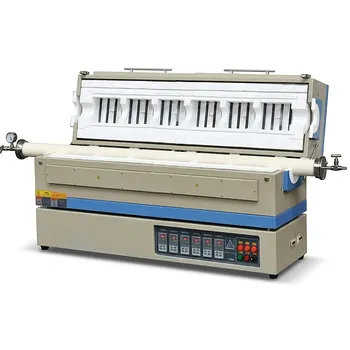
High Temperature 1700C Six Zone Split Tube Furnace with Alumina Tube and Water Cooled Flanges

1800C High Temperature Compact Vacuum Tube Furnace with 60mm OD Alumina Tube and Kanthal MoSi2 Heating Elements
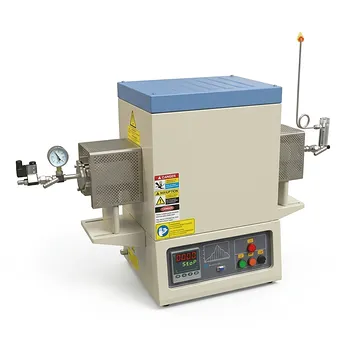
1700C Hydrogen Gas Tube Furnace with 60mm Alumina Process Tube and Integrated Hydrogen Safety Detector
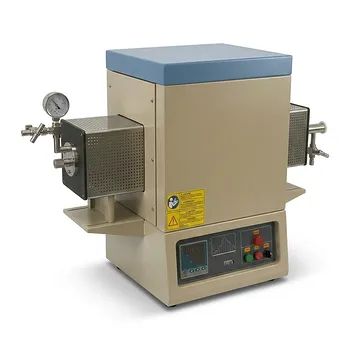
High Temperature 1700C Benchtop Tube Furnace with 5 Inch Heating Zone High Purity Alumina Tube and Vacuum Sealing Flanges
