What role does an industrial-grade tube furnace play in CO2 to CNT conversion? Essential Precision for Nanomaterial Yield
Updated 3 months ago
The industrial-grade tube furnace acts as the controlled reactor vessel that provides the thermal energy and chemical environment necessary for the Boudouard reaction. Specifically, it maintains a precise, high-temperature field (typically around 550 °C) that allows carbon monoxide—produced via $CO_2$ electrolysis—to disproportionate into solid carbon nanotubes (CNTs) upon contact with a catalyst.
Core Takeaway: An industrial-grade tube furnace is the critical infrastructure for $CO_2$-to-CNT conversion, serving as a precision thermal reactor that determines the yield, structural uniformity, and morphological quality of the resulting nanomaterials through strict temperature and atmospheric control.
Facilitating the Boudouard Reaction
Providing the Thermal Activation Energy
The conversion of $CO_2$ to CNTs is a multi-step thermochemical process that requires a stable heat source to drive the disproportionation of carbon monoxide.
The tube furnace maintains a constant thermal field, typically calibrated to 550 °C, which provides the necessary energy for $CO$ gas to break down into solid carbon and carbon dioxide.
The Role of the Quartz Reaction Tube
Within the furnace, a quartz tube serves as the primary reaction chamber, isolating the chemical precursors from the heating elements.
This setup allows gases produced by electrolysis to flow over a pre-positioned catalyst, ensuring that the chemical transformation occurs only within the intended reaction zone.
Ensuring Morphological Quality and Yield
The Impact of Temperature Uniformity
The morphological quality of carbon nanotubes—such as their diameter and chirality—is hyper-sensitive to thermal fluctuations.
Industrial-grade furnaces are engineered for high temperature uniformity, ensuring that every part of the catalyst bed experiences the same conditions to produce a consistent CNT product.
Precision Control Systems
Advanced control systems within the furnace manage heating rates and "soaking" times with high granularity.
This precision prevents localized overheating, which could lead to catalyst sintering or the formation of amorphous carbon instead of the desired tubular nanostructures.
Atmospheric Isolation and Protection
Creating an Oxygen-Free Environment
To prevent the oxidation and loss of newly formed carbon nanotubes, the tube furnace must maintain a strictly controlled atmosphere.
By utilizing inert carrier gases like nitrogen or argon, the furnace excludes oxygen, allowing the carbon atoms to rearrange into stable graphitic structures without being consumed by combustion.
Managing Precursor Decomposition
In processes involving Chemical Vapor Deposition (CVD), the furnace controls the pyrolysis of carbon-source gases.
By stabilizing atmospheric pressure and temperature, the furnace ensures that the carbon source decomposes precisely on the catalyst surface, driving directional growth into unique helical or tubular structures.
Understanding the Trade-offs and Pitfalls
Temperature Sensitivity vs. Yield
Operating at lower temperatures may improve the structural perfection of the CNTs but often results in significantly lower production yields.
Conversely, pushing the furnace to higher temperatures (e.g., above 700 °C) may increase growth rates but risks the accumulation of amorphous carbon impurities that are difficult to remove.
Scaling Challenges in Industrial Furnaces
As the diameter of the reaction tube increases for industrial production, maintaining a uniform "constant thermal field" becomes exponentially more difficult.
Thermal gradients between the center of the tube and the walls can lead to a heterogeneous product, where CNT quality varies wildly within a single production batch.
How to Apply This to Your Project
Selecting the Right Equipment Parameters
When configuring a tube furnace for $CO_2$ to CNT conversion, your technical requirements should align with your specific material goals.
- If your primary focus is high-purity single-walled nanotubes: Prioritize a furnace with high-precision PID controllers and a quartz tube to minimize metallic contamination.
- If your primary focus is maximizing production yield: Invest in a multi-zone furnace that can maintain a long, uniform heating zone to maximize the active catalyst surface area.
- If your primary focus is structural controllability (e.g., nanocoils): Ensure the system includes integrated mass flow controllers for precise delivery of precursor gases like acetylene or nitrogen.
By mastering the thermal environment within the tube furnace, you transform a simple chemical reduction into a sophisticated synthesis process for high-value carbon nanomaterials.
Summary Table:
| Furnace Function | Key Feature | Impact on CNT Production |
|---|---|---|
| Thermal Activation | Precise 550°C PID Control | Drives CO disproportionation and provides activation energy. |
| Reaction Containment | Quartz Reaction Tube | Isolates precursors from elements and prevents contamination. |
| Atmosphere Control | Inert Gas (N2/Ar) Purging | Prevents oxidation and ensures high-purity graphitic structures. |
| Morphology Control | High Thermal Uniformity | Maintains consistent tube diameter and chirality across the batch. |
| Yield Optimization | Multi-zone Heating | Maximizes active catalyst surface area for increased output. |
Optimize Your Nanomaterial Synthesis with THERMUNITS
As a global leader in high-temperature laboratory equipment, THERMUNITS provides the advanced thermal processing solutions essential for material science and industrial R&D. Our industrial-grade Tube Furnaces and CVD/PECVD systems are specifically engineered to eliminate thermal gradients and provide the strict atmospheric isolation required for high-yield $CO_2$ to Carbon Nanotube conversion.
From Muffle, Vacuum, and Atmosphere furnaces to specialized Rotary kilns, Hot Press furnaces, and Vacuum Induction Melting (VIM) systems, THERMUNITS offers the expertise and equipment to scale your research from lab to production.
Enhance your heat treatment precision today—contact our technical experts to discuss your requirements!
References
- Bradie S. Crandall, Feng Jiao. Transforming CO2 into advanced 3D printed carbon nanocomposites. DOI: 10.1038/s41467-024-54957-w
Mentioned Products
- Compact Vertical Split Quartz Tube Furnace with Stainless Steel Vacuum Flanges for Rapid Thermal Quenching and Controlled Atmosphere Material Processing
- 5 Inch Three Zone Rotary Tube Furnace with Integrated Gas Delivery System and 1200C Capability for Advanced Material CVD Processing
- Compact Hybrid Muffle and Tube Furnace for 1000C Controlled Atmosphere Laboratory Material Sintering
- 5 Inch Two Zone Rotary Tube Furnace 1100C for Powder CVD and Material Synthesis
- High Temperature 1700C Vertical Tube Furnace for Powder Spherification and Material Sintering
People Also Ask
- Why integrate a vertical split tube furnace with hydraulic loading for HSECC? Essential for In-Situ Fire Simulation.
- What is the role of a split vertical tube furnace during flash sintering of 8YSZ and 20SDC? Master Ultra-Fast R&D
- What is the primary engineering purpose for using a customized ventilation hood when operating a split tube furnace? RCF Safety
- Why is a quartz tube furnace necessary for phosphorus-doped MoS2/GO preparation? Ensure Purity & Precise Synthesis
- What is the primary function of a Quartz Tube Furnace in ZnO VLS growth? Master High-Precision Nanowire Synthesis

Tech Team · ThermUnits
Last updated on Jun 03, 2026
Related Products
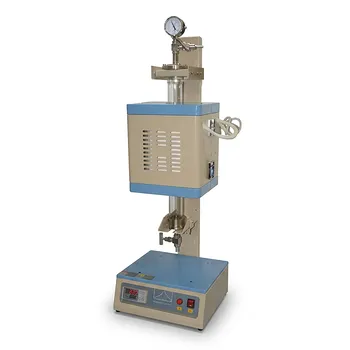
Compact Vertical Split Quartz Tube Furnace with Stainless Steel Vacuum Flanges for Rapid Thermal Quenching and Controlled Atmosphere Material Processing
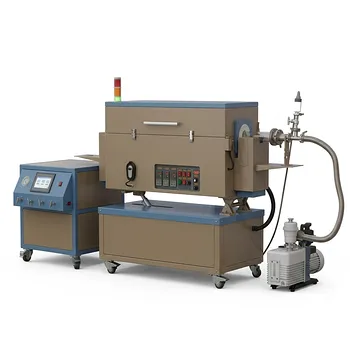
5 Inch Three Zone Rotary Tube Furnace with Integrated Gas Delivery System and 1200C Capability for Advanced Material CVD Processing
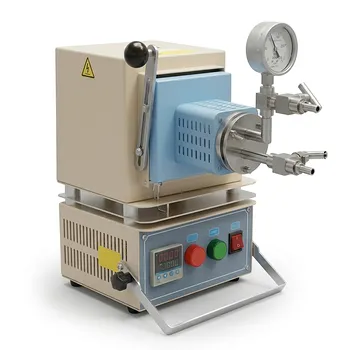
Compact Hybrid Muffle and Tube Furnace for 1000C Controlled Atmosphere Laboratory Material Sintering
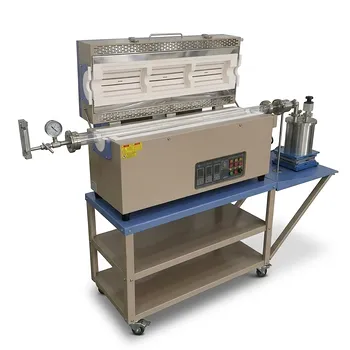
5 Inch Two Zone Rotary Tube Furnace 1100C for Powder CVD and Material Synthesis

High Temperature 1700C Vertical Tube Furnace for Powder Spherification and Material Sintering
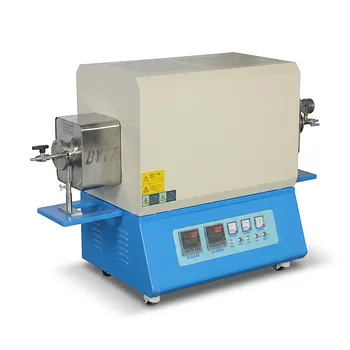
High Temperature Dual Zone Split Tube Furnace for Advanced Atmosphere Sintering and Vacuum CVD Applications
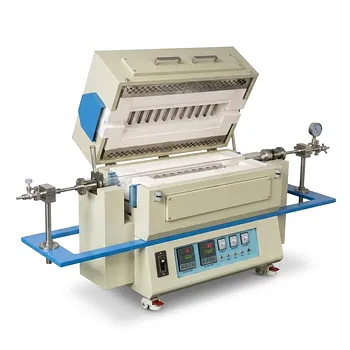
High Temperature Dual Zone Rotating Tube Furnace 1500C Silicon Carbide Heating for Advanced Material Synthesis

Compact High Temperature 1600C Tube Furnace with 50mm Alumina Tube and Vacuum Flanges for Material Sintering
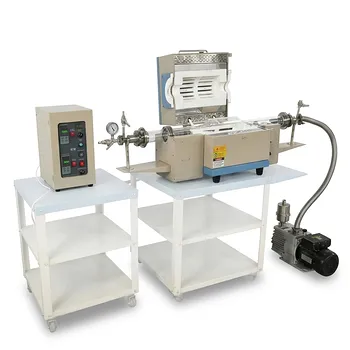
Two Zone Rotary Tube Furnace for Powder CVD Coating and Core Shell Material Synthesis 1100C
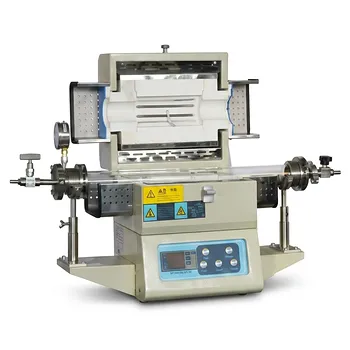
High Temperature 1200C Split Tube Furnace for CVD Research and Vacuum Atmosphere Heat Treatment
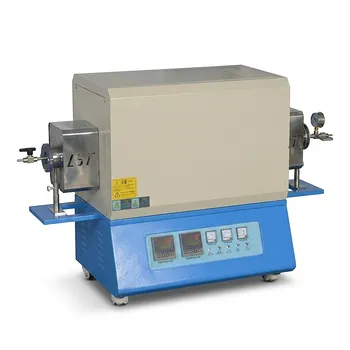
High Temperature Dual Zone Vacuum Tube Furnace for Material Research and CVD Processing

High Temperature 1700C Tube Furnace with High Vacuum Turbomolecular Pump System and Multi Channel Mass Flow Controller Gas Mixer
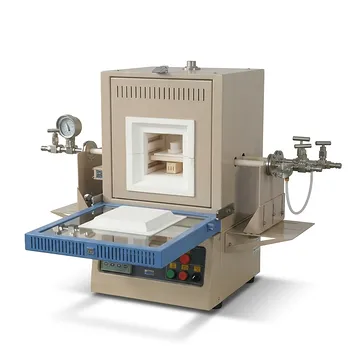
1700C Compact Hybrid Furnace with Dual Layer Box Sintering and Controlled Atmosphere Alumina Tubes
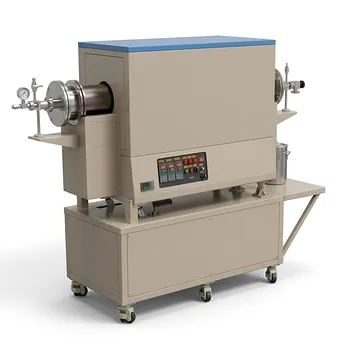
900°C Max Rotary Tube Furnace with 8 Inch 310S Alloy Tube and Optional Multi Zone Heating for Industrial Material Calcination

1200°C 5 Inch Vertical Quartz Tube Furnace with Stainless Steel Vacuum Flanges
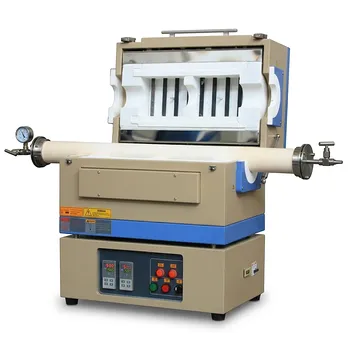
1500C Two Zone Split Tube Furnace with Vacuum Flange and 80mm Alumina Tube
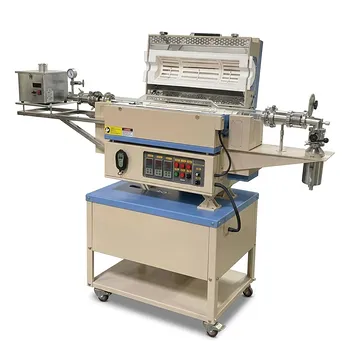
5 Inch Rotary Tube Furnace with Automatic Feeding and Receiving System 1200C Three Zone CVD Powder Processing
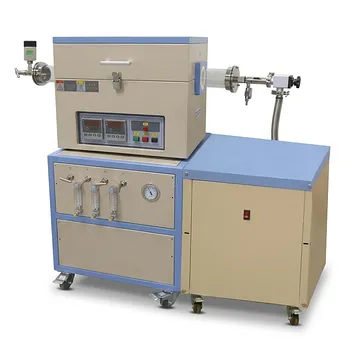
Dual Zone Quartz Tube Furnace with 80mm Diameter 1200C Max Temperature 3 Channel Gas Mixer and Vacuum Pump System
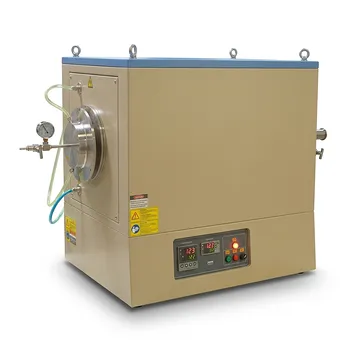
1100°C Large Diameter Quartz Tube Furnace with 24 Inch Heating Zone and Water Cooled Flanges
