What role does the vacuum control system play in the phase transformation of 2D SnSe? Master Precision Growth
Updated 3 months ago
The vacuum control system acts as the fundamental regulator of chemical potential during the phase transformation of two-dimensional tin selenide. It functions by maintaining a precise environment where the total pressure and precursor partial pressures are strictly governed. This control is what allows researchers to dictate the atomic adsorption and desorption dynamics required to transition between different chemical phases.
The vacuum control system is the essential mechanism for manipulating atomic stoichiometry, enabling the transition from selenium-rich SnSe2 to tin-rich SnSe by facilitating the controlled removal of selenium atoms.
The Mechanics of Vacuum-Driven Phase Transformation
Regulating Partial Pressure Environments
The primary role of the system is to stabilize the partial pressure of reactive species within the chamber. By accurately tuning these pressures, the system creates a specific chemical environment that favors one crystalline phase over another.
Driving the SnSe2 to SnSe Transition
In the preparation of tin-rich SnSe, the vacuum system is used to lower the chemical potential of selenium. When combined with specific temperature gradients, this environment induces the selective desorption of selenium atoms from a selenium-rich SnSe2 precursor.
Controlling Atomic Surface Dynamics
The system manages the "traffic" of atoms at the film's surface, known as adsorption and desorption dynamics. By maintaining a controlled vacuum, the system ensures that atoms leave or stay on the surface at a rate that allows for a high-quality, defect-free phase transformation.
Why Precision is Mandatory for 2D Materials
Maintaining Structural Integrity
In two-dimensional materials, the surface-to-volume ratio is extremely high, making the material hypersensitive to its environment. The vacuum control system prevents the chaotic exchange of atoms, ensuring the resulting SnSe film maintains its required structural and electronic properties.
Synergy with Thermal Gradients
The vacuum level determines the boiling and sublimation points of the precursors involved. By precisely managing the total pressure, the system works in tandem with heat to provide the necessary kinetic energy for atoms to reorganize into the desired lattice structure.
Understanding the Trade-offs
Precision vs. System Stability
While high vacuum levels are necessary for purity and controlled desorption, maintaining absolute stability in partial pressure can be technically challenging. Any fluctuation in the vacuum seal or pump speed can lead to stoichiometric drift, resulting in a mixture of SnSe and SnSe2 phases.
Complexity of Kinetic Control
A common pitfall is focusing solely on temperature while neglecting the vacuum-induced desorption rates. If the vacuum is too deep, selenium may desorb too quickly, leading to a breakdown of the 2D crystal structure rather than a clean phase transformation.
How to Apply This to Your Growth Process
Achieving a high-quality phase transformation requires a balanced approach to vacuum and thermal management.
- If your primary focus is phase purity: You must prioritize the stability of the precursor partial pressures to ensure an even transformation across the entire film surface.
- If your primary focus is crystal quality: Use the vacuum system to slow the desorption dynamics, allowing atoms more time to settle into their equilibrium positions in the SnSe lattice.
- If your primary focus is rapid synthesis: Carefully increase the vacuum-induced desorption rate while monitoring the temperature to ensure you do not inadvertently trigger material decomposition.
The vacuum control system is not merely a background component; it is the active steering mechanism that defines the chemical identity of the resulting 2D tin selenide.
Summary Table:
| Key Function | Mechanism in Phase Transformation | Impact on SnSe Quality |
|---|---|---|
| Chemical Potential Regulation | Stabilizes total and precursor partial pressures | Ensures precise atomic stoichiometry |
| Controlled Desorption | Facilitates selective selenium removal | Enables transition from SnSe2 to tin-rich SnSe |
| Surface Dynamics Control | Manages adsorption and desorption rates | Produces high-quality, defect-free 2D films |
| Thermal Synergy | Adjusts boiling and sublimation points | Optimizes kinetic energy for lattice reorganization |
Elevate Your 2D Material Research with THERMUNITS
Precise vacuum and thermal control are the keys to successful phase transformation in materials like tin selenide. THERMUNITS is a leading manufacturer of high-performance laboratory equipment designed specifically for advanced material science and industrial R&D.
Whether you are synthesizing 2D crystals or performing complex heat treatments, our solutions provide the stability and precision you need:
- Advanced CVD/PECVD Systems: Perfect for controlled atmosphere and vacuum-driven growth.
- High-Precision Furnaces: Including Vacuum, Atmosphere, Tube, and Muffle furnaces for diverse thermal profiles.
- Specialized Equipment: Rotary kilns, Vacuum Induction Melting (VIM) furnaces, and Hot Press systems.
Ready to optimize your lab’s thermal processing? Contact our engineering experts today to find the perfect furnace solution for your specific research goals and ensure repeatable, high-quality results every time.
References
- Sungyeon Kim, Joonki Suh. Phase‐Centric MOCVD Enabled Synthetic Approaches for Wafer‐Scale 2D Tin Selenides. DOI: 10.1002/adma.202400800
Mentioned Products
- Dual Tube 100mm 80mm CVD Sliding Furnace with 4 Channel Gas Mixing and Vacuum System
- Two Zone Rotary CVD Furnace with Automatic Feeding and Receiving System for Powder Processing
- Induction Heating System with Temperature Control for High Temperature Vacuum Sintering and Melting
- Three Temperature Zone High Temperature Vacuum Tube Furnace for CVD and Material Sintering
- Split Chamber CVD Tube Furnace with Vacuum Station Chemical Vapor Deposition System Machine
People Also Ask
- How does the Sweet Spot region within a chemical vapor deposition reactor influence the morphology control of VOx particles?
- What is the purpose of placing quartz crystals at the inlet and outlet of a CVD reaction tube? Optimize MoS2 Synthesis
- Why is a double-zone tube furnace required for CVD of WS2? Master Thermal Precision for High-Quality 2D Materials
- What are the temperature control requirements for a tube furnace used in pyrolysis and CVD? Master Thermal Precision
- What is the primary function of a dual-zone tube furnace in CVD MoS2 synthesis? Achieve Precise Thermal Control

Tech Team · ThermUnits
Last updated on Jun 03, 2026
Related Products
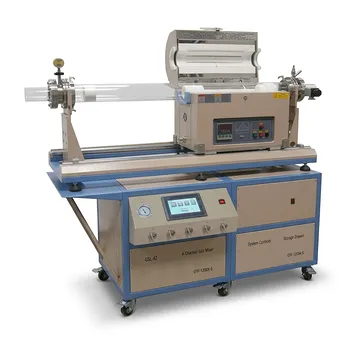
Dual Tube 100mm 80mm CVD Sliding Furnace with 4 Channel Gas Mixing and Vacuum System
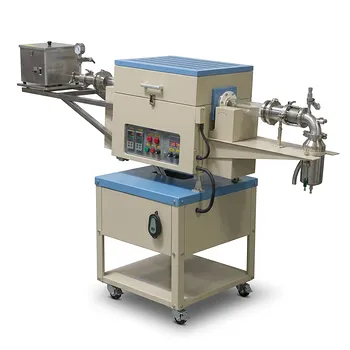
Two Zone Rotary CVD Furnace with Automatic Feeding and Receiving System for Powder Processing
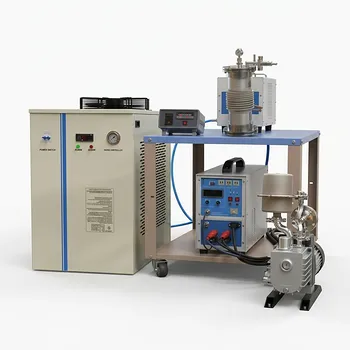
Induction Heating System with Temperature Control for High Temperature Vacuum Sintering and Melting
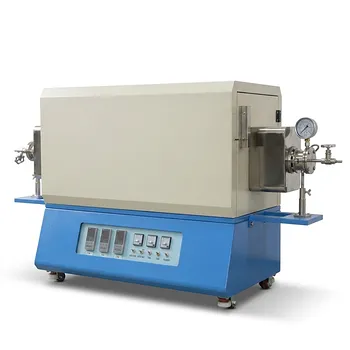
Three Temperature Zone High Temperature Vacuum Tube Furnace for CVD and Material Sintering
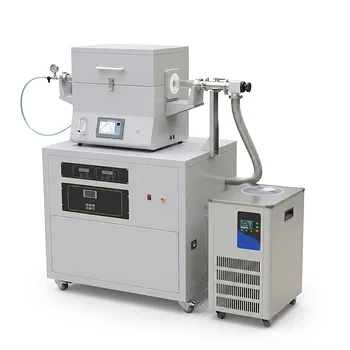
Split Chamber CVD Tube Furnace with Vacuum Station Chemical Vapor Deposition System Machine
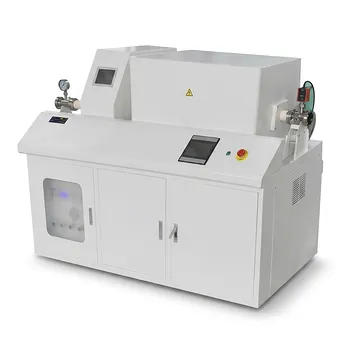
Chemical Vapor Deposition CVD System Slide PECVD Tube Furnace with Liquid Gasifier PECVD Machine
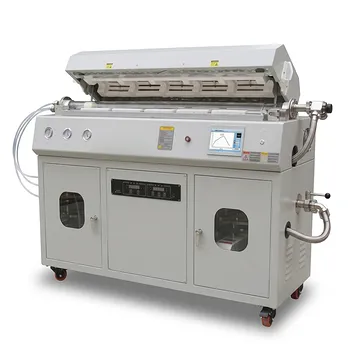
Multi Heating Zones CVD Tube Furnace System for Precision Chemical Vapor Deposition and Advanced Material Synthesis
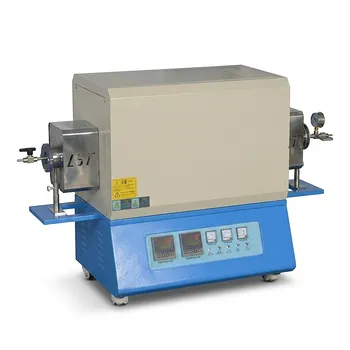
High Temperature Dual Zone Vacuum Tube Furnace for Material Research and CVD Processing
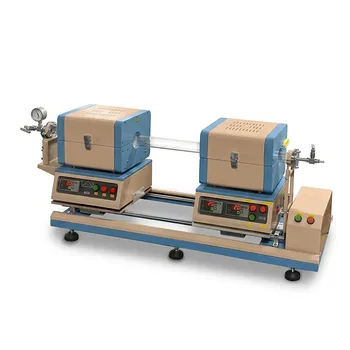
High Temperature 1200C Automatic Sliding Dual Zone Tube Furnace for 2D Transition Metal Dichalcogenides Growth and Material Sublimation Research