Why are high-purity alumina ceramic tubes, specifically C799 grade, preferred for titanium slag experiments?
Updated 3 months ago
High-purity alumina ceramic tubes, specifically the C799 grade (99.7% $Al_2O_3$), are the industry standard for titanium slag experiments due to their exceptional thermal ceiling and chemical neutrality. In environments reaching up to 1750°C, these tubes maintain structural integrity and superior airtightness, which is critical for protecting the reductive atmospheres necessary for titanium processing. Their resistance to the highly corrosive nature of molten slag ensures that the experimental data remains untainted by crucible degradation.
High-purity alumina provides a unique combination of extreme heat resistance and chemical "laziness," ensuring that the container does not become a variable in the experiment. By maintaining an airtight seal and resisting slag erosion, C799 tubes protect the purity of the sample and the safety of the laboratory environment.
Superior Performance at Extreme Temperatures
Maintaining Structural Integrity at 1750°C
Titanium slag research often requires temperatures that exceed the limits of standard refractory materials. C799 alumina is rated for continuous use at temperatures where other ceramics would soften or lose their vacuum-tight properties.
Preservation of Reductive Atmospheres
Experiments involving titanium slag typically require a reductive environment to simulate industrial smelting conditions. High-purity alumina tubes provide the gas-tightness necessary to prevent oxygen or atmospheric nitrogen from leaking into the system and altering the chemical reactions.
Chemical Inertness and Slag Resistance
Resisting Highly Corrosive Slag
Molten titanium slag is aggressively corrosive and can easily dissolve lower-grade ceramic materials. The 99.7% purity level of C799 alumina minimizes the presence of "glassy phases" (like silica) that slag typically attacks, significantly slowing the rate of erosion.
Preventing Sample Contamination
In metallurgical studies, the goal is to observe the behavior of the slag itself, not its reaction with the container. High-purity alumina prevents the dissolution of crucible material into the melt, which is essential for accurate measurements of slag viscosity and chemical composition.
Stability Against Basic Oxides
Slag often contains strong basic oxides like Calcium Oxide (CaO) and Magnesium Oxide (MgO). Alumina’s high chemical stability ensures it does not react with these components even at temperatures exceeding 1600°C, maintaining the purity of the pre-treated slag.
Understanding the Trade-offs and Limitations
Sensitivity to Thermal Shock
Despite its high-temperature strength, alumina is relatively brittle and sensitive to rapid temperature changes. If the heating or cooling cycles are too aggressive, the ceramic can crack, potentially leading to a catastrophic failure of the containment system.
Cost vs. Performance Balance
C799 grade material is significantly more expensive than lower-purity options like C610 (approx. 60% alumina). While the high purity is necessary for titanium research, it requires careful handling and precise furnace programming to justify the investment and ensure a long service life.
Making the Right Choice for Your Research Goal
To achieve the best results in your high-temperature experiments, select your materials based on the specific requirements of your metallurgical system.
- If your primary focus is Maximum Temperature Stability: Utilize C799 alumina to ensure the tube remains structurally sound and airtight up to 1750°C.
- If your primary focus is Chemical Purity and Phase Analysis: Choose 99.7% purity to prevent external elements from interfering with the Silico-Ferrite of Calcium and Aluminum (SFCA) or other phase compositions.
- If your primary focus is Gas-Phase Interaction Research: Rely on high-purity alumina’s refractory properties to ensure that observed oxidation results solely from the interaction between the gas and liquid metal, not the container.
By leveraging the chemical inertness and thermal resilience of C799 alumina, researchers can confidently explore the complex thermodynamics of titanium slag without the interference of material failure.
Summary Table:
| Feature | Specification (C799 Grade) | Benefit for Titanium Slag Experiments |
|---|---|---|
| Alumina Purity | 99.7% $Al_2O_3$ | Minimizes glassy phases to prevent slag erosion and sample contamination. |
| Max Operating Temp | Up to 1750°C | Maintains structural integrity during extreme high-temperature melting. |
| Gas Tightness | High Density / Vacuum Tight | Ensures stable reductive atmospheres and prevents atmospheric leaks. |
| Chemical Stability | Excellent against basic oxides | Resists reactions with CaO and MgO, preserving slag phase composition. |
| Thermal Sensitivity | High Thermal Shock Sensitivity | Requires precise furnace programming to prevent cracking during cycles. |
Elevate Your Material Research with THERMUNITS Precision Solutions
Are you conducting critical high-temperature research in metallurgy or material science? At THERMUNITS, we understand that the success of your experiments depends on the quality of your thermal equipment. As a leading manufacturer of high-temperature laboratory solutions, we provide the specialized tools you need to achieve accurate, repeatable results.
From high-purity alumina tubes to a comprehensive range of advanced systems—including Muffle, Vacuum, Atmosphere, Tube, Rotary, and Hot Press furnaces, as well as CVD/PECVD systems, Dental Furnaces, and Vacuum Induction Melting (VIM) furnaces—we empower industrial R&D and academic laboratories worldwide.
Why choose THERMUNITS?
- Precision Control: Maintain stable atmospheres and exact temperature profiles.
- Versatility: Solutions tailored for everything from dental ceramics to industrial-scale rotary kilns.
- Expert Support: Our technical team helps you select the right thermal elements and heat treatment equipment for your specific application.
Ready to optimize your thermal processing? Contact us today to discuss your project requirements and discover how our high-performance furnace systems can enhance your laboratory's efficiency.
References
- Maxat K. Myrzakulov, А И Карлина. Analysis of the Effect of Fluxing Additives in the Production of Titanium Slags in Laboratory Conditions. DOI: 10.3390/met14121320
Mentioned Products
- High Temperature 1700C Benchtop Tube Furnace with 5 Inch Heating Zone High Purity Alumina Tube and Vacuum Sealing Flanges
- High Temperature Compact Vacuum Tube Furnace 1750C Max 60mm OD Alumina Tube
- Hybrid High Temperature Tube and Box Furnace 1700C with 2 Inch Alumina Tube for Material Research
- High Temperature 1700C 4 Channel Tube Furnace 1 Inch Alumina Tube for Hi-Throughput Annealing
- High Temperature 1700C Tube Furnace with 4 Inch OD Alumina Tube and Vacuum Sealing Flanges
People Also Ask
- How are high-temperature tube furnaces utilized to repair etching damage? Precision Lattice Restoration Solutions
- What is the function of a high-temperature tube furnace in the synthesis of g-C3N4? Optimize Thermal Polycondensation
- What impact does the heating rate of a tube furnace have on biochar microstructure? Optimize Your Material R&D.
- What is the role of a high-temperature tube furnace in the calcination process of ZnO/In2O3 nanocomposites?
- Conditions for nZVI Synthesis in Tube Furnaces? Learn to Optimize Thermal and Atmospheric Control for High Purity.

Tech Team · ThermUnits
Last updated on Jun 02, 2026
Related Products

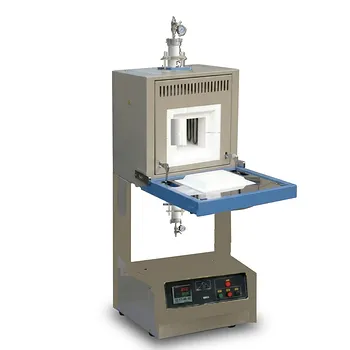
High Temperature 1700C Benchtop Tube Furnace with 5 Inch Heating Zone High Purity Alumina Tube and Vacuum Sealing Flanges
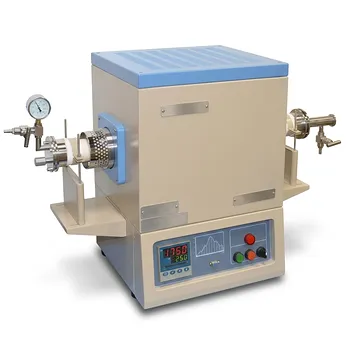
High Temperature Compact Vacuum Tube Furnace 1750C Max 60mm OD Alumina Tube
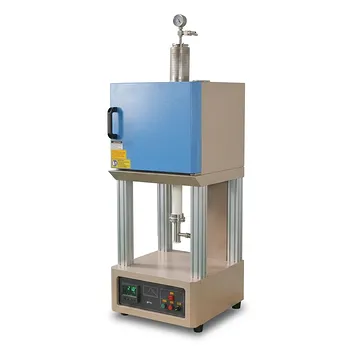
Hybrid High Temperature Tube and Box Furnace 1700C with 2 Inch Alumina Tube for Material Research
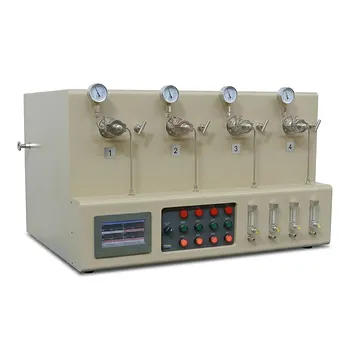
High Temperature 1700C 4 Channel Tube Furnace 1 Inch Alumina Tube for Hi-Throughput Annealing
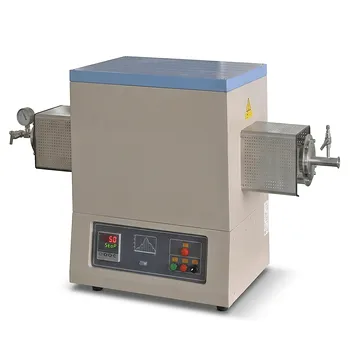
High Temperature 1700C Tube Furnace with 4 Inch OD Alumina Tube and Vacuum Sealing Flanges
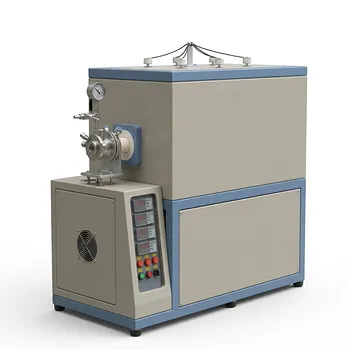
High Temperature 1700C Three Zone Tube Furnace with Alumina Tube 50mm 60mm 80mm OD for Material Research and Industrial Heat Treatment

Compact High Temperature 1600C Tube Furnace with 50mm Alumina Tube and Vacuum Flanges for Material Sintering

Vertical 1700C Vacuum and Atmosphere Tube Furnace with 80mm Alumina Tube
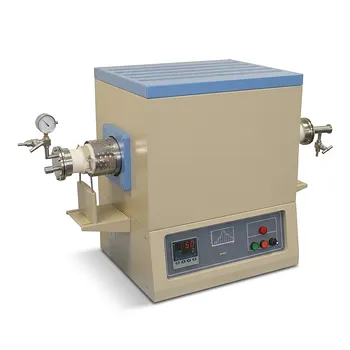
1700C High Temperature Alumina Tube Furnace with 18 Inch Heated Zone and Vacuum Sealing Flanges

1800C High Temperature Compact Vacuum Tube Furnace with 60mm OD Alumina Tube and Kanthal MoSi2 Heating Elements
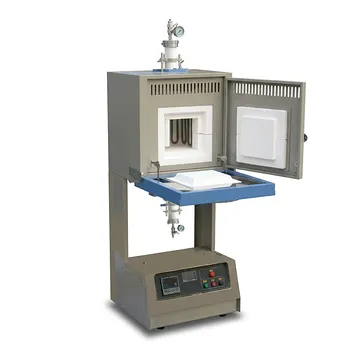
Vertical Hybrid High Temperature Furnace 1500C Alumina Tube SOFC Fuel Cell Testing Laboratory Heat Treatment Research Equipment

High Temperature 1700C Six Zone Split Tube Furnace with Alumina Tube and Water Cooled Flanges
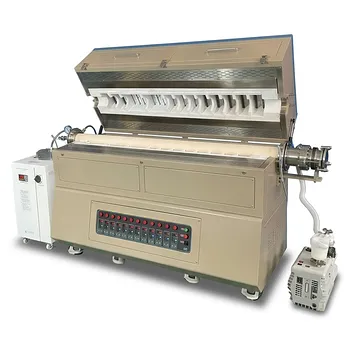
Twelve Zone 1700°C Multi Zone Split Tube Furnace with 100mm Alumina Processing Tube and Independent Temperature Gradient Control
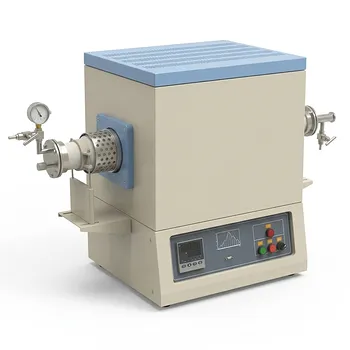
1750°C High Temperature Benchtop Vacuum Atmosphere Tube Furnace with Kanthal Super 1800 Heating Elements and 60mm Alumina Processing Tube
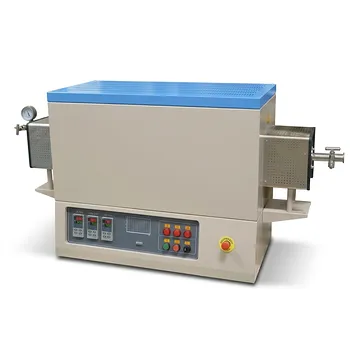
Three Zone Alumina Tube Furnace with Vacuum Flanges High Temperature 1700C Thermal Gradient CVD System
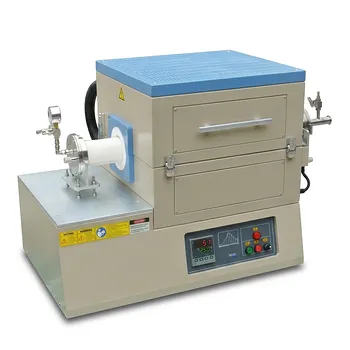
High Temperature 1700C Split Tube Furnace with Vacuum Flanges Valves and 60mm Alumina Tube

1700C Hydrogen Gas Tube Furnace with 60mm Alumina Process Tube and Integrated Hydrogen Safety Detector
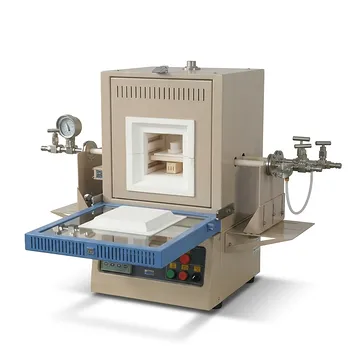
1700C Compact Hybrid Furnace with Dual Layer Box Sintering and Controlled Atmosphere Alumina Tubes
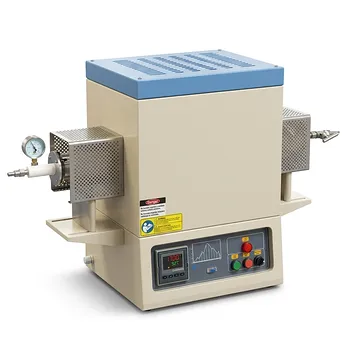
High Temperature Three Zone Tube Furnace 1700C with Alumina Tube and Water Cooled Flanges