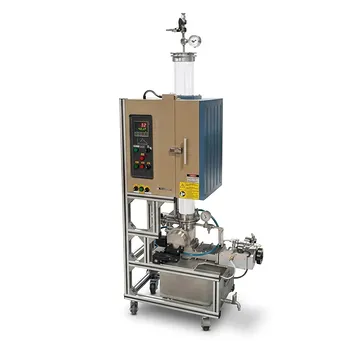
Why are high-purity quartz boats used for TiO2 thermal treatment? Ensure Chemical Purity & Thermal Stability
Updated 3 months ago
High-purity quartz boats are the industry standard for titanium dioxide ($TiO_2$) thermal treatment because they provide a chemically inert and thermally stable environment. Using these boats ensures that samples remain free from metallic contamination and structural degradation at temperatures exceeding 400°C. This protection is critical for maintaining the photocatalytic activity and chemical integrity of the final powder.
High-purity quartz boats serve as sacrificial carriers that withstand extreme temperatures and corrosive environments without leaching impurities into the sample. Their primary value lies in their ability to maintain sample purity while enduring the thermal stresses of intensive heating and cooling cycles.
The Role of Chemical Inertness in Catalyst Synthesis
Preventing Metal Ion Migration
The most critical reason for using high-purity quartz is its chemical purity, which prevents the infiltration of metal ion impurities. At temperatures above 400°C, many container materials can leach trace elements into $TiO_2$ powders. These impurities can "poison" the photocatalyst, significantly reducing its efficiency and altering its chemical properties.
Resistance to Reactive Environments
High-purity quartz is exceptionally chemically inert, meaning it does not react with the sample or the atmosphere inside the furnace. This inertness is maintained even in the presence of aggressive precursors or corrosive gases. This ensures that the final product remains a high-purity semiconductor with predictable characteristics.
Superior Thermal Properties for Furnace Operations
Resilience Against Thermal Shock
Quartz boats possess excellent thermal shock stability, allowing them to withstand rapid temperature fluctuations without cracking or shattering. This is essential for processes where samples must be moved in and out of a hot furnace chamber quickly. This durability reduces the risk of sample loss and container failure during high-throughput testing.
Structural Integrity at Extreme Temperatures
High-purity quartz can withstand process temperatures reaching up to 1000°C without deformation. Unlike other materials that might sag or warp, quartz maintains its shape, ensuring the sample remains contained and stable. This high-temperature resistance is vital for processes like nitridation, sulfidation, or carbonization.
Optimized Design for Material Consistency
Flat Geometry and Uniform Heating
The typical flat structural design of a quartz boat ensures that the sample powder is spread thinly and evenly. This maximizes the surface area contact between the reactants and the furnace atmosphere (such as ammonia or sulfurizing gases). Uniform heating across the boat prevents localized "hot spots," leading to a more consistent chemical reaction throughout the sample.
Minimal Surface Reactivity
Because quartz has minimal surface reactivity, samples do not stick to the boat after thermal treatment. This allows for easy recovery of the processed powder without contamination from the carrier material itself. This characteristic is particularly important when working with expensive precursors or when precise mass measurements are required.
Understanding the Trade-offs
Fragility and Handling Requirements
While quartz is thermally robust, it remains a brittle material that is susceptible to physical impact. It requires careful handling and storage to prevent chips or fractures that could compromise its integrity. Over time, repeated use at extreme temperatures can lead to devitrification, where the quartz becomes cloudy and more prone to breaking.
Cost as a Consumable
Quartz boats are considered consumables because they eventually wear out or become contaminated after multiple high-temperature cycles. They are generally more expensive than standard ceramic boats, but the investment is necessary for high-purity applications. For researchers, the cost is a trade-off for the "clean" data and high-quality results that lower-grade materials cannot provide.
How to Apply This to Your Project
When selecting a quartz boat for your thermal treatment process, align your choice with your specific experimental requirements.
- If your primary focus is photocatalytic efficiency: Use the highest purity quartz available to eliminate the risk of metal ion migration that could degrade catalyst performance.
- If your primary focus is high-temperature durability (1000°C+): Ensure the boat is thick-walled and rated for extreme temperatures to prevent structural deformation over long dwell times.
- If your primary focus is high-throughput processing: Prioritize boats with superior thermal shock resistance to allow for faster cooling and heating cycles without risk of rupture.
Selecting the right high-purity quartz boat is a fundamental step in ensuring the reproducibility and purity of your synthesized materials.
Summary Table:
| Feature | Key Benefit | Technical Insight |
|---|---|---|
| Chemical Purity | Prevents Contamination | Eliminates metal ion migration at temperatures >400°C |
| Thermal Stability | Resists Thermal Shock | Withstands rapid heating/cooling cycles up to 1000°C |
| Inertness | Catalyst Integrity | No reaction with aggressive precursors or corrosive gases |
| Flat Geometry | Uniform Heating | Maximizes surface area for consistent chemical reactions |
| Surface Property | Easy Sample Recovery | Minimal reactivity prevents samples from sticking to the boat |
Elevate Your Material Research with THERMUNITS
Precision in thermal processing is the key to high-performance catalyst synthesis. THERMUNITS is a leading manufacturer of high-temperature laboratory equipment, providing the tools you need for superior material science and industrial R&D.
Our comprehensive range of thermal solutions includes:
- Furnaces: Muffle, Vacuum, Atmosphere, Tube, Rotary, and Hot Press furnaces.
- Systems: Advanced CVD/PECVD systems and vacuum induction melting (VIM) furnaces.
- Specialized Equipment: Dental furnaces, electric rotary kilns, and high-purity thermal elements.
Whether you are treating titanium dioxide or developing next-generation semiconductors, our equipment ensures the chemical integrity and reproducibility your project demands.
Ready to optimize your lab's efficiency? Contact us today to discuss your specific heat treatment requirements and find the perfect solution for your research.
References
- Iwona Pełech, Urszula Narkiewicz. Thermal and/or Microwave Treatment: Insight into the Preparation of Titania-Based Materials for CO2 Photoreduction to Green Chemicals. DOI: 10.3390/molecules29153646
Mentioned Products
- 1100°C High Temperature Quartz Chamber Furnace 8 Inch OD with 7.6 Liter Capacity and Vacuum Atmosphere Capability
- 1200°C 5 Inch Vertical Quartz Tube Furnace with Stainless Steel Vacuum Flanges
- High Temperature 1200C Split Tube Furnace with Hinged Vacuum Flanges and 4 Inch Quartz Tube for Laboratory Research
- High Temperature Vertical Atmosphere Controlled Furnace with Automatic Bottom Loading and 1700°C Capacity for Advanced Material Research
- High Temperature Cold Wall High Vacuum Chamber Furnace 1400C for Advanced Material Processing
People Also Ask
- Why is a quartz tube furnace necessary for phosphorus-doped MoS2/GO preparation? Ensure Purity & Precise Synthesis
- Benefits of high-vacuum quartz tube furnaces with N2 for Co3O4 nanosheets: Purity and Structural Integrity.
- What conditions does a quartz tube furnace provide for AlxCoCrFeNi steam corrosion tests? Achieve Precise R&D Control.
- Why is high-temperature annealing in a quartz tube furnace done after HfO2 deposition? Unlock peak film performance.
- Why is a high-purity quartz tube used for SP-Fe3O4-C? Ensure Chemical Purity & Catalytic Stability

Tech Team · ThermUnits
Last updated on Jun 03, 2026
Related Products
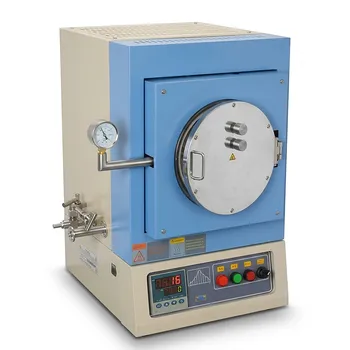
1100°C High Temperature Quartz Chamber Furnace 8 Inch OD with 7.6 Liter Capacity and Vacuum Atmosphere Capability
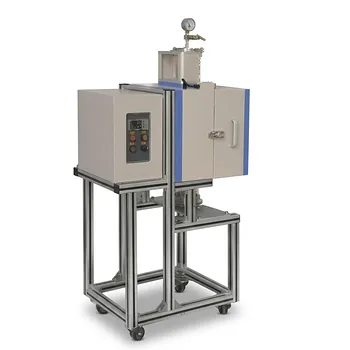
1200°C 5 Inch Vertical Quartz Tube Furnace with Stainless Steel Vacuum Flanges
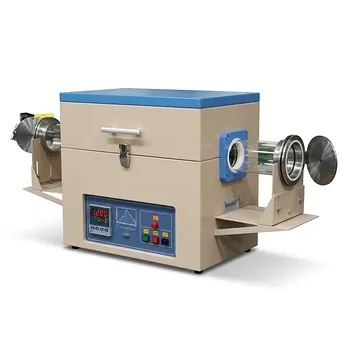
High Temperature 1200C Split Tube Furnace with Hinged Vacuum Flanges and 4 Inch Quartz Tube for Laboratory Research
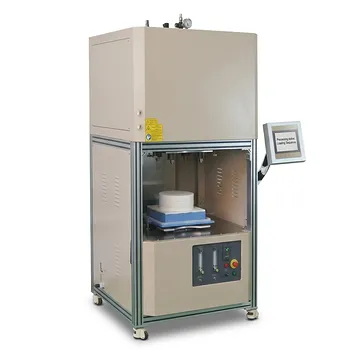
High Temperature Vertical Atmosphere Controlled Furnace with Automatic Bottom Loading and 1700°C Capacity for Advanced Material Research
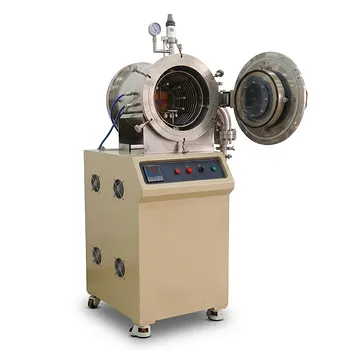
High Temperature Cold Wall High Vacuum Chamber Furnace 1400C for Advanced Material Processing
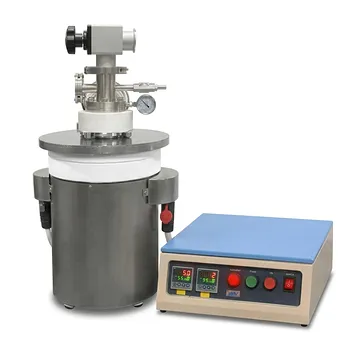
1100C High Temperature Vacuum Crucible Furnace with Quartz Chamber for Thermal Processing and Sintering
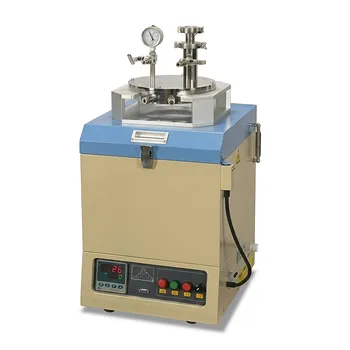
Vertical Vacuum Furnace 1100C High Temperature 8 Inch Quartz Chamber Water Cold Flange System
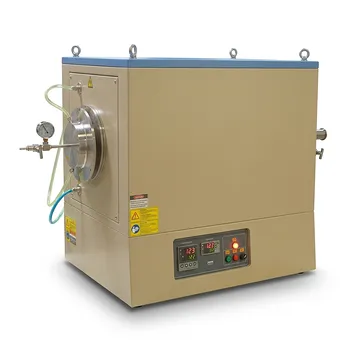
1100°C Large Diameter Quartz Tube Furnace with 24 Inch Heating Zone and Water Cooled Flanges
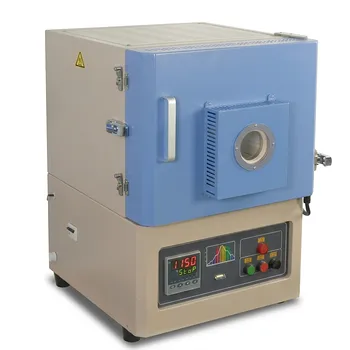
High Temperature Benchtop Muffle Furnace with Quartz Observation Window for Thermal Imaging and Material Analysis
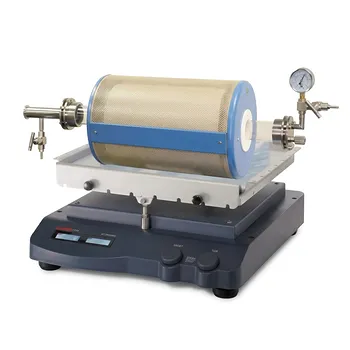
High Temperature Rocking Tube Furnace with Quartz Tube and Vacuum Flange for Materials Synthesis
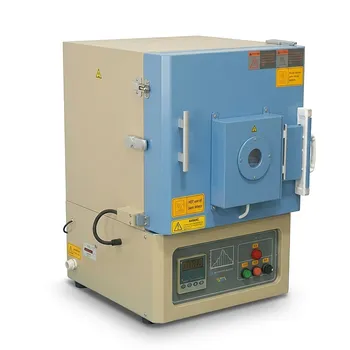
High Temperature Benchtop Muffle Furnace 1500C with 3.6L Chamber and Quartz Observation Window

High Temperature Automated 5 Inch Tube Furnace for Autonomous Material Research and Advanced Laboratory R&D