Why is a continuous atmosphere supply in a tube furnace necessary for BTO? Optimize Material Purity & Stoichiometry
Updated 3 months ago
Ensuring complete chemical transformation. The primary reason for a continuous atmosphere supply during the thermal treatment of Barium Titanate (BTO) is to remove gaseous decomposition products—such as carbonates and acetates—generated by the precursors. This steady flow, often maintained at approximately 0.5 L/min, prevents these residues from lingering in the furnace, which would otherwise lead to carbon impurities within the BTO lattice and compromise the material's chemical stoichiometry.
A continuous atmosphere supply functions as both a chemical reactant and a transport mechanism, ensuring that volatile byproducts are purged while the surrounding environment remains oxidizing enough to maintain the structural integrity of the ceramic.
The Role of Mass Transport in Material Purity
Effective Removal of Decomposition Products
During calcination, BTO precursors undergo significant chemical shifts, releasing organic groups like acetates and carbonates. A continuous flow acts as a carrier gas that physically sweeps these gaseous byproducts out of the hot zone.
Preventing Carbon Encroachment
If the atmosphere remains stagnant, decomposition products can re-deposit or fail to fully exit the material's pores. This leads to residual carbon impurities trapped within the Barium Titanate lattice, which can degrade the dielectric properties of the final ceramic.
Maintaining Chemical Stoichiometry
BTO requires a specific ratio of barium to titanium to maintain its ferroelectric properties. The continuous supply of an oxidizing atmosphere (such as air) ensures that the reaction reaches completion without shifting the intended chemical balance.
Maintaining Thermodynamic Equilibrium
Ensuring Oxidizing Conditions
Like many metal oxides, BTO is sensitive to the partial pressure of oxygen in its environment. A steady air flow provides a constant source of oxygen, preventing the unwanted reduction of the material at high temperatures.
Inhibiting Oxygen Vacancies
Without a sufficient and refreshed oxygen supply, the material may develop oxygen vacancies. Just as oxygen flow maintains the Ni3+ state in other oxides, it ensures that BTO maintains its intended oxidation states and crystal structure.
Facilitating Surface Reactions
The continuous movement of gas ensures that the concentration gradient at the material's surface remains high. This speeds up the decomposition kinetics, allowing for a more uniform and thorough calcination across the entire sample batch.
Understanding the Trade-offs
Flow Rate vs. Thermal Uniformity
While a higher flow rate removes byproducts more effectively, it can introduce thermal gradients. Rapidly moving gas may cool the sample surface prematurely, leading to uneven heating and internal stresses in the ceramic.
Gas Purity vs. Operational Cost
Using high-purity compressed air or oxygen ensures the best results but increases operational overhead. However, using "dirty" or insufficiently filtered shop air can introduce moisture or oil mists, which defeat the purpose of the atmosphere control by introducing new contaminants.
Atmosphere Choice and Material Sensitivity
While BTO requires an oxidizing environment, other materials treated in the same furnace might require inert gases like Nitrogen or Argon. Accidentally using an oxidizing flow for sensitive substrates, such as nickel foam or reducing agents like NaBH4, will lead to catastrophic oxidation and sample failure.
Optimizing Your BTO Thermal Treatment
How to Apply This to Your Project
Proper atmosphere management is a balancing act between chemical purity and thermal stability.
- If your primary focus is Maximum Chemical Purity: Maintain a steady flow of high-purity air (0.5 L/min) throughout the entire ramp and soak cycle to ensure all carbonaceous species are purged.
- If your primary focus is Stoichiometric Accuracy: Ensure the furnace is tightly sealed to prevent the ingress of moisture, which can interfere with the formation of the desired oxide phases.
- If your primary focus is Process Efficiency: Calibrate your flow rate to the minimum required to remove byproducts without creating significant temperature fluctuations within the tube.
A well-regulated, continuous atmosphere is the fundamental safeguard that transforms raw precursors into high-performance, contaminant-free Barium Titanate.
Summary Table:
| Key Function | Technical Purpose | Material Impact |
|---|---|---|
| Byproduct Removal | Purges carbonates and acetates | Prevents carbon impurities & lattice defects |
| Oxidation Control | Maintains high oxygen partial pressure | Inhibits oxygen vacancies; ensures Ni3+ state |
| Mass Transport | Facilitates surface gas exchange | Speeds up decomposition & ensures uniformity |
| Stoichiometry | Maintains Ba:Ti chemical balance | Preserves ferroelectric properties and performance |
Elevate Your Research with Precision Thermal Solutions
Achieving the perfect chemical stoichiometry in materials like Barium Titanate requires precise atmosphere control and thermal stability. THERMUNITS is a leading manufacturer of high-temperature laboratory equipment specifically designed for material science and industrial R&D.
We offer a comprehensive range of thermal processing solutions, including:
- Advanced Furnaces: Tube, Muffle, Vacuum, Atmosphere, Rotary, and Hot Press Furnaces.
- Specialized Systems: CVD/PECVD systems, Dental Furnaces, and Electric Rotary Kilns.
- High-End Melting: Vacuum Induction Melting (VIM) furnaces and high-quality Thermal Elements.
Whether you are performing sensitive calcination or complex material synthesis, our equipment provides the reliability and control your laboratory demands. Contact THERMUNITS today to discuss your specific heat treatment requirements and discover how our expert solutions can accelerate your project success.
References
- Mahsa Abedi, Zsolt Pap. Influence of Rapid Heat Treatment on the Photocatalytic Activity and Stability of Barium Titanates Against a Broad Range of Pollutants. DOI: 10.3390/molecules29225350
Mentioned Products
- High Temperature Tube Furnace 1500C with Sliding Flanges and 50mm OD for Rapid Thermal Processing Fast Heating and Cooling
- Vertical 1700C Vacuum and Atmosphere Tube Furnace with 80mm Alumina Tube
- 1100C Tube Furnace with Vacuum Flange and Programmable Temperature Controller for Material Science and Industrial Heat Treatment
- Compact High Temperature 1600C Tube Furnace with 50mm Alumina Tube and Vacuum Flanges for Material Sintering
- 900°C Max Rotary Tube Furnace with 8 Inch 310S Alloy Tube and Optional Multi Zone Heating for Industrial Material Calcination
People Also Ask
- How are high-temperature tube furnaces utilized to repair etching damage? Precision Lattice Restoration Solutions
- What role does a high-temperature tube furnace play in CVD synthesis of silicon nanowires? Master VLS Growth Precision.
- What core conditions does a high-temperature tube furnace provide for rGO aerogels? Mastering Precision Synthesis.
- What role does a high-temperature tube furnace play in the sulfidation heat treatment of CoS@C/MXene nanocomposites? Guide
- How does precision tube furnace control influence CoFe nanoparticle formation? Master Your Bimetallic Synthesis.

Tech Team · ThermUnits
Last updated on Jun 02, 2026
Related Products
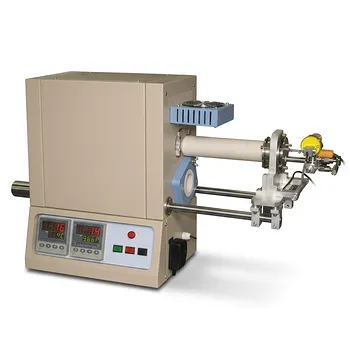
High Temperature Tube Furnace 1500C with Sliding Flanges and 50mm OD for Rapid Thermal Processing Fast Heating and Cooling

Vertical 1700C Vacuum and Atmosphere Tube Furnace with 80mm Alumina Tube

1100C Tube Furnace with Vacuum Flange and Programmable Temperature Controller for Material Science and Industrial Heat Treatment

Compact High Temperature 1600C Tube Furnace with 50mm Alumina Tube and Vacuum Flanges for Material Sintering
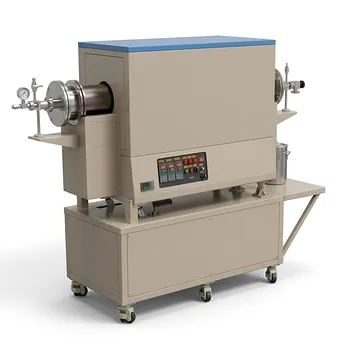
900°C Max Rotary Tube Furnace with 8 Inch 310S Alloy Tube and Optional Multi Zone Heating for Industrial Material Calcination
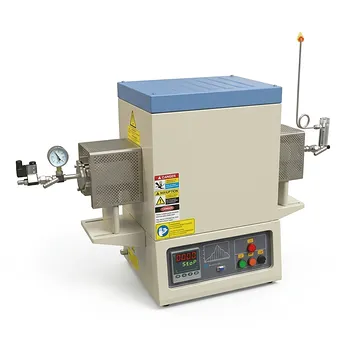
1700C Hydrogen Gas Tube Furnace with 60mm Alumina Process Tube and Integrated Hydrogen Safety Detector

High Temperature 1700C Tube Furnace with High Vacuum Turbomolecular Pump System and Multi Channel Mass Flow Controller Gas Mixer
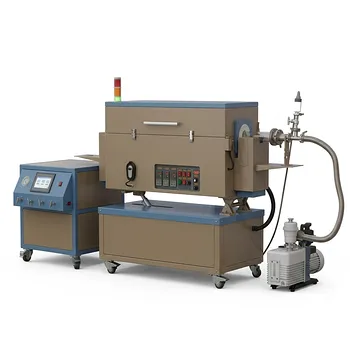
5 Inch Three Zone Rotary Tube Furnace with Integrated Gas Delivery System and 1200C Capability for Advanced Material CVD Processing
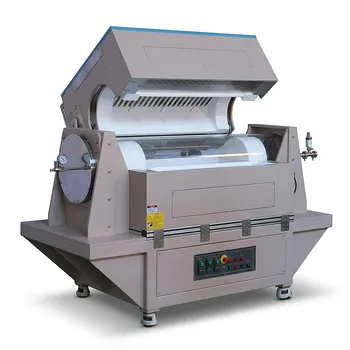
Three Zone Tube Furnace with 11 Inch or 15 Inch Quartz Tube and Hinged Flanges for Vacuum Atmosphere Heat Treatment

1200C High Throughput Multi Channel Tube Furnace with 50mm Quartz Tubes for Annealing and Material Phase Diagram Research
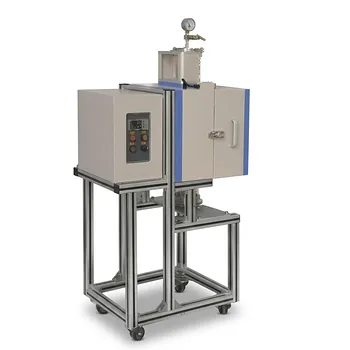
1200°C 5 Inch Vertical Quartz Tube Furnace with Stainless Steel Vacuum Flanges

High Temperature 1700C Benchtop Tube Furnace with 5 Inch Heating Zone High Purity Alumina Tube and Vacuum Sealing Flanges
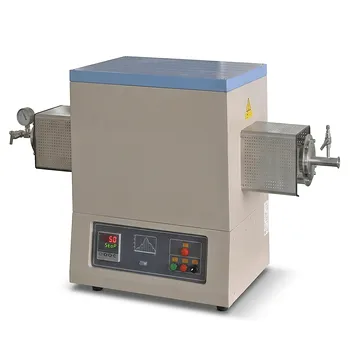
High Temperature 1700C Tube Furnace with 4 Inch OD Alumina Tube and Vacuum Sealing Flanges

1800C High Temperature Compact Vacuum Tube Furnace with 60mm OD Alumina Tube and Kanthal MoSi2 Heating Elements

High Temperature 1700C Six Zone Split Tube Furnace with Alumina Tube and Water Cooled Flanges

Compact Vertical Split Quartz Tube Furnace with Stainless Steel Vacuum Flanges for Rapid Thermal Quenching and Controlled Atmosphere Material Processing
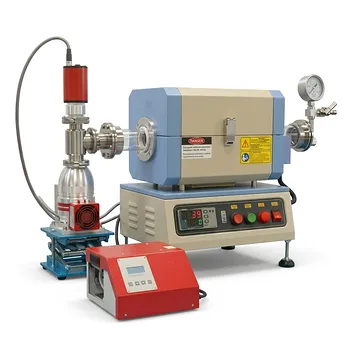
High Vacuum Compact Tube Furnace 1200C with Integrated Turbo Pump System and 8 Inch Heating Zone
High Throughput 1200C Four Channel Tube Furnace with 3 Inch Quartz Tubes for Multi Zone Annealing and Material Research

High Temperature Automated 5 Inch Tube Furnace for Autonomous Material Research and Advanced Laboratory R&D
