Why is continuous nitrogen flow required for biomass carbonization in a tube furnace? Optimize Purity & Pore Structure
Updated 5 months ago
A continuous nitrogen flow is the essential safeguard that prevents biomass from burning into ash while simultaneously "cleaning" the internal structure of the resulting carbon. In a tube furnace, this flow displaces oxygen to create an inert environment, ensuring the material undergoes pyrolysis rather than combustion at high temperatures, and flushes out volatile by-products that would otherwise clog the developing pore network.
Core Takeaway: Nitrogen acts as both a protective shield and a transport medium. It prevents the destructive oxidation of the biomass and carries away gaseous impurities to ensure the final activated carbon achieves high purity, a stable nitrogen content, and a well-developed pore structure.
Preventing Oxidative Combustion
The Necessity of Oxygen Displacement
At typical carbonization temperatures (such as 600°C), biomass will immediately ignite and undergo oxidative combustion if oxygen is present. Nitrogen flow effectively purges air from the tube furnace chamber, replacing it with an inert atmosphere.
Ensuring Pyrolysis Over Burning
By maintaining an anaerobic (oxygen-free) environment, the nitrogen ensures the organic matter is converted into carbon-rich biochar through pyrolysis. This process breaks down the biomass chemically without the presence of a flame, preserving the structural carbon framework.
Maximizing Material Yield
Without a steady flow of nitrogen, the biomass or the resulting nitrogen-doped carbon would undergo ashing. This would lead to a significant loss of carbon mass and a failure to produce a functional anode or adsorbent material.
Facilitating Pore Development and Chemical Stability
Removal of Volatile By-products
As biomass is heated, it releases volatile dehydration products, carbon dioxide, and carbon monoxide. A continuous flow "sweeps" these gases out of the furnace, preventing them from interfering with the carbonization reaction or settling back onto the material.
Preventing Secondary Deposition
If these volatile by-products are not removed, they can undergo secondary deposition, where they re-condense inside the pores of the carbon. Keeping the flow active ensures the pores remain "open" and well-developed, which is critical for the carbon’s final performance.
Maintaining Reaction Equilibrium
A steady flow rate (often around 500 mL/min) helps maintain a stable chemical environment inside the tube. This stability is vital for consistent nitrogen doping, as it ensures the reaction equilibrium is not disrupted by the accumulation of unwanted gaseous by-products.
Understanding the Trade-offs
Balancing Flow Rate and Temperature
While a high flow rate ensures oxygen is excluded, an excessively fast flow can lead to "slugs" of cold gas entering the hot zone. This can cause temperature fluctuations within the tube furnace, leading to inconsistent carbonization and doping results.
Gas Purity vs. Cost
The effectiveness of the process depends heavily on the purity of the nitrogen used (typically 99.99% or higher). Using lower-purity nitrogen introduces trace amounts of oxygen and moisture, which can degrade the quality of the activated carbon and corrode the internal equipment over time.
Equipment Lifespan and Maintenance
While the nitrogen protects the sample, its ability to flush out corrosive volatiles also protects the furnace itself. Failing to maintain a continuous flow can allow these corrosive gases to linger, damaging the heating elements and the furnace tube lining.
Applying This to Your Project
To achieve the best results in biomass carbonization and nitrogen doping, you must tailor your gas management strategy to your specific performance requirements.
- If your primary focus is Maximum Pore Volume: Prioritize a higher nitrogen flow rate to ensure all volatile by-products are instantly removed, preventing any pore-filling secondary deposition.
- If your primary focus is Consistent Nitrogen Doping: Maintain a consistent, moderate flow of high-purity (99.999%) nitrogen to ensure the chemical environment remains stable without fluctuating the furnace temperature.
- If your primary focus is Minimizing Material Loss: Ensure the tube is fully purged and a positive pressure is maintained throughout the entire heating and cooling cycle to prevent any oxygen backflow.
A precisely controlled nitrogen environment is the difference between producing a high-performance functional carbon and simply creating low-value ash.
Summary Table:
| Aspect | Role of Nitrogen Flow | Benefit to Activated Carbon |
|---|---|---|
| Atmosphere Control | Displaces oxygen to create an inert environment | Prevents combustion and material loss (ashing). |
| Pore Management | Flushes out volatile dehydration by-products | Prevents secondary deposition and pore clogging. |
| Chemical Doping | Maintains a stable reaction equilibrium | Ensures consistent and uniform nitrogen doping levels. |
| Equipment Safety | Removes corrosive gases and tars | Protects heating elements and extends furnace lifespan. |
Elevate Your Material Research with THERMUNITS
Precise atmosphere control is the foundation of high-performance material science. THERMUNITS is a leading manufacturer of high-temperature laboratory equipment, providing the precision and stability required for complex biomass carbonization and industrial R&D.
From advanced Tube and Atmosphere furnaces designed for perfect nitrogen flow management to Rotary kilns, Vacuum Induction Melting (VIM) furnaces, and CVD/PECVD systems, our thermal solutions are built for excellence. Whether you need a Dental Furnace for specialized ceramics or a Hot Press furnace for material synthesis, we have the expertise to support your goals.
Contact us today to find the perfect thermal processing solution for your lab!
References
- Takashi Osawa, Motoi Machida. Characteristics of Nitrate Ion Adsorption onto N-doped Activated Carbon Derived from Pinecone and Urea. DOI: 10.5985/jec.34.71
Mentioned Products
- High Temperature Tube Furnace 1500C with Sliding Flanges and 50mm OD for Rapid Thermal Processing Fast Heating and Cooling
- Vertical 1700C Vacuum and Atmosphere Tube Furnace with 80mm Alumina Tube
- 1100C Tube Furnace with Vacuum Flange and Programmable Temperature Controller for Material Science and Industrial Heat Treatment
- Compact High Temperature 1600C Tube Furnace with 50mm Alumina Tube and Vacuum Flanges for Material Sintering
- 900°C Max Rotary Tube Furnace with 8 Inch 310S Alloy Tube and Optional Multi Zone Heating for Industrial Material Calcination
People Also Ask
- How are high-temperature tube furnaces utilized to repair etching damage? Precision Lattice Restoration Solutions
- What core conditions does a high-temperature tube furnace provide for rGO aerogels? Mastering Precision Synthesis.
- What role does a high-temperature tube furnace play in CVD synthesis of silicon nanowires? Master VLS Growth Precision.
- How does precision tube furnace control influence CoFe nanoparticle formation? Master Your Bimetallic Synthesis.
- What role does a high-temperature tube furnace play in the sulfidation heat treatment of CoS@C/MXene nanocomposites? Guide

Tech Team · ThermUnits
Last updated on Apr 14, 2026
Related Products
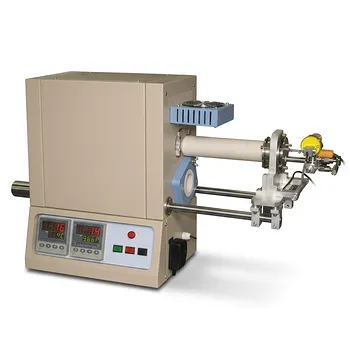
High Temperature Tube Furnace 1500C with Sliding Flanges and 50mm OD for Rapid Thermal Processing Fast Heating and Cooling

Vertical 1700C Vacuum and Atmosphere Tube Furnace with 80mm Alumina Tube

1100C Tube Furnace with Vacuum Flange and Programmable Temperature Controller for Material Science and Industrial Heat Treatment

Compact High Temperature 1600C Tube Furnace with 50mm Alumina Tube and Vacuum Flanges for Material Sintering
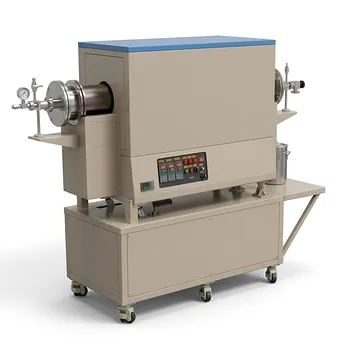
900°C Max Rotary Tube Furnace with 8 Inch 310S Alloy Tube and Optional Multi Zone Heating for Industrial Material Calcination

1700C Hydrogen Gas Tube Furnace with 60mm Alumina Process Tube and Integrated Hydrogen Safety Detector

High Temperature 1700C Tube Furnace with High Vacuum Turbomolecular Pump System and Multi Channel Mass Flow Controller Gas Mixer
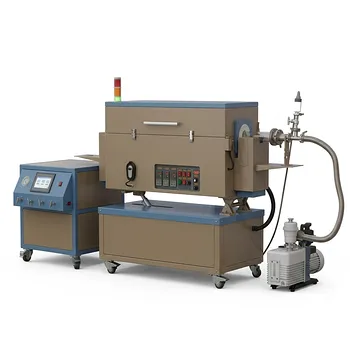
5 Inch Three Zone Rotary Tube Furnace with Integrated Gas Delivery System and 1200C Capability for Advanced Material CVD Processing

Three Zone Tube Furnace with 11 Inch or 15 Inch Quartz Tube and Hinged Flanges for Vacuum Atmosphere Heat Treatment

1200C High Throughput Multi Channel Tube Furnace with 50mm Quartz Tubes for Annealing and Material Phase Diagram Research

1200°C 5 Inch Vertical Quartz Tube Furnace with Stainless Steel Vacuum Flanges
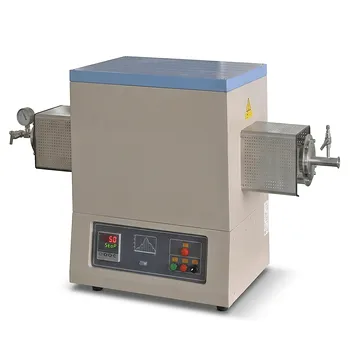
High Temperature 1700C Tube Furnace with 4 Inch OD Alumina Tube and Vacuum Sealing Flanges

High Temperature 1700C Benchtop Tube Furnace with 5 Inch Heating Zone High Purity Alumina Tube and Vacuum Sealing Flanges

Compact Vertical Split Quartz Tube Furnace with Stainless Steel Vacuum Flanges for Rapid Thermal Quenching and Controlled Atmosphere Material Processing

High Temperature 1700C Six Zone Split Tube Furnace with Alumina Tube and Water Cooled Flanges

1800C High Temperature Compact Vacuum Tube Furnace with 60mm OD Alumina Tube and Kanthal MoSi2 Heating Elements

High Vacuum Compact Tube Furnace 1200C with Integrated Turbo Pump System and 8 Inch Heating Zone
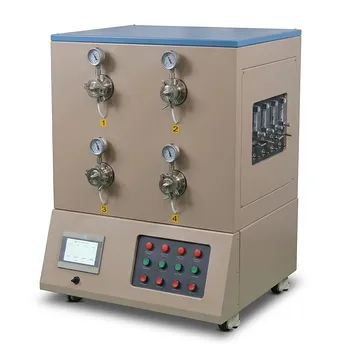
High Throughput 1200C Four Channel Tube Furnace with 3 Inch Quartz Tubes for Multi Zone Annealing and Material Research

High Temperature Automated 5 Inch Tube Furnace for Autonomous Material Research and Advanced Laboratory R&D
