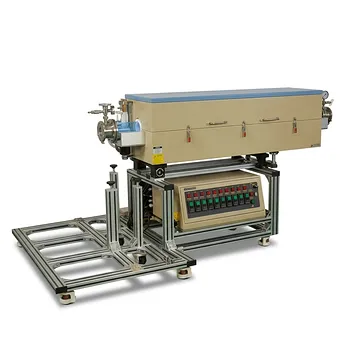
Why is a high-precision atmosphere tube furnace required for CNT treatment? Achieve perfect surface regulation.
Updated 3 months ago
Achieving precise control over Carbon Nanotube (CNT) surface chemistry requires a high-precision atmosphere tube furnace to isolate the reaction from oxygen and apply exact thermal energy. This specialized equipment allows for the selective removal of oxygen-containing functional groups while preventing the structural combustion of the nanotubes. By maintaining a strictly controlled environment, researchers can fine-tune the material's properties for specific applications like hydrogen storage and catalysis.
Core Takeaway: A high-precision atmosphere tube furnace is the only tool capable of providing the stable, inert environment and specific heating curves required to selectively pyrolyze oxygen groups (400°C–1000°C) without damaging the underlying carbon structure.
The Necessity of Strict Atmosphere Control
Preventing Uncontrolled Oxidation
At the high temperatures required for thermal treatment, carbon nanotubes are highly susceptible to combustion if even trace amounts of oxygen are present. A sealed atmosphere furnace utilizes high-purity argon or nitrogen to displace ambient air, ensuring the CNTs do not burn away during the process.
Maintaining Chemical Stoichiometry
Precise atmosphere control prevents moisture and oxygen from reacting with the CNT surface in unintended ways. This isolation is critical for ensuring that the chemical stoichiometry and physical properties of the nanotubes remain consistent and reproducible across different batches.
Creating Protective Environments
In advanced applications, the furnace must maintain an inert protective atmosphere to protect both the sample and the internal heating elements. This is especially vital when temperatures exceed 1000°C, where carbon materials become exceptionally reactive to any surrounding impurities.
Selective Pyrolysis through Precise Heating
Targeting Specific Functional Groups
Surface-modified CNTs often contain a variety of oxygen groups, such as carboxyl, anhydride, and lactone groups. Because these groups decompose at different temperatures, a high-precision heating curve is required to selectively remove one type while leaving others intact.
Regulating the 400°C to 1000°C Range
The ability to hold exact temperatures within the 400°C to 1000°C range is essential for "tuning" the surface. This thermal precision allows researchers to quantify exactly how different oxygen groups impact complex phenomena like hydrogen spillover efficiency.
Promoting Structural Integrity
Precise heating ensures that the carbon network itself is not compromised during the removal of functional groups. Stable heating rates prevent thermal shock and ensure that the resulting nanotubes maintain high electrical conductivity and chemical stability.
Material Integrity and Purity
The Role of Quartz Reaction Chambers
High-precision furnaces often utilize high-purity quartz tubes, which offer excellent thermal stability and chemical inertness. These tubes ensure that no metallic impurities are introduced to the CNTs, which is critical for maintaining the purity of the material at temperatures up to 800°C or higher.
Managing Heteroatom Incorporation
When the goal is to incorporate elements like nitrogen or phosphorus into the carbon matrix, the furnace must manage the gas flow precisely. A stable inert flow during the carbonization stage ensures these heteroatoms are successfully embedded into the pore structures rather than being lost to the atmosphere.
Understanding the Trade-offs
Seal Integrity vs. Gas Consumption
Maintaining a perfect vacuum or a pure inert atmosphere requires superior sealing performance, which can increase the complexity of the setup. While high flow rates of argon ensure purity, they also increase operational costs and require sophisticated pressure regulation to avoid disturbing the lightweight CNT samples.
Heating Speed vs. Precision
Rapid heating (flash pyrolysis) can save time but often leads to "overshoot," where the temperature exceeds the target and removes more functional groups than intended. Conversely, very slow heating rates may lead to unintended structural rearrangements or the sintering of any catalysts present on the CNT surface.
Applying This to Your Research Goals
- If your primary focus is quantifying hydrogen spillover: Utilize a furnace with a high-accuracy PID controller to target specific pyrolysis temperatures for carboxyl and lactone groups.
- If your primary focus is maximizing electrical conductivity: Prioritize a furnace with exceptional sealing performance to ensure an entirely oxygen-free environment during the high-temperature sintering phase.
- If your primary focus is heteroatom doping: Select a system that allows for the precise switching between nitrogen and argon atmospheres at specific temperature thresholds to protect the carbon network.
Selecting a furnace with both high-purity atmosphere capabilities and exact thermal regulation is the foundational step in transforming raw carbon nanotubes into high-performance, functionalized materials.
Summary Table:
| Feature | Impact on CNT Processing | Critical Range/Material |
|---|---|---|
| Inert Atmosphere | Prevents sample combustion and oxidation | High-purity Argon/Nitrogen |
| Thermal Precision | Selective removal of carboxyl & lactone groups | 400°C to 1000°C |
| Quartz Chamber | Prevents metallic impurity contamination | Up to 800°C+ |
| Gas Flow Control | Facilitates precise heteroatom doping | Controlled Carbonization |
Elevate Your Carbon Nanotube Research with THERMUNITS
Precision is the difference between breakthrough results and failed experiments in material science. As a leading manufacturer of high-temperature laboratory equipment, THERMUNITS provides the advanced thermal processing solutions required for complex CNT functionalization and industrial R&D.
Our Atmosphere Tube Furnaces, CVD/PECVD systems, and Vacuum Induction Melting (VIM) furnaces are engineered to deliver the strict atmosphere control and stable heating curves your research demands. Whether you are quantifying hydrogen spillover or maximizing electrical conductivity, our equipment ensures consistent, reproducible results.
Ready to optimize your heat treatment process? Contact our technical experts today to find the ideal furnace solution for your laboratory.
References
- Javier Navarro‐Ruiz, Iann C. Gerber. Mechanism of Hydrogen Spillover on Metal-Doped Carbon Materials: Surface Carboxylic Groups Are Key. DOI: 10.1021/acscatal.4c00293
Mentioned Products
- Vertical 1700C Vacuum and Atmosphere Tube Furnace with 80mm Alumina Tube
- 1750°C High Temperature Benchtop Vacuum Atmosphere Tube Furnace with Kanthal Super 1800 Heating Elements and 60mm Alumina Processing Tube
- 1200C Hybrid Muffle and Tube Furnace for Material Research with Dual Atmosphere Control Quartz Tubes
- Compact Hybrid Muffle and Tube Furnace for 1000C Controlled Atmosphere Laboratory Material Sintering
- Three Zone Tube Furnace with 11 Inch or 15 Inch Quartz Tube and Hinged Flanges for Vacuum Atmosphere Heat Treatment
People Also Ask
- Why is a thermocouple sensor indispensable for monitoring the vertical tube furnace during gallium oxide nanowire production? Optimize VLS Growth
- How is an industrial-grade vertical tube furnace utilized in smelting leaching residues? Enhance Metal Recovery Efficiency
- How does a vertical tube furnace facilitate thermoelectric alloy melting? Precision synthesis for material homogeneity.
- What is the function of a laboratory-grade vertical tube furnace in fast pyrolysis? Optimize Composite Research.
- Why is a vertical tube furnace preferred for Ga2O3 CVD? Optimize Convection & Nanowire Growth

Tech Team · ThermUnits
Last updated on Jun 02, 2026
Related Products

Vertical 1700C Vacuum and Atmosphere Tube Furnace with 80mm Alumina Tube
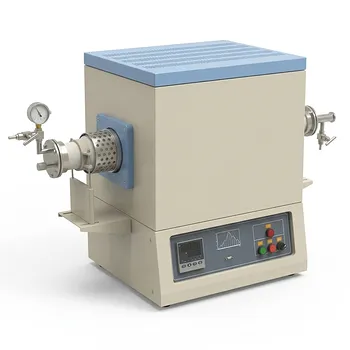
1750°C High Temperature Benchtop Vacuum Atmosphere Tube Furnace with Kanthal Super 1800 Heating Elements and 60mm Alumina Processing Tube
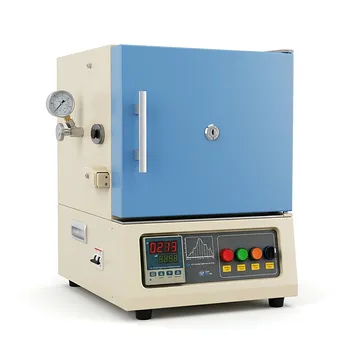
1200C Hybrid Muffle and Tube Furnace for Material Research with Dual Atmosphere Control Quartz Tubes
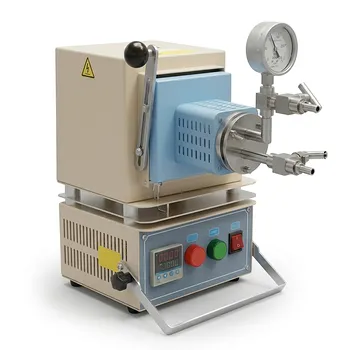
Compact Hybrid Muffle and Tube Furnace for 1000C Controlled Atmosphere Laboratory Material Sintering
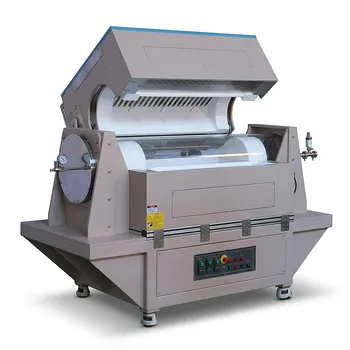
Three Zone Tube Furnace with 11 Inch or 15 Inch Quartz Tube and Hinged Flanges for Vacuum Atmosphere Heat Treatment
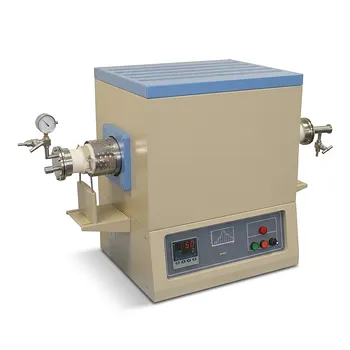
1700C High Temperature Alumina Tube Furnace with 18 Inch Heated Zone and Vacuum Sealing Flanges
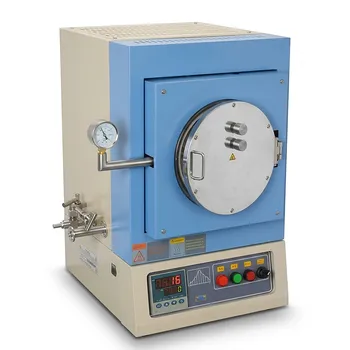
1100°C High Temperature Quartz Chamber Furnace 8 Inch OD with 7.6 Liter Capacity and Vacuum Atmosphere Capability
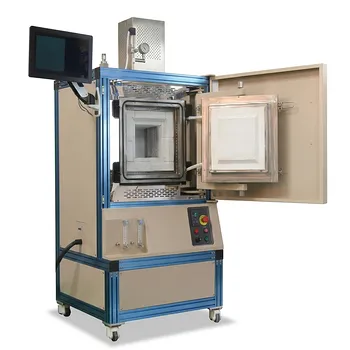
High Temperature Hydrogen Atmosphere Box Furnace 1650C Max Reducing Environment Material Synthesis System 8x8x8 Chamber

1200°C 5 Inch Vertical Quartz Tube Furnace with Stainless Steel Vacuum Flanges
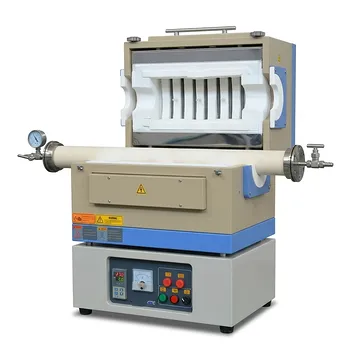
High Temperature 1600C Split Tube Furnace Vacuum Flanges Valves Optional 60mm 80mm Alumina Tube

High Temperature 1700C Tube Furnace with High Vacuum Turbomolecular Pump System and Multi Channel Mass Flow Controller Gas Mixer

1100C Tube Furnace with Vacuum Flange and Programmable Temperature Controller for Material Science and Industrial Heat Treatment

High Temperature 1700C Vertical Tube Furnace for Powder Spherification and Material Sintering

Compact High Temperature 1600C Tube Furnace with 50mm Alumina Tube and Vacuum Flanges for Material Sintering

High Temperature 1700C Six Zone Split Tube Furnace with Alumina Tube and Water Cooled Flanges

1800C High Temperature Compact Vacuum Tube Furnace with 60mm OD Alumina Tube and Kanthal MoSi2 Heating Elements
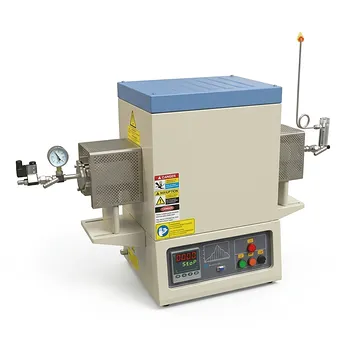
1700C Hydrogen Gas Tube Furnace with 60mm Alumina Process Tube and Integrated Hydrogen Safety Detector

High Temperature 1700C Benchtop Tube Furnace with 5 Inch Heating Zone High Purity Alumina Tube and Vacuum Sealing Flanges

High Temperature Automated 5 Inch Tube Furnace for Autonomous Material Research and Advanced Laboratory R&D