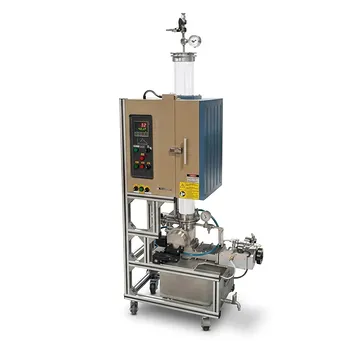
Why is a high-purity quartz boat typically selected as the sample carrier in biomass torrefaction? Purity & Stability
Updated 3 months ago
High-purity quartz boats are the industry standard for biomass torrefaction because they provide a chemically neutral environment that can withstand extreme thermal stress. By combining exceptional high-temperature resistance with near-total chemical inertness, these carriers ensure that the resulting torrefied char remains free from contamination, which is a critical requirement for accurate thermochemical kinetic analysis.
The use of high-purity quartz eliminates the risk of the sample carrier reacting with the biomass or catalysts, thereby safeguarding the chemical integrity of the solid products. This inertness, paired with physical stability at temperatures exceeding 1000°C, makes quartz an essential tool for repeatable and precise experimental outcomes.
Superior Chemical Inertness and Sample Purity
Prevention of Side Reactions
During the torrefaction and pyrolysis process, biomass undergoes complex chemical changes that can be easily skewed by reactive surfaces. High-purity quartz does not react with biomass raw materials, even when exposed to strong alkaline activators like KOH or corrosive gases.
Eliminating Impurity Migration
Ensuring that no foreign elements migrate into the sample is vital for maintaining the uniformity of the product's surface properties. Because the boat is "high-purity," it prevents the introduction of metallic or non-metallic impurities into the torrefied char or carbon spheres.
Accuracy of Kinetic Analysis
For researchers, the purity of the solid product is a prerequisite for valid data. Any reaction between the carrier and the sample would invalidate thermochemical kinetic analyses, making quartz the only reliable choice for high-precision laboratory work.
Thermal Stability Under Extreme Conditions
High-Temperature Resistance
Torrefaction and subsequent carbonization often occur at temperatures ranging from 200°C to over 900°C. Quartz boats maintain their structural integrity without deformation at these levels, often withstanding process temperatures up to and exceeding 1000°C.
Resistance to Thermal Shock
Biomass processing often involves rapid heating and cooling cycles to achieve specific char characteristics. Quartz possesses excellent thermal stability, allowing it to endure these rapid fluctuations without cracking or losing its shape.
Consistent Sample Positioning
Because quartz remains rigid and dimensionally stable at high heat, it ensures accurate sample positioning within the furnace. This consistency is necessary for maintaining a stable environment throughout the duration of the heating cycle.
Optimizing the Reaction Environment
Promoting Uniform Heating
The flat, shallow design of a quartz boat allows the biomass sample to be spread in a thin layer. This geometry ensures that the material is heated uniformly throughout the carbonization or torrefaction reaction, preventing localized under-processing.
Enhancing Gas Diffusion
The boat-shaped structure is designed to maximize the contact area between the sample and the reaction gases (such as nitrogen or steam). This promotes efficient gas diffusion, which is essential for forming the characteristic porous structure and high reactivity of biochar.
Atmosphere Control
Quartz boats are compatible with high-purity inert atmospheres, such as 99.99% nitrogen environments. They do not interfere with the displacement of oxygen, which is a fundamental requirement for the pyrolysis reaction and the prevention of unwanted combustion.
Understanding the Trade-offs
Mechanical Fragility
While quartz is thermally robust, it is mechanically brittle. It is highly susceptible to physical impact and breakage if mishandled, requiring careful storage and transport compared to metallic alternatives.
Material Cost
High-purity quartz is significantly more expensive than standard glass or certain ceramic carriers. This cost is a necessary investment for high-stakes research and purity-critical applications, but it may be a factor in high-volume industrial screening.
Chemical Limitations
Although quartz is inert to most chemicals, it can be etched or damaged by hydrofluoric acid (HF) or strong phosphoric acid at high temperatures. Users must ensure the biomass feedstock or additives do not contain specific compounds that target silica.
How to Select a Carrier for Your Process
Recommendations Based on Your Project Goals
- If your primary focus is analytical precision: Always utilize high-purity quartz to ensure that the chemical signatures in your kinetic analysis are derived solely from the biomass.
- If your primary focus is rapid thermal cycling: Quartz is the ideal choice due to its low coefficient of thermal expansion, which prevents cracking during sudden temperature shifts.
- If your primary focus is maximizing gas-solid interaction: Choose the flat boat-style design over deeper crucibles to increase the surface area exposed to the furnace atmosphere.
By prioritizing chemical neutrality and thermal resilience, high-purity quartz boats serve as the foundation for reliable and uncontaminated biomass conversion research.
Summary Table:
| Feature | Benefit for Torrefaction | Research Impact |
|---|---|---|
| Chemical Inertness | Prevents reactions with biomass/activators | Ensures accurate kinetic data |
| Thermal Stability | Resists shock and temperatures >1000°C | Prevents carrier deformation or cracking |
| High Purity | Eliminates metallic/non-metallic migration | Maintains sample and surface integrity |
| Boat Geometry | Uniform heating and optimal gas diffusion | Consistent biochar and porous structure |
Elevate Your Material Research with THERMUNITS
Precision in biomass torrefaction and carbonization requires more than just high-quality carriers; it demands a perfectly controlled thermal environment. THERMUNITS is a leading manufacturer of high-temperature laboratory equipment dedicated to advancing material science and industrial R&D.
From Tube and Atmosphere furnaces ideal for quartz boat applications to advanced CVD/PECVD systems, Muffle, Vacuum, Rotary, and Hot Press furnaces, we offer a comprehensive range of thermal solutions. We also provide specialized equipment like Dental Furnaces, Electric Rotary Kilns, and Vacuum Induction Melting (VIM) furnaces to meet unique research needs.
Ready to optimize your heat treatment process? Our experts are here to provide tailored solutions and high-performance thermal elements for your laboratory.
Contact THERMUNITS Today to Get a Quote
References
- Hongyu Gao, Weiming Yi. Effect of Pretreatment on the Pyrolysis Kinetics of Corn Stalk: Comparison of Inert, Oxidative, and Wet Torrefaction. DOI: 10.1007/s12155-024-10811-x
Mentioned Products
- 1100°C High Temperature Quartz Chamber Furnace 8 Inch OD with 7.6 Liter Capacity and Vacuum Atmosphere Capability
- 1200°C 5 Inch Vertical Quartz Tube Furnace with Stainless Steel Vacuum Flanges
- High Temperature 1200C Split Tube Furnace with Hinged Vacuum Flanges and 4 Inch Quartz Tube for Laboratory Research
- High Temperature Vertical Atmosphere Controlled Furnace with Automatic Bottom Loading and 1700°C Capacity for Advanced Material Research
- High Temperature Cold Wall High Vacuum Chamber Furnace 1400C for Advanced Material Processing
People Also Ask
- Why is a quartz tube furnace necessary for phosphorus-doped MoS2/GO preparation? Ensure Purity & Precise Synthesis
- Benefits of high-vacuum quartz tube furnaces with N2 for Co3O4 nanosheets: Purity and Structural Integrity.
- What conditions does a quartz tube furnace provide for AlxCoCrFeNi steam corrosion tests? Achieve Precise R&D Control.
- Why is high-temperature annealing in a quartz tube furnace done after HfO2 deposition? Unlock peak film performance.
- Why is a high-purity quartz tube used for SP-Fe3O4-C? Ensure Chemical Purity & Catalytic Stability

Tech Team · ThermUnits
Last updated on Jun 02, 2026
Related Products
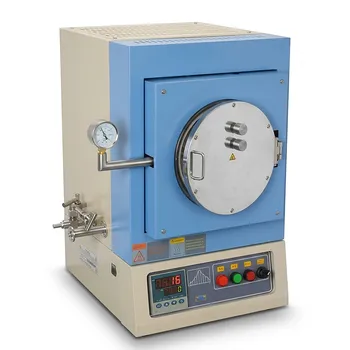
1100°C High Temperature Quartz Chamber Furnace 8 Inch OD with 7.6 Liter Capacity and Vacuum Atmosphere Capability
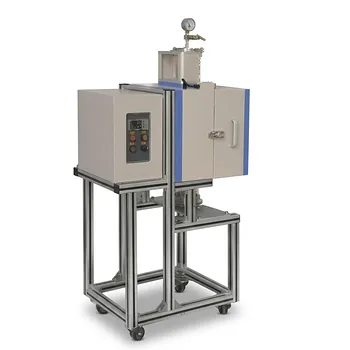
1200°C 5 Inch Vertical Quartz Tube Furnace with Stainless Steel Vacuum Flanges
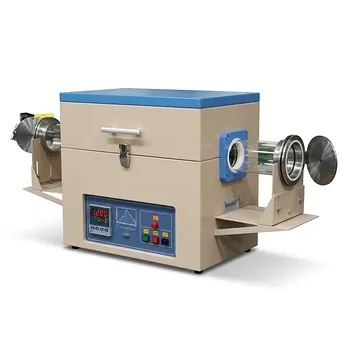
High Temperature 1200C Split Tube Furnace with Hinged Vacuum Flanges and 4 Inch Quartz Tube for Laboratory Research
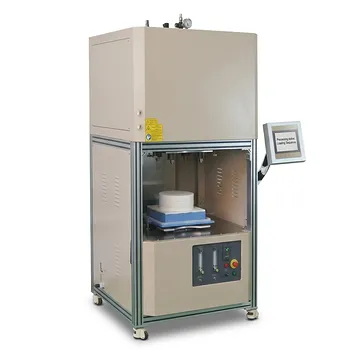
High Temperature Vertical Atmosphere Controlled Furnace with Automatic Bottom Loading and 1700°C Capacity for Advanced Material Research
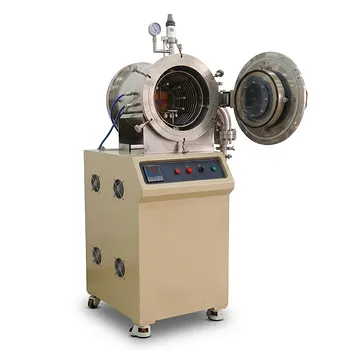
High Temperature Cold Wall High Vacuum Chamber Furnace 1400C for Advanced Material Processing
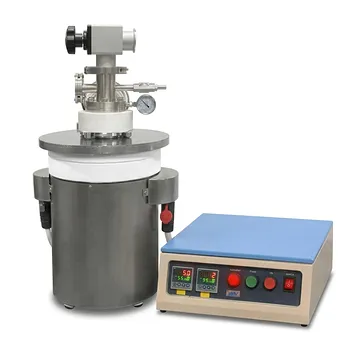
1100C High Temperature Vacuum Crucible Furnace with Quartz Chamber for Thermal Processing and Sintering
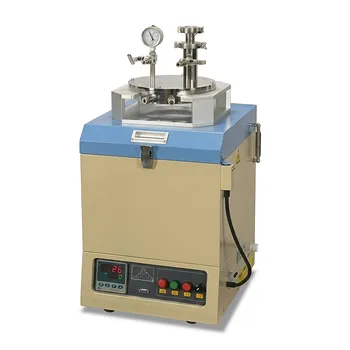
Vertical Vacuum Furnace 1100C High Temperature 8 Inch Quartz Chamber Water Cold Flange System
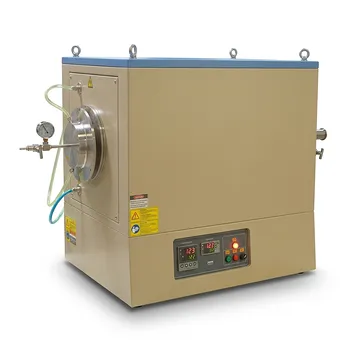
1100°C Large Diameter Quartz Tube Furnace with 24 Inch Heating Zone and Water Cooled Flanges
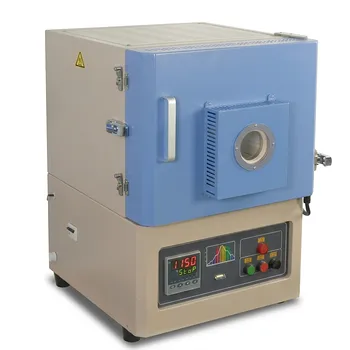
High Temperature Benchtop Muffle Furnace with Quartz Observation Window for Thermal Imaging and Material Analysis
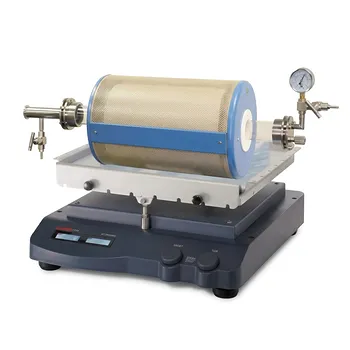
High Temperature Rocking Tube Furnace with Quartz Tube and Vacuum Flange for Materials Synthesis
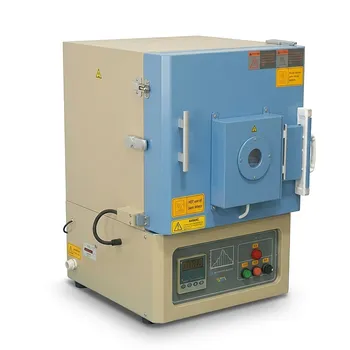
High Temperature Benchtop Muffle Furnace 1500C with 3.6L Chamber and Quartz Observation Window

High Temperature Automated 5 Inch Tube Furnace for Autonomous Material Research and Advanced Laboratory R&D