Why is a high-temperature annealing step essential for converting pyrolysis products into γ-US2? Phase Purity Guide
Updated 3 months ago
The transition to gamma-phase Uranium Disulfide ($\gamma$-US$_2$) requires high-temperature annealing to provide the thermal energy necessary for atomic rearrangement. Initial pyrolysis typically results in amorphous or low-crystallinity precursors that lack a defined lattice. By applying heat—specifically at 850 °C—the system overcomes kinetic barriers, allowing atoms to migrate from a disordered state into a stable, long-range ordered crystalline structure.
Core Takeaway: High-temperature annealing at 850 °C is the critical thermodynamic "reset" that transforms disordered pyrolysis byproducts into the highly structured $\gamma$-US$_2$ phase, ensuring both chemical purity and structural integrity.
The Transition from Disorder to Order
Overcoming the Amorphous State
Pyrolysis often occurs at temperatures sufficient to break chemical bonds but insufficient to organize the resulting atoms. This leaves the uranium and sulfur in a "frozen" amorphous state or a low-crystallinity powder that lacks the properties of the $\gamma$-phase.
Thermal Energy and Atomic Rearrangement
The 850 °C environment provides the kinetic energy required for atoms to vibrate and migrate across the material. This movement allows the atoms to settle into the lowest energy configuration, which, for this specific sulfide, is the long-range ordered $\gamma$-phase.
Inducing Phase-Specific Crystallinity
Without this specific thermal input, the material cannot achieve the symmetry required for the $\gamma$-phase. The annealing process acts as a catalyst for crystallization, transforming a chaotic mixture into a predictable, repeating lattice.
Structural and Morphological Refinement
Achieving Long-Range Order
Long-range order is the defining characteristic of $\gamma$-US$_2$ compared to its precursors. High-temperature treatment ensures that this order extends throughout the bulk of the material, which is essential for consistent physical and chemical performance.
Modifying Microscopic Morphology
Beyond the internal lattice, annealing significantly alters the visible structure of the particles. It facilitates grain growth and can change the surface area and pore structure, which are vital for the material’s eventual application.
Ensuring Phase Purity
Just as the preparation of Uranium Dicarbide (UC$_2$) requires 1700 °C to drive solid-state diffusion, the 850 °C threshold for US$_2$ ensures that the reaction reaches completion. This prevents the final product from being contaminated by unreacted oxides or intermediate phases.
Understanding the Trade-offs
Risk of Excessive Grain Growth
While high temperatures improve crystallinity, staying at peak temperature for too long can cause unwanted sintering. This leads to larger grain sizes, which may reduce the surface reactivity of the Uranium Disulfide.
Precise Temperature Control
If the temperature falls below the 850 °C threshold, the transition to the $\gamma$-phase may be incomplete, leaving the material semi-amorphous. Conversely, exceeding the required temperature could lead to phase instability or the formation of secondary uranium-sulfur compounds.
Equipment Requirements
Achieving these specific phases requires specialized heating equipment capable of maintaining stable, high-temperature environments. This adds a layer of operational complexity and energy cost compared to simple low-temperature drying or initial pyrolysis.
How to Apply This to Your Process
Recommendations for Material Optimization
Optimizing the synthesis of $\gamma$-US$_2$ depends on the intended use of the final material. Consider the following strategic focuses:
- If your primary focus is Phase Purity: Maintain a steady 850 °C soak time to ensure every atom has sufficient energy to find its place in the $\gamma$-lattice.
- If your primary focus is High Surface Area: Use the minimum effective annealing time at 850 °C to prevent excessive particle coarsening and sintering.
- If your primary focus is Electronic Properties: Carefully monitor the cooling rate post-annealing to prevent the formation of vacancies or defects that could alter conductivity.
Mastering the thermal transition at 850 °C is the definitive step in transforming raw pyrolysis products into a high-performance, crystalline Uranium Disulfide material.
Summary Table:
| Key Factor | Role in γ-US2 Synthesis | Process Metric |
|---|---|---|
| Atomic Rearrangement | Transitions amorphous precursors to ordered lattices | 850 °C Required |
| Phase Purity | Drives solid-state diffusion to eliminate impurities | Critical Threshold |
| Morphology Control | Refines grain growth and particle surface area | Soak Time Dependent |
| Crystallinity | Establishes long-range symmetry and stability | Thermal Kinetic Energy |
Advance Your Material Research with THERMUNITS
Achieving the precise 850 °C threshold for γ-US2 requires reliable, high-performance thermal equipment. As a leading manufacturer for material science and industrial R&D, THERMUNITS offers a comprehensive range of solutions, including Muffle, Vacuum, Atmosphere, and Tube furnaces, as well as CVD/PECVD systems and Vacuum Induction Melting (VIM) units.
Our precision-engineered heat treatment systems provide the thermal stability your research demands to ensure phase purity and structural integrity.
Ready to enhance your lab’s capabilities?
Contact THERMUNITS Experts Today to find the perfect furnace for your high-temperature applications.
References
- Sheridon N. Kelly, Stefan G. Minasian. Formation of uranium disulfide from a uranium thioamidate single-source precursor. DOI: 10.1039/d4sc03422h
Mentioned Products
- High Temperature 1500C Four Channel Tube Furnace with Alumina Tubes for High Throughput Annealing and Phase Diagram Research
- High Temperature 1000C Vacuum Furnace with 8 Inch ID Chamber for Material Sintering and Research Annealing
- High Temperature 1700C 4 Channel Tube Furnace 1 Inch Alumina Tube for Hi-Throughput Annealing
- High Temperature Cold Wall Vacuum Furnace for Advanced Material Sintering and Annealing 1600C Heating Area 200x200x300mm
- High Temperature 1500C Benchtop Muffle Furnace 3.6L Alumina Fiber Chamber Programmable Controller Sintering Annealing Carbonization Thermal Processing System
People Also Ask
- What critical conditions does an industrial high-temperature tube furnace provide for annealing (GaAl)2O3 thin films?
- Why is post-annealing in a high-temperature tube furnace required for LLTaO? Unlock High Perovskite Phase Purity
- How does an industrial-grade high-temperature tube furnace contribute to the annealing of Laponite clay membranes? Key Roles
- Why is a high-precision furnace critical for g-C3N4? Master Thermal Etching and Exfoliation for Superior Nanosheets
- Why is a laboratory-grade tube furnace required for CuCo2O4@rGO annealing? Maximize Crystallinity & Stability

Tech Team · ThermUnits
Last updated on Jun 03, 2026
Related Products
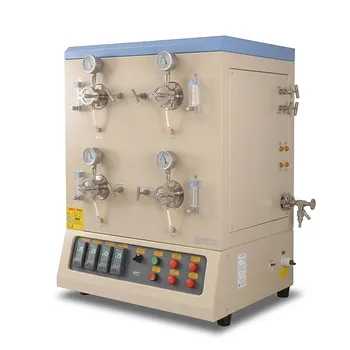
High Temperature 1500C Four Channel Tube Furnace with Alumina Tubes for High Throughput Annealing and Phase Diagram Research
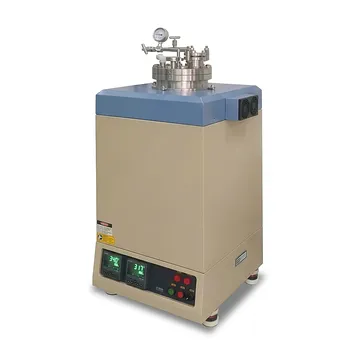
High Temperature 1000C Vacuum Furnace with 8 Inch ID Chamber for Material Sintering and Research Annealing
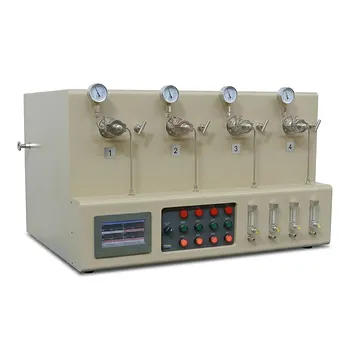
High Temperature 1700C 4 Channel Tube Furnace 1 Inch Alumina Tube for Hi-Throughput Annealing
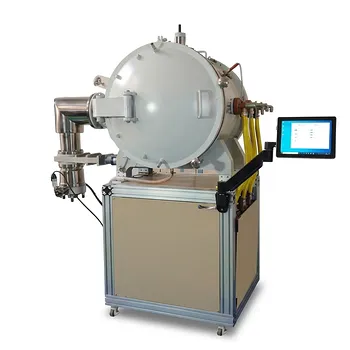
High Temperature Cold Wall Vacuum Furnace for Advanced Material Sintering and Annealing 1600C Heating Area 200x200x300mm
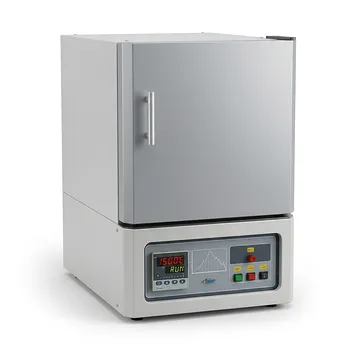
High Temperature 1500C Benchtop Muffle Furnace 3.6L Alumina Fiber Chamber Programmable Controller Sintering Annealing Carbonization Thermal Processing System
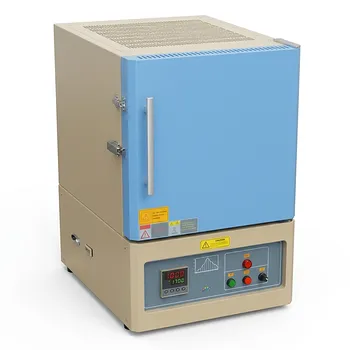
Large Bench Top 1700C High Temperature Muffle Furnace with 19L Chamber for Advanced Material Sintering and Annealing
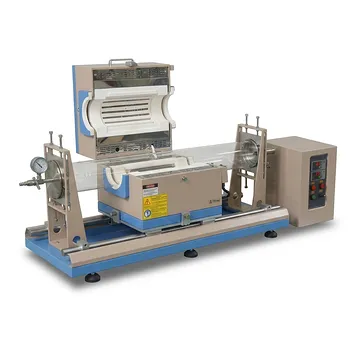
1200C High Temperature 5 Inch Sliding Tube Furnace for Rapid Thermal Processing RTP and Wafer Annealing
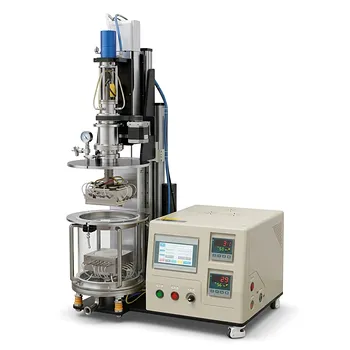
High Temperature 800C Rapid Thermal Processing Furnace with Rotating Sample Holder for Close Spaced Sublimation and Thin Film Solar Cell Research
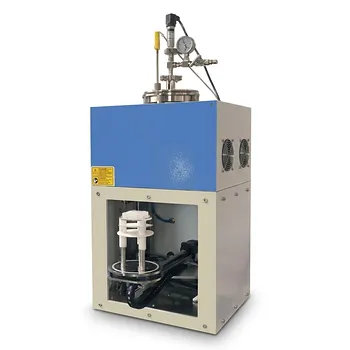
Rapid Thermal Processing Atmosphere Controlled Bottom Loading Furnace 1100C with 50C Per Second Heating Rate for Wafer Annealing
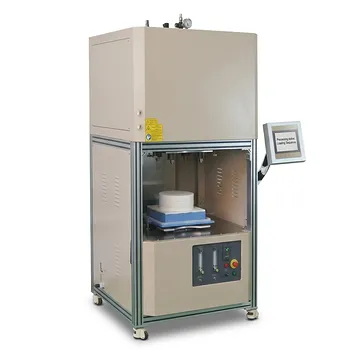
High Temperature Vertical Atmosphere Controlled Furnace with Automatic Bottom Loading and 1700°C Capacity for Advanced Material Research
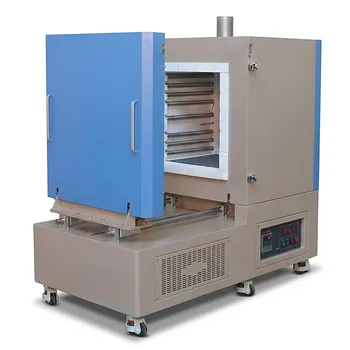
1200C Five Side Heating Muffle Furnace with Sliding Door 125L Volume High Temperature Heat Treatment System for Large Scale Sintering and Annealing
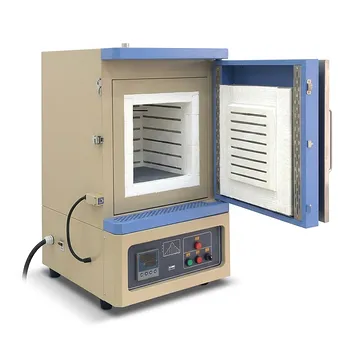
Five Side Heating Muffle Furnace High Purity Alumina Fiber 27L Chamber 1200C High Temperature Thermal Processing System for Sintering Annealing and Materials Research
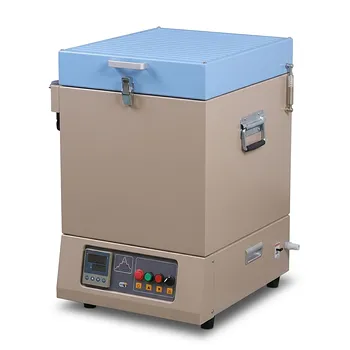
High Temperature Vertical Crucible Furnace with 22L Heating Chamber and 1200C Maximum Temperature
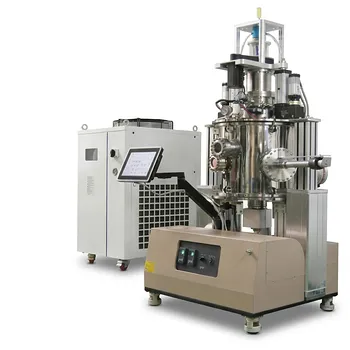
950C Rapid Thermal Processing Furnace for 12 Inch Wafer CSS Coating with Rotating Substrate Holder

High Temperature Tube Furnace 1500C with Sliding Flanges and 50mm OD for Rapid Thermal Processing Fast Heating and Cooling
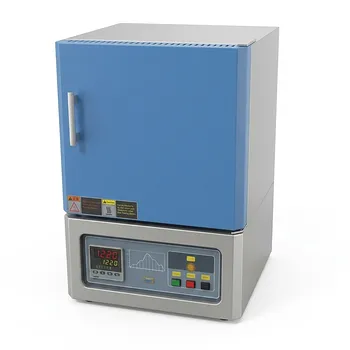
High Temperature Benchtop Muffle Furnace 1700C 10L Chamber Alumina Fiber Insulation MoSi2 Heating Elements
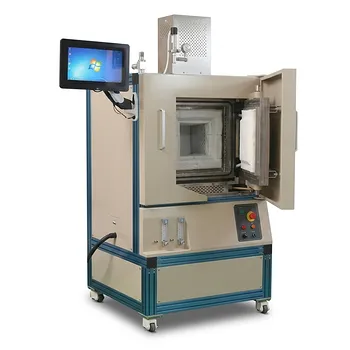
High Temperature Oxygen and Inert Atmosphere Controlled Furnace 8 Liter 1700C Sintering System for Advanced Materials RD
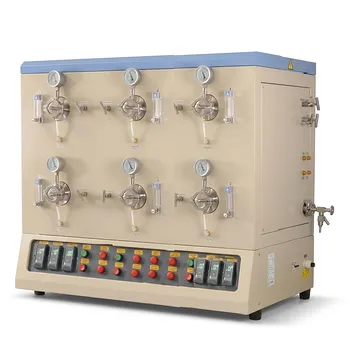
1200C High Throughput Multi Channel Tube Furnace with 50mm Quartz Tubes for Annealing and Material Phase Diagram Research

High Temperature 1700C Tube Furnace with High Vacuum Turbomolecular Pump System and Multi Channel Mass Flow Controller Gas Mixer