Why is post-annealing in a high-temperature tube furnace required for LLTaO? Unlock High Perovskite Phase Purity
Updated 3 months ago
Post-deposition annealing is the essential phase-transformation step required to unlock the functional properties of LLTaO thin films. While Pulsed Laser Deposition (PLD) provides excellent control over film thickness, the resulting "as-deposited" films often suffer from poor crystallinity or contain unidentified, non-functional phases. Subjecting these films to a high-temperature tube furnace—typically at 950 °C in a flowing oxygen environment—provides the thermal energy necessary to reorganize the atomic lattice into a high-performance perovskite structure.
Core Takeaway: Post-annealing is required because it provides the activation energy needed for solid-state recrystallization, transforming disordered or amorphous LLTaO into a highly crystalline perovskite phase that is essential for efficient lithium-ion migration.
Achieving Structural Phase Purity
The Transition to the Perovskite Structure
The primary goal of annealing LLTaO is to induce the formation of the perovskite crystal structure. In its as-deposited state, the material may lack the defined lattice sites necessary for high performance.
Thermal energy allows atoms to migrate to their equilibrium positions, creating the specific atomic framework required for lithium-ion transport. Without this structural transition, the thin film remains an insulator or a poor conductor of ions.
Eliminating Unidentified and Metastable Phases
During the PLD process, especially under low oxygen partial pressures, the film may contain unidentified secondary phases. These impurities act as barriers to ion movement and degrade the electrochemical stability of the material.
The high-temperature environment of a tube furnace facilitates solid-state reactions that consume these secondary phases. This results in a chemically homogeneous film with a singular, high-purity LLTaO phase.
Thermodynamics of Lattice Rearrangement
Overcoming the Kinetic Energy Barrier
At room temperature or low deposition temperatures, atoms lack the mobility to find their ideal lattice sites. They become "frozen" in a disordered or amorphous state as they hit the substrate.
Annealing at 950 °C provides the activation energy required for thermal diffusion. This allows for long-range atomic rearrangement, which is the fundamental mechanism behind grain growth and enhanced crystallinity.
Internal Stress Relief and Defect Reduction
The rapid cooling and energetic nature of PLD often trap internal stresses and lattice defects within the thin film. These defects can lead to film cracking, delamination, or electronic "traps" that hinder performance.
Maintaining a stable thermal environment in a tube furnace allows these stresses to relax through recrystallization. This process significantly improves the mechanical stability and electrical repeatability of the LLTaO layer.
The Critical Role of the Annealing Environment
Managing Oxygen Stoichiometry
Performing the annealing in a flowing oxygen environment is vital for LLTaO. Lithium-based oxides are prone to oxygen vacancies, which can negatively alter the oxidation state of the elements and the crystal symmetry.
The flowing oxygen ensures that the film reaches its proper stoichiometric balance. This stabilizes the crystal structure and prevents the degradation of the material’s lithium-ion migration properties.
Controlled Thermal Fields in Tube Furnaces
A high-precision tube furnace provides a stable and uniform thermal field that is difficult to achieve with other heating methods. This uniformity is critical for ensuring that the entire surface of the thin film undergoes the same phase transformation.
By precisely regulating the soaking time and cooling rates, researchers can control the grain size of the LLTaO. This control is essential for optimizing the balance between bulk conductivity and grain boundary resistance.
Understanding the Trade-offs
Thermal Budget and Substrate Compatibility
The requirement for 950 °C annealing imposes a high thermal budget on the fabrication process. Not all substrates can withstand such high temperatures without melting, warping, or diffusing into the thin film.
Volatile Lithium Loss
At extreme temperatures, lithium evaporation becomes a significant risk. If the annealing time is too long or the temperature is too high, the film may become lithium-deficient, which ironically destroys the perovskite structure it was meant to create.
How to Apply This to Your Project
Selecting the Right Parameters
- If your primary focus is maximizing ion conductivity: Prioritize the 950 °C oxygen-flow annealing to ensure the most complete perovskite phase formation possible.
- If your primary focus is preventing substrate interference: Consider a lower temperature (e.g., 800–850 °C) with an extended soaking time to reduce the risk of interdiffusion at the interface.
- If your primary focus is film transparency or surface smoothness: Use a slower cooling ramp rate (1–5 °C/min) to minimize the formation of thermal micro-cracks during the cooling phase.
By mastering the post-annealing process, you transform a disordered chemical deposit into a highly functional, crystalline electrolyte ready for solid-state battery applications.
Summary Table:
| Goal of Annealing | Mechanism Involved | Key Benefit for LLTaO |
|---|---|---|
| Phase Transformation | Thermal reorganization at 950°C | Formation of perovskite crystal structure |
| Purity Enhancement | Solid-state chemical reactions | Elimination of unidentified secondary phases |
| Stress Relief | Lattice recrystallization | Improved mechanical stability & repeatability |
| Stoichiometry | Flowing oxygen environment | Balanced oxygen levels & ion migration |
| Grain Control | Precise soaking & cooling rates | Optimized bulk vs. grain boundary resistance |
Elevate Your Material Research with THERMUNITS
Precise phase transformation requires superior thermal uniformity. THERMUNITS is a leading manufacturer of high-temperature laboratory equipment for material science and industrial R&D. We offer a comprehensive range of thermal processing solutions, including Tube Furnaces optimized for oxygen-flow annealing, as well as Muffle, Vacuum, Atmosphere, Rotary, and Hot Press furnaces, CVD/PECVD systems, and Vacuum Induction Melting (VIM) equipment.
Whether you are developing solid-state batteries or advanced thin films, our high-performance systems provide the stability and control your research demands.
Ready to optimize your heat treatment process?
Contact our experts today to find the perfect solution for your lab!
References
- Ian A. Brummel, Jon F. Ihlefeld. Effect of background gas composition on the stoichiometry and lithium ion conductivity of pulse laser deposited epitaxial lithium lanthanum tantalate (Li3<i>x</i>La1/3−<i>x</i>TaO3). DOI: 10.1116/6.0003457
Mentioned Products
- High Temperature 800C Rapid Thermal Processing Furnace with Rotating Sample Holder for Close Spaced Sublimation and Thin Film Solar Cell Research
- High Temperature 1700C 4 Channel Tube Furnace 1 Inch Alumina Tube for Hi-Throughput Annealing
- High Temperature 1500C Four Channel Tube Furnace with Alumina Tubes for High Throughput Annealing and Phase Diagram Research
- 1200C High Temperature 5 Inch Sliding Tube Furnace for Rapid Thermal Processing RTP and Wafer Annealing
- High Temperature 1800C Atmosphere Tube Furnace for CVD Research and Vacuum Sintering Precision Heat Treatment
People Also Ask
- What role does a SiC-coated graphite susceptor play in H2Se selenization? Boost RTP Thermal Uniformity & Film Purity.
- What is the purpose of coating ceramic sheets with platinum paste? Achieve Stable High-Temp Ohmic Contacts
- What are the functional advantages of an RTP system for surface deposition? Enhance Heterojunction Interface Integrity
- What are the advantages of RTPR for Pd1/PU catalyst synthesis? Achieve superior single-atom dispersion and stability.
- How does a high-temperature tube furnace optimize palladium thin film pre-annealing? Improve Grain Growth & Stress Relief

Tech Team · ThermUnits
Last updated on Jun 02, 2026
Related Products
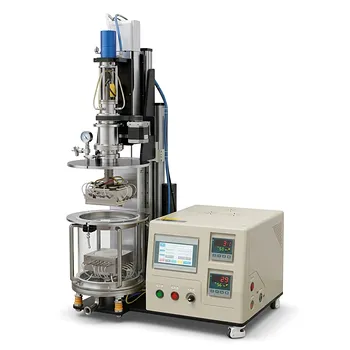
High Temperature 800C Rapid Thermal Processing Furnace with Rotating Sample Holder for Close Spaced Sublimation and Thin Film Solar Cell Research
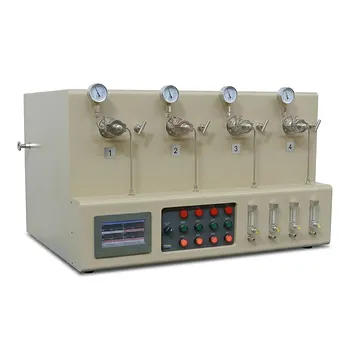
High Temperature 1700C 4 Channel Tube Furnace 1 Inch Alumina Tube for Hi-Throughput Annealing
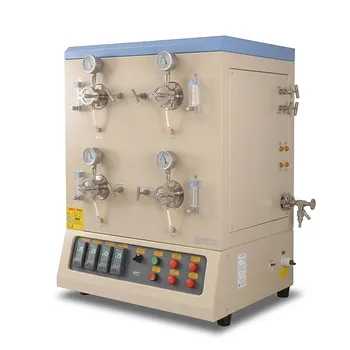
High Temperature 1500C Four Channel Tube Furnace with Alumina Tubes for High Throughput Annealing and Phase Diagram Research
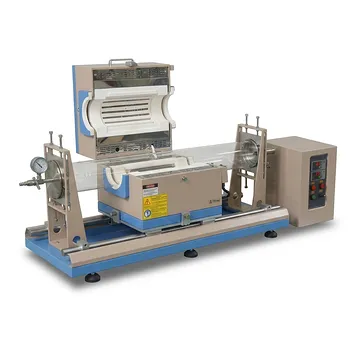
1200C High Temperature 5 Inch Sliding Tube Furnace for Rapid Thermal Processing RTP and Wafer Annealing
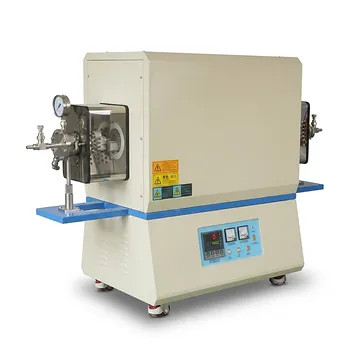
High Temperature 1800C Atmosphere Tube Furnace for CVD Research and Vacuum Sintering Precision Heat Treatment
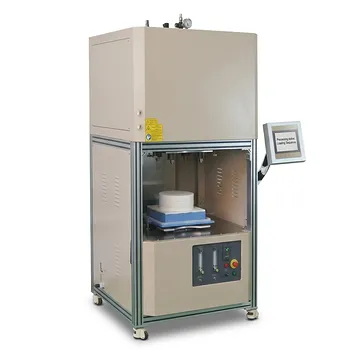
High Temperature Vertical Atmosphere Controlled Furnace with Automatic Bottom Loading and 1700°C Capacity for Advanced Material Research

Compact High Temperature 1600C Tube Furnace with 50mm Alumina Tube and Vacuum Flanges for Material Sintering

High Temperature Tube Furnace 1500C with Sliding Flanges and 50mm OD for Rapid Thermal Processing Fast Heating and Cooling
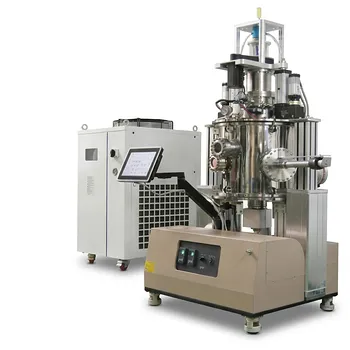
950C Rapid Thermal Processing Furnace for 12 Inch Wafer CSS Coating with Rotating Substrate Holder
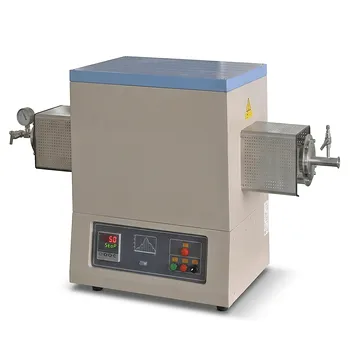
High Temperature 1700C Tube Furnace with 4 Inch OD Alumina Tube and Vacuum Sealing Flanges
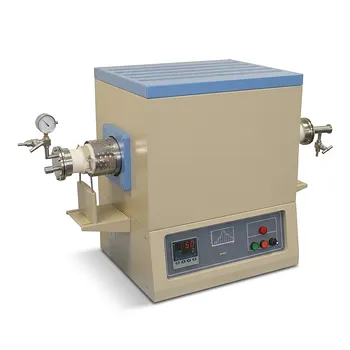
1700C High Temperature Alumina Tube Furnace with 18 Inch Heated Zone and Vacuum Sealing Flanges
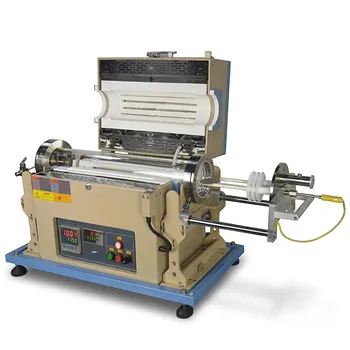
1200°C High Temperature 4 Inch Tube Furnace with Sliding Flange for CVD Systems

1750°C High Temperature Benchtop Vacuum Atmosphere Tube Furnace with Kanthal Super 1800 Heating Elements and 60mm Alumina Processing Tube

High Temperature 1700C Benchtop Tube Furnace with 5 Inch Heating Zone High Purity Alumina Tube and Vacuum Sealing Flanges
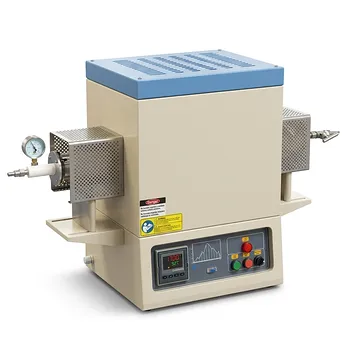
High Temperature Three Zone Tube Furnace 1700C with Alumina Tube and Water Cooled Flanges

1800C High Temperature Compact Vacuum Tube Furnace with 60mm OD Alumina Tube and Kanthal MoSi2 Heating Elements

High Temperature 1700C Tube Furnace with High Vacuum Turbomolecular Pump System and Multi Channel Mass Flow Controller Gas Mixer
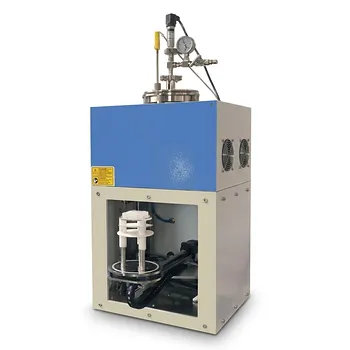
Rapid Thermal Processing Atmosphere Controlled Bottom Loading Furnace 1100C with 50C Per Second Heating Rate for Wafer Annealing
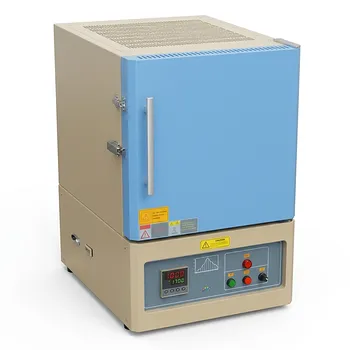
Large Bench Top 1700C High Temperature Muffle Furnace with 19L Chamber for Advanced Material Sintering and Annealing
