How does an industrial-grade high-temperature tube furnace contribute to the annealing of Laponite clay membranes? Key Roles
Updated 3 months ago
Thermal precision is the catalyst for structural evolution. An industrial-grade high-temperature tube furnace provides the exact thermal environment required to trigger physicochemical transformations in Laponite clay membranes, specifically between 200 °C and 400 °C. By delivering uniform heat, the furnace removes physically adsorbed water from the clay's interlayers and induces a contraction of the d-spacing, which is essential for turning a raw precursor into a functional ion-selective membrane.
Core Takeaway: The tube furnace acts as a controlled reactor that stabilizes the molecular architecture of Laponite clay. This process is critical for ensuring the membrane remains structurally sound in aqueous solutions while maximizing its efficiency for osmotic energy generation.
Mechanisms of Physicochemical Transformation
Removal of Interlayer Water
At the core of the annealing process is the elimination of physically adsorbed water trapped between the clay layers. The furnace provides the necessary thermal energy to break these weak bonds, allowing the moisture to evaporate.
This dehydration is not merely a drying phase; it is a prerequisite for structural tightening. Without the precise control of an industrial furnace, residual water could lead to structural defects or inconsistent performance across the membrane surface.
Contraction of the D-Spacing
As water is removed, the furnace facilitates the contraction of the d-spacing, which is the distance between the microscopic layers of the Laponite clay. This reduction in spacing is a direct result of the thermal energy reorganizing the clay's internal geometry.
The ability to maintain a consistent temperature field ensures that this contraction occurs uniformly. This uniformity is vital for creating a membrane that exhibits predictable behavior during ion transport.
Impact on Membrane Performance and Stability
Enhancing Structural Stability in Aqueous Solutions
One of the primary goals of using a tube furnace for Laponite membranes is to prevent them from disintegrating when submerged. The annealing process hardens the structure, making it resilient against the swelling and dissolution that typically affect untreated clay.
By achieving the correct phase transformation, the furnace ensures the membrane maintains its integrity in high-salinity or variable-pH environments. This makes the material viable for long-term industrial use.
Optimizing Ion Selectivity and Flux
The precision of the tube furnace directly influences the ion selectivity of the final product. By tailoring the d-spacing through specific temperature profiles, researchers can fine-tune how easily ions pass through the membrane.
This optimization is the key to efficient osmotic energy generation. A furnace that fluctuates even slightly can result in a membrane with poor flux or low selectivity, rendering it ineffective for energy harvesting.
The Importance of Precise Environmental Control
Uniform Temperature Fields and Consistency
Industrial-grade furnaces are designed to provide a "zone of high consistency," meaning every part of the clay membrane experiences the same thermal history. This prevents "soft spots" or areas of incomplete transformation that could lead to membrane failure.
Consistency is especially important when scaling up production. The furnace ensures that the performance indicators of the final product are reproducible across multiple batches.
Atmospheric and Contamination Protection
The sealed environment of a tube furnace protects the Laponite clay from oxidation or environmental contamination during the high-heat phase. Depending on the specific application, the furnace can also maintain an inert atmosphere to safeguard the material’s chemical purity.
This protection ensures that the structural integrity of the membrane is not compromised by airborne particles or unintended chemical reactions with oxygen.
Understanding the Trade-offs
Temperature Sensitivity
While heat is necessary for stabilization, Laponite clay is sensitive to over-treatment. Exceeding the optimal temperature range (typically 200 °C to 400 °C) can lead to dehydroxylation, where the clay loses its structural hydroxyl groups, potentially making the membrane too brittle or destroying its ion-conducting properties.
Balancing Heating Rates
Rapid heating can cause "thermal shock," leading to micro-cracks in the membrane structure. Conversely, heating too slowly may result in inefficient production cycles. Finding the "sweet spot" in the furnace’s ramp rate is a critical operational challenge.
How to Apply This to Your Project
If you are integrating a high-temperature tube furnace into your Laponite membrane research or production, consider these recommendations:
- If your primary focus is Aqueous Durability: Prioritize the 300 °C to 400 °C range to ensure maximum d-spacing contraction and structural "locking."
- If your primary focus is Maximum Ion Flux: Use lower-end annealing temperatures (near 200 °C) to maintain slightly larger interlayer channels, provided the membrane stays stable.
- If your primary focus is Batch Consistency: Utilize a furnace with multi-zone heating control to ensure the thermal field is perfectly uniform across the entire length of the tube.
By mastering the thermal environment of a tube furnace, you transform a simple clay mineral into a sophisticated tool for sustainable energy generation.
Summary Table:
| Mechanism | Thermal Effect | Functional Benefit |
|---|---|---|
| Water Removal | Evaporates interlayer moisture (200-400°C) | Prevents structural defects and soft spots |
| D-Spacing Contraction | Reorganizes microscopic clay geometry | Optimizes ion selectivity and energy flux |
| Structural Hardening | Triggers phase transformation/locking | Ensures stability and durability in water |
| Atmospheric Control | Provides sealed or inert environment | Prevents oxidation and maintains chemical purity |
Elevate Your Advanced Material R&D with THERMUNITS
At THERMUNITS, we specialize in providing the thermal precision necessary for pioneering research in material science. As a leading manufacturer of high-temperature laboratory equipment, we offer a comprehensive range of solutions, including Tube, Muffle, Vacuum, Atmosphere, Rotary, and Hot Press furnaces, as well as CVD/PECVD systems and Vacuum Induction Melting (VIM) units.
Whether you are refining Laponite clay membranes for osmotic energy or developing complex thin films, our furnaces ensure the uniform heat and atmospheric protection required for consistent, high-performance results.
Unlock the full potential of your thermal processing:
- Uniformity: Multi-zone heating for flawless batch consistency.
- Versatility: Customizable solutions for benchtop R&D to industrial scaling.
- Expertise: Equipment designed precisely for sensitive phase transformations.
Contact THERMUNITS today to find the perfect heat treatment solution for your lab’s unique requirements!
References
- Yozelin Zavala‐Galindo, Dan Liŭ. Optimizing Nanofluidic Energy Harvesting in Synthetic Clay‐based Membranes by Annealing Treatment. DOI: 10.1002/advs.202400233
Mentioned Products
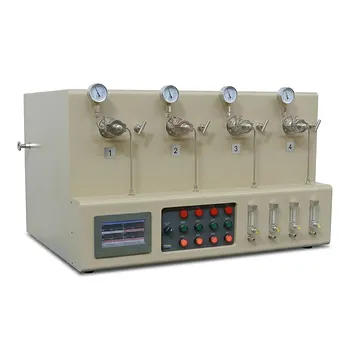
- High Temperature 1700C 4 Channel Tube Furnace 1 Inch Alumina Tube for Hi-Throughput Annealing
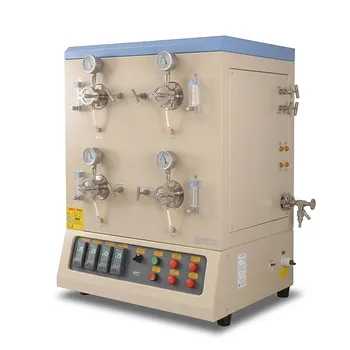
- High Temperature 1500C Four Channel Tube Furnace with Alumina Tubes for High Throughput Annealing and Phase Diagram Research
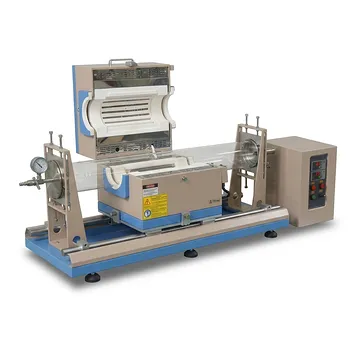
- 1200C High Temperature 5 Inch Sliding Tube Furnace for Rapid Thermal Processing RTP and Wafer Annealing
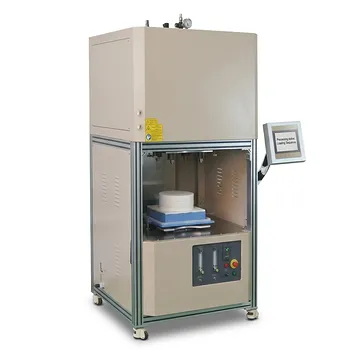
- High Temperature 1700C Vertical Tube Furnace for Powder Spherification and Material Sintering
- High Temperature Tube Furnace 1500C with Sliding Flanges and 50mm OD for Rapid Thermal Processing Fast Heating and Cooling
People Also Ask
- Why use a tube furnace for oxygen annealing LaCrO3/LaMnO3? Optimize Phase Transition & Magnetic Performance.
- What key role does a laboratory high-temperature tube furnace play in the production of carbon nanofibers? Guide
- How is a laboratory high-temperature tube furnace utilized to research the products of aluminothermic reduction? Advanced Metallurgical Solutions
- What critical conditions does an industrial high-temperature tube furnace provide for annealing (GaAl)2O3 thin films?
- What role does a high-temperature tube furnace play in the annealing modification of Miscanthus Biochar fillers? Boost graphitization.

Tech Team · ThermUnits
Last updated on Jun 02, 2026
Related Products
High Temperature 1700C 4 Channel Tube Furnace 1 Inch Alumina Tube for Hi-Throughput Annealing
High Temperature 1500C Four Channel Tube Furnace with Alumina Tubes for High Throughput Annealing and Phase Diagram Research
1200C High Temperature 5 Inch Sliding Tube Furnace for Rapid Thermal Processing RTP and Wafer Annealing

High Temperature 1700C Vertical Tube Furnace for Powder Spherification and Material Sintering

High Temperature Tube Furnace 1500C with Sliding Flanges and 50mm OD for Rapid Thermal Processing Fast Heating and Cooling

1200C High Throughput Multi Channel Tube Furnace with 50mm Quartz Tubes for Annealing and Material Phase Diagram Research
High Temperature Vertical Atmosphere Controlled Furnace with Automatic Bottom Loading and 1700°C Capacity for Advanced Material Research

Compact High Temperature 1600C Tube Furnace with 50mm Alumina Tube and Vacuum Flanges for Material Sintering
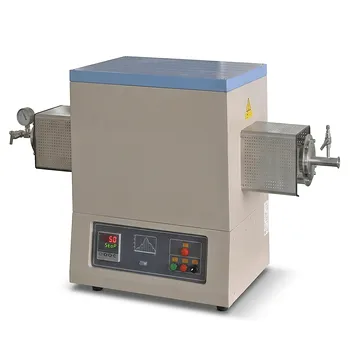
High Temperature 1700C Tube Furnace with 4 Inch OD Alumina Tube and Vacuum Sealing Flanges
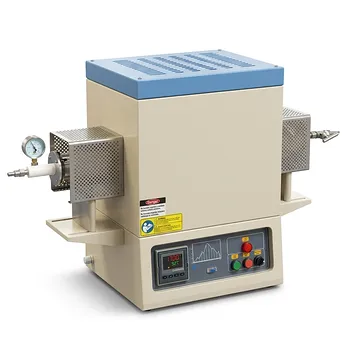
High Temperature Three Zone Tube Furnace 1700C with Alumina Tube and Water Cooled Flanges

High Temperature 1700C Benchtop Tube Furnace with 5 Inch Heating Zone High Purity Alumina Tube and Vacuum Sealing Flanges
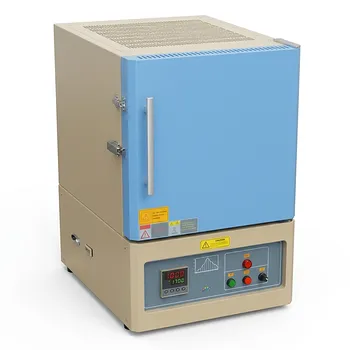
Large Bench Top 1700C High Temperature Muffle Furnace with 19L Chamber for Advanced Material Sintering and Annealing

High Temperature 1700C Tube Furnace with High Vacuum Turbomolecular Pump System and Multi Channel Mass Flow Controller Gas Mixer
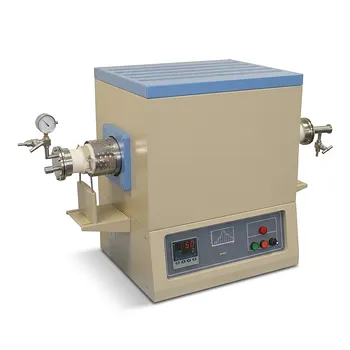
1700C High Temperature Alumina Tube Furnace with 18 Inch Heated Zone and Vacuum Sealing Flanges

1800C High Temperature Compact Vacuum Tube Furnace with 60mm OD Alumina Tube and Kanthal MoSi2 Heating Elements
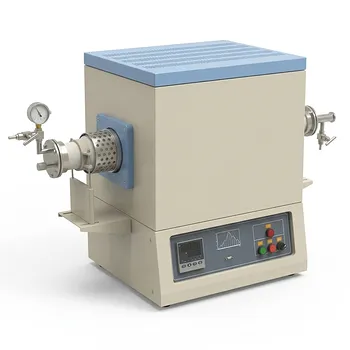
1750°C High Temperature Benchtop Vacuum Atmosphere Tube Furnace with Kanthal Super 1800 Heating Elements and 60mm Alumina Processing Tube
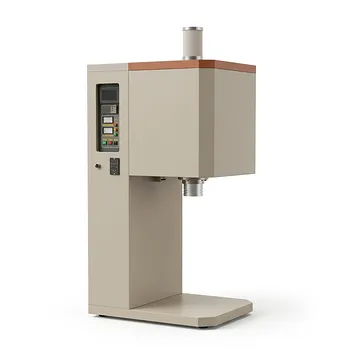
Vertical Openable Tube Furnace 0-1700c High Temperature Laboratory System for CVD and Vacuum Heat Treatment
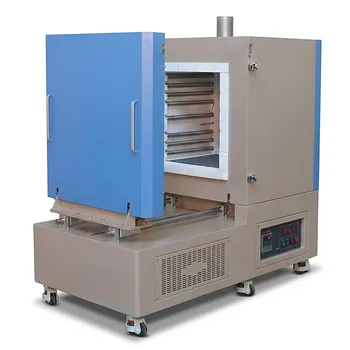
1200C Five Side Heating Muffle Furnace with Sliding Door 125L Volume High Temperature Heat Treatment System for Large Scale Sintering and Annealing
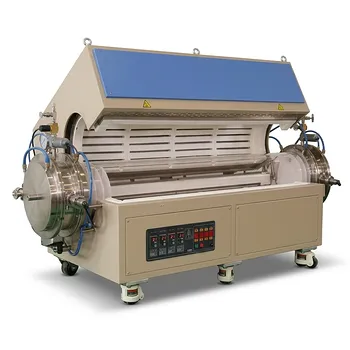
1200C Max Four Zone Split Tube Furnace with Optional Large Diameter Quartz Tubes
