Why is a high-temperature tube atmosphere furnace required for high-stability Pt/C catalysts? Master Catalyst Stability
Updated 3 months ago
Achieving peak catalytic performance requires a high-temperature tube atmosphere furnace to provide the precise reductive environment and thermal stability necessary for platinum nanoparticle optimization. This specialized equipment facilitates the crystal transition of platinum on carbon supports between 300°C and 700°C, ensuring the catalyst achieves the structural integrity required for long-term durability in acidic electrochemical environments.
The tube atmosphere furnace is indispensable for Pt/C catalysts because it integrates precise temperature programming with gas-phase control. This combination allows researchers to dictate the nanoparticle size, prevent unwanted oxidation, and optimize the metal-support interaction for maximum stability.
Precise Environmental Control for Material Integrity
The Role of Reductive Atmospheres
A tube furnace allows for the introduction of specific gas mixtures, such as nitrogen-hydrogen (N2-H2), which are critical for maintaining a reductive environment. This prevents the platinum and carbon support from undergoing unwanted oxidation at high temperatures, ensuring the metal remains in its active metallic state.
Preventing Unwanted Side Reactions
By utilizing high-purity inert gases like argon, the furnace can exclude oxygen entirely. This is vital when working with carbon substrates or precursors that would otherwise decompose or oxidize, allowing for the clean carbonization of organic frameworks and the anchoring of metallic atoms.
Managing Phase Transitions and Atomic Anchoring
High temperatures, sometimes reaching up to 1000°C, are necessary to drive the decomposition of organic frameworks and the vaporization of templates. This process facilitates the thermodynamic anchoring of atoms onto the matrix, which is essential for creating high-stability catalysts with true single-atom characteristics.
Thermal Precision and Structural Optimization
Uniformity of the Thermal Field
The highly uniform thermal field within a precision tube furnace ensures that every part of the catalyst batch experiences the same conditions. This uniformity is essential for achieving a narrow particle size distribution and consistent surface acidity, which directly impacts the final catalytic yield.
Multi-Stage Temperature Programming
Advanced furnaces support complex heating profiles, such as slow ramps of 2°C/min or multi-stage holds. This allows for initial oxidative shrinkage in air followed by metallic anchoring in a reducing atmosphere, preventing the aggregation of atoms into inactive clusters.
Balancing Activity and Durability
Treating catalysts within the 300°C to 700°C range promotes structural optimization. This specific thermal stress helps the platinum nanoparticles reach an ideal crystalline state that resists sintering (clumping) and leaching when exposed to harsh industrial or acidic conditions.
Understanding the Trade-offs
The Risk of Thermal Sintering
While high temperatures are necessary for stability, excessive heat can lead to sintering, where small particles merge into larger, less active masses. Precise control is required to find the "sweet spot" where the catalyst is stable enough for long-term use but retains enough surface area for high activity.
Atmosphere Sensitivity and Cost
Maintaining a continuous flow of high-purity gases like argon or hydrogen-mixed gases increases operational complexity and cost. Furthermore, any leak in the system during high-temperature runs can lead to the rapid degradation of the carbon support, effectively ruining the catalyst batch.
How to Apply This to Your Project
When selecting or operating a tube furnace for Pt/C catalyst development, your approach should be dictated by your specific performance targets.
- If your primary focus is long-term electrochemical durability: Prioritize a furnace with high temperature accuracy between 300°C and 700°C to ensure the ideal crystal transition and structural optimization.
- If your primary focus is simulating industrial lifespans: Utilize the furnace to conduct accelerated aging tests at constant thermal stress (e.g., 500°C for extended hours) to evaluate support stability.
- If your primary focus is the synthesis of complex structures: Opt for a system that supports multi-stage programming and rapid atmosphere switching to facilitate oxidative shrinkage followed by reductive anchoring.
By mastering the transition between controlled atmospheres and precise thermal stages, you can transform a standard catalyst into a high-stability industrial component.
Summary Table:
| Key Feature | Role in Pt/C Heat Treatment | Impact on Catalyst Performance |
|---|---|---|
| Atmosphere Control | Provides reductive (N2-H2) or inert (Ar) environments | Prevents oxidation; keeps platinum in active metallic state |
| Thermal Precision | Multi-stage programming & slow ramp rates (2°C/min) | Prevents sintering; ensures ideal crystal transition |
| Thermal Uniformity | Uniform heating field within the tube | Achieves narrow nanoparticle size distribution |
| Temperature Range | Structural optimization between 300°C and 700°C | Enhances durability in acidic electrochemical environments |
Elevate Your Catalyst Research with THERMUNITS Precision
Achieving the perfect crystal transition and nanoparticle stability in Pt/C catalysts requires uncompromising thermal control. THERMUNITS is a leading manufacturer of high-temperature laboratory equipment dedicated to material science and industrial R&D. We provide the specialized tools necessary for advanced heat treatment, including:
- Atmosphere & Tube Furnaces: Perfect for precise gas-phase control and reductive environments.
- CVD/PECVD Systems: For advanced thin-film and nanoparticle synthesis.
- Comprehensive Solutions: Including Muffle, Vacuum, Rotary, Hot Press, Dental Furnaces, and Vacuum Induction Melting (VIM) systems.
Whether you are refining single-atom catalysts or scaling industrial production, our equipment ensures maximum structural integrity and performance. Contact us today to discover how our thermal processing solutions can optimize your laboratory’s efficiency and research outcomes.
References
- Zhanxiong Feng, Cheng Wang. New Facile Continuous Microwave Pipeline Technology for the Preparation of Highly Stable and Active Carbon‐Supported Platinum Catalyst. DOI: 10.1002/celc.202300546
Mentioned Products
- Vertical 1700C Vacuum and Atmosphere Tube Furnace with 80mm Alumina Tube
- 1200C Hybrid Muffle and Tube Furnace for Material Research with Dual Atmosphere Control Quartz Tubes
- Compact Vertical Split Quartz Tube Furnace with Stainless Steel Vacuum Flanges for Rapid Thermal Quenching and Controlled Atmosphere Material Processing
- Compact Hybrid Muffle and Tube Furnace for 1000C Controlled Atmosphere Laboratory Material Sintering
- 1200°C Atmosphere Controlled Automatic Bottom Loading Furnace with 6 Inch Quartz Tube
People Also Ask
- How is an industrial-grade vertical tube furnace utilized in smelting leaching residues? Enhance Metal Recovery Efficiency
- What is the function of a laboratory-grade vertical tube furnace in fast pyrolysis? Optimize Composite Research.
- How does a vertical tube furnace facilitate thermoelectric alloy melting? Precision synthesis for material homogeneity.
- Why is a thermocouple sensor indispensable for monitoring the vertical tube furnace during gallium oxide nanowire production? Optimize VLS Growth
- What are the advantages of using a vertical tube furnace for crucible experiments simulating steel-slag interactions?

Tech Team · ThermUnits
Last updated on Jun 02, 2026
Related Products

Vertical 1700C Vacuum and Atmosphere Tube Furnace with 80mm Alumina Tube
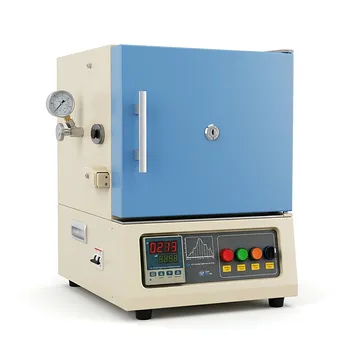
1200C Hybrid Muffle and Tube Furnace for Material Research with Dual Atmosphere Control Quartz Tubes

Compact Vertical Split Quartz Tube Furnace with Stainless Steel Vacuum Flanges for Rapid Thermal Quenching and Controlled Atmosphere Material Processing
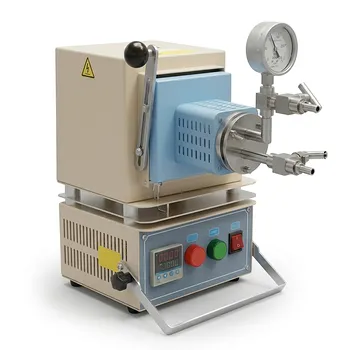
Compact Hybrid Muffle and Tube Furnace for 1000C Controlled Atmosphere Laboratory Material Sintering
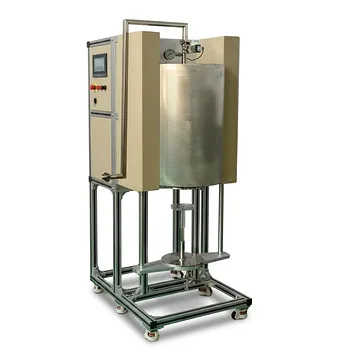
1200°C Atmosphere Controlled Automatic Bottom Loading Furnace with 6 Inch Quartz Tube

Three Zone Tube Furnace with 11 Inch or 15 Inch Quartz Tube and Hinged Flanges for Vacuum Atmosphere Heat Treatment

1200°C 5 Inch Vertical Quartz Tube Furnace with Stainless Steel Vacuum Flanges
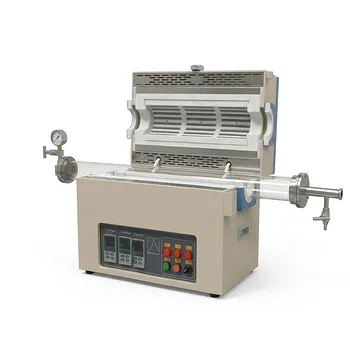
1200°C Three Zone Split Tube Furnace with 18 Inch Heating Length and Vacuum Flanges
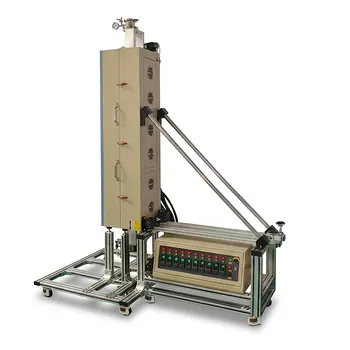
1200°C 10-Zone Split Tube Furnace with Horizontal and Vertical Mounting for Multi-Zone Thermal Gradients and Large Diameter Material Processing
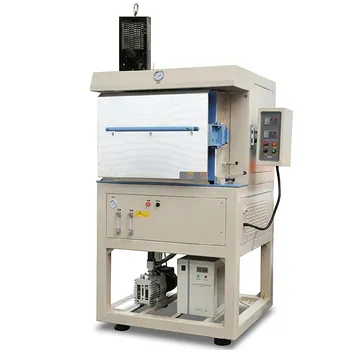
1200C Hydrogen Atmosphere Box Furnace with 5 Heated Sides and 64L Chamber

High Temperature 1700C Tube Furnace with High Vacuum Turbomolecular Pump System and Multi Channel Mass Flow Controller Gas Mixer

1700C Hydrogen Gas Tube Furnace with 60mm Alumina Process Tube and Integrated Hydrogen Safety Detector

High Temperature 1700C Vertical Tube Furnace for Powder Spherification and Material Sintering

High Temperature 1700C Six Zone Split Tube Furnace with Alumina Tube and Water Cooled Flanges
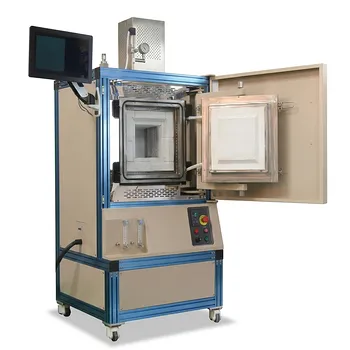
High Temperature Hydrogen Atmosphere Box Furnace 1650C Max Reducing Environment Material Synthesis System 8x8x8 Chamber

1800C High Temperature Compact Vacuum Tube Furnace with 60mm OD Alumina Tube and Kanthal MoSi2 Heating Elements
1100C Dual Zone Hydrogen Gas Tube Furnace with Quartz Tube and Integrated H2 Leak Detection System

High Temperature 1700C Benchtop Tube Furnace with 5 Inch Heating Zone High Purity Alumina Tube and Vacuum Sealing Flanges

High Temperature Automated 5 Inch Tube Furnace for Autonomous Material Research and Advanced Laboratory R&D