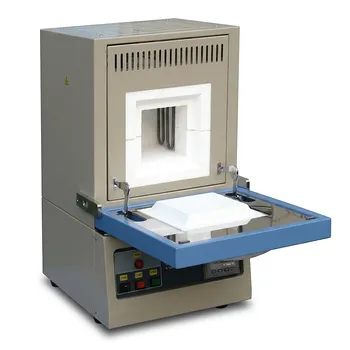
Why is a high-vacuum or atmosphere sintering furnace required for the 1100°C thermal treatment of LMTO? Expert Insights
Updated 3 months ago
The requirement for high-vacuum or atmosphere sintering furnaces in LMTO synthesis is driven by the need for precise chemical control at extreme temperatures. These specialized furnaces provide the 1100°C environment necessary for the solid-state reaction that forms the disordered rocksalt structure. By maintaining a controlled argon atmosphere, the equipment prevents the unintended oxidation of transition metals like manganese, ensuring the stability of the crystal structure and the integrity of the electrochemical active centers.
Core Takeaway: High-vacuum and atmosphere furnaces decouple high-temperature thermal processing from chemical degradation. By maintaining an inert argon shield at 1100°C, these systems protect the valence states of transition metals, which is the foundational requirement for a stable and high-performing LMTO cathode.
Achieving the Disordered Rocksalt Structure
Precise Thermal Control for Solid-State Reactions
Forming the specific disordered rocksalt structure in LMTO materials requires a consistent 1100°C thermal environment. High-vacuum and atmosphere furnaces offer the precise temperature regulation needed to drive the solid-state reactions that define the material's final phase.
Facilitating Atomic Diffusion
At 1100°C, the furnace promotes the necessary atomic diffusion and migration across grain boundaries. This movement is essential for eliminating pores and ensuring the material achieves the high density and structural uniformity required for effective lithium-ion transport.
Maintaining Structural Stability
The high-temperature environment must be perfectly stable to prevent the formation of unwanted secondary phases. Precise control ensures that the lithium and transition metal ions occupy the correct lattice positions within the disordered rocksalt framework.
Protecting Electrochemical Integrity via Argon
Preventing Transition Metal Oxidation
Transition metals like manganese are highly sensitive to oxygen when heated to 1100°C. An argon-shielded environment acts as an inert protective barrier, preventing these elements from reacting with trace oxygen and forming non-conductive oxide layers.
Stabilizing Valence States
The electrochemical capacity of LMTO depends on maintaining specific valence states in its active centers. By strictly controlling the oxygen partial pressure through an argon atmosphere, the furnace prevents the oxidation of variable-valence metallic elements, which is critical for theoretical specific capacity.
Isolating the Reaction Environment
Standard furnaces often allow for atmospheric leakage that can compromise the material's purity. Atmosphere furnaces are designed to completely isolate the internal chamber, ensuring that the inert gas remains pure and the material stays free from gas-borne impurities or oxidative loss.
Understanding the Trade-offs
Atmosphere Purity vs. System Cost
Maintaining a high-purity argon environment at 1100°C requires sophisticated sealing and gas delivery systems. While these systems ensure superior material performance, they involve significantly higher operational costs and more complex maintenance compared to standard muffle furnaces.
Balancing Vacuum Levels and Volatility
Using high vacuum can effectively remove impurities and reduce surface oxides on powders. However, at extreme temperatures, some components of the cathode material may exhibit high vapor pressure, potentially leading to the loss of volatile elements if the vacuum is too high.
Complexity of Multi-Stage Processing
Achieving the perfect LMTO structure often requires multi-stage heating profiles, such as specific pre-heating and cooling ramps. The high thermal mass of specialized sintering furnaces can make rapid temperature transitions difficult, requiring careful programming to avoid thermal shock or structural defects.
Making the Right Choice for Your Goal
How to Apply This to Your Project
- If your primary focus is maximizing electrochemical capacity: Prioritize a furnace with an integrated high-purity argon gas system to strictly maintain transition metal valence states.
- If your primary focus is structural uniformity and density: Invest in a furnace with multi-zone temperature control to ensure a consistent 1100°C profile across the entire material batch.
- If your primary focus is removing surface impurities: Utilize a vacuum-capable sintering furnace to reduce oxide films on precursor powders before introducing the argon shield for the final soak.
Ultimately, the furnace acts as a chemical reactor where temperature and atmosphere must be harmonized to translate raw precursors into a high-performance disordered rocksalt cathode.
Summary Table:
| Requirement | Function in LMTO Synthesis | Key Benefit |
|---|---|---|
| 1100°C Thermal Control | Drives solid-state reactions and atomic diffusion | Achieves high density and disordered rocksalt structure |
| Inert Argon Atmosphere | Prevents manganese oxidation and chemical degradation | Protects electrochemical active centers and capacity |
| High-Vacuum Capability | Removes surface impurities and reduces oxide films | Ensures high material purity and structural uniformity |
| Precise Gas Sealing | Isolates the internal reaction environment | Prevents atmospheric leakage and oxidative loss |
Elevate Your Material Research with THERMUNITS
Precision is the foundation of high-performance LMTO cathode materials. As a leading manufacturer of high-temperature laboratory equipment for material science and industrial R&D, THERMUNITS provides the advanced thermal solutions necessary to master complex synthesis processes.
Whether you require Atmosphere, Vacuum, Tube, or Muffle furnaces, our systems are engineered to provide stable 1100°C environments with rigorous gas control. We also offer CVD/PECVD systems, Hot Press furnaces, Rotary kilns, Vacuum Induction Melting (VIM) furnaces, and Dental furnaces to meet diverse research needs.
Ensure the integrity of your electrochemical active centers—contact our technical team today to find the perfect heat treatment solution for your laboratory!
References
- Tzu‐Yang Huang, Bryan D. McCloskey. Chemical Origin of in Situ Carbon Dioxide Outgassing from a Cation-Disordered Rock Salt Cathode. DOI: 10.1021/acs.chemmater.4c00756
Mentioned Products
- 1100C High Temperature Vacuum Crucible Furnace with Quartz Chamber for Thermal Processing and Sintering
- Rapid Thermal Processing RTP Atmosphere Controlled Bottom Loading Furnace 1100C High Throughput 50C per Second Heating Rate
- Rapid Thermal Processing Furnace 1100C Atmosphere Controlled Bottom Loading RTP System for Wafer Annealing and Catalysis Research
- High Temperature Muffle Furnace with Alloy Chamber for Debinding and Sintering Applications
- Compact Hybrid Muffle and Tube Furnace for 1000C Controlled Atmosphere Laboratory Material Sintering
People Also Ask
- How does the temperature control precision of a high-temperature sintering furnace affect Na1+xLa1-xZr2O6-δ ceramics?
- How does a high-temperature sintering furnace environment enhance NdFeB magnets? Achieve 98%+ density with precision.
- Why is a high-temperature sintering furnace required for the preparation of Li(Nb,Ta)O3 precursors? Essential Insights
- How does a high-temperature sintering furnace contribute to the interfacial strengthening of SS316L and zirconia?
- What is the function of high-vacuum furnaces in (Mo2/3V1/3)n+1AlCn MAX phase synthesis? Ensure Purity & Diffusion.

Tech Team · ThermUnits
Last updated on Jun 03, 2026
Related Products
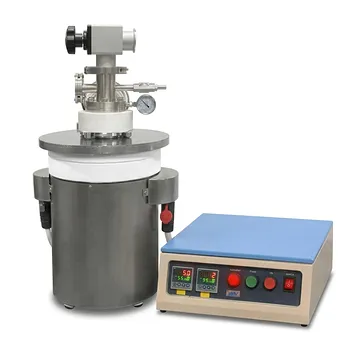
1100C High Temperature Vacuum Crucible Furnace with Quartz Chamber for Thermal Processing and Sintering
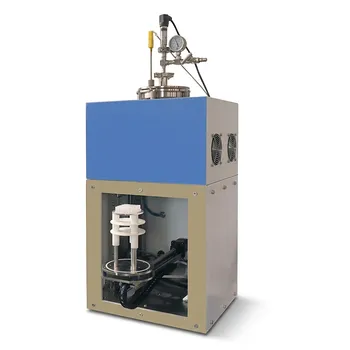
Rapid Thermal Processing RTP Atmosphere Controlled Bottom Loading Furnace 1100C High Throughput 50C per Second Heating Rate
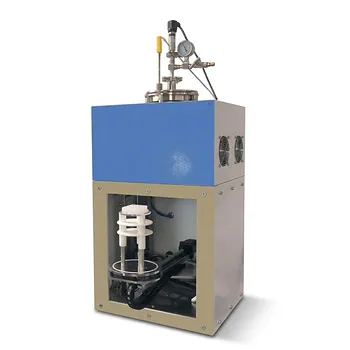
Rapid Thermal Processing Furnace 1100C Atmosphere Controlled Bottom Loading RTP System for Wafer Annealing and Catalysis Research
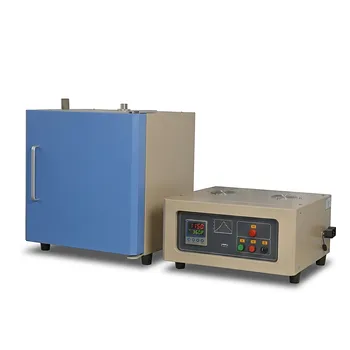
High Temperature Muffle Furnace with Alloy Chamber for Debinding and Sintering Applications
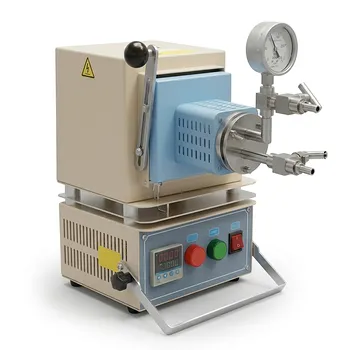
Compact Hybrid Muffle and Tube Furnace for 1000C Controlled Atmosphere Laboratory Material Sintering
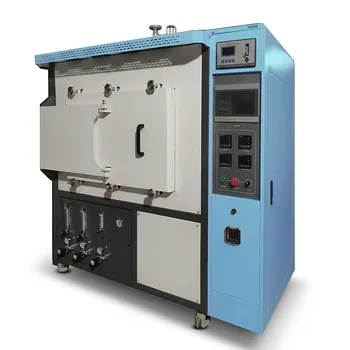
Roller Table Atmosphere Furnace 1500C High Temperature Battery Material Sintering System 112L Capacity
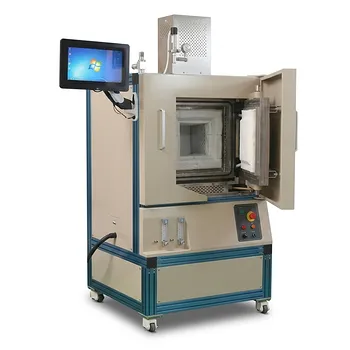
High Temperature Oxygen and Inert Atmosphere Controlled Furnace 8 Liter 1700C Sintering System for Advanced Materials RD
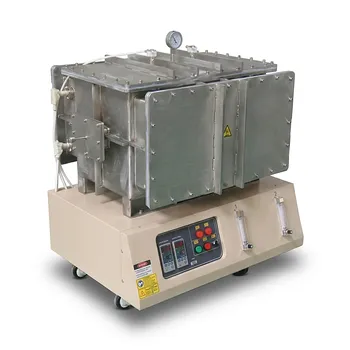
1500°C Atmosphere Controlled Rapid Heating Furnace for Material Science and Battery Powder Sintering

High Temperature 1700C Vertical Tube Furnace for Powder Spherification and Material Sintering
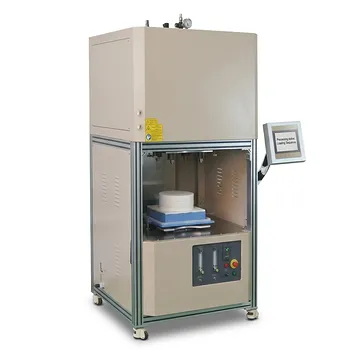
High Temperature Vertical Atmosphere Controlled Furnace with Automatic Bottom Loading and 1700°C Capacity for Advanced Material Research
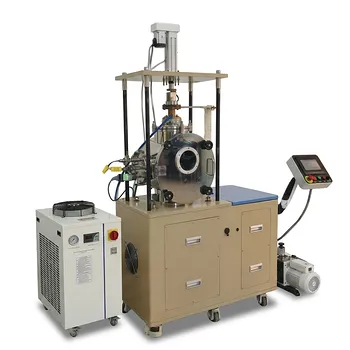
Compact Spark Plasma Sintering SPS Furnace 1200 C Max 100 MPa Pressure High Speed Sintering System for Material Research
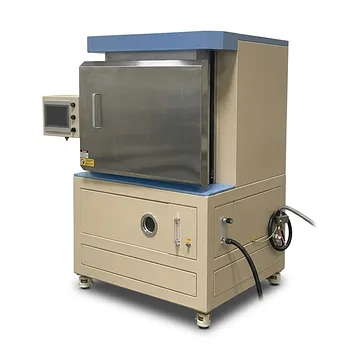
1650C High Temperature Atmosphere Controlled Box Furnace with 65L Chamber for Advanced Material Sintering and Industrial Heat Treatment
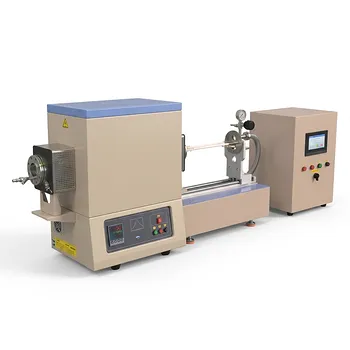
High Temperature Horizontal Electrical Assisted Sintering Furnace with 3KW Programmable Power Source for Advanced Ceramic Materials

Compact High Temperature 1600C Tube Furnace with 50mm Alumina Tube and Vacuum Flanges for Material Sintering
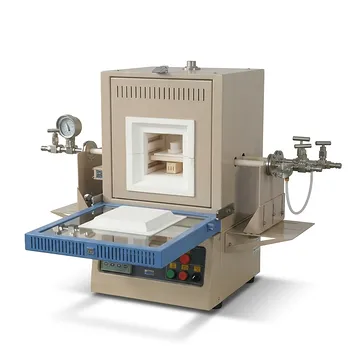
1700C Compact Hybrid Furnace with Dual Layer Box Sintering and Controlled Atmosphere Alumina Tubes
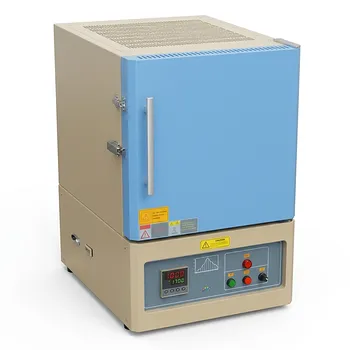
Large Bench Top 1700C High Temperature Muffle Furnace with 19L Chamber for Advanced Material Sintering and Annealing
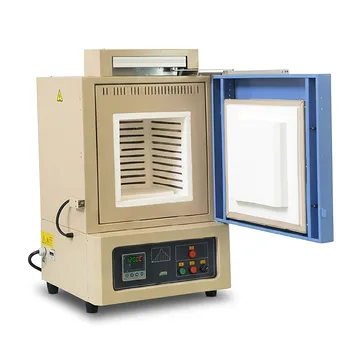
1200C High Temperature Muffle Furnace with Motorized Door and Automated PC Control for Industrial Sintering and Material Processing 27 Liter
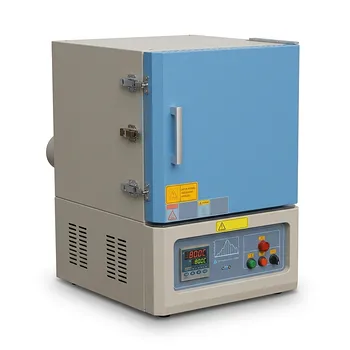
1800C Bench Top Muffle Furnace 18 Liters with Kanthal Super 1900 Heating Elements for High Purity Ceramic Sintering and Material Research
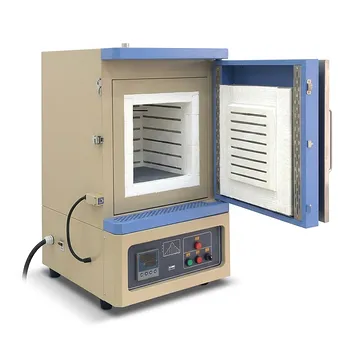
Five Side Heating Muffle Furnace High Purity Alumina Fiber 27L Chamber 1200C High Temperature Thermal Processing System for Sintering Annealing and Materials Research