What role does a High Vacuum Tube Furnace play in La2O2S synthesis? Achieve High Purity and Phase Stability
Updated 5 months ago
Synthesizing high-purity Lanthanum oxysulfide ($La_2O_2S$) requires a specialized environment that balances rigorous thermal energy with extreme atmospheric protection. A High Vacuum Tube Furnace provides the 600–1000 °C temperature range necessary to drive the solid-state reaction between Lanthanum sulfide ($La_2S_3$) and Lanthanum oxide ($La_2O_3$) while maintaining a vacuum below $7 \times 10^{-3} Pa$. This dual-action environment ensures the powders react thoroughly without undergoing oxidative degradation or contamination from ambient gases.
Core Takeaway: The High Vacuum Tube Furnace is the essential vessel for $La_2O_2S$ synthesis because it facilitates atomic diffusion through precise heating while simultaneously protecting the material’s chemical integrity via a high-vacuum seal. Without this controlled environment, the resulting powder would likely lose its stoichiometry or suffer from poor optical and structural properties.
Driving the Solid-State Reaction
Facilitating Atomic Diffusion
At temperatures between 600 °C and 1000 °C, the furnace provides the continuous thermal energy required for metal and sulfur atoms to migrate across grain boundaries. This solid-state diffusion is what allows the $La_2S_3$ and $La_2O_3$ precursors to break their existing bonds and reform into the $La_2O_2S$ crystal lattice.
Ensuring Chemical Completion
Precise temperature control ensures that the entire volume of the precursor powder reaches the activation energy threshold. This uniformity prevents the formation of "dead zones" where raw materials remain unreacted, resulting in a high-purity precursor powder with consistent phase distribution.
Managing Phase Stability
By maintaining a constant sintering temperature, the tube furnace allows the material to crystallize into its stable phase. This level of control is vital for achieving a single-phase cubic or hexagonal structure, as seen in similar perovskite or oxysulfide syntheses.
The Critical Role of High Vacuum
Preventing Oxidative Degradation
Lanthanum oxysulfide is highly sensitive to oxygen and moisture at elevated temperatures. A vacuum level of less than $7 \times 10^{-3} Pa$ is maintained to ensure that the oxysulfide does not oxidize into Lanthanum oxide or sulfates, which would render the material useless for high-performance applications.
Eliminating Impurity Contamination
The airtight design of the tube furnace excludes atmospheric nitrogen, carbon dioxide, and water vapor. Removing these impurity gases is decisive for maintaining the correct stoichiometry (the exact ratio of atoms) of the $La_2O_2S$ powder.
Enhancing Material Density and Optics
The vacuum environment aids in increasing the relative density of the synthesized material. For applications requiring optical clarity, such as scintillators or phosphors, this high-vacuum processing is what optimizes final optical transmittance.
Understanding the Trade-offs and Pitfalls
Vacuum Integrity vs. Reaction Speed
While a higher vacuum leads to higher purity, maintaining such low pressures ($< 7 \times 10^{-3} Pa$) at high temperatures places significant stress on the furnace seals. Any minor leak during the 600–1000 °C cycle will lead to immediate oxidation of the sulfur components.
Thermal Stress and Grain Growth
Rapid heating or cooling can induce internal thermal stress, leading to fractured grains or unwanted crystal defects. To avoid this, technical operators must utilize precise ramping rates (often as low as 2 °C/min) to control the final grain size and structural integrity.
Stoichiometry Imbalance
If the temperature exceeds the stable range for $La_2O_2S$ or if the vacuum is insufficient, sulfur may volatilize at a different rate than the other components. This results in a non-stoichiometric product that lacks the intended physical and chemical properties.
How to Optimize Your Synthesis Process
A High Vacuum Tube Furnace is a high-precision tool that must be configured based on the specific requirements of your final material.
- If your primary focus is Maximum Optical Clarity: Prioritize achieving and maintaining the lowest possible vacuum (well below $7 \times 10^{-3} Pa$) to eliminate even trace scattering centers caused by impurities.
- If your primary focus is Phase Purity: Focus on the precision of the temperature controller to ensure the furnace holds steady between 600–1000 °C for the duration of the reaction.
- If your primary focus is Structural Integrity: Implement a gradual cooling curve (2-5 °C/min) to prevent the build-up of thermal stresses that can degrade the powder's crystalline quality.
By mastering the balance between thermal energy and vacuum protection, you ensure the production of $La_2O_2S$ with the exact chemical and physical properties required for advanced technical applications.
Summary Table:
| Process Component | Furnace Role | Impact on La2O2S Quality |
|---|---|---|
| Thermal Energy | 600–1000 °C Stable Heating | Drives atomic diffusion & phase formation |
| Atmosphere Control | $< 7 \times 10^{-3} Pa$ High Vacuum | Prevents oxidation & impurity contamination |
| Material Purity | Airtight Sealing | Ensures stoichiometry & optical clarity |
| Structural Integrity | Precise Cooling Ramping | Minimizes internal thermal stress & defects |
Elevate Your Advanced Material Synthesis with THERMUNITS
Precision is the difference between a failed reaction and a high-purity breakthrough. THERMUNITS is a leading manufacturer of high-temperature laboratory equipment specifically designed for material science and industrial R&D. We provide the rigorous vacuum levels ($< 7 \times 10^{-3} Pa$) and precise thermal control required for the successful synthesis of sensitive compounds like Lanthanum oxysulfide.
Our comprehensive range of thermal solutions includes:
- Specialized Furnaces: High Vacuum, Atmosphere, Tube, Muffle, Rotary, and Hot Press Furnaces.
- Advanced Systems: CVD/PECVD systems, Vacuum Induction Melting (VIM), and Dental Furnaces.
- Components: High-quality Thermal Elements and custom laboratory heat treatment equipment.
Ready to optimize your high-temperature research? Contact our technical experts today to discuss your specific process requirements and find the ideal thermal processing solution for your lab.
Contact THERMUNITS for a Professional Consultation
References
- Yuqi Chen, Kun Yeun Han. Rapid Synthesis and Sintering of La2O2S and Its Physical, Optical, and Mechanical Properties. DOI: 10.3390/coatings14091120
Mentioned Products
- 1800C High Temperature Compact Vacuum Tube Furnace with 60mm OD Alumina Tube and Kanthal MoSi2 Heating Elements
- 1750°C High Temperature Benchtop Vacuum Atmosphere Tube Furnace with Kanthal Super 1800 Heating Elements and 60mm Alumina Processing Tube
- High Vacuum Compact Tube Furnace 1200C with Integrated Turbo Pump System and 8 Inch Heating Zone
- High Temperature 1700C Tube Furnace with High Vacuum Turbomolecular Pump System and Multi Channel Mass Flow Controller Gas Mixer
- 1200C High Temperature 5 Inch Split Vacuum Tube Furnace with 12 Inch Heating Zone and Separated PID Controller
People Also Ask
- What core functions does a high-temperature vacuum tube furnace provide? Optimize np-CuSn Sintering & Joint Integrity
- What is the primary function of a high-temperature tube furnace in Cu1-N-C synthesis? Precision Thermal Control.
- What impact does the heating rate of a tube furnace have on biochar microstructure? Optimize Your Material R&D.
- Role of Tube Furnace in KNNLST Ceramic Synthesis: Achieve High Phase Purity and Thermal Uniformity
- What is the role of a high-temperature tube furnace in the preparation of S-C3N4? Master Precision Material Synthesis

Tech Team · ThermUnits
Last updated on Apr 14, 2026
Related Products

1800C High Temperature Compact Vacuum Tube Furnace with 60mm OD Alumina Tube and Kanthal MoSi2 Heating Elements
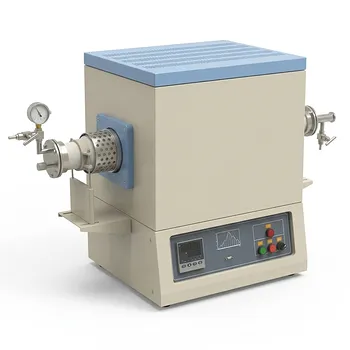
1750°C High Temperature Benchtop Vacuum Atmosphere Tube Furnace with Kanthal Super 1800 Heating Elements and 60mm Alumina Processing Tube
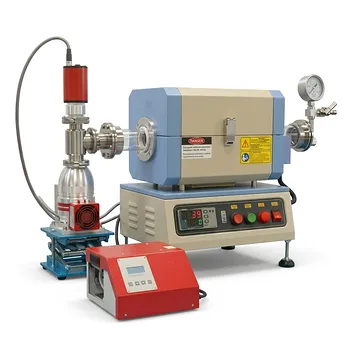
High Vacuum Compact Tube Furnace 1200C with Integrated Turbo Pump System and 8 Inch Heating Zone

High Temperature 1700C Tube Furnace with High Vacuum Turbomolecular Pump System and Multi Channel Mass Flow Controller Gas Mixer
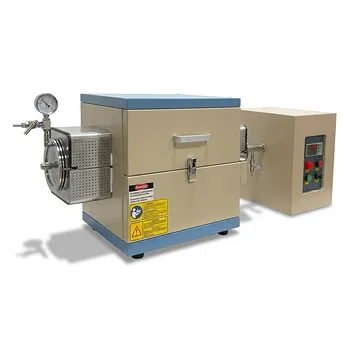
1200C High Temperature 5 Inch Split Vacuum Tube Furnace with 12 Inch Heating Zone and Separated PID Controller
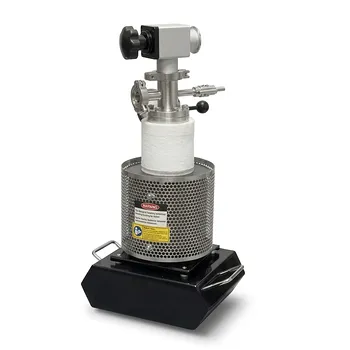
High Temperature 1100C Compact Top Loading Vertical Vacuum Tube Furnace for High Vacuum Noble Metal Melting and Material Research
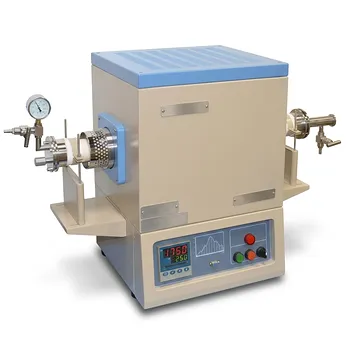
High Temperature Compact Vacuum Tube Furnace 1750C Max 60mm OD Alumina Tube
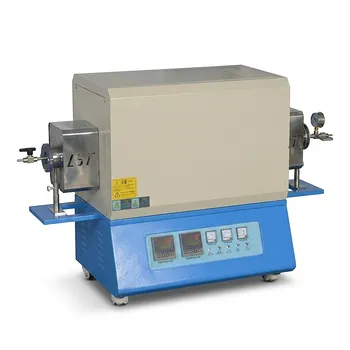
High Temperature Dual Zone Vacuum Tube Furnace for Material Research and CVD Processing

Compact High Temperature 1600C Tube Furnace with 50mm Alumina Tube and Vacuum Flanges for Material Sintering

High Temperature 1700C Benchtop Tube Furnace with 5 Inch Heating Zone High Purity Alumina Tube and Vacuum Sealing Flanges

High Temperature Automated 5 Inch Tube Furnace for Autonomous Material Research and Advanced Laboratory R&D

1100C Tube Furnace with Vacuum Flange and Programmable Temperature Controller for Material Science and Industrial Heat Treatment
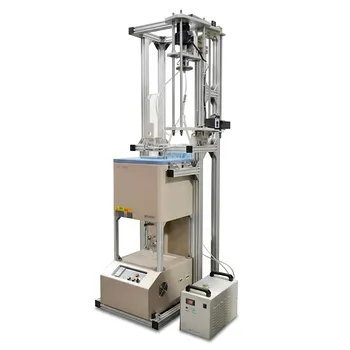
500C Vacuum Vertical Tube Furnace 84mm OD Sample Rotation Lifting System

High Temperature 1700C Vertical Tube Furnace for Powder Spherification and Material Sintering
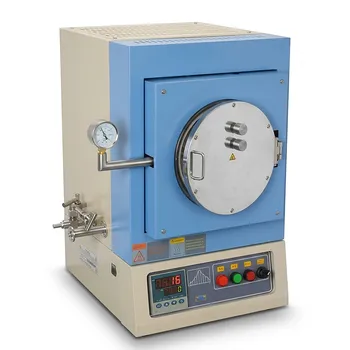
1100°C High Temperature Quartz Chamber Furnace 8 Inch OD with 7.6 Liter Capacity and Vacuum Atmosphere Capability
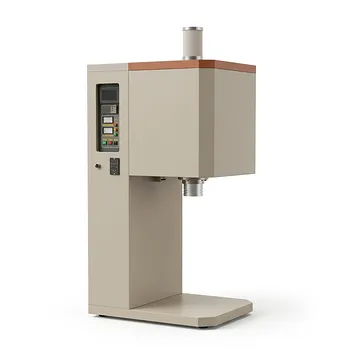
Vertical Openable Tube Furnace 0-1700c High Temperature Laboratory System for CVD and Vacuum Heat Treatment
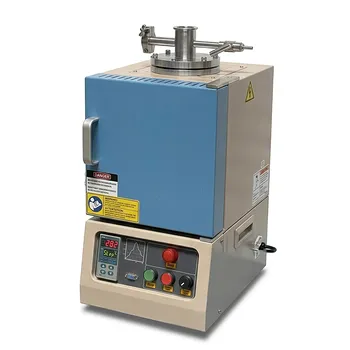
High Temperature Hybrid Muffle and Tube Furnace with Vacuum Capability and PID Control

High Temperature 1700C Six Zone Split Tube Furnace with Alumina Tube and Water Cooled Flanges
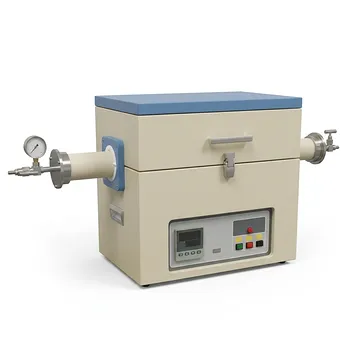
1250C Split Tube Furnace with 3 Inch Mullite Tube and Vacuum Sealing Flanges for Precision Thermal Processing
