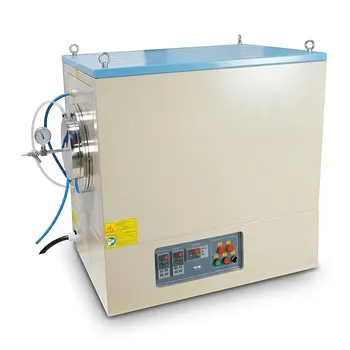
Why is a sealed tube furnace with Argon flow control required to study the thermal reactivity of filler metals? Guide
Updated 3 months ago
A sealed tube furnace with Argon flow control is essential because it isolates the filler metals from atmospheric oxygen while simulating the high-temperature environment of a molten pool. This setup allows researchers to heat materials up to 1400°C to observe intrinsic chemical interactions and phase transformations—such as those between Tungsten Carbide (WC) and cobalt-based alloys—without the interference of oxidation or contamination.
Core Takeaway: The combination of a sealed chamber and controlled Argon flow transforms the furnace into a "chemical cleanroom" for high-temperature metallurgy. It ensures that observed changes in the filler metal are the result of internal thermodynamic reactions rather than external environmental degradation.
Eliminating Atmospheric Interference
Prevention of Metal Oxidation
At temperatures reaching 1400°C, most metals and additives become highly reactive with even trace amounts of oxygen. An Argon atmosphere is critical because it displaces air, preventing the formation of oxide layers that would otherwise mask the true thermal reactivity of the filler metal.
Maintaining Chemical Valency
Specific elements within filler metal alloys require precise atmospheric control to maintain their functional states. For instance, in materials containing rare earth elements or specific ions, an anaerobic environment prevents the transition of beneficial ions into non-functional oxidized states, preserving the material's intended performance.
Protecting Sensitive Nanostructures
When studying filler metals reinforced with nanoparticles or fibers, such as carbon nanofibers or WC, oxygen exposure at high heat can lead to the "burn-off" or total destruction of these additives. A sealed furnace ensures these microscopic morphologies are preserved for accurate post-thermal analysis.
Simulating the Molten Pool Environment
Replicating Welding Conditions
Filler metals are designed to perform within the shielded environment of a welding arc or a brazing torch. The sealed tube furnace mimics this specialized environment, providing a stable platform to study how components like Tungsten Carbide interact with a cobalt-based matrix during the liquidus phase.
Observing Phase Transformations
The uniform thermal field of a tube furnace allows researchers to monitor phase transformation patterns with high precision. By eliminating external chemical variables, scientists can confirm that microstructural evolution—such as carbide dissolution—is driven purely by temperature and internal chemistry.
Ensuring Data Integrity
To obtain reliable phase equilibrium data, the sample must remain chemically pure throughout the heating cycle. Using Argon flow prevents "severe nitridation" or "surface decarburization," ensuring that the resulting data reflects the intrinsic properties of the ternary or complex alloy system being studied.
Understanding the Trade-offs
Purity vs. Flow Rate
While Argon is inert, the purity level of the gas and the flow rate are critical variables. Low flow rates may fail to adequately flush out outgassed impurities from the samples, while excessively high flow rates can cause localized cooling, disrupting the uniformity of the thermal field.
Seal Integrity and Contamination
The "sealed" aspect of the furnace is a common failure point; even a microscopic leak can introduce enough oxygen to ruin a 1400°C experiment. Furthermore, researchers must account for outgassing from the tube material itself or the sample crucibles, which can introduce unintended trace elements into the reaction.
How to Apply This to Your Research
Making the Right Choice for Your Goal
- If your primary focus is observing carbide dissolution: Prioritize a furnace with a highly uniform thermal zone to ensure thermodynamic processes are consistent across the entire sample.
- If your primary focus is preventing oxidation of reactive elements (Ti, Nb, or Cu): Invest in high-purity (99.999%) Argon and a dual-stage flow control system to ensure a completely anaerobic environment.
- If your primary focus is simulating real-world molten pools: Utilize a setup that allows for rapid heating and cooling cycles to mimic the thermal shocks characteristic of welding processes.
By strictly controlling the gaseous environment and thermal parameters, you ensure that the observed reactivity is a true reflection of the filler metal's engineering potential.
Summary Table:
| Key Feature | Research Function | Scientific Benefit |
|---|---|---|
| Argon Flow Control | Displaces oxygen and reactive gases | Prevents oxidation and preserves chemical valency |
| Sealed Tube Design | Creates a "Chemical Cleanroom" | Eliminates atmospheric interference and contamination |
| High-Temp Capability | Replicates molten pool (up to 1400°C) | Accurate observation of phase transformations |
| Anaerobic Environment | Protects sensitive nanostructures | Prevents "burn-off" of nanofibers and carbides |
Precision Thermal Solutions for Advanced Metallurgy
To achieve reliable data in high-temperature research, equipment precision is non-negotiable. THERMUNITS is a leading manufacturer of high-temperature laboratory equipment for material science and industrial R&D. We provide the high-purity environments necessary for studying complex filler metals and alloys.
Our comprehensive range of thermal processing solutions includes:
- Controlled Atmosphere Furnaces: Tube, Vacuum, and Atmosphere furnaces for oxidation-free heating.
- Advanced R&D Systems: CVD/PECVD systems, Vacuum Induction Melting (VIM), and Hot Press furnaces.
- Specialized Equipment: Muffle, Rotary, and Dental furnaces, along with high-quality Thermal Elements.
Whether you are simulating welding environments or tracking phase transformations, THERMUNITS delivers the uniformity and stability your research demands.
Contact our technical team today to discuss your heat treatment requirements!
References
- Felipe de Jesús García Vázquez, Gerardo Daniel Olvera Romero. Effect of WC nanoparticles on the cobalt based overlay deposited on H13 steel by a plasma transferred arc (PTA). DOI: 10.22533/at.ed.317492414032
Mentioned Products
- Compact Vertical Split Quartz Tube Furnace with Stainless Steel Vacuum Flanges for Rapid Thermal Quenching and Controlled Atmosphere Material Processing
- 1500°C Split Tube Furnace with Alumina Tube and Vacuum Sealing Flanges for Material Research
- 1700C High Temperature Alumina Tube Furnace with 18 Inch Heated Zone and Vacuum Sealing Flanges
- Compact Hybrid Muffle and Tube Furnace for 1000C Controlled Atmosphere Laboratory Material Sintering
- High Temperature Dual Zone Tube Furnace for Material Science Research and Professional Thermal Processing
People Also Ask
- Why integrate a vertical split tube furnace with hydraulic loading for HSECC? Essential for In-Situ Fire Simulation.
- What is the role of a split vertical tube furnace during flash sintering of 8YSZ and 20SDC? Master Ultra-Fast R&D
- What is the primary engineering purpose for using a customized ventilation hood when operating a split tube furnace? RCF Safety
- Why is a quartz tube furnace necessary for phosphorus-doped MoS2/GO preparation? Ensure Purity & Precise Synthesis
- What is the primary function of a Quartz Tube Furnace in ZnO VLS growth? Master High-Precision Nanowire Synthesis

Tech Team · ThermUnits
Last updated on Jun 03, 2026
Related Products

Compact Vertical Split Quartz Tube Furnace with Stainless Steel Vacuum Flanges for Rapid Thermal Quenching and Controlled Atmosphere Material Processing
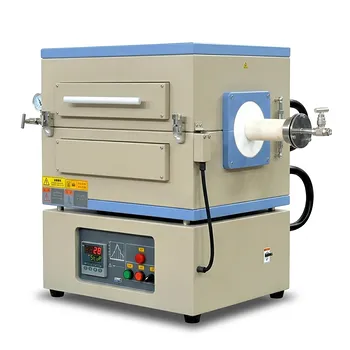
1500°C Split Tube Furnace with Alumina Tube and Vacuum Sealing Flanges for Material Research
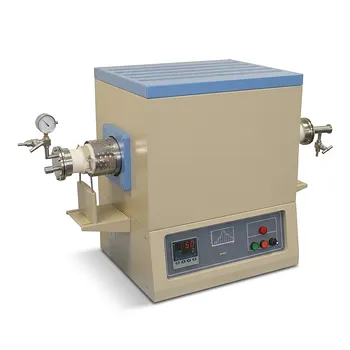
1700C High Temperature Alumina Tube Furnace with 18 Inch Heated Zone and Vacuum Sealing Flanges
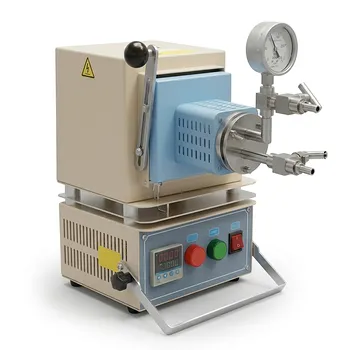
Compact Hybrid Muffle and Tube Furnace for 1000C Controlled Atmosphere Laboratory Material Sintering
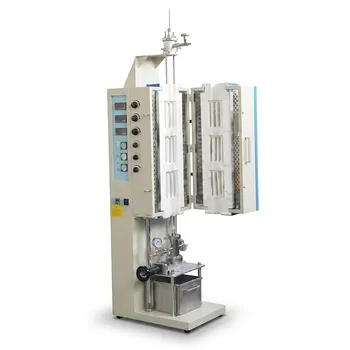
High Temperature Dual Zone Tube Furnace for Material Science Research and Professional Thermal Processing
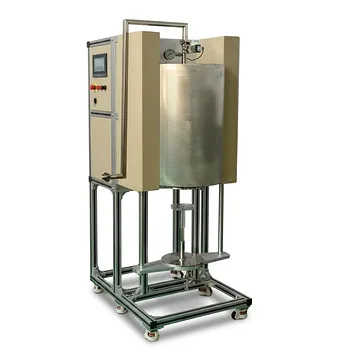
1200°C Atmosphere Controlled Automatic Bottom Loading Furnace with 6 Inch Quartz Tube
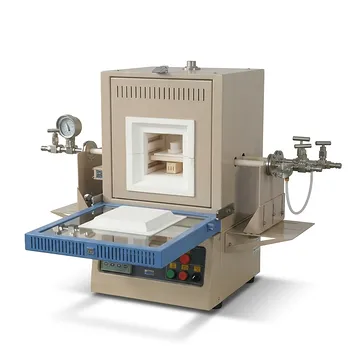
1700C Compact Hybrid Furnace with Dual Layer Box Sintering and Controlled Atmosphere Alumina Tubes

Compact High Temperature 1600C Tube Furnace with 50mm Alumina Tube and Vacuum Flanges for Material Sintering

High Temperature 1700C Six Zone Split Tube Furnace with Alumina Tube and Water Cooled Flanges

Vertical 1700C Vacuum and Atmosphere Tube Furnace with 80mm Alumina Tube

1800C High Temperature Compact Vacuum Tube Furnace with 60mm OD Alumina Tube and Kanthal MoSi2 Heating Elements

High Temperature 1700C Tube Furnace with High Vacuum Turbomolecular Pump System and Multi Channel Mass Flow Controller Gas Mixer

High Temperature 1700C Benchtop Tube Furnace with 5 Inch Heating Zone High Purity Alumina Tube and Vacuum Sealing Flanges

High Temperature 1700C Vertical Tube Furnace for Powder Spherification and Material Sintering

High Temperature Automated 5 Inch Tube Furnace for Autonomous Material Research and Advanced Laboratory R&D
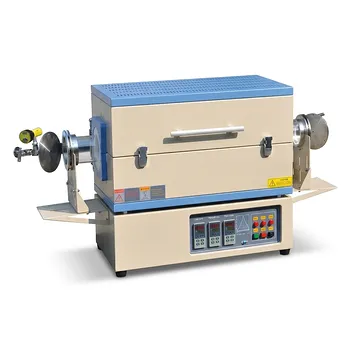
Three Zone Tube Furnace with 24 Inch Heating Length and Hinged Flange Quartz Tube System
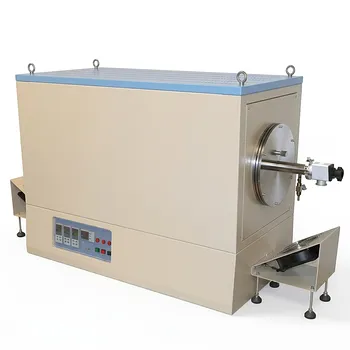
1100°C Three Zone Tube Furnace with 8.5 to 11 Inch OD Quartz Tube and Vacuum Flanges for Large Wafer Processing
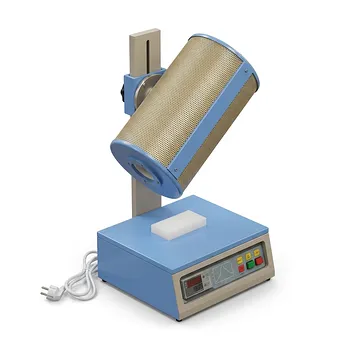
1100°C Vertical Laboratory Furnace for DIY Tubular Reactors with PID Temperature Controller

1200C High Throughput Multi Channel Tube Furnace with 50mm Quartz Tubes for Annealing and Material Phase Diagram Research