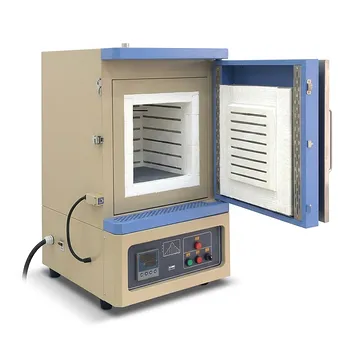
Why is a secondary calcination process at 500 °C necessary for ZnO/g-C3N4? Key to S-scheme Heterojunction Formation
Updated 3 months ago
The secondary calcination process at 500 °C is the critical catalyst that transitions a loose mixture of materials into a functional nanostructure. This specific thermal treatment drives the formation of stable chemical bonds at the interface between zinc oxide (ZnO) and graphitic carbon nitride (g-C3N4). Without this step, the materials remain as separate phases, failing to achieve the synergistic electronic properties required for high-performance photocatalysis.
Core Takeaway: A 500 °C secondary calcination is essential because it establishes the tight interfacial contact and chemical bonding required to transform a simple composite into an S-scheme heterojunction, which is necessary for efficient charge separation and light absorption.
The Mechanism of Interfacial Bonding
Moving Beyond Physical Adhesion
A simple mixture of ZnO and g-C3N4 relies on weak physical forces that are insufficient for rapid electron transfer. The 500 °C treatment provides the thermal energy necessary to overcome activation barriers, allowing atoms at the surface of both materials to reorganize.
This reorganization results in the creation of stable chemical bonds (such as Zn-N or Zn-O-N) between the two phases. These bonds act as "electronic bridges," allowing charges to flow seamlessly between the g-C3N4 and ZnO components.
The Role of the Semi-Closed Environment
Performing this calcination in a semi-closed crucible is vital for maintaining a specific micro-atmosphere. This limited air exchange prevents the excessive oxidation or sublimation of g-C3N4, which can start to decompose at temperatures near 600 °C.
The semi-closed environment ensures that the precursors interact deeply at the molecular level before any components can escape as gas. This results in a more homogenous distribution of ZnO across the g-C3N4 nanosheets.
Strengthening the S-Scheme Architecture
Enabling Efficient Charge Separation
The S-scheme (step-scheme) heterojunction is designed to keep electrons and holes with the highest redox potential. For this to work, the internal electric field at the interface must be strong and uninterrupted.
The tight interfacial contact achieved at 500 °C ensures that the band alignment between the two semiconductors is perfectly positioned. This allows "useless" photogenerated charges to recombine at the interface, leaving the "powerful" charges available for chemical reactions.
Enhancing Visible Light Response
ZnO is primarily active under ultraviolet light, which limits its utility under natural sunlight. By chemically bonding it to g-C3N4 through secondary calcination, the resulting heterojunction can capture a broader spectrum of visible light.
This shift occurs because the intimate contact alters the electronic environment of the composite. The result is a material that is not only more stable but also significantly more sensitive to the light levels found in practical, real-world applications.
Understanding the Trade-offs
Temperature Sensitivity and Decomposition
While 500 °C is the "sweet spot" for bonding, it sits very close to the thermal stability limit of g-C3N4. If the temperature exceeds this threshold, the carbon nitride framework may begin to depolymerize, leading to a loss of surface area and reduced catalytic sites.
Conversely, if the temperature is too low (e.g., below 400 °C), the thermal energy will be insufficient to form strong chemical bonds. In this scenario, the material remains a physical mixture, and the S-scheme mechanism will not initiate.
Atmosphere and Pressure Control
The use of a semi-closed crucible introduces a variable that can be difficult to standardize across different laboratory settings. Small changes in crucible volume or lid tightness can lead to variations in the surface morphology of the final product.
How to Apply This to Your Project
Secondary calcination is a precision process where temperature and containment are the primary levers for success. Careful control of these factors determines whether your material functions as a high-efficiency heterojunction or a standard composite.
- If your primary focus is maximizing charge carrier lifetime: Ensure the 500 °C dwell time is sufficient to complete the bonding process, as this minimizes the interfacial resistance that traps electrons.
- If your primary focus is material stability in aqueous or harsh environments: Prioritize the semi-closed crucible method to ensure the chemical bonds formed are robust enough to prevent leaching or phase separation during use.
- If your primary focus is visible light photocatalysis: Monitor the color change of your composite during calcination; a consistent shift often indicates the successful formation of the S-scheme interface.
By mastering this secondary thermal phase, you transition from simply mixing materials to engineering the sophisticated electronic pathways necessary for advanced chemical applications.
Summary Table:
| Key Factor | Function in Process | Impact on Heterojunction |
|---|---|---|
| 500 °C Calcination | Provides thermal energy for atomic reorganization | Creates stable chemical bonds (Zn-N/Zn-O-N) |
| Semi-Closed Environment | Limits air exchange and oxidation | Prevents g-C3N4 decomposition and ensures homogeneity |
| Interfacial Bonding | Acts as an "electronic bridge" | Enables seamless charge flow and S-scheme formation |
| Spectral Shift | Enhances visible light capture | Increases catalytic efficiency under natural sunlight |
Elevate Your Material Research with THERMUNITS
Achieving the precise thermal conditions for S-scheme heterojunctions requires reliable and accurate heat treatment equipment. As a leading manufacturer for material science and industrial R&D, THERMUNITS offers a comprehensive range of high-performance solutions, including:
- Muffle & Atmosphere Furnaces for controlled calcination environments.
- Vacuum & Tube Furnaces for precise atmospheric and pressure management.
- CVD/PECVD Systems and Rotary Kilns for advanced thin-film and bulk material processing.
- Hot Press & Vacuum Induction Melting (VIM) for specialized thermal engineering.
Whether you are developing photocatalysts or advanced ceramics, our equipment ensures the temperature stability and uniformity your projects demand.
Ready to optimize your thermal processing? Contact us today to find the perfect furnace solution for your laboratory!
References
- Fahad Hassan, Abdallah Shanableh. Solar-matched S-scheme ZnO/g-C3N4 for visible light-driven paracetamol degradation. DOI: 10.1038/s41598-024-60306-0
Mentioned Products
- 900°C Max Rotary Tube Furnace with 8 Inch 310S Alloy Tube and Optional Multi Zone Heating for Industrial Material Calcination
- Electric Rotary Kiln Continuous Working Small Rotary Furnace Heating Pyrolysis Plant
- 1750C Compact Muffle Furnace 1.7L Ultra High Temperature Laboratory Sintering System for Advanced Ceramics and Material Science Research
- 1700C Compact Hybrid Furnace with Dual Layer Box Sintering and Controlled Atmosphere Alumina Tubes
- Compact High Temperature 1600C Tube Furnace with 50mm Alumina Tube and Vacuum Flanges for Material Sintering
People Also Ask
- How does a rotary tube furnace improve the processing of granular materials? Enhance Uniformity and Reaction Kinetics
- Why use a rotary tube furnace for FACS carbonization? Ensure uniform morphology and prevent sphere agglomeration.
- Why is the precise optimization of residence time essential in the catalyst calcination process? Maximize Your Yields.
- In what ways do rotary tube furnaces enhance chemical and specialty mineral processing? Drive Precision and Uniformity.
- What parameters must operators control to maintain product quality in a rotary furnace? Master Your Heat Treatment.

Tech Team · ThermUnits
Last updated on Jun 02, 2026
Related Products
900°C Max Rotary Tube Furnace with 8 Inch 310S Alloy Tube and Optional Multi Zone Heating for Industrial Material Calcination
Electric Rotary Kiln Continuous Working Small Rotary Furnace Heating Pyrolysis Plant
1750C Compact Muffle Furnace 1.7L Ultra High Temperature Laboratory Sintering System for Advanced Ceramics and Material Science Research
1700C Compact Hybrid Furnace with Dual Layer Box Sintering and Controlled Atmosphere Alumina Tubes

Compact High Temperature 1600C Tube Furnace with 50mm Alumina Tube and Vacuum Flanges for Material Sintering
High Temperature Horizontal Electrical Assisted Sintering Furnace with 3KW Programmable Power Source for Advanced Ceramic Materials
High Temperature 1500C Benchtop Muffle Furnace 3.6L Alumina Fiber Chamber Programmable Controller Sintering Annealing Carbonization Thermal Processing System
1100C High Temperature Vacuum Crucible Furnace with Quartz Chamber for Thermal Processing and Sintering
1200C Sliding Tube Furnace for Rapid Thermal Processing and CVD Graphene Growth with 100mm OD Capacity
High Temperature Vertical Crucible Furnace with 22L Heating Chamber and 1200C Maximum Temperature
Ultra High Temperature Bench Top Muffle Furnace 1750C Sintering System with Kanthal Super Heating Elements and Precision Digital Control

1200°C 5 Inch Vertical Quartz Tube Furnace with Stainless Steel Vacuum Flanges
Industrial Large Box Furnace 1700C 216L High Temp Muffle Sintering System

High Temperature 1700C Benchtop Tube Furnace with 5 Inch Heating Zone High Purity Alumina Tube and Vacuum Sealing Flanges

1800C High Temperature Compact Vacuum Tube Furnace with 60mm OD Alumina Tube and Kanthal MoSi2 Heating Elements

High Temperature 1700C Tube Furnace with High Vacuum Turbomolecular Pump System and Multi Channel Mass Flow Controller Gas Mixer
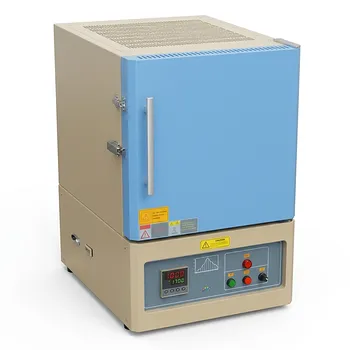
Large Bench Top 1700C High Temperature Muffle Furnace with 19L Chamber for Advanced Material Sintering and Annealing
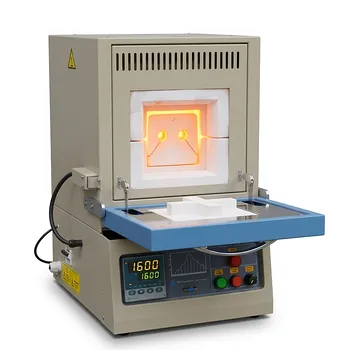
High Temperature Compact Muffle Furnace 1700 C with 30 Segment Programmable Controller and 1.7L Cubic Chamber
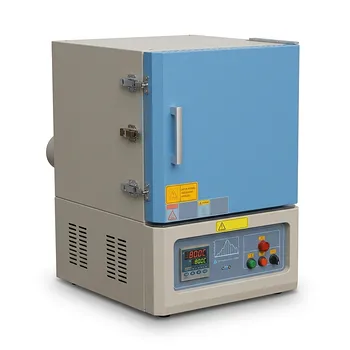
1800C Bench Top Muffle Furnace 18 Liters with Kanthal Super 1900 Heating Elements for High Purity Ceramic Sintering and Material Research