Why is a secondary calcination process in a tube furnace required for nickel-impregnated activated carbon? Key Benefits
Updated 3 months ago
Secondary calcination in a tube furnace is essential for converting adsorbed metal precursors into stable, functional metallic nickel nanoparticles. This thermal treatment decomposes chemical salts (like nickel nitrate) into active sites while simultaneously anchoring them to the activated carbon surface to prevent leaching or agglomeration.
Core Takeaway: This process is the bridge between a simple mixture of chemicals and a high-performance catalyst. It uses controlled thermal energy and inert atmospheres to transform raw precursors into precisely dispersed nanoparticles that are physically and chemically bonded to the carbon carrier.
The Mechanism of Precursor Transformation
Decomposing Metal Salts into Active Sites
During the impregnation phase, nickel salts are simply resting on the carbon surface or within its pores. Secondary calcination provides the thermal energy necessary to decompose these precursors, such as nickel nitrate, into their metallic or oxide forms.
In a nitrogen-rich environment, this process typically results in stable metallic nickel nanoparticles. Without this step, the material remains a mixture of carbon and raw salts, lacking the catalytic properties required for industrial applications.
Anchoring the Active Components
A critical function of the secondary calcination is the "anchoring" effect. The high temperatures facilitate a strong interaction between the nickel particles and the carbon substrate, ensuring they remain fixed during use.
This bond prevents the metal from migrating or washing away during chemical reactions. Proper anchoring is what transforms a temporary coating into a durable, reusable catalyst carrier.
Optimizing Catalyst Morphology
Controlling Particle Size and Dispersion
The quality of a catalyst is largely determined by its active surface area, which depends on how small and well-spread the nickel particles are. The controlled heating environment of a tube furnace prevents nanoparticles from "clumping" together, a phenomenon known as agglomeration.
By maintaining precise temperature cycles, the furnace ensures a high dispersion of active sites. This maximizes the number of nickel atoms exposed to reactants, significantly increasing the overall efficiency of the composite material.
Preservation of the Carbon Pore Structure
Activated carbon is valued for its high internal surface area and specific pore sizes. The tube furnace provides a stable thermal field that allows the metal to transform without collapsing the delicate pore structure of the carbon matrix.
Using an inert atmosphere like nitrogen prevents the carbon from reacting with oxygen and burning away. This balance ensures the final product retains a high specific surface area, often exceeding 1900 m²/g, which is vital for adsorption and catalytic speed.
The Role of the Tube Furnace Environment
Precise Atmosphere Control
A tube furnace is uniquely suited for this task due to its superior airtightness. This allows for the introduction of a protective nitrogen flow that excludes oxygen, which would otherwise cause the nickel to oxidize prematurely or the carbon to degrade.
The constant flow of gas also carries away gaseous byproducts from the precursor decomposition. This prevents secondary reactions that could poison the catalyst or alter the desired chemical state of the nickel.
Thermal Uniformity at High Temperatures
Processes like nickel reduction and alloying often require temperatures around 800°C. The tube furnace provides the necessary thermal field uniformity to ensure every part of the batch undergoes the same transformation.
Inconsistent heating leads to "hot spots" where particles grow too large, or "cold spots" where precursors remain undecomposed. Uniformity is the key to a predictable, high-quality industrial product.
Understanding the Trade-offs
Balancing Temperature and Sintering
While higher temperatures (above 800°C) can improve the crystalline structure of the nickel, they also increase the risk of sintering. This is when small particles fuse together into larger, less effective masses, reducing the active surface area.
Energy Consumption vs. Stability
Lowering the calcination temperature may save energy, but it often results in incomplete precursor decomposition. This leaves residual nitrates or salts that can cause the catalyst to fail or introduce impurities into the final chemical process.
How to Apply This to Your Project
Making the Right Choice for Your Goal
- If your primary focus is maximum catalytic activity: Prioritize a higher dispersion of nanoparticles by using a precise heating ramp and high nitrogen flow rates to prevent agglomeration.
- If your primary focus is material durability: Ensure a sufficiently high temperature (near 800°C) to achieve a strong chemical bond between the nickel and the carbon substrate.
- If your primary focus is high adsorption capacity: Strictly monitor the furnace atmosphere to prevent the oxidative degradation of the carbon pores during the heating cycle.
By mastering the secondary calcination process, you ensure that your nickel-impregnated activated carbon achieves the specific structural and chemical properties required for high-performance industrial applications.
Summary Table:
| Feature | Purpose of Calcination | Tube Furnace Advantage |
|---|---|---|
| Phase Change | Decomposes salts into active Ni nanoparticles | Precise temperature ramps for complete conversion |
| Stability | Anchors Ni to carbon to prevent leaching | Uniform heating for strong chemical bonding |
| Morphology | Prevents agglomeration of metal particles | Controlled thermal field ensures high dispersion |
| Structure | Preserves high-surface-area pore structure | Airtight inert atmosphere (N2) prevents oxidation |
Elevate Your Material Research with THERMUNITS Precision
Achieving the perfect catalytic structure requires uncompromising thermal control. THERMUNITS is a leading manufacturer of high-temperature laboratory equipment specifically designed for material science and industrial R&D. Whether you are performing secondary calcination, sintering, or advanced synthesis, our solutions ensure repeatable, high-quality results.
Our comprehensive range includes:
- Tube & Rotary Furnaces for precise powder and catalyst processing.
- Vacuum & Atmosphere Furnaces for oxidation-sensitive materials.
- CVD/PECVD Systems for advanced coating and thin-film research.
- Muffle, Hot Press, and Dental Furnaces for diverse thermal treatments.
- Vacuum Induction Melting (VIM) & Thermal Elements for specialized industrial needs.
Ready to optimize your thermal processing workflow? Contact our engineering experts today to discuss how THERMUNITS can provide the customized equipment your lab deserves.
References
- Kamil Dudek, Piotr Żabiński. Ni-Doped Activated Carbon from Invasive Plants as a Potential Catalyst. DOI: 10.3390/met14070790
Mentioned Products
- High Temperature Tube Furnace 1500C with Sliding Flanges and 50mm OD for Rapid Thermal Processing Fast Heating and Cooling
- 1100C Tube Furnace with Vacuum Flange and Programmable Temperature Controller for Material Science and Industrial Heat Treatment
- Vertical 1700C Vacuum and Atmosphere Tube Furnace with 80mm Alumina Tube
- Compact High Temperature 1600C Tube Furnace with 50mm Alumina Tube and Vacuum Flanges for Material Sintering
- 900°C Max Rotary Tube Furnace with 8 Inch 310S Alloy Tube and Optional Multi Zone Heating for Industrial Material Calcination
People Also Ask
- How are high-temperature tube furnaces utilized to repair etching damage? Precision Lattice Restoration Solutions
- What core conditions does a high-temperature tube furnace provide for rGO aerogels? Mastering Precision Synthesis.
- What role does a high-temperature tube furnace play in CVD synthesis of silicon nanowires? Master VLS Growth Precision.
- How does precision tube furnace control influence CoFe nanoparticle formation? Master Your Bimetallic Synthesis.
- What role does a high-temperature tube furnace play in the sulfidation heat treatment of CoS@C/MXene nanocomposites? Guide

Tech Team · ThermUnits
Last updated on Jun 03, 2026
Related Products
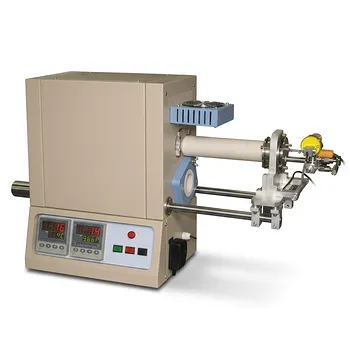
High Temperature Tube Furnace 1500C with Sliding Flanges and 50mm OD for Rapid Thermal Processing Fast Heating and Cooling

1100C Tube Furnace with Vacuum Flange and Programmable Temperature Controller for Material Science and Industrial Heat Treatment

Vertical 1700C Vacuum and Atmosphere Tube Furnace with 80mm Alumina Tube

Compact High Temperature 1600C Tube Furnace with 50mm Alumina Tube and Vacuum Flanges for Material Sintering
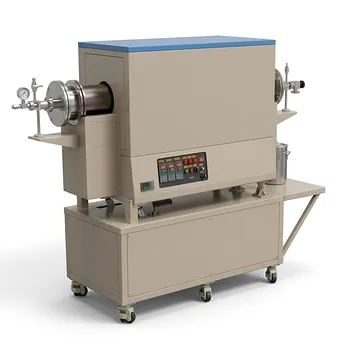
900°C Max Rotary Tube Furnace with 8 Inch 310S Alloy Tube and Optional Multi Zone Heating for Industrial Material Calcination

1700C Hydrogen Gas Tube Furnace with 60mm Alumina Process Tube and Integrated Hydrogen Safety Detector

High Temperature 1700C Tube Furnace with High Vacuum Turbomolecular Pump System and Multi Channel Mass Flow Controller Gas Mixer
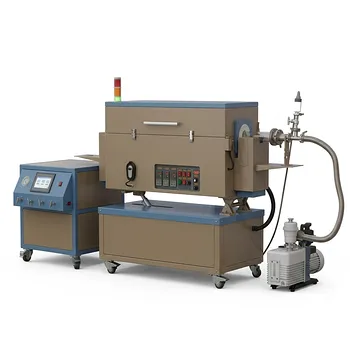
5 Inch Three Zone Rotary Tube Furnace with Integrated Gas Delivery System and 1200C Capability for Advanced Material CVD Processing
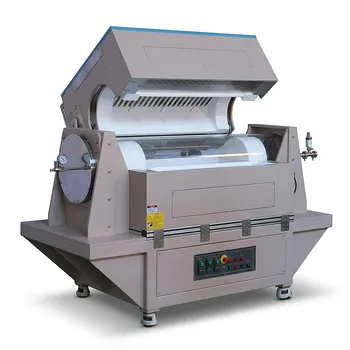
Three Zone Tube Furnace with 11 Inch or 15 Inch Quartz Tube and Hinged Flanges for Vacuum Atmosphere Heat Treatment

1200C High Throughput Multi Channel Tube Furnace with 50mm Quartz Tubes for Annealing and Material Phase Diagram Research

1200°C 5 Inch Vertical Quartz Tube Furnace with Stainless Steel Vacuum Flanges

High Temperature 1700C Benchtop Tube Furnace with 5 Inch Heating Zone High Purity Alumina Tube and Vacuum Sealing Flanges
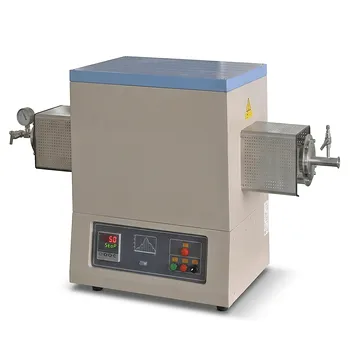
High Temperature 1700C Tube Furnace with 4 Inch OD Alumina Tube and Vacuum Sealing Flanges

High Temperature 1700C Six Zone Split Tube Furnace with Alumina Tube and Water Cooled Flanges

Compact Vertical Split Quartz Tube Furnace with Stainless Steel Vacuum Flanges for Rapid Thermal Quenching and Controlled Atmosphere Material Processing

1800C High Temperature Compact Vacuum Tube Furnace with 60mm OD Alumina Tube and Kanthal MoSi2 Heating Elements
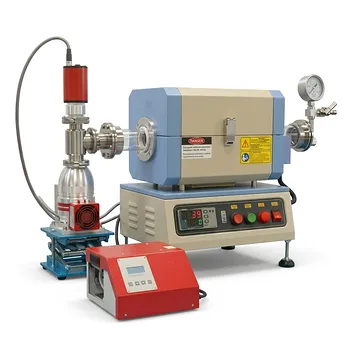
High Vacuum Compact Tube Furnace 1200C with Integrated Turbo Pump System and 8 Inch Heating Zone
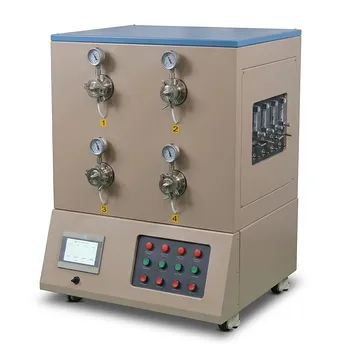
High Throughput 1200C Four Channel Tube Furnace with 3 Inch Quartz Tubes for Multi Zone Annealing and Material Research

High Temperature Automated 5 Inch Tube Furnace for Autonomous Material Research and Advanced Laboratory R&D
