Why is a specific sample arrangement required inside a tube furnace during catalyst phosphidation? Boost Surface Precision
Updated 5 months ago
The specific upstream-downstream arrangement is required to leverage gas-phase transport for uniform, non-contact surface modification. By placing the sodium hypophosphite precursor upstream and the catalyst downstream, the argon carrier gas can effectively transport phosphorus vapor over the catalyst surface at a controlled rate. This ensures a rapid reaction that modifies the catalyst surface without compromising its internal structure.
Core Takeaway: This precise spatial configuration transforms the tube furnace into a chemical vapor deposition (CVD) reactor, ensuring that phosphorus-containing vapors are delivered uniformly via a carrier gas to facilitate surface-limited phosphidation while preserving the catalyst’s bulk integrity.
The Mechanics of Gas-Phase Transport
Strategic Precursor Placement
Placing sodium hypophosphite (NaH2PO2) upstream allows it to decompose first as the furnace heats. This decomposition generates a steady stream of phosphorus-containing vapor (such as PH3) that is pushed forward by the inert argon gas.
Downstream Catalyst Exposure
The catalyst is positioned downstream to act as the target for the moving vapor front. This "non-contact" method ensures that only the gas-phase phosphorus interacts with the solid catalyst, preventing the contamination or structural damage often associated with liquid-phase methods.
The Role of the Carrier Gas
High-purity argon (Ar) acts as the vehicle for the reactive species, maintaining a stable flow channel. It also creates a completely inert environment, which is critical for preventing unwanted oxidation of metal sources or carbon substrates at high temperatures.
Thermal Field Distribution and Uniformity
Utilizing the Temperature Gradient
The tube furnace provides a specific thermal field distribution that dictates where decomposition and reaction occur. Proper positioning ensures the precursor reaches its decomposition temperature while the catalyst remains in a zone optimized for gas-solid reaction kinetics.
Eliminating Thermal Gradient Errors
Placing the sample precisely—often at the geometric center of the reaction zone—maintains heating uniformity. This consistency eliminates errors caused by positional deviations, ensuring that the phosphorus atoms infiltrate the lattice at a constant, predictable rate.
Precise Control of Reaction Rates
A stable heating rate (typically around 5 °C/min) combined with controlled gas flow allows for precise chemical transitions. This level of control is what enables the formation of nanocrystalline phosphides embedded within an amorphous matrix rather than a messy, non-uniform bulk transformation.
Achieving Surface-Specific Modification
Protecting the Bulk Structure
The primary goal of this arrangement is to form a phosphate modification layer on the surface (e.g., of Ni3FeN) without damaging the bulk nitride. Because the reaction is gas-phase and rapid, it can be stopped before the phosphorus penetrates deep enough to alter the catalyst's core properties.
Promoting High Dispersion
The stable gas flow and high-temperature environment promote the high dispersion of active metal components. This construction of efficient catalytic active sites is only possible when the phosphorus vapor is delivered uniformly across the entire exposed surface of the support.
Removal of Impurities
The high-temperature environment (ranging from 250°C to 1000°C depending on the application) helps remove organic template agents and avoids the impurity residues common in alternative synthesis methods. This results in a cleaner, more active catalyst phase.
Understanding the Trade-offs
Sensitivity to Positioning
A minor deviation in the distance between the precursor and the sample can lead to non-uniform phosphidation. If the sample is too far downstream, the vapor may dilute or deposit on the tube walls; if too close, the reaction may be too aggressive, damaging the bulk structure.
Atmosphere Sensitivity
The success of this arrangement is entirely dependent on the integrity of the inert atmosphere. Any oxygen leak into the system can cause the iron or carbon components to undergo unwanted oxidation, potentially ruining the catalyst's performance.
Temperature Synchronization
There is a delicate balance between the decomposition temperature of the sodium hypophosphite and the reaction temperature of the catalyst. If the furnace does not have a well-mapped thermal zone, the precursor might exhaust itself before the catalyst reaches the required activation energy.
How to Apply This to Your Project
Recommendations for Experimental Design
- If your primary focus is surface-level modification: Ensure the catalyst is placed in a slightly lower temperature zone downstream to prevent deep lattice infiltration.
- If your primary focus is high-purity iron phosphide (FeP) phases: Use a high-flow rate of argon to ensure rapid transport and minimize the residence time of phosphorus vapor.
- If your primary focus is maintaining bulk nitride structure: Keep the reaction time short and the temperature at the lower end of the activation range (approx. 250°C-450°C).
- If your primary focus is removing organic templates: Prioritize a higher temperature zone (above 550°C) and ensure the upstream precursor is sufficient to compensate for higher vaporization rates.
Precise spatial and thermal control within the tube furnace is the defining factor in transitioning from simple bulk heating to sophisticated, gas-phase surface engineering.
Summary Table:
| Component | Placement | Primary Role in Phosphidation |
|---|---|---|
| Precursor (NaH2PO2) | Upstream | Decomposes to generate phosphorus-containing vapor (PH3). |
| Catalyst Sample | Downstream | Acts as the target for gas-solid reaction to form active sites. |
| Argon (Ar) Gas | Flowing | Transports vapor species and maintains an inert, oxygen-free environment. |
| Heating Zone | Center | Provides uniform thermal distribution to synchronize decomposition and reaction kinetics. |
Elevate Your Material Research with THERMUNITS
Precise gas-phase transport and thermal uniformity are critical for successful catalyst engineering. THERMUNITS is a leading manufacturer of high-temperature laboratory equipment, providing the specialized tools you need for advanced R&D.
From high-precision Tube Furnaces and CVD/PECVD systems to Atmosphere and Vacuum furnaces, our solutions are designed to deliver the stable environments required for rapid phosphidation, nitridation, and other complex heat treatments.
Ready to optimize your thermal processing?
Contact our technical team today to find the perfect furnace solution for your laboratory or industrial R&D needs.
References
- Huashuai Hu, Minghui Yang. Engineered Nickel–Iron Nitride Electrocatalyst for Industrial‐Scale Seawater Hydrogen Production. DOI: 10.1002/adma.202415421
Mentioned Products
- High Temperature Tube Furnace 1500C with Sliding Flanges and 50mm OD for Rapid Thermal Processing Fast Heating and Cooling
- Vertical 1700C Vacuum and Atmosphere Tube Furnace with 80mm Alumina Tube
- 1100C Tube Furnace with Vacuum Flange and Programmable Temperature Controller for Material Science and Industrial Heat Treatment
- Compact High Temperature 1600C Tube Furnace with 50mm Alumina Tube and Vacuum Flanges for Material Sintering
- 900°C Max Rotary Tube Furnace with 8 Inch 310S Alloy Tube and Optional Multi Zone Heating for Industrial Material Calcination
People Also Ask
- How are high-temperature tube furnaces utilized to repair etching damage? Precision Lattice Restoration Solutions
- What role does a high-temperature tube furnace play in CVD synthesis of silicon nanowires? Master VLS Growth Precision.
- What core conditions does a high-temperature tube furnace provide for rGO aerogels? Mastering Precision Synthesis.
- What role does a high-temperature tube furnace play in the sulfidation heat treatment of CoS@C/MXene nanocomposites? Guide
- How does precision tube furnace control influence CoFe nanoparticle formation? Master Your Bimetallic Synthesis.

Tech Team · ThermUnits
Last updated on Apr 14, 2026
Related Products

High Temperature Tube Furnace 1500C with Sliding Flanges and 50mm OD for Rapid Thermal Processing Fast Heating and Cooling

Vertical 1700C Vacuum and Atmosphere Tube Furnace with 80mm Alumina Tube

1100C Tube Furnace with Vacuum Flange and Programmable Temperature Controller for Material Science and Industrial Heat Treatment

Compact High Temperature 1600C Tube Furnace with 50mm Alumina Tube and Vacuum Flanges for Material Sintering
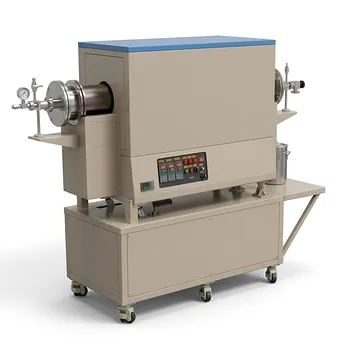
900°C Max Rotary Tube Furnace with 8 Inch 310S Alloy Tube and Optional Multi Zone Heating for Industrial Material Calcination

1700C Hydrogen Gas Tube Furnace with 60mm Alumina Process Tube and Integrated Hydrogen Safety Detector

High Temperature 1700C Tube Furnace with High Vacuum Turbomolecular Pump System and Multi Channel Mass Flow Controller Gas Mixer

5 Inch Three Zone Rotary Tube Furnace with Integrated Gas Delivery System and 1200C Capability for Advanced Material CVD Processing

Three Zone Tube Furnace with 11 Inch or 15 Inch Quartz Tube and Hinged Flanges for Vacuum Atmosphere Heat Treatment

1200C High Throughput Multi Channel Tube Furnace with 50mm Quartz Tubes for Annealing and Material Phase Diagram Research

1200°C 5 Inch Vertical Quartz Tube Furnace with Stainless Steel Vacuum Flanges
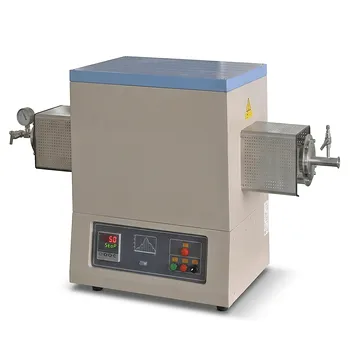
High Temperature 1700C Tube Furnace with 4 Inch OD Alumina Tube and Vacuum Sealing Flanges

High Temperature 1700C Benchtop Tube Furnace with 5 Inch Heating Zone High Purity Alumina Tube and Vacuum Sealing Flanges

Compact Vertical Split Quartz Tube Furnace with Stainless Steel Vacuum Flanges for Rapid Thermal Quenching and Controlled Atmosphere Material Processing

1800C High Temperature Compact Vacuum Tube Furnace with 60mm OD Alumina Tube and Kanthal MoSi2 Heating Elements

High Temperature 1700C Six Zone Split Tube Furnace with Alumina Tube and Water Cooled Flanges
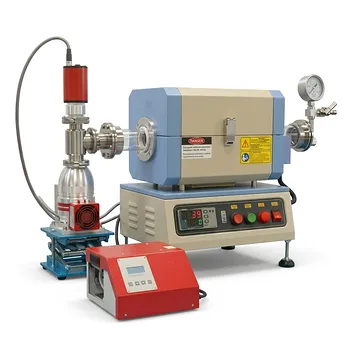
High Vacuum Compact Tube Furnace 1200C with Integrated Turbo Pump System and 8 Inch Heating Zone
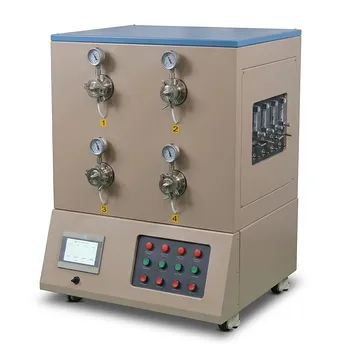
High Throughput 1200C Four Channel Tube Furnace with 3 Inch Quartz Tubes for Multi Zone Annealing and Material Research

High Temperature Automated 5 Inch Tube Furnace for Autonomous Material Research and Advanced Laboratory R&D
