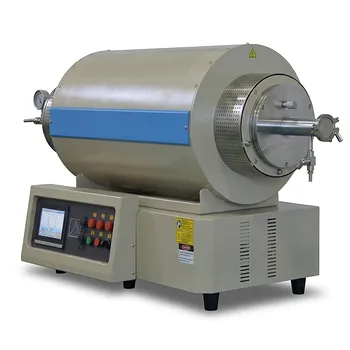
Why is a tube atmosphere furnace required for air-sensitive materials? Ensure Purity & Precision in Chemical Research
Updated 3 months ago
A tube atmosphere furnace is indispensable for air-sensitive materials because it creates a hermetically isolated, contamination-free environment. By sealing the reaction chamber and introducing high-purity inert or reducing gases, the system prevents the destructive effects of oxidation and hydrolysis. This level of environmental control is the only way to ensure the chemical purity, structural stability, and precise stoichiometry required in advanced research.
The core value of a tube atmosphere furnace lies in its ability to replace the reactive ambient atmosphere with a controlled gas environment or a vacuum. This isolation is critical for maintaining the integrity of materials that would otherwise degrade or react unintentionally when exposed to oxygen and moisture at high temperatures.
Eliminating Environmental Interference
Preventing Oxidation and Hydrolysis
At elevated temperatures, many advanced materials react violently or subtly with oxygen and moisture in the air. A tube atmosphere furnace uses a sealed furnace tube to physically block these elements from reaching the sample. This is mandatory for processing materials like carbides, nitrides, and certain semiconductor precursors that oxidize instantly upon heating.
Creating a High-Purity Inert Shield
By flushing the chamber with high-purity argon or nitrogen, the furnace creates an inert "blanket" around the material. This process often involves a vacuum-and-backfill sequence, which removes residual air trapped in the system. This ensures that the only molecules interacting with the sample are those explicitly intended by the researcher.
Enabling Chemical Reduction Pathways
Beyond simple protection, these furnaces allow for the introduction of reducing gases like hydrogen. This is essential for removing oxygen already present in a sample or for synthesizing metallic nanoparticles from oxides. The controlled flow of these gases ensures that the reduction happens at a predictable, repeatable rate.
Maintaining Material Performance and Stoichiometry
Ensuring Phase Purity and Stoichiometry
Advanced chemical research often requires materials to have an exact ratio of elements, known as stoichiometry. Even slight oxidation can shift this balance, altering the material's phase purity and rendering it useless for study. The atmosphere furnace maintains the specific chemical environment needed to keep these ratios intact during synthesis.
Protecting Surface Activity in Catalysts
For catalytic research, the state of active sites on the catalyst surface determines its effectiveness. Exposure to oxygen can poison these sites or change their oxidation state, leading to inconsistent experimental results. Precise atmosphere regulation ensures that the catalyst surface remains in its intended, highly active state.
Achieving Temperature Uniformity
In addition to gas control, tube furnaces are designed for high temperature field uniformity. This ensures that the entire sample experiences the same thermal conditions while under the protected atmosphere. This uniformity is vital for the repeatable preparation of complex materials like superconductors and functional nanomaterials.
Understanding Technical Constraints and Trade-offs
The Risk of Seal Failure
The effectiveness of an atmosphere furnace is entirely dependent on the integrity of its vacuum seals and O-rings. Even a microscopic leak can allow oxygen to enter the system via diffusion, potentially ruining a long-duration heat treatment. Regular maintenance and leak testing are non-negotiable requirements for successful operation.
Gas Purity and Flow Dynamics
The quality of the final material is limited by the purity of the gas supply. If the nitrogen or argon source contains trace amounts of water vapor or oxygen, the "protected" environment is compromised. Researchers must often use gas purification systems or "getters" to ensure the atmosphere is truly inert.
Constraints of Tube Materials
The furnace tube itself (often quartz or alumina) has thermal and chemical limitations. Quartz tubes offer excellent visibility and purity but cannot be used at extreme temperatures, while alumina tubes handle higher heat but are more susceptible to thermal shock. Selecting the wrong tube material can lead to contamination or catastrophic failure during the cooling phase.
Selecting the Configuration for Your Research
To achieve the best results, you must align the furnace capabilities with your specific material requirements.
- If your primary focus is oxidation prevention: Prioritize a system with high-vacuum capability (to 10⁻⁵ torr) and a reliable vacuum-and-backfill controller to ensure all residual oxygen is removed.
- If your primary focus is catalyst synthesis: Select a furnace with precise, multi-stage mass flow controllers (MFCs) to manage the exact concentration of reducing gases like hydrogen or carbon monoxide.
- If your primary focus is advanced ceramics or nitrides: Ensure the furnace utilizes high-density alumina tubes and specialized seals capable of handling the sustained high temperatures required for sintering.
By mastering the controlled environment of a tube atmosphere furnace, researchers can confidently push the boundaries of material science and chemical engineering.
Summary Table:
| Key Feature | Benefit for Research | Ideal Applications |
|---|---|---|
| Inert Atmosphere | Prevents oxidation and hydrolysis | Carbides, Nitrides, Semiconductors |
| Reducing Gas Support | Enables chemical reduction (e.g., using H2) | Metallic nanoparticles, Catalyst synthesis |
| Vacuum-and-Backfill | Eliminates residual oxygen/moisture | High-purity material synthesis |
| Thermal Uniformity | Ensures phase purity and stoichiometry | Superconductors, Functional nanomaterials |
| Sealed Environment | Protects surface activity of samples | Catalysis research, Surface science |
Elevate Your Research with THERMUNITS High-Precision Furnaces
At THERMUNITS, we understand that advanced material science requires uncompromising environmental control. As a leading manufacturer of high-temperature laboratory equipment, we provide the specialized thermal solutions needed to protect your most sensitive samples and ensure repeatable, high-purity results.
Our comprehensive range includes:
- Tube & Atmosphere Furnaces for precise gas control.
- Vacuum & CVD/PECVD Systems for advanced thin-film research.
- Muffle, Rotary, and Hot Press Furnaces for diverse industrial R&D needs.
- Specialized Equipment: Dental furnaces, vacuum induction melting (VIM), and high-quality thermal elements.
Don't let oxidation compromise your stoichiometry. Contact our technical experts today to discuss your specific heat treatment requirements and discover how our expertise can drive your research forward!
References
- Penggang Jiao, Ning Hu. Atomically Dispersed Ni on Nitrogen‐Doped Carbon Substrate Enhances Basic HER Performance of Ru Clusters**. DOI: 10.1002/slct.202400490
Mentioned Products
- Vertical 1700C Vacuum and Atmosphere Tube Furnace with 80mm Alumina Tube
- 1200C Hybrid Muffle and Tube Furnace for Material Research with Dual Atmosphere Control Quartz Tubes
- Compact Vertical Split Quartz Tube Furnace with Stainless Steel Vacuum Flanges for Rapid Thermal Quenching and Controlled Atmosphere Material Processing
- Compact Hybrid Muffle and Tube Furnace for 1000C Controlled Atmosphere Laboratory Material Sintering
- 1200°C Atmosphere Controlled Automatic Bottom Loading Furnace with 6 Inch Quartz Tube
People Also Ask
- How is an industrial-grade vertical tube furnace utilized in smelting leaching residues? Enhance Metal Recovery Efficiency
- What is the function of a laboratory-grade vertical tube furnace in fast pyrolysis? Optimize Composite Research.
- How does a vertical tube furnace facilitate thermoelectric alloy melting? Precision synthesis for material homogeneity.
- Why is a thermocouple sensor indispensable for monitoring the vertical tube furnace during gallium oxide nanowire production? Optimize VLS Growth
- What are the advantages of a Vertical Tube Furnace for iron coke testing? | Achieve High-Precision CRI Analysis

Tech Team · ThermUnits
Last updated on Jun 02, 2026
Related Products

Vertical 1700C Vacuum and Atmosphere Tube Furnace with 80mm Alumina Tube
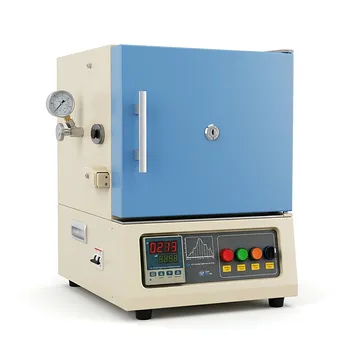
1200C Hybrid Muffle and Tube Furnace for Material Research with Dual Atmosphere Control Quartz Tubes

Compact Vertical Split Quartz Tube Furnace with Stainless Steel Vacuum Flanges for Rapid Thermal Quenching and Controlled Atmosphere Material Processing
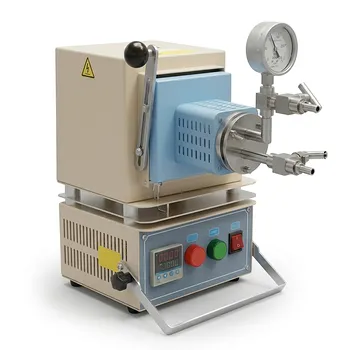
Compact Hybrid Muffle and Tube Furnace for 1000C Controlled Atmosphere Laboratory Material Sintering
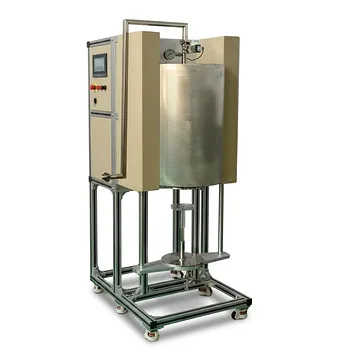
1200°C Atmosphere Controlled Automatic Bottom Loading Furnace with 6 Inch Quartz Tube

Three Zone Tube Furnace with 11 Inch or 15 Inch Quartz Tube and Hinged Flanges for Vacuum Atmosphere Heat Treatment

1200°C 5 Inch Vertical Quartz Tube Furnace with Stainless Steel Vacuum Flanges
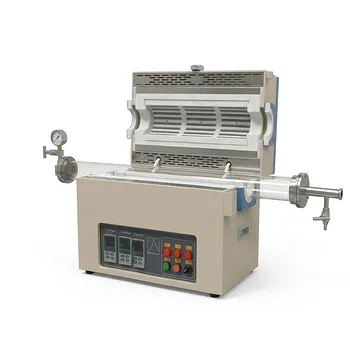
1200°C Three Zone Split Tube Furnace with 18 Inch Heating Length and Vacuum Flanges
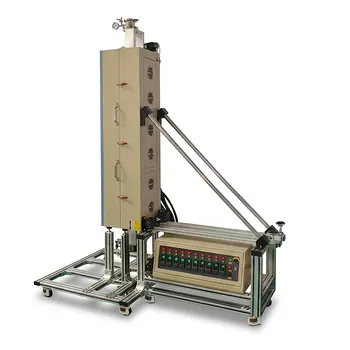
1200°C 10-Zone Split Tube Furnace with Horizontal and Vertical Mounting for Multi-Zone Thermal Gradients and Large Diameter Material Processing
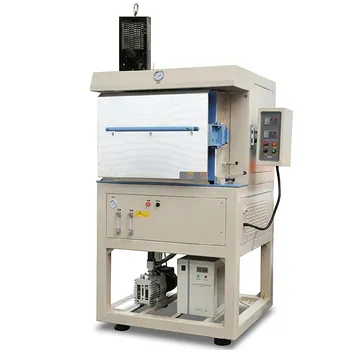
1200C Hydrogen Atmosphere Box Furnace with 5 Heated Sides and 64L Chamber

High Temperature 1700C Tube Furnace with High Vacuum Turbomolecular Pump System and Multi Channel Mass Flow Controller Gas Mixer

1700C Hydrogen Gas Tube Furnace with 60mm Alumina Process Tube and Integrated Hydrogen Safety Detector

High Temperature 1700C Vertical Tube Furnace for Powder Spherification and Material Sintering

High Temperature 1700C Six Zone Split Tube Furnace with Alumina Tube and Water Cooled Flanges
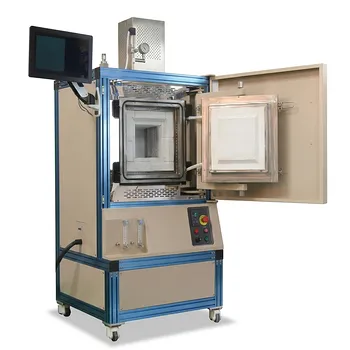
High Temperature Hydrogen Atmosphere Box Furnace 1650C Max Reducing Environment Material Synthesis System 8x8x8 Chamber
1100C Dual Zone Hydrogen Gas Tube Furnace with Quartz Tube and Integrated H2 Leak Detection System

1800C High Temperature Compact Vacuum Tube Furnace with 60mm OD Alumina Tube and Kanthal MoSi2 Heating Elements

High Temperature 1700C Benchtop Tube Furnace with 5 Inch Heating Zone High Purity Alumina Tube and Vacuum Sealing Flanges

High Temperature Automated 5 Inch Tube Furnace for Autonomous Material Research and Advanced Laboratory R&D