Why Use a Tube Furnace with Inert Gas for Bagasse Carbon Activation? Optimize Surface Area & Prevent Oxidation
Updated 5 months ago
High-temperature activation requires a tube furnace with inert gas control primarily to prevent the carbon precursor from burning away while simultaneously etching its microscopic porous structure. At activation temperatures reaching 800°C or higher, bagasse-based carbon would undergo immediate oxidative combustion if exposed to even trace amounts of oxygen. The inert gas flow system creates a protective environment that allows chemical activators to precisely engineer the material's surface without destroying the carbon skeleton.
Core Takeaway: A tube furnace with inert gas control acts as a high-precision chemical reactor that prevents carbon loss via combustion while enabling the uniform thermal etching required to maximize surface area and adsorption capacity.
Prevention of Oxidative Combustion
The Necessity of Oxygen Displacement
During high-temperature phases, typically around 800°C, the introduction of high-purity argon or nitrogen is critical to displace oxygen within the furnace chamber. Without this displacement, the carbon material would react with oxygen and be consumed by fire rather than being activated.
Creating a Reducing Environment
The flow control system maintains a strictly oxygen-free reducing environment, which is essential when working with precursors like bagasse or bamboo. This environment ensures that the carbon skeleton remains intact so that the activation agents can perform their specific chemical functions.
Precision Architecture of Pore Structures
Controlling Gas-Phase Diffusion
The use of high-precision flow meters allows for the stable supply of activation gases, which directly determines the gas-phase diffusion rate. This control is necessary to directionally construct microporous structures on the material surface, which are vital for capturing gases like carbon dioxide and ethylene.
Regulating Microscopic Burn-off
Precise gas flow regulates the microscopic burn-off rate of the carbon matrix. By managing how the gas interacts with the material, researchers can increase the specific surface area to over 1900 m²/g, significantly enhancing the final adsorption capacity.
Optimization of Chemical Activation
Facilitating Thorough Chemical Reactions
A tube furnace provides a uniform thermal field that ensures chemical activators, such as sodium hydroxide (NaOH) or potassium hydroxide (KOH), react thoroughly with the carbon matrix. This uniform heat prevents "cold spots" that would result in uneven activation and lower material quality.
Surface Ablation and Pore Clearing
High-temperature thermal treatment under an inert atmosphere facilitates a vigorous reaction that ablates the carbon surface. This process clears existing pores and etches new ones, which is the fundamental mechanism for increasing the material’s porosity and energy storage capabilities.
Understanding the Trade-offs and Pitfalls
Sensitivity to Flow Rate Fluctuations
If the inert gas flow is too low, stagnant pockets of byproduct gases can inhibit the activation reaction, leading to low surface area. Conversely, an excessively high flow rate may cool the sample surface or sweep away volatile activating agents before they can react with the carbon.
Temperature Uniformity Challenges
While tube furnaces offer excellent control, the sample bed depth can impact results; if the bed is too thick, the gas may not pass uniformly through the material. This can lead to a "core-shell" effect where the exterior of the bagasse particles is over-activated while the interior remains under-processed.
How to Apply This to Your Project
Recommendations for Activation Success
- If your primary focus is Maximum Surface Area: Utilize high-purity argon with a high-precision mass flow controller to maintain a steady microscopic burn-off rate during the 800°C-900°C window.
- If your primary focus is Carbon Yield: Ensure the furnace is completely purged of oxygen before ramping temperatures above 400°C to prevent early-stage mass loss.
- If your primary focus is Gas Adsorption (CO2/Ethylene): Optimize the flow rate to specifically target the development of micropores (under 2nm) rather than larger mesopores.
Precise atmospheric control transforms a simple heating process into a sophisticated chemical etching tool capable of producing high-performance activated carbon.
Summary Table:
| Key Requirement | Role in Activation Process | Target Outcome |
|---|---|---|
| Oxygen Displacement | Replaces O2 with Argon/Nitrogen | Prevents oxidative combustion at 800°C+ |
| Flow Rate Control | Regulates gas-phase diffusion | High-precision micropore construction (<2nm) |
| Thermal Uniformity | Eliminates "cold spots" in the chamber | Consistent chemical reaction with NaOH/KOH |
| Reducing Atmosphere | Protects the carbon skeleton | Maximizes surface area (up to 1900 m²/g) |
Achieve Superior Material Activation with THERMUNITS Precision
Maximize the potential of your biomass-based research with the industry's most reliable thermal solutions. THERMUNITS is a leading manufacturer of high-temperature laboratory equipment for material science and industrial R&D, providing the precision control required for sophisticated chemical etching and carbon activation.
Our specialized Tube Furnaces and Atmosphere Furnaces are designed to maintain the strictly oxygen-free environments essential for preventing carbon loss and engineering high-capacity pore structures. From CVD/PECVD systems to Rotary Kilns and Vacuum Induction Melting (VIM) furnaces, we offer the thermal uniformity your project demands.
Why choose THERMUNITS for your lab?
- Precision Engineering: High-accuracy gas flow control for consistent microscopic burn-off rates.
- Comprehensive Range: We provide Muffle, Vacuum, Tube, Hot Press, and Dental Furnaces tailored to your specific R&D needs.
- Expert Support: Our equipment ensures your chemical activators react thoroughly, clearing pores and enhancing energy storage capabilities.
Ready to elevate your heat treatment results? Contact our technical experts today to discuss the ideal furnace configuration for your high-performance material synthesis!
References
- Kyfti Yolanda Siburian, Agung Nugroho. Effect of CoO loading on electrochemical properties of activated carbon from sugarcane bagasse. DOI: 10.5599/jese.2439
Mentioned Products
- High Temperature 1700C Tube Furnace with High Vacuum Turbomolecular Pump System and Multi Channel Mass Flow Controller Gas Mixer
- High Temperature Vertical Tube Furnace for Small Solid Oxide Fuel Cell Testing with Four Channel Gas Control
- High Temperature 1700C Vertical Tube Furnace for Powder Spherification and Material Sintering
- High Temperature Dual Zone Tube Furnace for Material Science Research and Professional Thermal Processing
- Gas Pre-Heating Tube Furnace for High Temperature Pyrolysis Reactors and Material Science Research
People Also Ask
- What is the role of a high-temperature tube furnace in the calcination process of ZnO/In2O3 nanocomposites?
- What impact does the heating rate of a tube furnace have on biochar microstructure? Optimize Your Material R&D.
- What is the function of a high-temperature tube furnace in the synthesis of g-C3N4? Optimize Thermal Polycondensation
- What is the critical function of a high-temperature tube furnace in Si/Al2O3/RGO synthesis? Key to Battery Innovation
- What are the primary functions of a high-temperature tube furnace for Inconel 718? Master Debinding & Pre-sintering.

Tech Team · ThermUnits
Last updated on Apr 14, 2026
Related Products

High Temperature 1700C Tube Furnace with High Vacuum Turbomolecular Pump System and Multi Channel Mass Flow Controller Gas Mixer
High Temperature Vertical Tube Furnace for Small Solid Oxide Fuel Cell Testing with Four Channel Gas Control

High Temperature 1700C Vertical Tube Furnace for Powder Spherification and Material Sintering
High Temperature Dual Zone Tube Furnace for Material Science Research and Professional Thermal Processing
Gas Pre-Heating Tube Furnace for High Temperature Pyrolysis Reactors and Material Science Research

High Temperature Automated 5 Inch Tube Furnace for Autonomous Material Research and Advanced Laboratory R&D
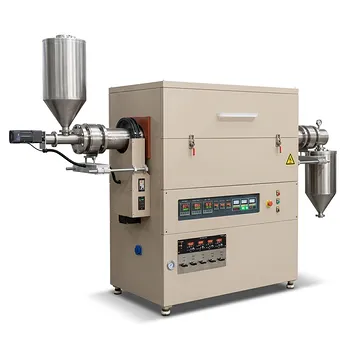
High Temperature Tilting Rotary Tube Furnace with Integrated Mass Flow Control and Multi Zone Heating

High Temperature 1700C Benchtop Tube Furnace with 5 Inch Heating Zone High Purity Alumina Tube and Vacuum Sealing Flanges

1800C High Temperature Compact Vacuum Tube Furnace with 60mm OD Alumina Tube and Kanthal MoSi2 Heating Elements
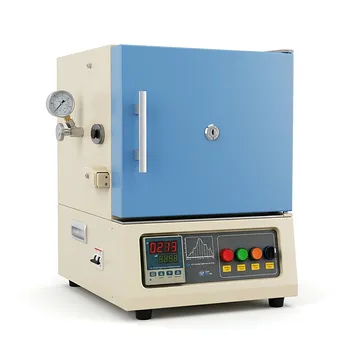
1200C Hybrid Muffle and Tube Furnace for Material Research with Dual Atmosphere Control Quartz Tubes

High Temperature 1700C Six Zone Split Tube Furnace with Alumina Tube and Water Cooled Flanges
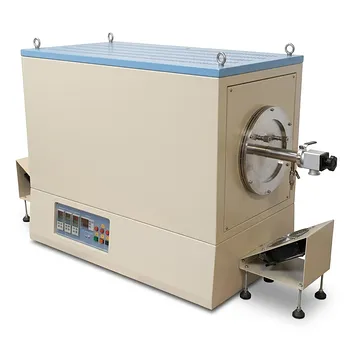
Four Zone Tube Furnace 1100C with 600mm Large Diameter Quartz Tube and Vacuum Flanges
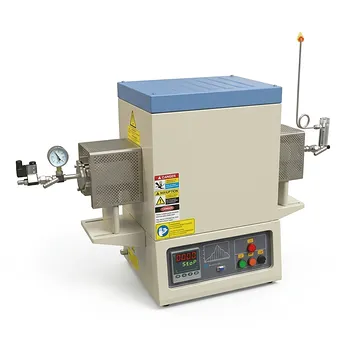
1700C Hydrogen Gas Tube Furnace with 60mm Alumina Process Tube and Integrated Hydrogen Safety Detector
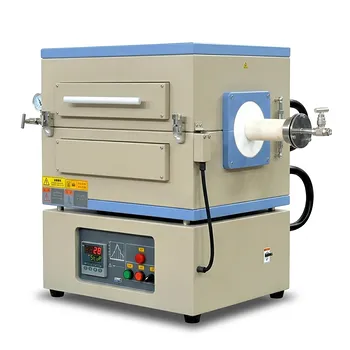
1500°C Split Tube Furnace with Alumina Tube and Vacuum Sealing Flanges for Material Research
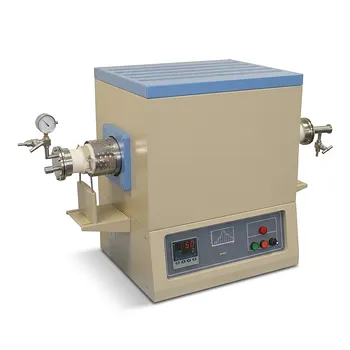
1700C High Temperature Alumina Tube Furnace with 18 Inch Heated Zone and Vacuum Sealing Flanges
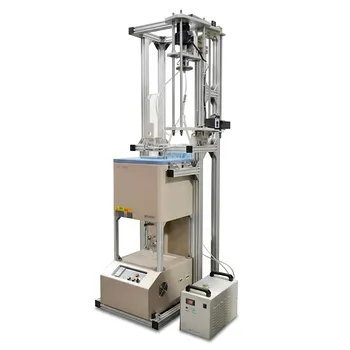
500C Vacuum Vertical Tube Furnace 84mm OD Sample Rotation Lifting System
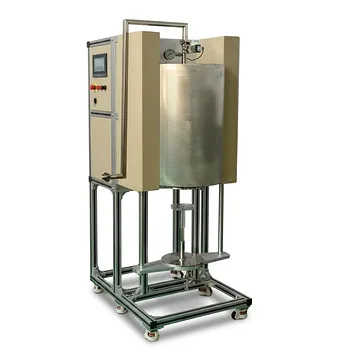
1200°C Atmosphere Controlled Automatic Bottom Loading Furnace with 6 Inch Quartz Tube

High Vacuum Compact Tube Furnace 1200C with Integrated Turbo Pump System and 8 Inch Heating Zone
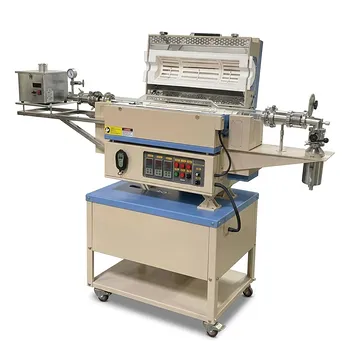
5 Inch Rotary Tube Furnace with Automatic Feeding and Receiving System 1200C Three Zone CVD Powder Processing