Why is a tube furnace preferred over a drying oven for corncob activation? Master High-Temp & Atmosphere Control
Updated 3 months ago
The fundamental difference between a tube furnace and a drying oven lies in their thermal limits and atmospheric control. Chemical activation of corncob requires temperatures starting at 500°C and a strictly oxygen-free environment to prevent the carbon from combusting. A tube furnace is designed for these high-temperature reactions under inert gases, whereas a standard drying oven is typically limited to low-temperature moisture removal in the presence of air.
Core Takeaway: A tube furnace is preferred because it creates a sealed, high-temperature environment (500°C–1100°C) that allows for the precise chemical etching of carbon without the risk of oxidation or loss of material.
The Critical Role of High-Temperature Capabilities
Exceeding the Limits of Conventional Ovens
Standard drying ovens are designed for moisture removal and rarely exceed 250°C to 300°C. Chemical activation of corncob carbon requires a minimum of 500°C to initiate the necessary structural changes and can reach up to 1100°C for advanced pore development.
Promoting Vigorous Chemical Reactions
High temperatures (700°C–900°C) are required to facilitate the interaction between activating agents like KOH or NaOH and the carbonized material. This thermal energy allows the agents to "ablate" or etch the carbon surface, which is the mechanism that creates the desired high surface area.
Efficient Removal of Volatile Matter
The intense heat provided by a tube furnace facilitates pyrolysis, which effectively removes organic volatiles from the biomass. This process enriches the carbon content and ensures the resulting material is thermally stable and structurally sound.
Atmospheric Control and Oxidation Prevention
Maintaining an Inert Environment
A tube furnace features superior sealing and gas flow design, allowing for the continuous introduction of protective gases like nitrogen or argon. This displaces oxygen, creating the precisely controlled atmosphere necessary for chemical activation.
Preventing Sample Combustion
If corncob carbon were heated to activation temperatures (500°C+) in a standard drying oven, the presence of oxygen would cause the carbon to oxidize and burn away. The tube furnace's oxygen-free environment ensures a high carbon yield by preventing this combustion.
Uniform Gas Distribution
Advanced furnace designs, such as vertical tube furnaces, ensure that protective or reactive gases pass uniformly through the sample bed. This consistent gas flow field leads to a more efficient etching of the carbon matrix and a more uniform final product.
Engineering the Pore Structure
Developing High Specific Surface Area
The precise environment of a tube furnace allows for the development of microporous and mesoporous structures. This can increase the specific surface area of the activated carbon to over 1900 m²/g, significantly improving its adsorption capacity.
Precision Control of Reaction Parameters
Unlike a drying oven, a tube furnace allows for the accurate manipulation of the heating rate and isothermal holding time. These parameters determine the intensity of the reaction between potassium ions and the carbon matrix, which directly dictates the final pore size distribution.
Facilitating Steam Activation
In some processes, a tube furnace is used to introduce high-temperature steam into the reaction chamber. This steam acts as a physical activating agent, etching the carbon structure to create abundant pores that are critical for applications like energy storage or carbon dioxide adsorption.
Understanding the Trade-offs
Equipment Complexity and Cost
Tube furnaces are significantly more expensive than drying ovens and require specialized training to operate safely. They also necessitate a constant supply of pressurized inert gas cylinders, adding to the operational overhead.
Capacity and Throughput
While a drying oven can accommodate large batches of material, a tube furnace is often limited by the inner diameter of the ceramic or quartz tube. This makes it ideal for precision laboratory work but challenging to scale up without significant industrial investment.
Safety Considerations
The combination of extremely high heat and pressurized gases introduces risks that are not present with drying ovens. Operators must carefully manage thermal expansion of the tube and ensure that gas exhaust is properly vented to prevent the buildup of volatile byproducts.
How to Apply This to Your Project
Making the Right Choice for Your Goal
- If your primary focus is simple moisture removal or pre-drying corncob: Use a standard drying oven, as it is more cost-effective and provides sufficient heat (100°C–110°C) for water evaporation.
- If your primary focus is producing high-surface-area activated carbon: You must use a tube furnace to provide the 500°C+ temperatures and inert nitrogen atmosphere required to prevent combustion and develop pores.
- If your primary focus is testing different chemical activating agents (like KOH): Utilize a tube furnace with precise temperature ramping controls to observe how different heating rates affect the integration of ions into the carbon matrix.
- If your primary focus is maximizing adsorption capacity for CO2 or energy storage: Use a high-purity tube furnace capable of reaching 900°C to ensure the most aggressive etching and development of micropores.
By selecting the tube furnace for the activation stage, you ensure that the chemical potential of the corncob precursor is fully realized through precise atmospheric and thermal control.
Summary Table:
| Feature | Standard Drying Oven | Tube Furnace | Importance for Activation |
|---|---|---|---|
| Max Temperature | Up to 250°C - 300°C | 500°C – 1200°C+ | Enables pyrolysis and chemical etching. |
| Atmosphere | Ambient Air (O2 present) | Sealed / Inert (Nitrogen/Argon) | Prevents carbon combustion and oxidation. |
| Main Function | Moisture removal & drying | Thermal synthesis & reactions | Creates specific pore structures (1900 m²/g). |
| Control | Standard heating | Precise PID ramping & gas flow | Dictates pore size distribution & quality. |
Unlock Superior Material Performance with THERMUNITS
Are you looking to elevate your material science research or industrial R&D? THERMUNITS is a leading manufacturer specializing in high-temperature laboratory equipment designed for precision and reliability.
We provide a comprehensive range of thermal processing solutions tailored for chemical activation, carbonization, and complex heat treatments, including:
- Tube & Rotary Furnaces for continuous and batch chemical activation.
- Vacuum & Atmosphere Furnaces for strictly oxygen-free environments.
- CVD/PECVD Systems and Vacuum Induction Melting (VIM) for advanced material synthesis.
- Specialized Muffle, Hot Press, and Dental Furnaces.
Whether you are scaling up corncob activated carbon production or developing new energy storage materials, our engineering experts are ready to help you select the ideal thermal system.
Ready to optimize your lab's efficiency? Contact THERMUNITS Today for a technical consultation and quote!
References
- Hasaruwani S. Kiridena, Dragan Isailović. Evaluation of Carbonized Corncobs for Removal of Microcystins and Nodularin-R from Water. DOI: 10.3390/separations11030084
Mentioned Products
- High Temperature Tube Furnace 1500C with Sliding Flanges and 50mm OD for Rapid Thermal Processing Fast Heating and Cooling
- Vertical 1700C Vacuum and Atmosphere Tube Furnace with 80mm Alumina Tube
- 1100C Tube Furnace with Vacuum Flange and Programmable Temperature Controller for Material Science and Industrial Heat Treatment
- Compact High Temperature 1600C Tube Furnace with 50mm Alumina Tube and Vacuum Flanges for Material Sintering
- 900°C Max Rotary Tube Furnace with 8 Inch 310S Alloy Tube and Optional Multi Zone Heating for Industrial Material Calcination
People Also Ask
- How are high-temperature tube furnaces utilized to repair etching damage? Precision Lattice Restoration Solutions
- What role does a high-temperature tube furnace play in CVD synthesis of silicon nanowires? Master VLS Growth Precision.
- What core conditions does a high-temperature tube furnace provide for rGO aerogels? Mastering Precision Synthesis.
- What role does a high-temperature tube furnace play in the sulfidation heat treatment of CoS@C/MXene nanocomposites? Guide
- How does precision tube furnace control influence CoFe nanoparticle formation? Master Your Bimetallic Synthesis.

Tech Team · ThermUnits
Last updated on Jun 03, 2026
Related Products

High Temperature Tube Furnace 1500C with Sliding Flanges and 50mm OD for Rapid Thermal Processing Fast Heating and Cooling

Vertical 1700C Vacuum and Atmosphere Tube Furnace with 80mm Alumina Tube

1100C Tube Furnace with Vacuum Flange and Programmable Temperature Controller for Material Science and Industrial Heat Treatment

Compact High Temperature 1600C Tube Furnace with 50mm Alumina Tube and Vacuum Flanges for Material Sintering
900°C Max Rotary Tube Furnace with 8 Inch 310S Alloy Tube and Optional Multi Zone Heating for Industrial Material Calcination
1700C Hydrogen Gas Tube Furnace with 60mm Alumina Process Tube and Integrated Hydrogen Safety Detector

High Temperature 1700C Tube Furnace with High Vacuum Turbomolecular Pump System and Multi Channel Mass Flow Controller Gas Mixer
5 Inch Three Zone Rotary Tube Furnace with Integrated Gas Delivery System and 1200C Capability for Advanced Material CVD Processing
Three Zone Tube Furnace with 11 Inch or 15 Inch Quartz Tube and Hinged Flanges for Vacuum Atmosphere Heat Treatment
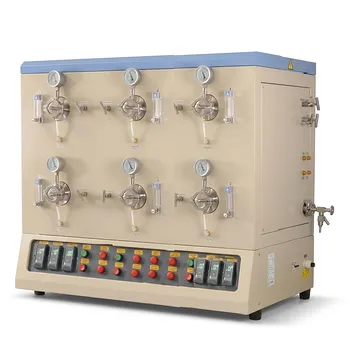
1200C High Throughput Multi Channel Tube Furnace with 50mm Quartz Tubes for Annealing and Material Phase Diagram Research
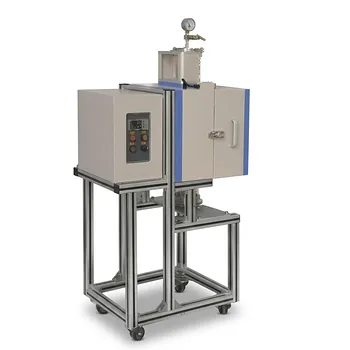
1200°C 5 Inch Vertical Quartz Tube Furnace with Stainless Steel Vacuum Flanges
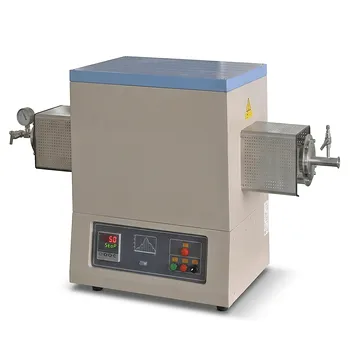
High Temperature 1700C Tube Furnace with 4 Inch OD Alumina Tube and Vacuum Sealing Flanges

High Temperature 1700C Benchtop Tube Furnace with 5 Inch Heating Zone High Purity Alumina Tube and Vacuum Sealing Flanges

High Temperature 1700C Six Zone Split Tube Furnace with Alumina Tube and Water Cooled Flanges

Compact Vertical Split Quartz Tube Furnace with Stainless Steel Vacuum Flanges for Rapid Thermal Quenching and Controlled Atmosphere Material Processing

1800C High Temperature Compact Vacuum Tube Furnace with 60mm OD Alumina Tube and Kanthal MoSi2 Heating Elements
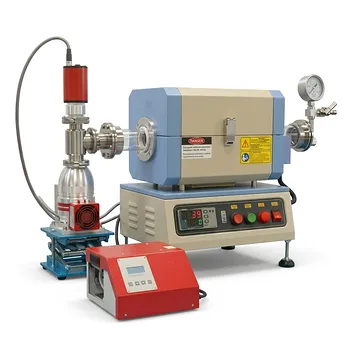
High Vacuum Compact Tube Furnace 1200C with Integrated Turbo Pump System and 8 Inch Heating Zone
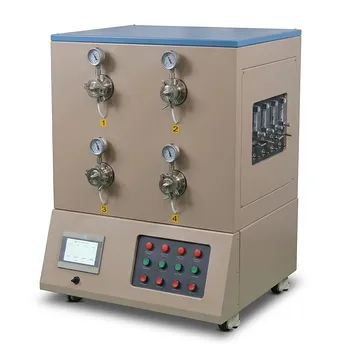
High Throughput 1200C Four Channel Tube Furnace with 3 Inch Quartz Tubes for Multi Zone Annealing and Material Research

High Temperature Automated 5 Inch Tube Furnace for Autonomous Material Research and Advanced Laboratory R&D
