Why is a tube furnace used with nitrogen gas for tea waste biochar? Mastering Pyrolysis for Superior Carbon Yield
Updated 3 months ago
The integration of a tube furnace and nitrogen gas is the critical foundation for tea waste pyrolysis. This setup provides the precise thermal control and inert environment necessary to prevent biomass combustion, ensuring the organic material undergoes carbonization rather than burning. By maintaining an oxygen-free atmosphere at temperatures typically around 700°C, the process successfully transforms tea waste into biochar with a high specific surface area and a stable structural framework.
Core Takeaway: A tube furnace used with nitrogen gas enables "anaerobic thermal decomposition," a process that prevents the oxidation of biomass and allows for the precise development of the biochar’s carbon structure and porosity.
The Role of the Tube Furnace: Precise Thermal Regulation
Maintaining Stable High Temperatures
The primary function of an industrial-grade tube furnace is to provide a stable, high-temperature environment required for thermochemical degradation. For tea waste biochar (TBC), this often involves reaching temperatures between 600°C and 800°C.
Controlled Heating Rates and Dwell Times
Pyrolysis is highly sensitive to how quickly the material is heated, often requiring specific rates like 10°C/min. The tube furnace allows researchers to program these rates and maintain specific isothermal durations (dwell times) to ensure the biomass is processed uniformly.
The Quartz Tube as a Reaction Vessel
High-purity quartz tubes within the furnace serve as heat-resistant reaction vessels. These tubes can withstand significant thermal shocks while providing a strictly sealed environment that prevents atmospheric leaks during the carbonization process.
The Function of Nitrogen Gas: Atmospheric Control
Creating an Inert Environment
Nitrogen gas acts as a protective shielding gas that creates an oxygen-free or oxygen-deficient atmosphere. Before the heating begins, nitrogen is used to purge residual air from the system, ensuring no oxygen remains to react with the biomass.
Preventing Oxidative Combustion
Without nitrogen, the biomass would undergo combustion (burning) at high temperatures, resulting in ash rather than biochar. The nitrogen flow ensures the material undergoes pyrolysis, which is the thermal decomposition of organic matter in the absence of oxygen.
Optimizing Pore Structure and Carbon Yield
The inert atmosphere is essential for the complete development of the pore structure and a high specific surface area. By preventing oxidation, nitrogen ensures a high fixed carbon yield and maintains the chemical stability of the final biochar product.
Understanding the Trade-offs and Limitations
Gas Consumption and Cost
Maintaining a continuous flow of industrial-grade nitrogen throughout the heating and cooling phases can be cost-prohibitive for large-scale operations. Any interruption in the gas flow during the high-temperature phase can lead to immediate oxidation and the loss of the entire batch.
Complexity of Sealing
While the tube furnace is excellent for small to medium batches, ensuring a perfect seal at high temperatures can be technically challenging. Even minor leaks can introduce oxygen, which degrades the pore structure and reduces the energy storage capacity of the resulting biochar.
Thermal Gradient Issues
In larger tube furnaces, there is a risk of thermal gradients, where the center of the tea waste mass may not reach the same temperature as the exterior. This can lead to non-uniform carbonization, resulting in a product with inconsistent chemical and physical properties.
How to Optimize Pyrolysis for Your Goals
Application-Specific Strategies
- If your primary focus is High Energy Storage Capacity: Prioritize precise control over heating rates and maximize dwell times to fully develop the micro-pore structure.
- If your primary focus is Maximum Biochar Yield: Operate at the lower end of the temperature spectrum (e.g., 400°C–500°C) to facilitate slow pyrolysis and minimize the loss of volatile matter.
- If your primary focus is Chemical Stability and Fixed Carbon: Utilize higher temperatures (700°C+) and ensure a high-purity nitrogen purge to eliminate all traces of oxygen during the cooling phase.
The synergy between the tube furnace's thermal precision and nitrogen's atmospheric protection is what transforms simple tea waste into a high-performance carbon material.
Summary Table:
| Component | Role in Pyrolysis | Key Benefit |
|---|---|---|
| Tube Furnace | Precise Thermal Regulation | Ensures uniform heating and controlled carbonization rates (e.g., 10°C/min). |
| Nitrogen Gas | Inert Atmosphere Creation | Prevents oxidative combustion, turning biomass into biochar instead of ash. |
| Quartz Tube | Sealed Reaction Vessel | Provides a high-purity environment resistant to thermal shock and oxygen leaks. |
| Nitrogen Flow | Purging & Protection | Optimizes specific surface area and maintains high fixed carbon stability. |
Elevate your biochar research and material synthesis with THERMUNITS, a premier manufacturer of high-temperature laboratory equipment for material science and industrial R&D. Our precision-engineered Tube, Vacuum, and Atmosphere Furnaces provide the exact thermal control and atmospheric purity required for advanced pyrolysis and CVD/PECVD processes. Whether you are developing sustainable energy solutions or high-performance carbon materials, our comprehensive range—including Muffle, Rotary, Hot Press, and Vacuum Induction Melting (VIM) Furnaces—is designed for peak efficiency. Contact THERMUNITS today to find the perfect thermal processing solution for your laboratory needs.
References
- Wei Li, Jian Xiong. Preparation of Lanthanum-Modified Tea Waste Biochar and Its Adsorption Performance on Fluoride in Water. DOI: 10.3390/ma17030766
Mentioned Products
- High Temperature Tube Furnace 1500C with Sliding Flanges and 50mm OD for Rapid Thermal Processing Fast Heating and Cooling
- Vertical 1700C Vacuum and Atmosphere Tube Furnace with 80mm Alumina Tube
- 1100C Tube Furnace with Vacuum Flange and Programmable Temperature Controller for Material Science and Industrial Heat Treatment
- Compact High Temperature 1600C Tube Furnace with 50mm Alumina Tube and Vacuum Flanges for Material Sintering
- 900°C Max Rotary Tube Furnace with 8 Inch 310S Alloy Tube and Optional Multi Zone Heating for Industrial Material Calcination
People Also Ask
- How are high-temperature tube furnaces utilized to repair etching damage? Precision Lattice Restoration Solutions
- What role does a high-temperature tube furnace play in CVD synthesis of silicon nanowires? Master VLS Growth Precision.
- What core conditions does a high-temperature tube furnace provide for rGO aerogels? Mastering Precision Synthesis.
- What role does a high-temperature tube furnace play in the sulfidation heat treatment of CoS@C/MXene nanocomposites? Guide
- How does precision tube furnace control influence CoFe nanoparticle formation? Master Your Bimetallic Synthesis.

Tech Team · ThermUnits
Last updated on Jun 03, 2026
Related Products

High Temperature Tube Furnace 1500C with Sliding Flanges and 50mm OD for Rapid Thermal Processing Fast Heating and Cooling

Vertical 1700C Vacuum and Atmosphere Tube Furnace with 80mm Alumina Tube

1100C Tube Furnace with Vacuum Flange and Programmable Temperature Controller for Material Science and Industrial Heat Treatment

Compact High Temperature 1600C Tube Furnace with 50mm Alumina Tube and Vacuum Flanges for Material Sintering
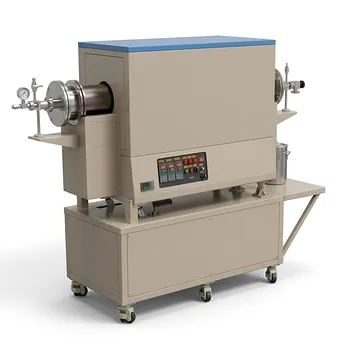
900°C Max Rotary Tube Furnace with 8 Inch 310S Alloy Tube and Optional Multi Zone Heating for Industrial Material Calcination

1700C Hydrogen Gas Tube Furnace with 60mm Alumina Process Tube and Integrated Hydrogen Safety Detector

High Temperature 1700C Tube Furnace with High Vacuum Turbomolecular Pump System and Multi Channel Mass Flow Controller Gas Mixer

5 Inch Three Zone Rotary Tube Furnace with Integrated Gas Delivery System and 1200C Capability for Advanced Material CVD Processing

Three Zone Tube Furnace with 11 Inch or 15 Inch Quartz Tube and Hinged Flanges for Vacuum Atmosphere Heat Treatment
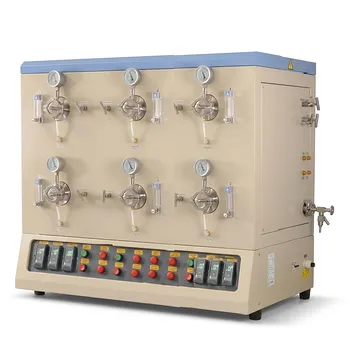
1200C High Throughput Multi Channel Tube Furnace with 50mm Quartz Tubes for Annealing and Material Phase Diagram Research

1200°C 5 Inch Vertical Quartz Tube Furnace with Stainless Steel Vacuum Flanges
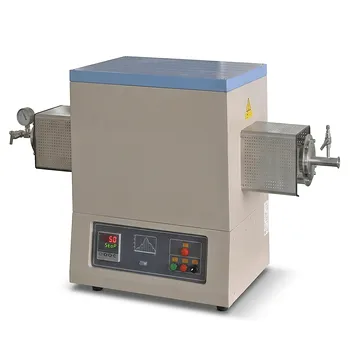
High Temperature 1700C Tube Furnace with 4 Inch OD Alumina Tube and Vacuum Sealing Flanges

High Temperature 1700C Benchtop Tube Furnace with 5 Inch Heating Zone High Purity Alumina Tube and Vacuum Sealing Flanges

High Temperature 1700C Six Zone Split Tube Furnace with Alumina Tube and Water Cooled Flanges

Compact Vertical Split Quartz Tube Furnace with Stainless Steel Vacuum Flanges for Rapid Thermal Quenching and Controlled Atmosphere Material Processing

1800C High Temperature Compact Vacuum Tube Furnace with 60mm OD Alumina Tube and Kanthal MoSi2 Heating Elements
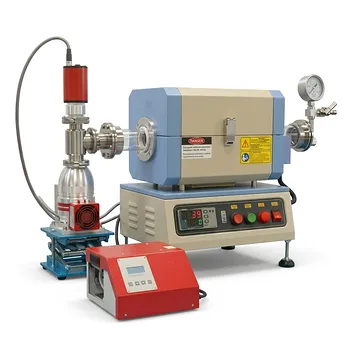
High Vacuum Compact Tube Furnace 1200C with Integrated Turbo Pump System and 8 Inch Heating Zone
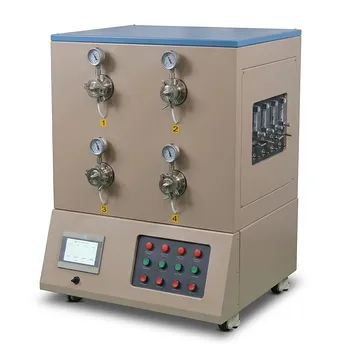
High Throughput 1200C Four Channel Tube Furnace with 3 Inch Quartz Tubes for Multi Zone Annealing and Material Research

High Temperature Automated 5 Inch Tube Furnace for Autonomous Material Research and Advanced Laboratory R&D
