Why is an argon-protected tube furnace required for eggplant carbonization? Master Pyrolysis & Biomass Templates
Updated 3 months ago
Using an argon-protected tube atmosphere furnace is critical because it facilitates pyrolysis while preventing combustion. At the required carbonization temperature of 800 °C, the presence of any oxygen would cause the eggplant tissue to oxidize and turn into ash rather than a functional carbon template. The furnace creates a strictly anaerobic environment that preserves the eggplant's structural integrity while converting its organic components into amorphous carbon.
Core Takeaway: The argon-protected furnace serves as a controlled reactor that removes oxygen to prevent the biomass from burning, allowing for the precise thermal decomposition (pyrolysis) required to transform organic tissue into a stable, porous carbon skeleton.
Preventing Oxidative Burnout at High Temperatures
The Danger of Oxygen in High-Heat Environments
At 800 °C, biomass like eggplant is highly reactive and will undergo combustion if exposed to even trace amounts of oxygen. The primary role of the furnace is to displace oxygen and moisture using high-purity argon, ensuring the material does not simply burn away.
Maximizing Carbon Yield
By maintaining a strictly inert atmosphere, the furnace ensures that the organic molecules are stripped of volatile components without losing the underlying carbon. This process, known as pyrolysis, maximizes the final yield of the carbon material by preventing the carbon atoms from bonding with oxygen to form CO2 gas.
Protecting Microscopic Morphology
The eggplant’s cellular structure is what makes it a valuable template for biomass-based carbons. The argon shield protects the microscopic morphology and nanofibers from oxidative degradation, ensuring the final product retains the intended structural defects and surface area.
Precise Control of the Carbonization Process
Converting Organics to Amorphous Carbon
The tube furnace provides a stable thermal environment where organic components are fully converted into amorphous carbon. This transition is essential for creating a conductive and chemically stable carbon framework that can be used in advanced technical applications.
Managing Volatile Removal
During the heating process, various gases are released as the eggplant tissue decomposes. The continuous flow of argon acts as a carrier, safely removing these volatile components from the tube while maintaining a constant pressure and preventing backflow of atmospheric air.
Temperature Ramp and Uniformity
The "tube" design of the furnace allows for precise temperature ramp rates and uniform heat distribution. This consistency is vital to ensure that the entire eggplant sample carbonizes at the same rate, preventing structural warping or incomplete conversion of the internal tissues.
Understanding the Trade-offs and Limitations
Argon vs. Nitrogen Protection
While both are inert gases, Argon is often preferred over Nitrogen for specific high-temperature applications because it is truly noble and less likely to react with certain precursors. However, Argon is significantly more expensive than Nitrogen, which can increase the operational costs of large-scale production.
Risks of System Leaks
The effectiveness of the process is entirely dependent on the airtight integrity of the tube furnace. Even a minor leak in the seals or gas lines can introduce oxygen, leading to the partial oxidation of the sample and a total loss of the desired pore structure and surface properties.
Sensitivity to Heating Rates
If the temperature is increased too rapidly, the rapid release of volatile gases can create internal pressure that ruptures the biomass skeleton. While the argon protects the chemistry, the user must still carefully calibrate the furnace’s programmed ramp rates to preserve the template's physical form.
How to Apply This to Your Project
Recommendations Based on Your Research Goals
- If your primary focus is maximizing surface area: Ensure a high flow rate of argon during the 500 °C to 800 °C transition to efficiently clear volatile byproducts that might otherwise block pore formation.
- If your primary focus is structural replication: Use a slow temperature ramp rate (e.g., 2–5 °C/min) within the tube furnace to allow gases to escape the eggplant tissue without causing mechanical stress or cracks.
- If your primary focus is cost-efficiency: Evaluate if high-purity Nitrogen can replace Argon for your specific biomass, as it provides a similar inert environment at a lower price point, provided the material does not require a strictly noble atmosphere.
By mastering the atmosphere and thermal profile of the tube furnace, you can successfully transform common biomass into sophisticated, high-performance carbon templates.
Summary Table:
| Feature | Function in Carbonization | Benefit to Final Product |
|---|---|---|
| Argon Atmosphere | Displaces oxygen and moisture | Prevents combustion and ash formation |
| Pyrolysis (800 °C) | Thermal decomposition of organics | Converts biomass into amorphous carbon |
| Tube Design | Precise temperature ramp/uniformity | Preserves microscopic morphology/pores |
| Carrier Gas Flow | Removes volatile decomposition gases | Ensures purity and structural integrity |
Elevate Your Research with THERMUNITS
Precision is paramount when transforming biomass into high-performance carbon templates. THERMUNITS is a leading manufacturer of high-temperature laboratory equipment for material science and industrial R&D. We offer a comprehensive range of thermal processing solutions, including Tube, Atmosphere, Vacuum, Muffle, and Rotary furnaces, as well as CVD/PECVD systems and Thermal Elements.
Whether you are performing sensitive pyrolysis or complex heat treatments, our equipment ensures the strictly controlled environments your materials require. Contact our experts today to discuss how our advanced furnace solutions can optimize your laboratory's R&D outcomes.
References
- Chunxue Zheng, Yue Li. Biomass-derived lightweight SiC aerogels for superior thermal insulation. DOI: 10.1039/d3nr06076d
Mentioned Products
- Vertical 1700C Vacuum and Atmosphere Tube Furnace with 80mm Alumina Tube
- 1750°C High Temperature Benchtop Vacuum Atmosphere Tube Furnace with Kanthal Super 1800 Heating Elements and 60mm Alumina Processing Tube
- Compact Vertical Split Quartz Tube Furnace with Stainless Steel Vacuum Flanges for Rapid Thermal Quenching and Controlled Atmosphere Material Processing
- 1700C High Temperature Alumina Tube Furnace with 18 Inch Heated Zone and Vacuum Sealing Flanges
- 1200C Hybrid Muffle and Tube Furnace for Material Research with Dual Atmosphere Control Quartz Tubes
People Also Ask
- How is an industrial-grade vertical tube furnace utilized in smelting leaching residues? Enhance Metal Recovery Efficiency
- What is the function of a laboratory-grade vertical tube furnace in fast pyrolysis? Optimize Composite Research.
- How does a vertical tube furnace facilitate thermoelectric alloy melting? Precision synthesis for material homogeneity.
- Why is a thermocouple sensor indispensable for monitoring the vertical tube furnace during gallium oxide nanowire production? Optimize VLS Growth
- What are the advantages of using a vertical tube furnace for crucible experiments simulating steel-slag interactions?

Tech Team · ThermUnits
Last updated on Jun 02, 2026
Related Products

Vertical 1700C Vacuum and Atmosphere Tube Furnace with 80mm Alumina Tube
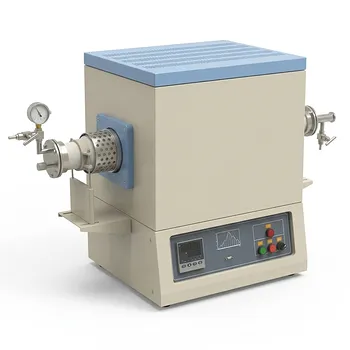
1750°C High Temperature Benchtop Vacuum Atmosphere Tube Furnace with Kanthal Super 1800 Heating Elements and 60mm Alumina Processing Tube

Compact Vertical Split Quartz Tube Furnace with Stainless Steel Vacuum Flanges for Rapid Thermal Quenching and Controlled Atmosphere Material Processing
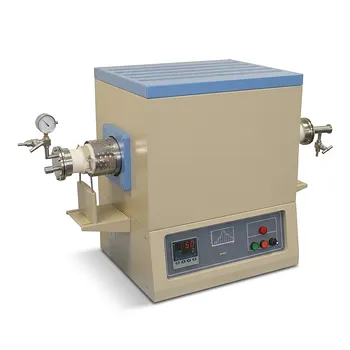
1700C High Temperature Alumina Tube Furnace with 18 Inch Heated Zone and Vacuum Sealing Flanges
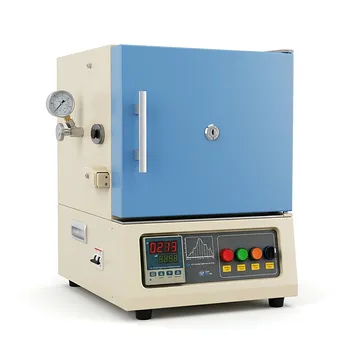
1200C Hybrid Muffle and Tube Furnace for Material Research with Dual Atmosphere Control Quartz Tubes

Three Zone Tube Furnace with 11 Inch or 15 Inch Quartz Tube and Hinged Flanges for Vacuum Atmosphere Heat Treatment
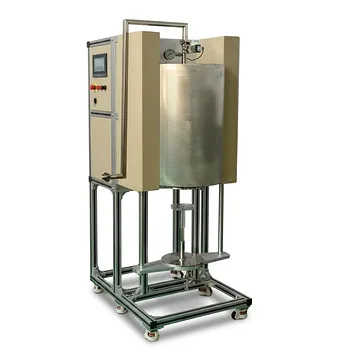
1200°C Atmosphere Controlled Automatic Bottom Loading Furnace with 6 Inch Quartz Tube
Compact Hybrid Muffle and Tube Furnace for 1000C Controlled Atmosphere Laboratory Material Sintering
1100°C High Temperature Quartz Chamber Furnace 8 Inch OD with 7.6 Liter Capacity and Vacuum Atmosphere Capability

1700C Hydrogen Gas Tube Furnace with 60mm Alumina Process Tube and Integrated Hydrogen Safety Detector

High Temperature 1700C Six Zone Split Tube Furnace with Alumina Tube and Water Cooled Flanges

1800C High Temperature Compact Vacuum Tube Furnace with 60mm OD Alumina Tube and Kanthal MoSi2 Heating Elements

High Temperature 1700C Benchtop Tube Furnace with 5 Inch Heating Zone High Purity Alumina Tube and Vacuum Sealing Flanges

1200°C 5 Inch Vertical Quartz Tube Furnace with Stainless Steel Vacuum Flanges
1200C Hydrogen Atmosphere Box Furnace with 5 Heated Sides and 64L Chamber
1500C Compact Hydrogen Gas Tube Furnace with 2 Inch Alumina Tube and Hydrogen Detector
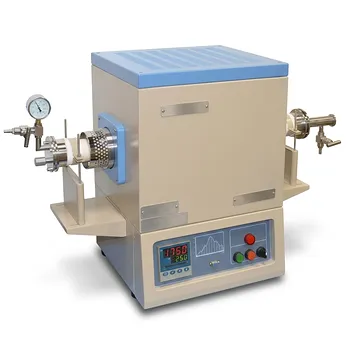
High Temperature Compact Vacuum Tube Furnace 1750C Max 60mm OD Alumina Tube
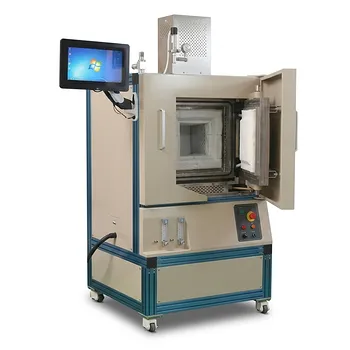
High Temperature Oxygen and Inert Atmosphere Controlled Furnace 8 Liter 1700C Sintering System for Advanced Materials RD
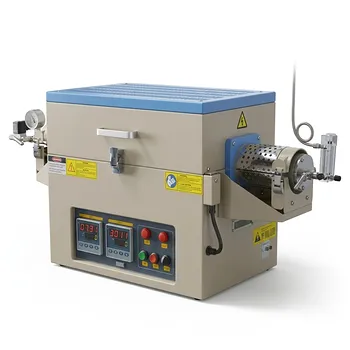
1100C Dual Zone Hydrogen Gas Tube Furnace with Quartz Tube and Integrated H2 Leak Detection System
