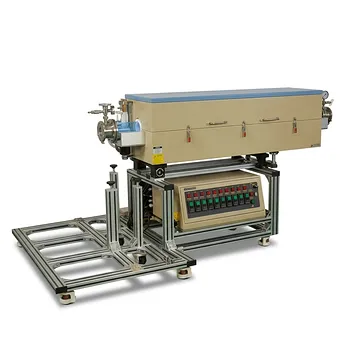
Why is an atmosphere tube furnace essential for lignin carbonization? Unlock High-Purity Graphene & Carbon Structures
Updated 3 months ago
The atmosphere tube furnace is the indispensable catalyst for lignin carbonization because it provides a strictly controlled, oxygen-free environment that allows lignin to reach temperatures up to 1200°C without burning. This specialized equipment facilitates the precise chemical transitions—such as dehydrogenation and polycondensation—required to reorganize amorphous lignin into high-purity carbon structures, including graphene microcrystalline fragments and hard carbon.
An atmosphere tube furnace serves as a protected high-temperature reactor that prevents oxidative combustion while enabling the molecular restructuring of lignin into a stable, conductive carbon skeleton. It is the only way to ensure the resulting material retains the ideal microscopic architecture for advanced applications.
The Critical Role of an Inert Atmosphere
Preventing Oxidative Combustion
At the high temperatures required for carbonization (600°C to 1200°C), lignin will immediately undergo oxidative combustion if any oxygen is present. The tube furnace creates a strictly sealed environment where high-purity nitrogen or argon acts as a protective shield, ensuring the material carbonizes rather than turns to ash.
Facilitating Chemical Etching and Activation
In stages involving chemical agents like potassium hydroxide (KOH), the inert atmosphere is vital for precision. It allows these agents to precisely act on the carbon framework to create specific microporous and mesoporous structures without the interference of uncontrolled atmospheric reactions.
Precision Thermal Control and Molecular Reorganization
Removal of Heteroatoms
The furnace provides a stable thermal field that allows for the thorough elimination of heteroatoms such as oxygen and hydrogen. By maintaining specific temperatures (e.g., 600°C) for several hours, the furnace ensures that these atoms are driven off, leaving behind a high-purity carbon skeleton.
Formation of Graphene Microcrystalline Fragments
High-temperature treatment within the furnace facilitates the reorganization of sp2/sp3 hybridized structures. This process transforms organic precursors into graphene microcrystalline fragments, which are essential for creating the "hard carbon" used in battery anodes and other high-performance materials.
Facilitating Deep Structural Graphitization
When temperatures exceed 1000°C, the furnace enables deep structural reorganization, moving beyond simple carbonization toward graphitization. This transition is marked by the development of distinct (002) crystal planes, which optimize interlayer spacing and increase the overall crystallinity of the material.
Engineering Material Properties
Ensuring Uniformity in Carbon Nanofibers
For applications like electrospun membranes, the tube furnace's ability to control the heating curve is paramount. Precise temperature ramps and "soak" times ensure that the resulting carbon nanofibers have a uniform internal structure and stable chemical properties.
Developing Conductive Networks
The uniform temperature field of a tube furnace is critical for the thermal decomposition of organic components. This results in a carbon fiber skeleton with high electrical conductivity and a high aspect ratio, which serves as the foundation for electromagnetic wave absorption and photothermal conversion.
Understanding the Trade-offs and Pitfalls
Gas Flow Dynamics and Sealing Risks
While the atmosphere is "inert," the rate of gas flow can significantly impact the cooling rate and the removal of volatile byproducts. If the flow is too low, secondary carbon deposition may occur; if the seals are compromised, even a trace of oxygen can destroy the microscopic pore structure of the sample.
Thermal Gradient Limitations
In larger tube furnaces, a thermal gradient can exist between the center of the tube and the ends. This can lead to non-uniform carbonization if the sample boat is too long or improperly placed, potentially resulting in a batch of material with inconsistent conductivity and purity.
Making the Right Choice for Your Goal
To achieve the best results with lignin carbonization, you must align your furnace parameters with your specific material objectives.
- If your primary focus is High Electrical Conductivity: Prioritize temperatures above 1000°C in an argon atmosphere to facilitate maximum graphitization and crystal plane alignment.
- If your primary focus is Porous Hard Carbon for Batteries: Focus on precise heating curves and the introduction of chemical etching agents under a strict nitrogen flow at 700°C to 900°C.
- If your primary focus is Carbon Nanofiber Uniformity: Ensure the furnace has a long "constant temperature zone" and use slow heating ramps to prevent structural defects during heteroatom removal.
The atmosphere tube furnace is not merely a heater, but a sophisticated chemical reactor that dictates the final molecular architecture of biomass-derived carbon.
Summary Table:
| Carbonization Stage | Furnace Function | Key Material Outcome |
|---|---|---|
| Heteroatom Removal | Eliminates O and H atoms at 600°C+ | High-purity carbon skeleton |
| Pore Formation | Facilitates chemical etching/activation | High-surface-area hard carbon |
| Graphitization | High-temp restructuring (>1000°C) | Graphene microcrystalline fragments |
| Structural Stability | Precise heating curves & cooling | Uniform, defect-free nanofibers |
Advance Your Material Science Research with THERMUNITS
As a leading manufacturer of high-temperature laboratory equipment, THERMUNITS provides the precision thermal processing solutions required for cutting-edge industrial R&D. Our extensive range includes Atmosphere Tube Furnaces, Vacuum and Muffle Furnaces, CVD/PECVD systems, and Vacuum Induction Melting (VIM) units, all engineered to deliver the strictly controlled environments essential for biomass carbonization and advanced heat treatments.
Whether you are developing high-performance battery anodes, dental ceramics, or conductive carbon nanofibers, our equipment ensures the molecular purity and structural integrity your materials demand. Contact us today to find your ideal thermal solution!
References
- Siyu Long, Qi-Shi Du. Study on the lignin-derived sp2–sp3 hybrid hard carbon materials and the feasibility for industrial production. DOI: 10.1038/s41598-024-54190-x
Mentioned Products
- Vertical 1700C Vacuum and Atmosphere Tube Furnace with 80mm Alumina Tube
- 1750°C High Temperature Benchtop Vacuum Atmosphere Tube Furnace with Kanthal Super 1800 Heating Elements and 60mm Alumina Processing Tube
- 1200C Hybrid Muffle and Tube Furnace for Material Research with Dual Atmosphere Control Quartz Tubes
- Compact Hybrid Muffle and Tube Furnace for 1000C Controlled Atmosphere Laboratory Material Sintering
- Three Zone Tube Furnace with 11 Inch or 15 Inch Quartz Tube and Hinged Flanges for Vacuum Atmosphere Heat Treatment
People Also Ask
- How is an industrial-grade vertical tube furnace utilized in smelting leaching residues? Enhance Metal Recovery Efficiency
- What is the function of a laboratory-grade vertical tube furnace in fast pyrolysis? Optimize Composite Research.
- How does a vertical tube furnace facilitate thermoelectric alloy melting? Precision synthesis for material homogeneity.
- Why is a thermocouple sensor indispensable for monitoring the vertical tube furnace during gallium oxide nanowire production? Optimize VLS Growth
- What are the advantages of using a vertical tube furnace for crucible experiments simulating steel-slag interactions?

Tech Team · ThermUnits
Last updated on Jun 03, 2026
Related Products

Vertical 1700C Vacuum and Atmosphere Tube Furnace with 80mm Alumina Tube
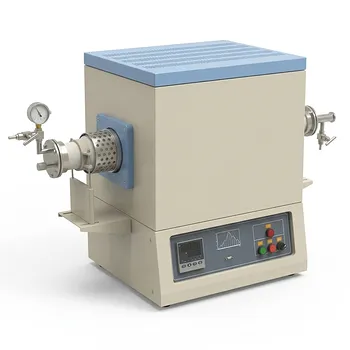
1750°C High Temperature Benchtop Vacuum Atmosphere Tube Furnace with Kanthal Super 1800 Heating Elements and 60mm Alumina Processing Tube
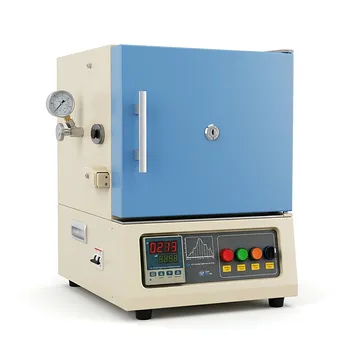
1200C Hybrid Muffle and Tube Furnace for Material Research with Dual Atmosphere Control Quartz Tubes
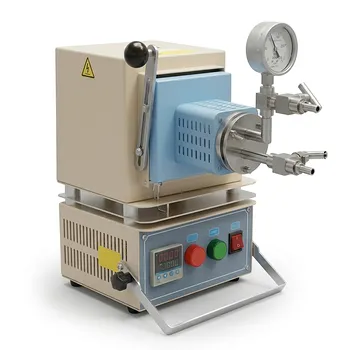
Compact Hybrid Muffle and Tube Furnace for 1000C Controlled Atmosphere Laboratory Material Sintering

Three Zone Tube Furnace with 11 Inch or 15 Inch Quartz Tube and Hinged Flanges for Vacuum Atmosphere Heat Treatment
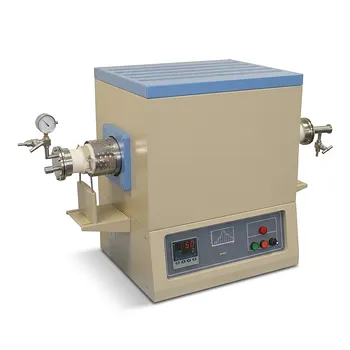
1700C High Temperature Alumina Tube Furnace with 18 Inch Heated Zone and Vacuum Sealing Flanges
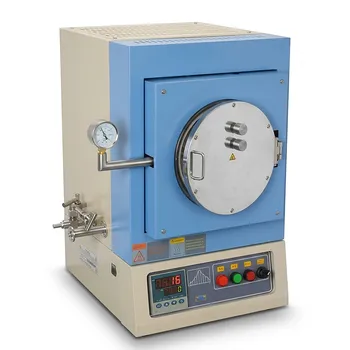
1100°C High Temperature Quartz Chamber Furnace 8 Inch OD with 7.6 Liter Capacity and Vacuum Atmosphere Capability
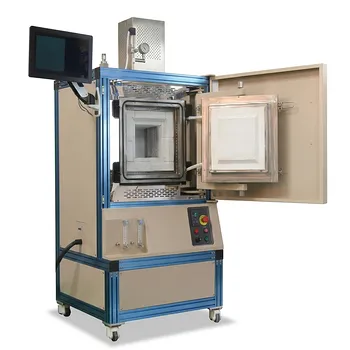
High Temperature Hydrogen Atmosphere Box Furnace 1650C Max Reducing Environment Material Synthesis System 8x8x8 Chamber

1200°C 5 Inch Vertical Quartz Tube Furnace with Stainless Steel Vacuum Flanges
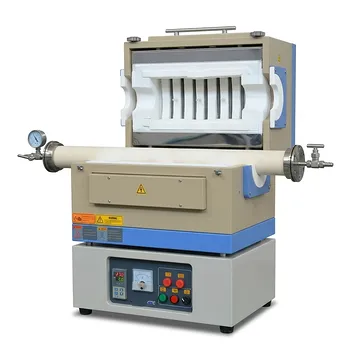
High Temperature 1600C Split Tube Furnace Vacuum Flanges Valves Optional 60mm 80mm Alumina Tube

High Temperature 1700C Tube Furnace with High Vacuum Turbomolecular Pump System and Multi Channel Mass Flow Controller Gas Mixer

1100C Tube Furnace with Vacuum Flange and Programmable Temperature Controller for Material Science and Industrial Heat Treatment

High Temperature 1700C Vertical Tube Furnace for Powder Spherification and Material Sintering

Compact High Temperature 1600C Tube Furnace with 50mm Alumina Tube and Vacuum Flanges for Material Sintering

High Temperature 1700C Six Zone Split Tube Furnace with Alumina Tube and Water Cooled Flanges

1800C High Temperature Compact Vacuum Tube Furnace with 60mm OD Alumina Tube and Kanthal MoSi2 Heating Elements

1700C Hydrogen Gas Tube Furnace with 60mm Alumina Process Tube and Integrated Hydrogen Safety Detector

High Temperature 1700C Benchtop Tube Furnace with 5 Inch Heating Zone High Purity Alumina Tube and Vacuum Sealing Flanges

High Temperature Automated 5 Inch Tube Furnace for Autonomous Material Research and Advanced Laboratory R&D