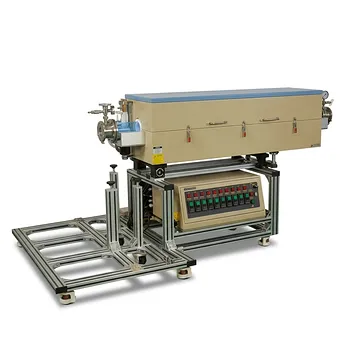
Why is an atmosphere tube furnace required for biomass pyrolysis? Unlock High-Yield Carbon-Based Char Synthesis
Updated 3 months ago
An atmosphere tube furnace is the fundamental tool for biomass pyrolysis because it isolates the material from oxygen while maintaining precise thermal conditions. Without this specific equipment, biomass heated to high temperatures would simply undergo oxidative combustion and turn into ash rather than carbonizing into high-value char.
The primary role of an atmosphere tube furnace is to create a strictly anaerobic, high-temperature environment that forces biomass to undergo thermal degradation instead of burning. This process preserves the carbon skeleton, maximizes carbon yield, and enables the precise engineering of the material's internal pore structure and chemical reactivity.
The Necessity of an Anaerobic Environment
Preventing Oxidative Combustion
At temperatures ranging from 400°C to 900°C, biomass naturally reacts with oxygen to ignite. An atmosphere tube furnace provides a strictly airtight environment that prevents this aerobic combustion. By excluding oxygen, the furnace ensures the material undergoes carbonization—the enrichment of carbon elements—rather than being consumed by flames.
Maintaining Inert Gas Integrity
The furnace utilizes a sealed pipeline to introduce high-purity inert gases, such as argon or nitrogen. This continuous flow of protective gas displaces oxygen and creates the necessary anaerobic conditions. This environment is critical for the organic components to decompose into a stable, solid carbon structure without interference from atmospheric gases.
Precise Thermal Control and Carbonization
Facilitating Thermal Degradation
Successful pyrolysis requires a stable and highly controlled heating environment. The tube furnace allows for precise temperature control, which facilitates the dehydration and thermal decomposition of raw biomass. This process systematically removes volatile components, leaving behind a solid skeletal structure essential for high-quality char.
Engineering the Carbon Skeleton
The ability to regulate heating rates and peak temperatures is vital for constructing hierarchical pore structures. By controlling the thermal environment, researchers can precisely develop micropores and mesopores within the carbon. This level of control ensures that the resulting char has the high reactive activity and porosity required for advanced applications like chemical activation or material science substrates.
Ensuring Material Quality and Yield
Maximizing Carbon Yield and Purity
An atmosphere tube furnace ensures that the biomass undergoes only the desired chemical reactions, such as dehydration and carbonization. This focus on specific chemical pathways maximizes the fixed carbon content while minimizing loss. The result is a high-yield, stable biochar that retains the potential for further chemical activation.
Achieving Temperature Field Uniformity
The design of a tube furnace ensures excellent temperature field uniformity, meaning the biomass is heated evenly across the entire sample. This consistency is critical for producing biochar with uniform physical and chemical properties. Uniform heating prevents "cold spots" that could lead to incomplete carbonization or "hot spots" that might damage the carbon skeleton.
Understanding the Trade-offs and Limitations
High Operational Complexity
Operating an atmosphere tube furnace requires rigorous attention to sealing and gas flow rates. Any leak in the system can introduce oxygen, leading to sample loss or potential safety hazards at high temperatures. Furthermore, the reliance on high-purity gases like argon increases the overall operational cost compared to standard muffle furnaces.
Scale and Throughput Constraints
Tube furnaces are typically designed for batch processing of relatively small samples. While they provide superior control for research and high-precision synthesis, they are not naturally suited for high-volume industrial production. Transitioning from laboratory-scale tube furnaces to industrial pyrolysis requires significant engineering to maintain the same level of atmosphere purity and thermal precision.
How to Apply This to Your Project
Recommendations for Synthesis Goals
- If your primary focus is high-porosity activated carbon: Prioritize a furnace with high-precision gas flow controllers to ensure a stable reaction between the activator and the carbon precursor.
- If your primary focus is maximizing biochar yield: Focus on a system with highly accurate heating rate controls to prevent the rapid release of volatiles that can disrupt the carbon skeleton.
- If your primary focus is composite material synthesis: Ensure the furnace provides excellent temperature uniformity to facilitate the even conversion of metallic salts into nano-scale particles within the carbon matrix.
The atmosphere tube furnace remains the gold standard for biomass pyrolysis by providing the vacuum-tight, inert, and thermally stable environment necessary to transform raw organic matter into engineered carbon materials.
Summary Table:
| Feature | Role in Pyrolysis | Key Benefit |
|---|---|---|
| Anaerobic Sealing | Excludes oxygen to prevent combustion | Transforms biomass to char instead of ash |
| Inert Gas Control | Displaces air with Ar/N₂ | Ensures chemical purity and stable carbonization |
| Thermal Uniformity | Maintains even heat across samples | Consistent pore structure and material properties |
| Precise Ramp Rates | Controls volatile release speed | Maximizes fixed carbon yield and skeleton integrity |
Optimize Your Carbon Material Research with THERMUNITS
Ready to achieve superior precision in your pyrolysis workflows? THERMUNITS is a leading manufacturer of high-temperature laboratory equipment for material science and industrial R&D. We offer a comprehensive range of thermal processing solutions, including Atmosphere Tube Furnaces, Vacuum, Muffle, and Rotary furnaces, as well as CVD/PECVD systems and vacuum induction melting (VIM) units.
Our equipment is engineered to provide the strictly controlled environments necessary for high-value char synthesis, helping you maximize carbon yield and engineer precise pore structures.
Contact our expert team today to find the perfect thermal solution for your lab!
References
- Matthew J. Margeson, Mita Dasog. Turning Trash to Treasure: The Influence of Carbon Waste Source on the Photothermal Behaviour of Plasmonic Titanium Carbide Interfaces. DOI: 10.1002/cphc.202400806
Mentioned Products
- Vertical 1700C Vacuum and Atmosphere Tube Furnace with 80mm Alumina Tube
- 1750°C High Temperature Benchtop Vacuum Atmosphere Tube Furnace with Kanthal Super 1800 Heating Elements and 60mm Alumina Processing Tube
- 1200C Hybrid Muffle and Tube Furnace for Material Research with Dual Atmosphere Control Quartz Tubes
- Compact Hybrid Muffle and Tube Furnace for 1000C Controlled Atmosphere Laboratory Material Sintering
- Three Zone Tube Furnace with 11 Inch or 15 Inch Quartz Tube and Hinged Flanges for Vacuum Atmosphere Heat Treatment
People Also Ask
- How is an industrial-grade vertical tube furnace utilized in smelting leaching residues? Enhance Metal Recovery Efficiency
- What is the function of a laboratory-grade vertical tube furnace in fast pyrolysis? Optimize Composite Research.
- How does a vertical tube furnace facilitate thermoelectric alloy melting? Precision synthesis for material homogeneity.
- Why is a thermocouple sensor indispensable for monitoring the vertical tube furnace during gallium oxide nanowire production? Optimize VLS Growth
- What are the advantages of using a vertical tube furnace for crucible experiments simulating steel-slag interactions?

Tech Team · ThermUnits
Last updated on Jun 02, 2026
Related Products

Vertical 1700C Vacuum and Atmosphere Tube Furnace with 80mm Alumina Tube

1750°C High Temperature Benchtop Vacuum Atmosphere Tube Furnace with Kanthal Super 1800 Heating Elements and 60mm Alumina Processing Tube
1200C Hybrid Muffle and Tube Furnace for Material Research with Dual Atmosphere Control Quartz Tubes
Compact Hybrid Muffle and Tube Furnace for 1000C Controlled Atmosphere Laboratory Material Sintering
Three Zone Tube Furnace with 11 Inch or 15 Inch Quartz Tube and Hinged Flanges for Vacuum Atmosphere Heat Treatment
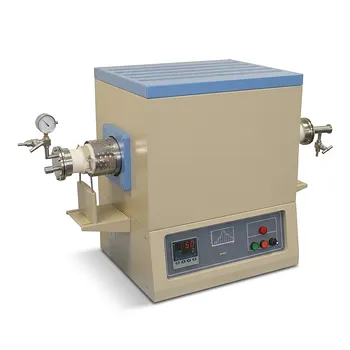
1700C High Temperature Alumina Tube Furnace with 18 Inch Heated Zone and Vacuum Sealing Flanges
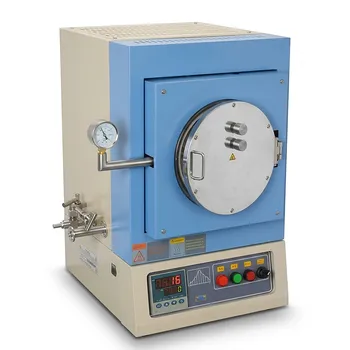
1100°C High Temperature Quartz Chamber Furnace 8 Inch OD with 7.6 Liter Capacity and Vacuum Atmosphere Capability
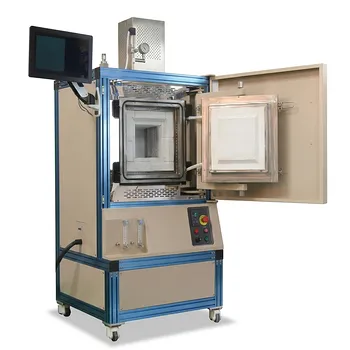
High Temperature Hydrogen Atmosphere Box Furnace 1650C Max Reducing Environment Material Synthesis System 8x8x8 Chamber
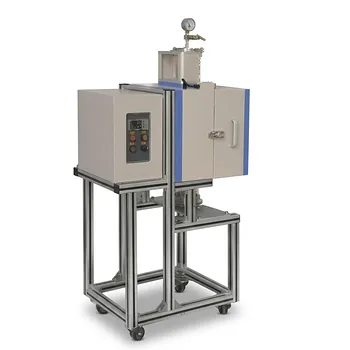
1200°C 5 Inch Vertical Quartz Tube Furnace with Stainless Steel Vacuum Flanges
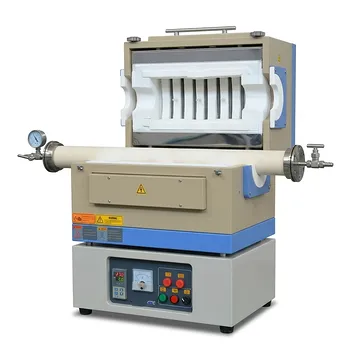
High Temperature 1600C Split Tube Furnace Vacuum Flanges Valves Optional 60mm 80mm Alumina Tube

High Temperature 1700C Tube Furnace with High Vacuum Turbomolecular Pump System and Multi Channel Mass Flow Controller Gas Mixer
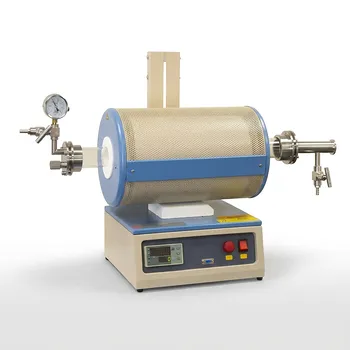
1100C Tube Furnace with Vacuum Flange and Programmable Temperature Controller for Material Science and Industrial Heat Treatment

High Temperature 1700C Vertical Tube Furnace for Powder Spherification and Material Sintering

Compact High Temperature 1600C Tube Furnace with 50mm Alumina Tube and Vacuum Flanges for Material Sintering

High Temperature 1700C Six Zone Split Tube Furnace with Alumina Tube and Water Cooled Flanges

1800C High Temperature Compact Vacuum Tube Furnace with 60mm OD Alumina Tube and Kanthal MoSi2 Heating Elements
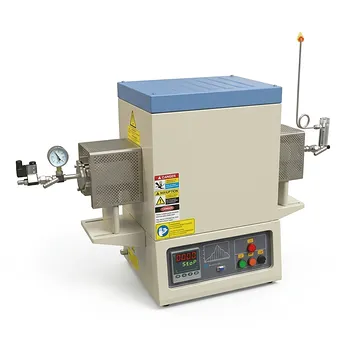
1700C Hydrogen Gas Tube Furnace with 60mm Alumina Process Tube and Integrated Hydrogen Safety Detector

High Temperature Automated 5 Inch Tube Furnace for Autonomous Material Research and Advanced Laboratory R&D

High Temperature 1700C Benchtop Tube Furnace with 5 Inch Heating Zone High Purity Alumina Tube and Vacuum Sealing Flanges