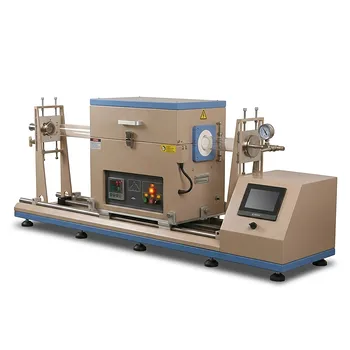
Why is a high-temp tube furnace necessary for biomass nanoporous carbon? Precision Thermal Control for Superior R&D
Updated 3 months ago
The production of nanoporous carbon from biomass requires an industrial-grade high-temperature tube furnace primarily to provide a strictly oxygen-free environment while maintaining precise thermal control. In this controlled setting, biomass undergoes pyrolysis—the thermal decomposition of organic matter—at temperatures typically ranging from 500°C to 900°C under nitrogen protection. This specific environment prevents the biomass from simply burning away, instead forcing the chemical reactions that create a complex, high-surface-area carbon skeleton.
Core Takeaway: An industrial-grade tube furnace is the indispensable "reactor" for biomass carbonization because it isolates the material from oxygen and provides the uniform, high-temperature thermal field necessary to engineer specific pore structures and material purity.
Maintaining a Strict Inert Atmosphere
Preventing Oxidative Loss and Combustion
Biomass is highly flammable; at temperatures above 400°C, it will readily combust if oxygen is present. An industrial-grade furnace ensures superior airtightness, allowing high-purity nitrogen to displace all oxygen.
This inert environment prevents the carbon material from being lost to oxidation. It ensures that the organic precursor is preserved and converted into biochar rather than ash.
Facilitating Chemical Activation Reactions
When chemical activators are added to the biomass, they require a stable nitrogen flow to react intensely with the carbon matrix. The furnace maintains this stable flow rate, which is essential for efficiently creating the microscopic pores that define nanoporous carbon.
Without this strict atmosphere control, the chemical activation would be uneven. This would result in a material with poor porosity and limited industrial utility.
Driving Complex Chemical Transformations
Dehydrogenation and Aromatization
The high temperatures (500°C–900°C) within the tube furnace facilitate deep dehydrogenation, deoxygenation, and aromatization. These reactions strip away volatile components and enrich the carbon content of the material.
By removing non-carbon elements, the furnace establishes the solid skeletal structure of the final product. This transformation is what turns soft plant matter into a rigid, conductive carbon framework.
Thermal Degradation of Templates
In many processes, sacrificial templates are used to "mold" the pores within the carbon. The furnace provides the precise heating rates (e.g., 10°C per minute) required for these templates to degrade thermally.
As the templates vanish at high temperatures, they leave behind a network of nanopores. The precision of the furnace determines whether these pores are uniform or structurally flawed.
Precision Control of Material Properties
Determining Pore Size Distribution
The furnace's ability to maintain a uniform thermal field is the primary factor in determining the quality of the pore size distribution. Fluctuations in temperature can lead to "hot spots" that cause pores to collapse or over-expand.
Consistent heating ensures that the specific surface area is maximized. This is critical for applications like supercapacitors or high-end filtration where pore consistency is paramount.
Controlling the Degree of Graphitization
Higher temperatures (often reaching 1000°C) promote the transformation of the amorphous carbon framework into a highly conductive carbon structure. This process, known as graphitization, is sensitive to even minor temperature deviations.
An industrial furnace provides the multi-stage temperature control necessary to reach these peaks safely. This allows manufacturers to tune the conductivity and strength of the carbon carrier.
Understanding the Trade-offs
Equipment Cost vs. Material Quality
Industrial-grade furnaces require significant capital investment compared to simpler ovens. However, using lower-grade equipment often results in inconsistent batches and high material loss due to oxygen leaks.
Energy Consumption and Throughput
Maintaining temperatures up to 1000°C for extended periods consumes massive amounts of energy. Additionally, the need for slow cooling cycles to protect the furnace tubes can limit the daily production volume of the material.
Material Limitations of the Furnace Tube
The type of tube used (e.g., quartz or alumina) dictates the maximum temperature and chemical resistance. Using the wrong tube material can lead to contamination of the nanoporous carbon or catastrophic failure of the furnace itself.
How to Apply This to Your Project
Selecting Your Furnace Configuration
- If your primary focus is maximizing surface area: Prioritize a furnace with high-precision nitrogen flow meters and superior airtightness to facilitate intense chemical activation.
- If your primary focus is electrical conductivity: Choose an industrial-grade furnace capable of sustained operation at 1000°C or higher to ensure a high degree of graphitization.
- If your primary focus is nitrogen-doped carbon: Select a furnace with a highly uniform thermal field at 500°C to ensure the retention of nitrogen elements within the carbon matrix during pyrolysis.
The high-temperature tube furnace is not merely a heater, but a precision instrument that dictates the molecular architecture and commercial value of biomass-derived carbon.
Summary Table:
| Key Furnace Feature | Technical Function | Impact on Nanoporous Carbon |
|---|---|---|
| Inert Atmosphere | Prevents oxidative loss/combustion | High carbon yield and material purity |
| Precise Thermal Field | Uniform heating cycles (500-900°C) | Consistent pore size and surface area |
| Airtight Sealing | Maintains nitrogen/argon flow | Successful chemical activation of pores |
| High-Temp Stability | Facilitates graphitization | Improved electrical conductivity/strength |
Elevate Your Material R&D with THERMUNITS Precision
Are you looking to master the molecular architecture of biomass-derived materials? THERMUNITS is a leading manufacturer of high-temperature laboratory equipment specifically designed for material science and industrial R&D. We understand that the difference between high-performance nanoporous carbon and low-grade biochar lies in precise thermal engineering.
Our comprehensive range of thermal solutions includes Muffle, Vacuum, Atmosphere, Tube, Rotary, and Hot Press furnaces, as well as specialized CVD/PECVD systems and Vacuum Induction Melting (VIM) furnaces. Whether you need to optimize pore distribution or enhance graphitization, our equipment provides the stability and atmosphere control your project demands.
Ready to scale your production or refine your research? Contact our technical experts today to find the perfect furnace configuration for your laboratory. Let’s build the future of sustainable carbon materials together.
References
- Dolrudee Jaruwat, Suttichai Assabumrungrat. Nanoporous Carbon-Supported Bimetallic (Ni, Cu, and Fe)-Mo Catalysts for Partial Hydrogenation of Biodiesel. DOI: 10.1021/acsomega.4c05207
Mentioned Products
- Multi Position Tube Furnace 1100C for Laboratory Material Research and Advanced Industrial Thermal Processing
- 1100C Tube Furnace with Vacuum Flange and Programmable Temperature Controller for Material Science and Industrial Heat Treatment
- High Temperature Tube Furnace 1500C with Sliding Flanges and 50mm OD for Rapid Thermal Processing Fast Heating and Cooling
- Compact High Temperature 1600C Tube Furnace with 50mm Alumina Tube and Vacuum Flanges for Material Sintering
- High Temperature 1700C Vertical Tube Furnace for Powder Spherification and Material Sintering
People Also Ask
- Why use a tube furnace for oxygen annealing LaCrO3/LaMnO3? Optimize Phase Transition & Magnetic Performance.
- What key role does a laboratory high-temperature tube furnace play in the production of carbon nanofibers? Guide
- How is a laboratory high-temperature tube furnace utilized to research the products of aluminothermic reduction? Advanced Metallurgical Solutions
- What is the role of a laboratory tube furnace in the carbonization process of porous carbon foam (PCF)? Master 3D Synthesis
- What role does a laboratory tube furnace play in the pyrolysis and carbonization of biomass? Optimize Thermal Research.

Tech Team · ThermUnits
Last updated on Jun 03, 2026
Related Products
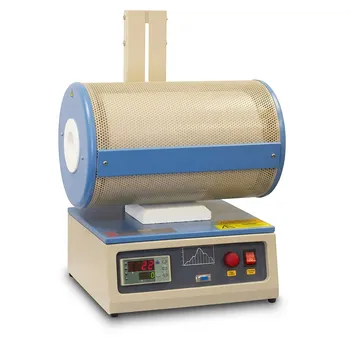
Multi Position Tube Furnace 1100C for Laboratory Material Research and Advanced Industrial Thermal Processing

1100C Tube Furnace with Vacuum Flange and Programmable Temperature Controller for Material Science and Industrial Heat Treatment
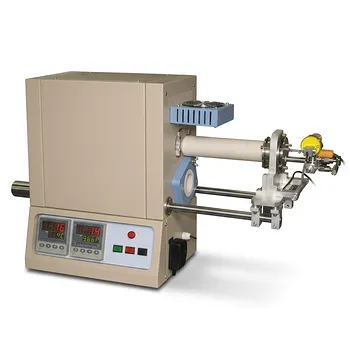
High Temperature Tube Furnace 1500C with Sliding Flanges and 50mm OD for Rapid Thermal Processing Fast Heating and Cooling

Compact High Temperature 1600C Tube Furnace with 50mm Alumina Tube and Vacuum Flanges for Material Sintering

High Temperature 1700C Vertical Tube Furnace for Powder Spherification and Material Sintering

High Temperature 1700C Tube Furnace with High Vacuum Turbomolecular Pump System and Multi Channel Mass Flow Controller Gas Mixer
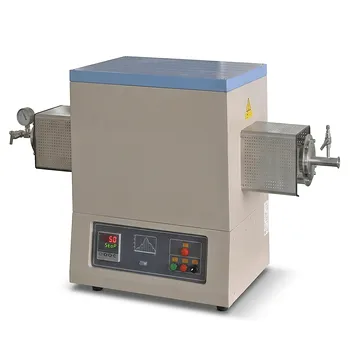
High Temperature 1700C Tube Furnace with 4 Inch OD Alumina Tube and Vacuum Sealing Flanges
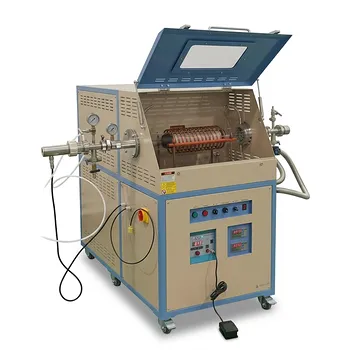
Ultra High Temperature 2300C Induction Heated Graphite Tube Furnace with Infrared Control
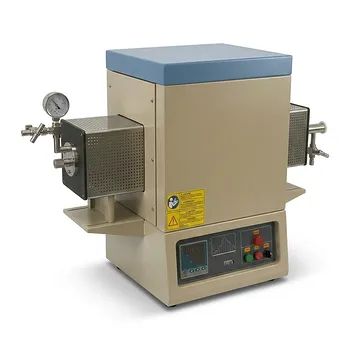
High Temperature 1700C Benchtop Tube Furnace with 5 Inch Heating Zone High Purity Alumina Tube and Vacuum Sealing Flanges
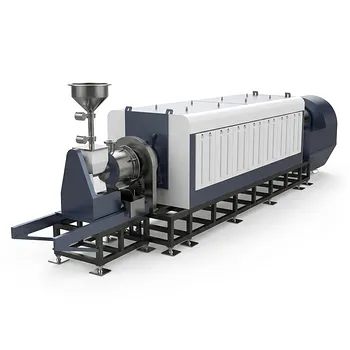
Electric Rotary Kiln Small Rotary Furnace Biomass Pyrolysis Plant
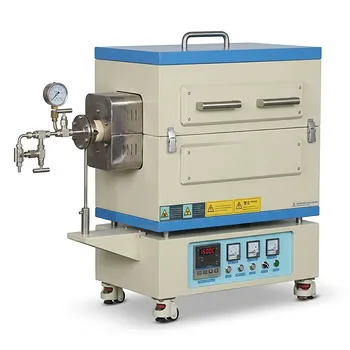
High Temperature Split Tube Furnace 1500C for Material Research Vacuum and Atmosphere Thermal Processing
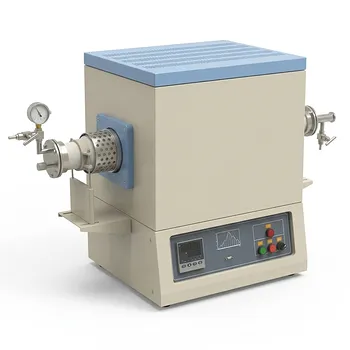
1750°C High Temperature Benchtop Vacuum Atmosphere Tube Furnace with Kanthal Super 1800 Heating Elements and 60mm Alumina Processing Tube

1800C High Temperature Compact Vacuum Tube Furnace with 60mm OD Alumina Tube and Kanthal MoSi2 Heating Elements
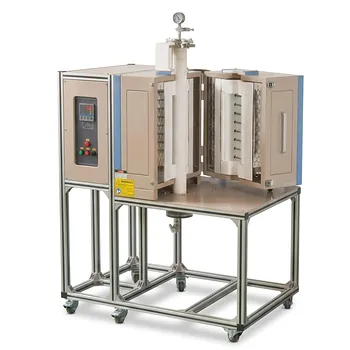
High Temperature 1700C Vertical Split Tube Furnace for Material Quenching and Single Crystal Growth
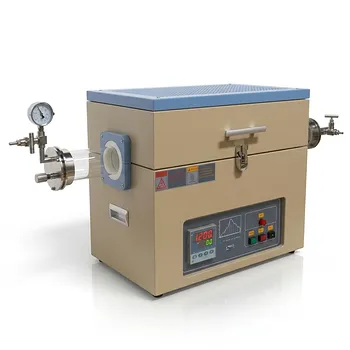
High Temperature 1200C Split Tube Furnace with Optional Quartz Tube Sizes and Vacuum Sealing Flanges for Material Science Research

High Temperature Automated 5 Inch Tube Furnace for Autonomous Material Research and Advanced Laboratory R&D
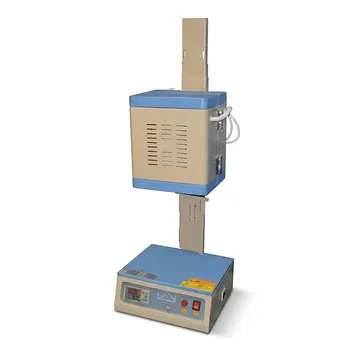
High Temperature Vertical Split Tube Furnace with PID Temperature Controller for 1 and 2 Inch Processing Tubes
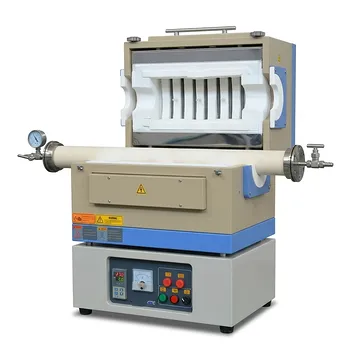
High Temperature 1600C Split Tube Furnace Vacuum Flanges Valves Optional 60mm 80mm Alumina Tube
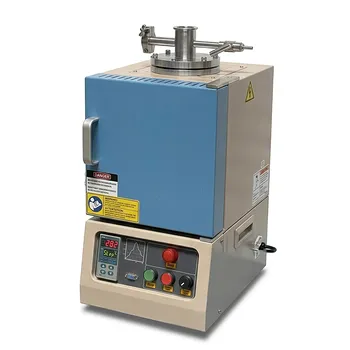
High Temperature Hybrid Muffle and Tube Furnace with Vacuum Capability and PID Control